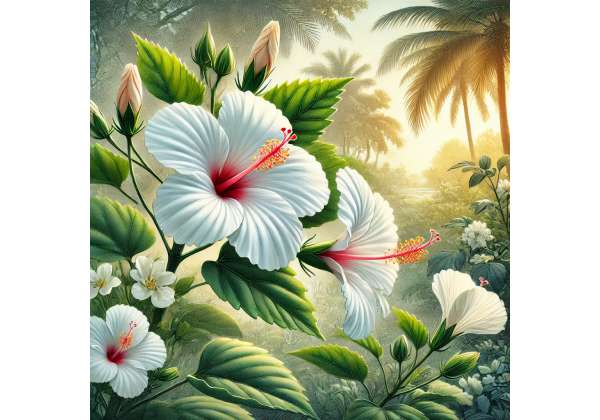
Dainty White is a white-flowered form of Hibiscus rosa-sinensis, the familiar tropical hibiscus often grown for its large, showy blooms. While many people know it as an ornamental plant, Hibiscus rosa-sinensis has a long history in traditional care practices and is now being studied for anti-inflammatory, antioxidant, glucose-support, and skin-related uses. The key point is that most modern evidence is based on the species overall, not this cultivar alone, so it is best to read “Dainty White” as part of the broader Hibiscus rosa-sinensis research story.
What makes this plant especially useful is its versatility: flowers, leaves, and roots have all been used in different traditions, and recent studies are exploring flower extracts for functional tea and wellness applications. At the same time, dosing is not standardized, and stronger extracts deserve caution. This guide focuses on what is promising, what is practical, and what still needs better human evidence.
Quick Facts
- Dainty White belongs to Hibiscus rosa-sinensis, a species studied for anti-inflammatory, antioxidant, and glucose-support effects in early research.
- The strongest modern evidence is still mostly preclinical, so use it as a supportive botanical rather than a replacement for medical treatment.
- There is no standard oral dose, but research often tests extracts in animal models at about 50 to 400 mg/kg, and a human wound-care pilot used a 4% leaf extract ointment.
- Avoid concentrated extracts during pregnancy or while trying to conceive because animal studies have reported antifertility and anti-implantation effects.
- People taking diabetes or blood pressure medicines should be cautious because hibiscus extracts may overlap with those treatment goals.
Table of Contents
- What Dainty White is and why it matters
- Key compounds in Dainty White
- Health benefits and realistic uses
- How to use Dainty White safely
- How much and when to use
- Side effects interactions and who should avoid it
- What the evidence actually says
What Dainty White is and why it matters
Dainty White is a white-blooming cultivar within the Hibiscus rosa-sinensis species, a member of the Malvaceae family. In gardens, it is valued for clean white petals and a tropical look. In health discussions, however, the important detail is the species name, because most medicinal and pharmacology studies are conducted on Hibiscus rosa-sinensis in general rather than on named ornamental cultivars such as Dainty White.
That distinction matters for two reasons. First, cultivars can differ in pigment and phytochemical content. A white flower may not have the same anthocyanin profile as a red flower, even if both belong to the same species. Second, many online articles blur species boundaries and mix up Hibiscus rosa-sinensis with Hibiscus sabdariffa (roselle), which is a different hibiscus commonly used for tart red tea. Dainty White is not roselle, and evidence from roselle tea should not be copied directly onto Hibiscus rosa-sinensis.
What gives Dainty White and related Hibiscus rosa-sinensis plants medicinal interest is the broad range of bioactive compounds found in the flowers, leaves, and roots. Recent review work describes flavonoids, quercetin, kaempferol, saponins, and other compounds across plant parts, along with antioxidant and anti-inflammatory activity. The species has also been studied for glucose and lipid support, skin applications, and topical wound care.
There is also a useful cultivar-specific connection for white hibiscus. A recent review summarizing animal research noted comparative anti-inflammatory testing that included Hibiscus rosa-sinensis var alba, a white hibiscus form. That does not prove Dainty White itself has the same potency, but it does make the white-flower question more relevant than many readers assume.
The biggest advantage of understanding Dainty White this way is that it keeps expectations realistic:
- It is a promising medicinal species with multiple traditional uses.
- It is still an emerging evidence topic for modern clinical care.
- It is not a standardized drug or a plug-in replacement for prescription treatment.
For most readers, the best use of this information is practical and cautious. Enjoy Dainty White as an ornamental, and if you explore hibiscus-based wellness uses, do so with species-specific awareness, careful sourcing, and clear limits. The next sections break down what is in the plant and which uses make the most sense today.
Key compounds in Dainty White
The medicinal value of Dainty White comes from the chemistry of Hibiscus rosa-sinensis, especially the flower. The most studied compounds are polyphenols and related phytochemicals, which are linked to antioxidant and anti-inflammatory effects in lab and animal models. A recent systematic review of the flower’s anti-inflammatory potential describes Hibiscus rosa-sinensis as a rich source of polyphenolic compounds, especially flavonoids, along with tannins, glycosides, saponins, terpenoids, and other plant metabolites.
A broader 2025 review adds more named compounds and classes, highlighting:
- Quercetin
- Kaempferol
- Saponins
- Anthraquinones
- Anthocyanin-related pigments in some flower types
For Dainty White specifically, the white petals may not carry the same color-pigment intensity as darker cultivars, but that does not mean the flowers are chemically inactive. White forms can still contain useful flavonoids and non-pigment phenolics. In practical terms, this is why white hibiscus can still be discussed for anti-inflammatory or antioxidant use, even if its color chemistry differs from red or orange hibiscus flowers.
The flower also has nutritional value when handled as a food ingredient. A recent functional tea study on Hibiscus rosa-sinensis flowers reported notable mineral and composition values in dried flower material, including measurable calcium, potassium, iron, zinc, fiber, and carbohydrate content. Those numbers should not be treated like a supplement label for every cultivar, but they do support the idea that the flower can act as more than a decorative garnish.
Another important “ingredient” point is that different plant parts do different jobs:
- Flowers are the main focus for anti-inflammatory, antioxidant, and tea-development studies.
- Leaves are common in traditional preparations and topical research, including a pilot wound-care ointment study.
- Roots appear in older animal studies for anti-inflammatory, antipyretic, and reproductive effects.
This matters because many product labels simply say “hibiscus extract” without naming the plant part. A flower extract and a leaf extract are not interchangeable, and neither tells you much unless the extraction method is also clear.
A practical way to evaluate a Dainty White product is to ask four questions:
- Is it Hibiscus rosa-sinensis or another hibiscus species?
- Which plant part is used?
- Is it a whole powder, tea cut, or concentrated extract?
- Is the product standardized or just loosely labeled?
Those questions do more for safety and effectiveness than any marketing claim. The active compounds in Dainty White are real, but their impact depends heavily on form, plant part, and preparation.
Health benefits and realistic uses
Dainty White is best viewed as a promising Hibiscus rosa-sinensis wellness plant with several potential benefits, but most of the evidence remains preclinical. That means the strongest signals come from laboratory and animal studies, with only limited human evidence. The benefits are still worth understanding, as long as they are framed correctly.
1) Anti-inflammatory support
This is one of the most consistent research themes. A recent systematic review focused on Hibiscus rosa-sinensis flower extracts found that anti-inflammatory activity is likely linked to polyphenols, especially flavonoids, and may involve pathways such as NF-κB, MAPK, and arachidonic-acid signaling. In simpler terms, hibiscus flower compounds appear to act on the chemical messengers that drive swelling, pain, and inflammatory stress.
For readers interested in Dainty White, this is relevant because white hibiscus forms have been included in comparative animal anti-inflammatory work summarized in recent reviews.
2) Antioxidant and oxidative-stress support
Multiple reviews and extraction studies describe strong antioxidant behavior in Hibiscus rosa-sinensis flowers, especially when tested as methanolic or other solvent extracts. Antioxidant activity does not automatically mean a direct disease cure, but it supports the plant’s potential role in protecting cells from oxidative stress and in supporting general wellness formulations.
This benefit also helps explain why the flower is being explored for functional tea products and cosmetic uses.
3) Glucose and metabolic support
A broad review of Hibiscus rosa-sinensis research describes antidiabetic and antihyperlipidemic effects in animal studies, including reductions in blood glucose, triglycerides, and cholesterol markers. Some of the work also suggests support for post-meal glucose handling and inflammatory markers tied to metabolic health.
The realistic takeaway is not “Dainty White treats diabetes.” The better takeaway is that Hibiscus rosa-sinensis has enough glucose-support evidence to justify cautious interest, especially as a complementary option.
4) Skin and wound-care potential
One of the most practical human-use signals comes from a pilot study using a 4% Hibiscus rosa-sinensis leaf extract ointment with compression stockings for venous leg ulcers. The ointment was used as an adjunct, not a stand-alone treatment, and the results were promising for wound closure timing in that small study.
This is an important example because it shows a real clinical-style use case for the species, even though it is still early evidence.
5) Functional tea and food uses
A recent study on flower extracts developed functional tea blends using Hibiscus rosa-sinensis and green tea combinations, supporting the plant’s role as a food-compatible botanical. This is a more practical and lower-risk pathway for many users than high-dose extracts.
Overall, Dainty White offers genuine medicinal advantages in theory and early evidence. The best outcomes today are likely to come from careful, supportive use rather than high expectations or self-treatment of serious disease.
How to use Dainty White safely
The safest way to use Dainty White is to treat it as a Hibiscus rosa-sinensis botanical with food and topical potential, not as a high-dose herbal shortcut. Most of the useful applications fall into three categories: light culinary use, topical use, and carefully selected extracts.
1) Culinary and tea-style use
Recent work on Hibiscus rosa-sinensis supports its use in functional tea development, especially from flowers. For home users, this suggests a simple, practical route: use food-grade flowers from a trusted source in low-intensity preparations such as infusions or blends.
Important sourcing rules matter here:
- Use flowers grown for food or herbal use, not ornamental plants sprayed for display.
- Wash gently and handle cleanly.
- Start small and monitor tolerance.
Dainty White’s mild color profile can make it attractive for blends where a lighter floral character is preferred over strongly pigmented hibiscus varieties.
2) Topical use
Topical use is one of the more practical evidence-based pathways for Hibiscus rosa-sinensis, especially because a pilot human study used a 4% leaf extract ointment as an adjunct in wound care. That does not mean every homemade hibiscus paste is safe or effective, but it does suggest that leaf-based formulations can have real skin-care relevance.
Common topical uses people explore include:
- Scalp and hair masks
- Skin soaks or rinses
- Commercial ointments or creams containing Hibiscus rosa-sinensis extracts
If using any topical preparation, patch testing is a smart step. Even gentle botanicals can irritate sensitive skin, especially if the formula includes alcohol or essential oils.
3) Concentrated extracts
This is where caution matters most. Many of the strongest anti-inflammatory and metabolic findings come from concentrated extracts used in research. Home-made extracts may be much stronger than tea and much less predictable than standardized study materials.
If you choose a concentrated product:
- Confirm the label states Hibiscus rosa-sinensis.
- Check the plant part (flower, leaf, or root).
- Avoid products with vague “hibiscus complex” wording.
- Do not combine multiple new botanicals at once.
- Use a short trial period with clear goals.
4) What Dainty White is not for
Avoid using Dainty White as:
- A replacement for diabetes medication
- A substitute for wound-care treatment plans
- A fertility or reproductive remedy
- A high-dose daily extract without guidance
The practical advantage of Dainty White is flexibility. It can fit into tea, topical, and wellness routines. The practical risk is assuming that “natural” means dose-free. A measured, low-risk approach is the best way to use this plant while the evidence base continues to grow.
How much and when to use
There is no established standard oral dose for Dainty White or for Hibiscus rosa-sinensis extracts in general. That is the most important dosage fact to understand before using this plant medicinally. Research uses a wide range of doses, and those doses vary by plant part, extraction method, and goal.
The best way to think about dosage is to separate research dosing from practical home use.
Research dosing ranges from animal studies
Recent reviews on Hibiscus rosa-sinensis summarize many animal studies, and the tested doses often fall in the 50 to 400 mg/kg range for various extracts and outcomes. Some examples include:
- Flower or petal extracts around 50 mg/kg for oxidative-stress and metabolic markers
- Leaf or flower extracts at 100 to 200 mg/kg in anti-inflammatory and metabolic models
- Higher-dose testing up to 400 mg/kg, often used in safety or efficacy comparisons
A recent review also summarized comparative anti-inflammatory work involving white hibiscus forms, with tested doses reported at 5, 50, 100, and 1000 mg/kg in an animal paw-edema model. This is useful for “Dainty White” readers because it confirms that white-flower Hibiscus rosa-sinensis types are part of the research conversation. It is not, however, a home dose recommendation.
Human-use dose with the best direct evidence
For clinical-style use, the clearest dose example is topical, not oral:
- A pilot venous leg ulcer study used a 4% Hibiscus rosa-sinensis leaf extract ointment as an adjunct to compression therapy.
This is an important reference point because it gives a real, measured formulation strength in human care. It also reminds readers that some of the better-supported uses of this species may be topical.
Timing and duration guidance
Because oral dosing is not standardized, timing should stay conservative:
- Use with meals if trying a tea or oral product, especially if you have a sensitive stomach.
- Use short trial windows first, such as a few days to two weeks, then reassess.
- Do not escalate quickly.
- Stop if symptoms appear.
For topical products, timing depends on the formula and use case, but consistency matters more than intensity. A stable routine is usually safer and easier to judge than frequent product changes.
A practical dose rule for readers
If you want one clear rule, use this:
- Food and tea use: keep it light and occasional unless a product is clearly food-grade and you tolerate it well.
- Topical use: choose labeled strengths and patch test first.
- Concentrated oral extracts: avoid self-dosing for medical goals unless a clinician approves.
Dainty White has real potential, but dosage science is still too early for confident, one-size-fits-all instructions.
Side effects interactions and who should avoid it
Dainty White and other Hibiscus rosa-sinensis forms are often described as gentle, but that does not mean risk-free. The main safety issue is not dramatic poisoning in normal use. It is the combination of uncertain dosing, concentrated extracts, and overlapping effects with medicines.
Common side effects to watch for
Most people who use hibiscus-style preparations lightly will not have major problems, but concentrated extracts may increase the chance of:
- Stomach upset
- Nausea
- Loose stools
- Headache
- Skin irritation with topical products
The research literature also shows a dose effect in animal toxicology. Recent summaries report that some leaf extracts were tolerated at moderate doses but showed liver and kidney stress markers at higher repeated doses. In one commonly cited pattern, 400 mg/kg was tolerated in sub-acute animal testing, while 800 mg/kg produced concerning biochemical and histologic changes.
That does not translate directly to human dosing, but it strongly supports a “more is not better” approach.
Interactions and overlap with medicines
Because Hibiscus rosa-sinensis is studied for glucose, lipid, and blood-pressure-related effects, the biggest interaction risk is additive effect, especially with:
- Diabetes medicines
- Blood pressure medicines
- Diuretics or multi-drug cardiometabolic plans
Even if a direct interaction is not fully mapped, combining a plant that may lower glucose or influence inflammatory pathways with prescription therapy can complicate symptom tracking and medication adjustments.
Who should avoid concentrated use
The following groups should avoid strong extracts or self-prescribed medicinal use unless a clinician specifically approves it:
- Pregnant people
- People trying to conceive
- Breastfeeding people
- Children
- People with liver or kidney disease
- People taking diabetes or blood pressure medicines
- Anyone scheduled for surgery or a new medication change
Pregnancy and fertility deserve special emphasis. Review literature on Hibiscus rosa-sinensis includes animal studies reporting anti-implantation and antifertility effects at certain doses and preparations. That does not prove the same outcome in humans, but it is enough to justify a strict precaution.
Practical safety checklist
Before using Dainty White medicinally, ask:
- Am I using a food-safe or cosmetic-safe source?
- Is the product clearly labeled as Hibiscus rosa-sinensis?
- Am I taking medicines for glucose, blood pressure, or lipids?
- Could I be pregnant or trying to conceive?
- Is this a tea-level use or a concentrated extract?
That checklist keeps the plant in the safest zone: supportive, low-risk, and realistic.
What the evidence actually says
The evidence on Dainty White should be interpreted through the larger Hibiscus rosa-sinensis research base, and that evidence is best described as promising but not settled.
What is reasonably well supported
The strongest themes across recent reviews are consistent:
- Hibiscus rosa-sinensis contains active phytochemicals with antioxidant and anti-inflammatory potential.
- Animal studies repeatedly show metabolic and inflammatory effects.
- Flower extracts are suitable candidates for functional beverage and wellness product development.
- Topical use has at least one human pilot study signal in wound care.
This is enough to say the species has genuine medicinal relevance. It is not just folklore or garden lore.
What is still limited
The main limitations are equally important:
- Most studies are preclinical.
- Human trials are few and small.
- Extracts are not standardized across papers.
- Different plant parts are often mixed under one name.
- Cultivar-specific evidence, including named white cultivars like Dainty White, is sparse.
That last point is critical. Even when white hibiscus forms appear in research summaries, they are usually described broadly, not as commercial cultivar names. So it is accurate to infer potential relevance for Dainty White, but not to claim direct proof for this exact cultivar.
How to read claims without hype
A good rule is to sort claims into three levels:
- Likely plausible
- Antioxidant support
- Anti-inflammatory activity
- Functional tea and topical potential
- Promising but not proven
- Glucose support in routine human use
- Blood pressure support from this species specifically
- Long-term metabolic benefits
- Not established
- Disease treatment
- Fertility regulation
- Safe high-dose self-medication
Best practical use of the current evidence
For most readers, the smart path is not “take more.” It is “use better”:
- Choose the right species.
- Use the right plant part for the right goal.
- Prefer food-level or topical approaches first.
- Avoid heavy extract use without clinical guidance.
Dainty White is a strong example of a plant that deserves both curiosity and restraint. It has real phytochemistry, real tradition, and a growing scientific record. It also has clear evidence gaps. Keeping both sides in view is what makes this guide useful in practice and not just interesting on paper.
References
- Hibiscus rosa-sinensis: A Multifunctional Flower Bridging Nutrition, Medicine, and Molecular Therapeutics 2025 (Review)
- A Comprehensive Overview of Hibiscus rosa-sinensis L.: Its Ethnobotanical Uses, Phytochemistry, Therapeutic Uses, Pharmacological Activities, and Toxicology 2024 (Review)
- Mechanistic Insight Into Anti-inflammatory Potential of Hibiscus rosa-sinensis Flower Extract as a Herbal Remedy: A Systematic Review 2024 (Systematic Review)
- Ultrasound-assisted extraction of Hibiscus rosa-sinensis flower extracts to be utilized as a sustainable ingredient for the development of functional tea 2025 (Primary Study)
- Efficacy and Safety of 4% Hibiscus rosa-sinensis Leaf Extract Ointment as an Adjunct Treatment to Compression Stockings on the Closure of Venous Leg Ulcers: A Pilot Study 2019 (Pilot Study)
Disclaimer
This article is for educational purposes only and is not medical advice, diagnosis, or treatment. Dainty White and other Hibiscus rosa-sinensis preparations are not standardized medicines, and most reported benefits come from laboratory or animal studies rather than large human trials. If you are pregnant, breastfeeding, trying to conceive, have liver or kidney disease, or take prescription medicines for diabetes or blood pressure, speak with a qualified healthcare professional before using hibiscus extracts or concentrated products.
If you found this guide helpful, please share it on Facebook, X (formerly Twitter), or any platform you prefer.