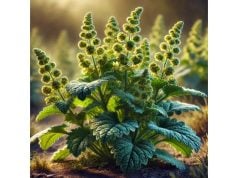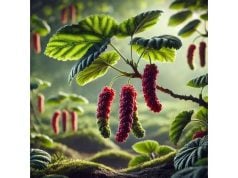
Daphniphyllum is a lesser-known medicinal plant genus that attracts attention for a very different reason than common wellness herbs: its chemistry is unusually complex. Instead of being popular for everyday tea use, Daphniphyllum is mainly discussed in traditional regional medicine and in modern phytochemistry research, where scientists study its distinctive alkaloids and possible anti-inflammatory effects. Most medicinal references focus on Daphniphyllum calycinum, especially when it appears in traditional Chinese formula products used for digestive complaints. That background makes Daphniphyllum interesting, but it also means readers need a careful, evidence-based approach. The plant has promising biological activity, yet human data are limited, and safety concerns deserve real attention. This guide explains what Daphniphyllum is, the key compounds linked to its medicinal properties, the benefits that seem most realistic, how it is used, what dosage information is actually available, and the side effects and risks you should know before considering it.
Quick Facts
- Daphniphyllum is most promising for anti-inflammatory and gut-related support in early research, especially in multi-herb formulas.
- Its key medicinal value comes from unique alkaloids, but strong human evidence for stand-alone use is still limited.
- Published dose ranges are mostly from animal studies or formula products, such as 1.125 to 4.5 mg per 100 g body weight in rat research, not a standard human dose.
- Avoid self-made concentrated extracts because some Daphniphyllum alkaloids have been linked to liver toxicity.
- People who are pregnant, breastfeeding, have liver disease, or take multiple prescription medicines should avoid unsupervised use.
Table of Contents
- What is Daphniphyllum and why it matters
- Key compounds and medicinal properties
- Does Daphniphyllum help with gut and inflammation
- How Daphniphyllum is used in practice
- How much and when to use Daphniphyllum
- Side effects, interactions, and who should avoid it
- What the evidence actually shows
What is Daphniphyllum and why it matters
Daphniphyllum is a genus of evergreen shrubs and small trees that belongs to the Daphniphyllaceae family. It is not a mainstream supplement plant, which is why many people encounter the name only when reading research papers or traditional medicine product labels. The genus includes multiple species, but medicinal discussion most often centers on Daphniphyllum calycinum. In traditional Chinese medicine contexts, this species has been used in certain regional formulations for digestive and inflammatory complaints.
What makes Daphniphyllum matter is not popularity, but chemical uniqueness. Plants in this genus produce a large group of compounds known as Daphniphyllum alkaloids. These alkaloids have highly complex structures and are studied heavily in natural-products chemistry. In plain terms, Daphniphyllum is a “research-rich” plant group. Scientists are interested in it not only for possible herbal uses, but also because its compounds can help researchers understand new pathways for anti-inflammatory and other biologically active molecules.
For readers, the biggest source of confusion is that “Daphniphyllum” can mean several different things:
- A plant genus with multiple species
- A specific species such as Daphniphyllum calycinum
- A raw herb material used in traditional practice
- A purified alkaloid used only in laboratory studies
- A component inside a multi-herb formula
Those are not interchangeable. A study on a purified alkaloid does not automatically tell you what a whole-herb tea will do. A formula study does not prove the same effect comes from Daphniphyllum alone. That is why this herb needs more careful reading than common botanicals like peppermint or chamomile.
Daphniphyllum also matters because it highlights a common gap in herbal information online: many articles blur together traditional use, lab findings, and proven clinical outcomes. With Daphniphyllum, keeping those categories separate is essential. There are real reasons for interest, especially in gut and inflammation research, but there are also meaningful safety questions.
If you are evaluating whether Daphniphyllum is worth considering, start with a practical mindset: this is a specialized medicinal plant category, not a general wellness herb. Product identity, species verification, and preparation method matter more than they do for many familiar herbs. That makes quality control and professional guidance especially important.
Key compounds and medicinal properties
The key ingredients in Daphniphyllum are primarily alkaloids, and this is where the plant genus truly stands out. Daphniphyllum alkaloids are a large family of natural compounds with intricate multi-ring structures. They are considered chemically unusual, and many have been isolated and named over decades of research. This is one reason the genus appears so often in phytochemistry journals: it offers a deep pool of structurally novel molecules.
From a medicinal perspective, the phrase “key ingredients” can refer to two different layers:
- Genus-specific alkaloids found in Daphniphyllum species
- Broader active compounds in formula products that include Daphniphyllum together with other herbs
That distinction matters because many practical-use studies involve a formula rather than Daphniphyllum alone.
What Daphniphyllum alkaloids are known for
In laboratory research, Daphniphyllum alkaloids are often tested for effects on:
- Inflammatory signaling pathways
- Cellular stress responses
- Fibrosis-related signaling markers
- Autophagy-related pathways
These are important because they are involved in many chronic conditions, especially those linked to inflammation and tissue injury. However, it is important to keep the scale of the evidence in view: many of these findings come from cell studies, not human trials. A compound that changes a pathway in a lab assay may still fail to produce a useful effect in real patients.
Medicinal properties linked to formula use
When Daphniphyllum is part of a traditional multi-herb product, the medicinal profile expands. Formula studies often identify flavonoids, phenolic compounds, and other constituents from companion herbs, which may contribute to:
- Anti-inflammatory activity
- Gut motility regulation
- Barrier-protective effects in intestinal tissue
- Antioxidant support
In other words, a Daphniphyllum-containing formula may have broader activity than Daphniphyllum itself, but the trade-off is that it becomes harder to isolate which ingredient is driving the effect.
What this means for readers
The practical takeaway is simple: Daphniphyllum’s medicinal properties are chemically credible, but they are not yet “fully translated” into standard clinical use. The alkaloids are the headline compounds, and they likely explain much of the scientific interest. Still, most claims should be framed as potential or preclinical, not proven.
If a product lists Daphniphyllum, ask these questions before using it:
- Is it a single-herb extract or a multi-herb formula
- Which species is used
- Which plant part is included
- Is the extract standardized or not
- Is there any safety screening information
With Daphniphyllum, the compound profile is a strength, but it also makes product quality and interpretation much more important than average.
Does Daphniphyllum help with gut and inflammation
This is the question most readers actually want answered, and the most accurate response is: possibly, but the strength of evidence depends on the form used. The strongest support for Daphniphyllum-related benefits currently comes from preclinical research and from studies on traditional formula products that include Daphniphyllum, not from well-established human trials of Daphniphyllum alone.
Where the benefit claims come from
Traditional use reports have linked Daphniphyllum calycinum to uses involving fever, inflammation, respiratory symptoms, and digestive complaints. That background is valuable because it shows long-standing use patterns, but traditional use by itself does not confirm modern clinical efficacy.
More specific benefit claims come from lab and animal studies. In these settings, Daphniphyllum compounds and Daphniphyllum-containing formulas have shown activity in pathways tied to inflammation and gastrointestinal function. Researchers have reported effects such as:
- Reduced inflammatory signaling markers in experimental systems
- Improved bowel function markers in animal models
- Effects on colonic motility and smooth muscle regulation
- Potential support for gut barrier-related mechanisms
These are meaningful findings, especially for early-stage research. They help explain why Daphniphyllum continues to be studied for gut-focused and anti-inflammatory applications.
What benefits are realistic to expect
For practical readers, the most realistic language is:
- May support gut comfort in certain traditional formula contexts
- May have anti-inflammatory activity based on experimental models
- May contribute to symptom support when used as part of a broader practitioner-led plan
What is not realistic is treating Daphniphyllum as a proven stand-alone solution for chronic digestive disease. There is not enough direct human evidence to say it reliably treats conditions like irritable bowel syndrome, colitis, or inflammatory bowel disease on its own.
Advantages and limitations
A useful way to think about Daphniphyllum is to weigh the advantages against the limits.
Advantages
- Deep phytochemical research base
- Plausible anti-inflammatory mechanisms
- Traditional use continuity
- Potential relevance for gut-focused formulas
Limitations
- Limited human clinical evidence for stand-alone use
- Product variability
- Dose uncertainty
- Safety concerns that require more caution than many common herbs
So, does Daphniphyllum help with gut and inflammation issues? It may, especially within traditional formula use and under professional supervision. But it should be approached as a promising specialist herb with incomplete clinical proof, not as a guaranteed remedy.
How Daphniphyllum is used in practice
In practice, Daphniphyllum is not usually used the way consumers use everyday herbal teas or over-the-counter wellness capsules. It is more commonly encountered in practitioner-guided settings, traditional regional preparations, or regulated formula products. That difference is important because many online herb guides assume a single, simple use format. Daphniphyllum does not fit that pattern well.
Most common real-world use formats
There are three main ways Daphniphyllum shows up:
- Traditional crude herb use
- In some regional systems, specific plant parts may be prepared in decoctions or combined with other herbs.
- The exact preparation can vary widely by practitioner tradition and local pharmacopeia.
- Chinese patent medicine formulas
- This is the most common modern context for Daphniphyllum in published medicinal discussions.
- The herb appears as one component in a formula designed for digestive or inflammatory symptom patterns.
- Formula products are generally easier to dose and monitor than raw herb material.
- Research extracts or isolated compounds
- These are used in labs, not for routine self-care.
- They may be concentrated, purified, or prepared in ways that are not comparable to commercial herbal products.
How people use it for symptom goals
When Daphniphyllum is used in traditional formula settings, the goal is usually symptom support, not broad “wellness.” Common practical goals include:
- Digestive discomfort
- Loose stools or bowel irregularity
- Inflammation-related symptom patterns
- Short-term, targeted support rather than indefinite daily use
This is an important point: Daphniphyllum is usually used for a reason, not just as a general tonic.
Best practices for safer use
If someone is considering a Daphniphyllum-containing product, these practical habits reduce risk:
- Choose a verified commercial product instead of raw unidentified plant material.
- Confirm whether it is a single-herb product or a multi-herb formula.
- Avoid homemade tinctures or concentrated extracts.
- Use it for a defined purpose and timeframe, not casual long-term experimentation.
- Keep a symptom and side-effect log for the first one to two weeks.
Many herb users underestimate how much preparation method changes outcomes. With Daphniphyllum, this is especially important because extraction strength and plant identification can affect both efficacy and safety. A mild traditional preparation and a concentrated extract are not interchangeable.
The practical bottom line is that Daphniphyllum fits best in a structured, intentional approach. It is not the right herb for random supplement stacking, and it is not a good candidate for “more is better” thinking.
How much and when to use Daphniphyllum
Dosage is one of the most searched topics for any herb, but with Daphniphyllum, it is also one of the hardest to answer with confidence. There is no widely accepted, evidence-based human dosage for “Daphniphyllum spp.” as a stand-alone herb. The published dose information most people find comes from either animal studies or multi-herb formula products, and those numbers cannot be directly converted into safe home use.
Why a universal dose does not exist
Several variables make Daphniphyllum dosing difficult to standardize:
- Different species may have different compound profiles
- Different plant parts can vary in alkaloid content
- Water extracts and alcohol extracts can behave very differently
- Formula products change the effective dose context
- Safety limits are not well established for self-use
Because of this, any article that gives a single daily milligram number for all Daphniphyllum products is oversimplifying the reality.
What dose ranges appear in research
Animal studies on Daphniphyllum-containing formulas have used controlled dose ranges. For example, rat studies on digestive models have used formula doses reported in mg per 100 g body weight, and other animal studies have used gram-per-kilogram formula dosing. These are useful for research comparison, but they are not consumer dosing instructions.
If a reader sees numbers like these in studies, the safest interpretation is:
- They describe experimental dosing
- They often apply to a formula, not Daphniphyllum alone
- They are used in animals, not humans
- They should not be copied into self-treatment plans
How to approach dosing in the real world
If a clinician recommends a Daphniphyllum-containing product, practical dosing decisions should follow the product label and practitioner guidance, not research dose math.
A safe approach looks like this:
- Start with the lowest labeled amount.
- Take it at the timing recommended on the label (often with meals for digestive products, if stated).
- Use a short trial window, such as several days to two weeks, unless instructed otherwise.
- Stop if side effects appear.
- Do not combine with another product containing the same herb.
Timing and duration questions
People also ask when to take it and for how long. The honest answer is that timing depends on the product type and symptom goal. In digestive formula use, timing may be tied to meals or symptom onset, but there is no universal Daphniphyllum rule.
Duration should be conservative. This is not an herb to use indefinitely without a clear reason and monitoring, especially given the liver safety concerns discussed later. When in doubt, shorter, supervised use is safer than long-term unsupervised use.
Side effects, interactions, and who should avoid it
Safety is the most important part of any Daphniphyllum guide because the plant’s chemistry is active enough to deserve real caution. Unlike gentle culinary herbs, Daphniphyllum includes alkaloids that can have stronger biological effects, and some compounds from Daphniphyllum calycinum have been associated with liver toxicity in toxicology research. That does not mean every Daphniphyllum product is dangerous, but it does mean that product quality and dosing discipline are essential.
Possible side effects to watch for
Direct human side-effect data for Daphniphyllum stand-alone use are limited, so safety guidance relies on toxicology findings, formula experience, and general herb risk management. Potential issues may include:
- Nausea or stomach upset
- Digestive discomfort if the product is too concentrated
- Headache or fatigue in sensitive users
- Liver-related adverse effects in higher-risk situations
The liver concern is the most serious reason to avoid self-experimentation with strong extracts.
Interaction risks
Formal interaction studies are limited, which means uncertainty should be treated as a caution flag. Potential interaction concerns are most relevant for people who:
- Take prescription medications processed by the liver
- Use alcohol regularly
- Combine multiple herbs or supplements at once
- Already use products with known liver stress potential
Another practical issue is “stacking.” If a person takes several digestive products together, it becomes difficult to tell which ingredient is helping and which one is causing side effects. With Daphniphyllum, this can delay recognizing a problem.
Who should avoid Daphniphyllum
Certain groups should avoid unsupervised use entirely:
- Pregnant people
- Breastfeeding people
- Children and adolescents
- People with liver disease or a history of hepatitis
- People with elevated liver enzymes
- People taking multiple prescription medicines
- Anyone using unknown, wild-harvested, or unlabeled raw material
Even healthy adults should avoid homemade concentrated tinctures unless guided by a qualified professional with species-level identification and safety experience.
Stop-use warning signs
If someone is already using a Daphniphyllum-containing product, they should stop it and seek medical attention if they develop:
- Yellowing of the skin or eyes
- Dark urine
- Persistent vomiting
- Severe fatigue
- Right upper abdominal pain
- Unusual itching or flu-like symptoms after starting the product
The safest mindset is not fear, but respect. Daphniphyllum may have real medicinal potential, but it is not a low-risk herb for casual experimentation. Verified products and professional guidance make a major difference.
What the evidence actually shows
If you strip away marketing language and look at the evidence carefully, Daphniphyllum sits in an interesting middle ground: it is stronger in chemistry and preclinical pharmacology than in direct clinical proof. That does not make it unhelpful. It simply means the right expectations are crucial.
What is well supported
The best-supported area is the chemistry. Daphniphyllum species contain a large and distinctive set of alkaloids, and researchers continue to identify new compounds and map their structures. This level of chemical richness is a real strength and one reason Daphniphyllum keeps appearing in serious natural-products research.
Another reasonably supported area is mechanistic plausibility. In lab and animal studies, Daphniphyllum-related compounds and formulas have shown effects on pathways related to inflammation, tissue signaling, and gastrointestinal function. These findings are not enough to prove clinical efficacy, but they are strong enough to justify continued research.
What remains uncertain
The biggest evidence gaps are the ones consumers care about most:
- Which Daphniphyllum preparation works best for humans
- What the safest dose range is for stand-alone use
- How long it can be used safely
- Which benefits come from Daphniphyllum itself versus companion herbs in formulas
- Which people are most likely to benefit or experience side effects
This is why evidence-based articles on Daphniphyllum should sound more cautious than articles on heavily studied herbs. The limitation is not that the plant is “weak.” The limitation is that the human clinical map is still incomplete.
How to interpret claims online
A good rule is to sort claims into three buckets:
- Traditional use claim
- “Historically used for digestive and inflammatory symptom patterns.”
- Preclinical research claim
- “Shows anti-inflammatory or gut-related pathway activity in lab or animal studies.”
- Clinical proof claim
- “Proven in humans at a defined dose with consistent outcomes.”
Daphniphyllum currently has strong content in the first two buckets and limited content in the third. That is the most accurate summary.
Final evidence-based view
Daphniphyllum is best seen as a specialized medicinal plant with genuine scientific interest, especially for alkaloid chemistry and gut-inflammation research. It may be useful in practitioner-guided formula contexts, but it is not yet a broadly validated stand-alone herb for routine self-care. If your goal is the most evidence-backed path, choose verified products, use conservative timelines, and prioritize safety screening over aggressive dosing.
References
- The Latest Progress in the Chemistry of Daphniphyllum Alkaloids 2024 (Review)
- Calycindaphines A–J, daphniphyllum alkaloids from the roots of Daphniphyllum calycinum 2021 (Phytochemistry Study)
- Characterization of the Active Ingredients and Prediction of the Potential Anticolitis Mechanism of the Feng-Liao-Chang-Wei-Kang Capsule via Mass Spectrometry and Network Pharmacology 2025 (Formula Mechanism Study)
- Effects of Fengliao-Changweikang in Diarrhea-predominant Irritable Bowel Syndrome Rats and Its Mechanism Involving Colonic Motility 2018 (Animal Study)
- Deoxycalyciphylline B, a hepatotoxic alkaloid from Daphniphyllum calycinum 2012 (Toxicology Study)
Disclaimer
This article is for educational purposes only and is not a substitute for medical advice, diagnosis, or treatment. Daphniphyllum species and Daphniphyllum-containing formulas may have meaningful biological activity and may also carry safety risks, including possible liver toxicity in some contexts. Do not use Daphniphyllum to self-treat persistent diarrhea, severe abdominal pain, inflammatory bowel disease, or suspected infection. Speak with a qualified healthcare professional before using any Daphniphyllum product, especially if you are pregnant, breastfeeding, have liver disease, or take prescription medicines.
Please share this article on Facebook, X (formerly Twitter), or any platform you prefer if you found it helpful.