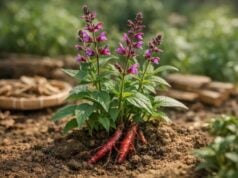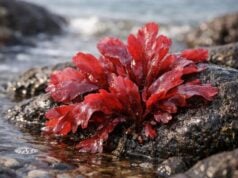
Dewplant (Disphyma crassifolium) is a low, spreading coastal succulent that thrives where many plants struggle—salt spray, wind, sandy soils, and bright sun. Its fleshy leaves store water and minerals, giving the plant a crisp texture and a naturally briny, slightly tangy taste that has earned it a place in modern “gourmet greens” and halophyte cuisine. Beyond its edible appeal, dewplant is also discussed for traditional topical uses, where fresh leaf juice is applied to soothe minor skin discomfort after heat, stings, or irritation.
What makes dewplant interesting from a wellness perspective is the combination of hydration-rich plant tissue, mineral content shaped by salty environments, and a profile of plant polyphenols that may support antioxidant activity. At the same time, it is not a cure-all herb with well-defined clinical dosing. Like many coastal edibles, its biggest “benefit” often comes from how it upgrades a meal—adding flavor, crunch, and plant compounds—rather than delivering a dramatic therapeutic effect. This guide explains what dewplant is, what’s inside it, how people use it, what a reasonable intake looks like, and who should be cautious.
Key Takeaways
- Dewplant can add fiber-rich greens and plant antioxidants to meals with a naturally salty flavor.
- Wild-harvested coastal plants may accumulate salt and contaminants; source carefully and rinse well.
- Typical adult food range: 30–80 g fresh leaves per day (start with 10–20 g).
- Avoid or limit if you must follow a strict low-sodium or low-oxalate diet, or if you have recurrent kidney stones.
Table of Contents
- What is dewplant?
- Key ingredients and medicinal properties
- Does dewplant help skin irritation?
- Does it support digestion and hydration?
- Best ways to use dewplant
- How much dewplant per day?
- Safety, interactions, and evidence
What is dewplant?
Dewplant (Disphyma crassifolium) is a ground-hugging succulent in the ice plant family (Aizoaceae). It forms mats of thick leaves and produces showy, daisy-like flowers in shades of pink to purple. You’ll most often see it growing along coasts, dunes, and rocky shorelines, where its natural “survival skills” are on full display: it tolerates salt, stores water in its tissues, and stabilizes soil with a sprawling growth habit.
One reason dewplant is gaining attention is that it belongs to a broader group of edible halophytes—plants adapted to saline environments. These plants often taste naturally salty or mineral-rich, which can make them useful in cooking as a “fresh salt note” rather than a heavy-handed seasoning. In culinary settings, dewplant is sometimes marketed under descriptive names like “sea fingers,” reflecting its crunchy, succulent leaves.
Because common names vary by region, dewplant can be confused with other coastal succulents. Some relatives have similar growth forms and are also edible, while others may be more irritating or simply unpleasant. If you plan to eat or apply any plant topically, correct identification matters as much as the plant itself.
Traditional and modern use, side by side
Dewplant is best understood as a food-first plant with occasional folk topical use:
- As a food: leaves are eaten fresh, lightly cooked, or used as a garnish with salty-sour brightness.
- As a topical plant: fresh leaf juice is sometimes used on small areas of intact skin for soothing comfort.
It helps to set expectations early. Dewplant is not a standardized medicinal herb with a long list of proven clinical indications. Its strengths are more practical: it can help people eat more greens, reduce dependence on refined salty snacks, and add variety to meals. When people report “benefits,” they are often describing these everyday improvements—better meal satisfaction, more plant variety, and a gentle nudge toward healthier patterns—rather than a direct treatment effect.
If you approach dewplant with that mindset, it becomes easier to use it well: choose a safe source, start with small portions, and treat it as a supportive ingredient rather than a primary therapy.
Key ingredients and medicinal properties
Dewplant’s chemistry is shaped by two realities: it is a succulent (water-storing) and a halophyte (salt-tolerant). Those traits influence what you experience in your mouth and how the plant might fit into wellness routines.
Water-rich tissue and natural electrolytes
Fresh dewplant leaves are mostly water, which creates that crisp “pop” when eaten raw. Because the plant grows in saline conditions, it can accumulate minerals and salts in ways that give it a naturally briny taste. This does not mean dewplant is an electrolyte supplement, but it does explain why small amounts can make food taste more satisfying without needing much added salt.
Fiber and plant structure
Even though it’s succulent, dewplant still contributes dietary fiber—one reason it can support satiety when used to bulk up meals. The fiber is not typically as high as in dense leafy greens, but the plant’s texture can slow eating speed, which matters more than people realize. When a food makes you chew and pause, portion control becomes easier.
Polyphenols and antioxidant potential
Recent lab analyses of Disphyma crassifolium extracts have identified a broad mix of phenolic compounds, including:
- Flavonoids (often discussed for antioxidant and cell-signaling roles)
- Phenolic acids (commonly linked with antioxidant capacity)
- Other plant polyphenols that may support protective cellular responses
In real life, “antioxidant” is best treated as a long-term dietary pattern concept. Dewplant is not a pill that neutralizes damage on demand; it is a plant food that contributes compounds associated with better resilience when eaten as part of an overall healthy diet.
If you enjoy dewplant because it’s a succulent green with a tangy-salty edge, you may also enjoy comparing it to other edible succulents that people use in similar ways. purslane’s nutrition and uses offers a helpful comparison, especially for people who like crunchy greens and want more plant variety.
“Medicinal properties” in plain language
A responsible summary of dewplant’s likely medicinal properties looks like this:
- Functional food support: adds plant compounds and fiber while improving meal enjoyment
- Potential antioxidant activity: supported mainly by laboratory assays of extracts
- Possible topical soothing: based on traditional use and the feel of fresh succulent juice on skin
The key is to avoid overstating what’s known. Dewplant’s chemistry is interesting, but most strong claims still sit at the “promising but early” stage.
Does dewplant help skin irritation?
Dewplant is sometimes used like a “coastal first-aid plant” in folk practice: a leaf is split or crushed, and the cool, moist juice is applied to intact skin after heat exposure, minor stings, or friction irritation. This kind of use makes intuitive sense because succulent juice can feel soothing, and many plants in the ice plant family contain polyphenols and other compounds that show anti-inflammatory or antimicrobial activity in lab studies.
Still, there’s an important boundary: topical tradition is not the same as proven clinical wound care. Dewplant should not replace basic first aid, and it should not be used on serious injuries.
Where topical use may be reasonable
If someone chooses to try dewplant topically, the safest context is:
- Intact skin with mild irritation (heat discomfort, minor rubbing, localized itch)
- A small area you can monitor for redness or rash
- Short-term use, then stopping if there is no clear benefit
A practical approach is to rinse the leaf thoroughly, split it, and apply a thin layer of juice to a small patch of skin. Let it sit briefly, then rinse off and reassess. The goal is comfort, not “treating” a medical condition.
Where it should not be used
Avoid dewplant juice on:
- Open wounds, punctures, or significant burns
- Large areas of skin (higher chance of irritation or contamination)
- The face, eyes, or mucous membranes
- Skin infections that are spreading or producing pus
If you are seeking a plant-based topical with a clearer safety history and widely available standardized products, aloe vera safety and uses is often a more predictable choice for minor soothing, especially when you use a product intended for skin.
Patch testing matters more than people expect
Even gentle plants can cause dermatitis in sensitive individuals. A simple patch test lowers risk:
- Apply a tiny amount of dewplant juice to the inner forearm.
- Leave it for 15–30 minutes, then rinse.
- Watch for delayed redness, itching, or rash over the next 24 hours.
If you see irritation, stop. If you have a history of frequent skin reactions, it is wiser to skip topical experimentation.
What to do when symptoms are not minor
Use medical care—not plant juice—if you have:
- Blistering or severe burns
- Jellyfish stings with systemic symptoms (shortness of breath, widespread hives)
- Rapidly spreading redness, fever, or worsening pain
- Any wound that may require cleaning, closure, or antibiotics
In short, dewplant may offer gentle, short-term comfort on intact skin, but it should sit firmly in the “optional support” category, not as a substitute for first aid or medical evaluation.
Does it support digestion and hydration?
Most people who eat dewplant are not doing it for a dramatic medicinal effect—they are doing it because it makes healthy meals more appealing. That said, there are a few realistic ways dewplant can support digestion and hydration routines.
Digestive support through food structure
Dewplant adds crunch, moisture, and fiber to meals. When used as part of a bowl, salad, or side dish, it can:
- Increase total vegetable volume without feeling heavy
- Support satiety, reducing the urge to snack soon after meals
- Contribute fiber that helps regularity over time
If your main goal is constipation relief, dewplant alone may be too gentle. In that case, it can help to compare it with more targeted fiber tools like psyllium husk fiber, which is used specifically for stool bulking and regularity. Dewplant can still play a role, but it may be part of a bigger plan.
Hydration support in a practical sense
Succulent greens can encourage hydration habits simply because they pair well with water-rich meals (soups, salads, chilled plates). However, dewplant’s salty flavor can cut both ways:
- In small amounts, it can make vegetables more satisfying, helping you stick to a healthier plate.
- In large amounts, it may add a meaningful sodium load, especially if you also add salt, sauces, or salty proteins.
A useful strategy is to treat dewplant as a flavor accent, not a base green you pile high every day.
Why some people feel better eating it
There are two common “hidden wins” with dewplant:
- It replaces less helpful snacks. If dewplant makes you want a salad instead of chips, the benefit is real even if the plant itself is not acting like a medicine.
- It supports meal balance. Dewplant is easy to pair with protein and healthy fats (fish, legumes, olive oil, nuts), which tends to stabilize appetite and energy.
Who may not tolerate it well
Even healthy plant foods can cause discomfort for some people:
- If you increase your intake quickly, you may notice bloating or looser stools.
- If you have a sensitive gut, the sour-salty profile may feel irritating when eaten alone.
The simplest solution is portion control and pairing. Start with a small amount alongside a full meal, not as a stand-alone snack. If it consistently bothers your digestion, it may not be the right green for you.
Dewplant supports digestion and hydration best when it is used as a smart ingredient—small amounts, balanced meals, and steady habits—rather than as a standalone “digestive remedy.”
Best ways to use dewplant
Dewplant works best when you treat it like a specialty green: a plant that adds a unique flavor and texture, not one you force into every meal. Because it can taste naturally salty, a little often goes a long way.
Choosing and preparing dewplant
If you buy dewplant as an edible green (rather than harvesting it), you’ll usually get cleaner, more consistent quality. If you do harvest it yourself, avoid shorelines near roads, industrial sites, marinas, or areas with visible pollution.
Preparation tips that improve both taste and safety:
- Rinse thoroughly and gently rub the leaves to remove sand and salt residue.
- If the flavor is very salty, soak briefly in cold water, then drain and pat dry.
- Use it fresh when possible; the crisp texture is part of its appeal.
Simple culinary uses
- Salad booster: Chop a small handful and mix with mild greens, cucumber, and citrus.
- Seafood companion: Use as a fresh garnish on fish, shrimp, or legumes with lemon and olive oil.
- Quick sauté: Toss in a pan for 30–60 seconds—just enough to warm and soften slightly. Overcooking can make it limp and overly salty.
- Dip and spread add-in: Finely chop into yogurt-based dips or soft cheeses for a briny crunch.
How to use it as a “salt reducer”
If your goal is cutting down on added salt, dewplant can help by giving you saltiness from the plant itself. The key is to adjust the rest of the dish:
- Taste your meal first, then decide if you still need added salt.
- Use acids (lemon, vinegar) to boost flavor without sodium.
- Pair with unsalted components (plain grains, unseasoned proteins) to keep the overall sodium load reasonable.
Topical use in practice (optional)
For people interested in the folk topical approach, the safest method is minimal:
- Use freshly rinsed leaf juice on a small area of intact skin.
- Avoid the face and avoid applying it where it can transfer to eyes or mouth.
- Stop quickly if you notice burning, rash, or worsening redness.
Storage and handling
Dewplant is best when it’s crisp. Store it like other tender greens:
- Refrigerate in a breathable bag with a paper towel to manage moisture.
- Use within a few days for best texture.
- Don’t store it wet; excess moisture can speed spoilage.
Used well, dewplant is a practical ingredient that can make healthy meals feel more satisfying—often the most important “medicinal” effect a food can have.
How much dewplant per day?
Dewplant dosing is best approached like dosing a strong-flavored food: start small, pay attention to how you feel, and adjust based on your blood pressure goals, sodium intake, and digestion. Because dewplant can carry a salty taste, more is not always better.
Typical food range for adults
A reasonable daily range for most healthy adults is:
- 30–80 g fresh leaves per day, often used across one or two meals
If you are new to dewplant, start with:
- 10–20 g per day (a small garnish-sized handful), then increase gradually over a week if you tolerate it well.
This approach reduces the chance of digestive upset and helps you avoid accidentally driving up sodium intake.
Goal-based guidance
For meal satisfaction and healthier snacking
- Add 10–30 g to a lunch salad or bowl.
- Pair with protein and healthy fat so the meal holds you longer.
For “salt reduction” cooking
- Use 5–15 g chopped dewplant as a finishing herb/green.
- Reduce added salt in the rest of the dish and rely on citrus, herbs, and spice for flavor.
For digestive regularity support
- Keep portions modest (20–40 g daily) and focus on consistency.
- Combine with other fibers (vegetables, legumes, whole grains) and adequate fluids.
Topical-only guidance (if used)
Dewplant is not a standardized topical medicine, so keep any skin use conservative:
- Apply a thin layer of fresh juice to a small area 1–2 times daily for up to 3–5 days.
- Stop sooner if the skin becomes red, itchy, or more irritated.
Timing and duration
- Most people do best using dewplant earlier in the day, when they’re eating their largest meals and drinking more water.
- If you notice puffiness or thirst after using it, scale down portions or reduce other salty foods that day.
Practical “portion visuals” that help
- 10–20 g: a small sprinkle across a plate
- 30–40 g: a modest side portion mixed with other greens
- 60–80 g: a full serving, best suited to people who are active and not limiting sodium
The best dose is the amount that improves your diet without pushing salt intake or digestive comfort in the wrong direction. If you need a strict low-sodium plan, dewplant may be an occasional garnish rather than a daily green.
Safety, interactions, and evidence
Dewplant is generally used as a food, and for many people it can be a safe, enjoyable addition in moderate amounts. The main safety issues are less about “toxicity” and more about context: where it was grown, how much salt it carries, and whether you have specific health conditions that make salty or high-oxalate foods risky.
Key safety considerations
1) Sodium and blood pressure goals
Because dewplant can taste salty and may contain meaningful salt depending on growing conditions, it can work against a strict low-sodium diet. If you manage hypertension, heart failure, or swelling, keep portions small and reduce other salty foods on the same day.
2) Oxalates and kidney stone risk
Many leafy plants contain oxalates, and higher-oxalate diets can be a problem for people prone to calcium oxalate stones. Dewplant is not automatically high in oxalates, but the safest guidance is to treat unfamiliar greens cautiously if you have recurrent stones: start low, avoid daily large servings, and keep calcium intake adequate with meals unless your clinician advises otherwise.
3) Wild harvesting and contaminants
Coastal plants can be exposed to heavy metals, runoff, and microbial contamination. This is one reason cultivated edible halophytes are often a better choice than foraging. If you do forage, avoid polluted areas, wash thoroughly, and do not treat wild plants as “clean” by default.
4) Allergy and skin reactions
Topical use can cause dermatitis in sensitive individuals. Any rash, itching, or burning is a stop signal.
Potential interactions
Dewplant is not known for classic herb-drug interactions in the way concentrated supplements can be. The more realistic “interaction” is dietary:
- If your medication plan depends on stable sodium intake (common in blood pressure and heart conditions), large swings in salty foods can make management harder.
- If you take diuretics or have electrolyte issues, be cautious about treating salty greens as “free foods.”
What the evidence actually says
The strongest research around Disphyma crassifolium focuses on:
- Nutritional and phytochemical profiling of cultivated halophytes
- Antioxidant activity in laboratory models
- Food quality considerations (including microbial and sensory evaluation)
These are useful data points, but they do not equal clinical proof of disease treatment. At this stage, the most honest conclusion is that dewplant is best used as a nutrient- and polyphenol-containing food ingredient, with possible minor topical soothing based on traditional use, while stronger medicinal claims remain unproven.
Who should avoid or limit dewplant
Limit or avoid regular use if you:
- Have advanced kidney disease or are on a potassium or sodium restriction plan
- Have recurrent kidney stones and have been advised to follow a low-oxalate diet
- Have uncontrolled hypertension or heart failure where sodium balance is critical
- Are pregnant or breastfeeding and considering concentrated extracts (food portions are typically the safer default)
Used thoughtfully, dewplant can be a smart culinary tool. Used carelessly—very large portions, questionable harvesting sites, or as a substitute for medical care—it can create avoidable risks.
References
- Insights into the Bioactive Composition, Antioxidant Properties and In Vitro Cell Effects of Disphyma crassifolium 2024 (Research Article)
- Soilless Cultivated Halophyte Plants: Volatile, Nutritional, Phytochemical, and Biological Differences 2023 (Research Article)
- Microbial and Sensory Evaluation of Halophytes Cultivated in a Soilless System Under Different Salinities 2025 (Research Article)
- Oxalate Contents of Raw, Boiled, Wok-Fried and Pesto and Juice Made from Fat Hen (Chenopodium album) Leaves 2018 (Research Article)
Disclaimer
This article is for educational purposes only and does not provide medical advice, diagnosis, or treatment. Dewplant (Disphyma crassifolium) is typically used as a food, but individual needs vary. If you are pregnant or breastfeeding, have kidney disease, heart disease, hypertension, recurrent kidney stones, or follow a medically prescribed sodium or oxalate restriction, consult a qualified healthcare professional before making dewplant a regular part of your diet. Seek prompt medical care for serious burns, rapidly spreading skin redness, signs of infection, severe allergic reactions, or any symptoms that worsen instead of improving.
If you found this guide useful, consider sharing it on Facebook, X (formerly Twitter), or your preferred platform to help others use dewplant more safely and confidently.