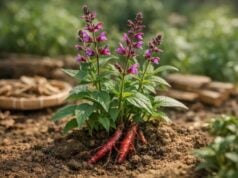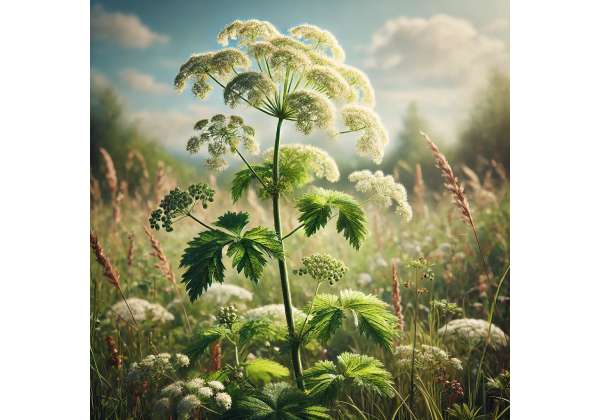
Dropwort (Filipendula vulgaris), sometimes called fern-leaf dropwort, is a traditional European herb from the rose family (Rosaceae). It grows in dry grasslands and calcareous soils and is valued for its fragrant flowers, leafy tops, and distinctive tuberous roots. In folk practice, dropwort has been used for comfort during colds, minor joint aches, digestive upset, and “water retention” patterns, often as a warm infusion or a stronger root decoction. Modern interest focuses on its salicylate-related compounds, tannins, and flavonoids—an active combination that helps explain why it has a reputation for easing inflammation and supporting the stomach.
Dropwort’s biggest strength is also its biggest reason for caution: its chemistry overlaps with other analgesic herbs and can be relevant for people who are sensitive to salicylates or who take blood-thinning medicines. It is also easy to confuse “dropwort” with unrelated, highly poisonous plants that share the same common name.
This article clarifies what dropwort is, what it contains, what it may realistically help with, and how to use it with a safety-first mindset.
Key Takeaways for Dropwort
- May support minor joint comfort and inflammation balance when used short term as an herbal tea.
- Often used for mild digestive upset and stomach discomfort, especially as a warm infusion.
- Typical tea range: 1.5–6 g dried herb per dose, with a daily total of 2–18 g.
- Avoid combining with aspirin or NSAIDs unless medically advised, due to salicylate overlap.
- Avoid if pregnant, breastfeeding, under 18, allergic to salicylates, or using anticoagulant therapy.
Table of Contents
- What is dropwort
- Key ingredients and actions
- Dropwort health benefits
- How to use dropwort
- How much dropwort per day
- Side effects and interactions
- What the research shows
What is dropwort
Dropwort is the common name for Filipendula vulgaris, a perennial herb in the Rosaceae family. You may also see it listed under a historical synonym, Filipendula hexapetala. The plant produces clusters of creamy-white, sweetly aromatic flowers, finely divided leaves, and a root system with small tubers—one reason it has been used in traditional preparations that emphasize either the flowering tops (for tea) or the roots (for decoction).
The first safety issue is naming confusion. “Dropwort” is not a unique label. In everyday language it can refer to unrelated species—some of which are dangerous. The most serious mix-up is with “water dropwort” plants in the genus Oenanthe (carrot family), which are notorious for toxicity. If you are buying dropwort for herbal use, the label should clearly state Filipendula vulgaris. If you are wild-harvesting, do not rely on common names, and avoid collecting from wet habitats or near waterways where toxic look-alikes are more likely.
The second issue is species overlap within the same genus. People often confuse dropwort with meadowsweet (Filipendula ulmaria). They are related and share some chemistry, but they grow in different habitats and are used in different ways. Meadowsweet is typically associated with damp meadows and streamsides, while dropwort prefers drier grasslands. If you want a quick orientation to the better-known cousin that often appears in modern herb texts, see meadowsweet overview and traditional uses and then return to dropwort with the differences in mind.
What parts are used?
- Flowers and aerial parts: commonly dried for herbal infusions and blended teas
- Roots and tubers: used in stronger decoctions or extracts in some traditions
- Whole plant (less common): occasionally used when the goal is an astringent, toning profile
Traditional “medicinal properties” in plain language
Dropwort is commonly described as:
- Anti-inflammatory and analgesic: for minor aches and joint discomfort
- Astringent: especially where tannins are desired (for example, some diarrhea patterns)
- Diuretic: for mild “fluid heaviness” sensations
- Supportive for colds: often as part of warm, soothing tea routines
These traditional categories guide how people use the herb, but they do not automatically prove clinical effectiveness. The most responsible approach is to match dropwort to mild, self-limited concerns and keep your expectations realistic.
Key ingredients and actions
Dropwort’s activity comes from a layered phytochemical profile rather than one “magic” compound. In practical terms, it behaves like a plant that can influence inflammation signaling, oxidative stress balance, and mucosal comfort—while also carrying salicylate-related cautions for certain people.
1) Salicylates and salicylate-like aroma compounds
Dropwort contains salicylate-related constituents that help explain its historical use for pain and fever patterns. In some extracts—especially those derived from underground parts—volatile fractions have been reported to include salicylate esters such as methyl salicylate and benzyl salicylate. These compounds are often associated with a “warming” sensory profile and are part of why the plant is discussed alongside other salicylate-containing herbs.
A helpful way to contextualize this chemistry is to compare it conceptually with classic salicylate herbs such as willow. If you want a deeper primer on that category, see how willow bark supports pain relief. The key lesson is the same: salicylate overlap can matter for people who react to aspirin or who take anticoagulants.
2) Flavonoids (including spiraeoside-type compounds)
Dropwort is rich in flavonoids—polyphenols that can support antioxidant defenses and may modulate inflammatory pathways. Traditional flower infusions contain glycosylated flavonoids that are water-extractable, which makes tea a logical preparation when the goal is gentle systemic support rather than a concentrated “drug-like” effect.
3) Tannins and ellagitannins
Tannins contribute to the astringent character that shows up in traditional uses for diarrhea patterns and mucosal “tone.” They can also help explain why some Filipendula preparations are discussed for stomach comfort, despite the fact that salicylates can irritate sensitive stomachs in other contexts. The plant’s overall effect depends on the balance of tannins, flavonoids, and salicylate-related constituents, plus the preparation method.
4) Phenolic acids and broader polyphenols
Phenolic acids complement flavonoids by supporting antioxidant activity and influencing enzymes involved in inflammatory mediator synthesis. These compounds are commonly measured as part of “total phenolic content,” a broad indicator used in many plant studies.
What these compounds suggest, without hype
- Tea and light infusions tend to emphasize polyphenols and gentle comfort.
- Strong extracts, especially from roots, can capture a different and sometimes more stimulating chemical profile.
- People with salicylate sensitivity should treat dropwort as a higher-caution herb even when the dose feels modest.
In other words, dropwort is not just “a pleasant tea plant.” Its chemistry can be meaningful—and that is exactly why dosing and safety deserve careful attention.
Dropwort health benefits
Most people exploring dropwort are looking for practical, near-term benefits: less stiffness, more comfort during a cold, calmer digestion, or a “lighter” feeling when they retain fluid easily. The most helpful way to evaluate dropwort is to match it to mild, non-urgent goals and avoid using it as a stand-in for medical care.
1) Minor joint aches and inflammation support
Dropwort is traditionally used for minor articular pain and inflammation-related discomfort. The likely contributors are its salicylate-related constituents and polyphenols. For a person with occasional stiffness after activity or weather-related aches, a short-term tea routine may feel supportive, particularly when combined with hydration, gentle movement, and sleep.
Realistic outcomes here are modest:
- Reduced perception of “tightness”
- Mild improvement in comfort during rest
- A warming, soothing ritual effect that supports recovery behaviors
If you are dealing with persistent inflammatory joint pain, dropwort should be viewed as supportive rather than decisive. In that context, it can be useful to compare it with better-studied anti-inflammatory botanicals; for example, boswellia evidence for joint comfort shows how modern research quality can differ across herbs.
2) Cold-season comfort (supportive care)
Dropwort, like other traditional European tea herbs, is often used when someone feels run down: scratchy throat, low appetite, mild feverishness, or general body aches during a cold. Here the benefit is often a blend of hydration, warmth, and mild anti-inflammatory support. If symptoms are severe, rapidly worsening, or involve breathing difficulty, this is not an herb decision—it is a medical decision.
3) Digestive comfort and stomach resilience
One of the most interesting aspects of Filipendula herbs is that some preparations are investigated for gastroprotective potential, even though salicylate chemistry can raise questions about stomach tolerance. In practice, many people use dropwort tea after meals or during digestive unease. The tannin and flavonoid content may support mucosal comfort and help with “watery” diarrhea patterns, while the warm infusion supports hydration and gentle motility.
That said, dosing matters. Very strong, tannin-heavy infusions can feel constipating or drying for some people, while salicylate-sensitive individuals may find even mild teas irritating.
4) Mild diuretic and “fluid heaviness” patterns
Dropwort is often described as mildly diuretic in traditional sources. A realistic expectation is subtle: it may support a gentle increase in urination when used as tea, especially alongside reduced sodium intake and adequate water. It is not a treatment for edema, heart failure, kidney disease, or medically significant swelling.
When to avoid self-treatment
- Joint pain with redness, heat, sudden swelling, or fever
- Stomach pain with black stools, vomiting blood, or persistent nausea
- Swelling with shortness of breath, chest symptoms, or one-sided leg swelling
Used wisely, dropwort fits best as a short-term, mild support herb—not a “strong natural alternative” for serious disease.
How to use dropwort
Dropwort can be used in several forms, but the safest and most traditional approach is still the simplest: a measured infusion. Your choice of preparation should follow your goal, your sensitivity, and the level of certainty you need.
1) Infusion (herbal tea) for general use
For most people, tea is the preferred option because it allows gradual dosing, emphasizes polyphenols, and is easier to stop quickly if you do not tolerate it.
Practical tea guidelines:
- Measure your dried herb rather than “eyeballing” it.
- Pour hot water over the herb and cover the cup to retain volatile components.
- Steep, strain, and sip slowly, ideally warm.
If you are using dropwort primarily for digestion, you can build a gentle routine: one cup after meals for a few days, then reassess. If your main interest is digestive spasm comfort, you may also benefit from reading peppermint digestive and respiratory benefits to understand how different “stomach herbs” feel and why some people prefer one profile over another.
2) Root decoction (stronger, higher-caution)
Traditional use sometimes highlights the roots and tubers. Decoctions tend to be stronger and can capture a different chemical balance than flower infusions. Because root-based preparations may concentrate salicylate esters and other constituents, they are best approached cautiously:
- Use smaller doses.
- Avoid long-term daily use.
- Avoid if you have salicylate sensitivity or take anticoagulants.
3) Tinctures and extracts (use only with clear labeling)
If you choose a tincture, look for:
- Botanical name (Filipendula vulgaris)
- Plant part used (flowering tops vs roots)
- Extraction ratio and alcohol percentage
- Suggested serving size in mL
Avoid products that do not disclose these basics or that make dramatic claims (especially around serious diseases).
4) Topical use (less common, situational)
Some traditions describe external use as washes or compresses. This is usually guided by astringency and soothing warmth rather than deep transdermal action. If you try topical use:
- Avoid broken skin.
- Patch test first.
- Do not apply near eyes or mucous membranes.
5) Combining dropwort with other herbs
Blending can be useful, but it can also blur safety boundaries. If you already take aspirin or NSAIDs, stacking multiple salicylate-related herbs is not a harmless “natural upgrade.” Keep blends simple, and treat dropwort as the main active rather than one more ingredient in an already complex formula.
In practice, dropwort is best used as a measured, short-term tea. Strong extracts may have a place, but they raise the stakes and reduce the predictability that most people want from an everyday herb.
How much dropwort per day
Dropwort does not have the same level of standardized, product-specific dosing guidance as some regulated herbal medicines. For that reason, responsible dosing is built on three principles: start low, stay within conservative traditional ranges, and use short, goal-specific timeframes.
Tea dosing (most common, most practical)
A cautious working range for adult tea use aligns with traditional Filipendula-style dosing:
- Single dose: 1.5–6 g of dried herb as an infusion
- Daily total: 2–18 g per day, divided across 2–3 servings
If you are new to dropwort, begin on the low end:
- Beginner start: 1.5–2 g in a cup, once daily for 2–3 days
- Typical short-term use: 2–4 g per cup, 1–3 times daily
- Upper end (only if clearly tolerated): up to 6 g per dose
Steep time and concentration choices
- A shorter steep usually tastes lighter and may be easier on sensitive stomachs.
- A longer steep can pull more tannins, which may feel more astringent and, for some people, more constipating or drying.
- If you feel stomach irritation, reduce dose and steep time rather than “pushing through.”
Tincture dosing (when used)
Tincture ranges vary by product strength. If your tincture label provides a ratio (for example, 1:5) and a serving size, treat that label as the primary guide. A common cautious adult pattern for many herbal tinctures is in the low single-digit mL range per dose, taken 1–3 times daily, but dropwort-specific products vary enough that it is better to follow the manufacturer’s measured guidance and start with half the suggested dose for the first day or two.
How long should you use it?
Duration is where safety becomes practical:
- For common cold comfort: use for up to 7 days, then reassess if symptoms persist.
- For minor joint discomfort: use for up to 2–4 weeks, then take a break and evaluate whether it is truly helping.
- For digestive upset: use for 2–7 days, and stop sooner if symptoms resolve.
When dosing should stop immediately
Stop dropwort and reassess if you notice:
- Ringing in the ears, unusual bruising, or nosebleeds
- New wheezing, facial swelling, or hives
- Stomach pain that worsens, black stools, or persistent nausea
The safest dose is the smallest dose that reliably supports your goal. If you find yourself steadily increasing amounts to “make it work,” that is usually a sign to choose a different approach rather than escalating.
Side effects and interactions
Dropwort is often described as gentle, but its chemistry can be clinically relevant for certain groups—especially those sensitive to salicylates or those taking medicines that affect bleeding risk. Safety is not about fear; it is about matching the herb to the right person and the right context.
Common side effects (usually dose-related)
Possible side effects include:
- Stomach upset, heartburn, or nausea (more likely with strong tea or empty-stomach use)
- Constipation or “drying” sensations (often linked to tannin-heavy infusions)
- Headache or lightheadedness in sensitive individuals
- Mild skin irritation if used topically (less common, but possible)
Salicylate sensitivity: the most important caution
If you are allergic to aspirin or have a history of salicylate-triggered symptoms (such as hives, wheezing, or asthma flares), dropwort may not be appropriate. Even if you tolerate small amounts, the risk increases when you combine it with aspirin, NSAIDs, or multiple salicylate-containing herbs.
Medication interactions to take seriously
Use caution and seek clinical guidance if you take:
- Aspirin or NSAIDs: potential additive salicylate exposure
- Anticoagulants or antiplatelets (blood thinners): potential increased bleeding tendency
- Long-term corticosteroids: higher baseline gastrointestinal risk
- Multiple medications for chronic disease: because even mild herbs can complicate symptom interpretation
Who should avoid dropwort
Avoid oral use if you are:
- Pregnant or breastfeeding (insufficient safety data for routine use)
- Under 18 (especially due to salicylate-related cautions in pediatrics)
- Diagnosed with a bleeding disorder or using anticoagulant therapy
- Preparing for surgery (a conservative stop window is commonly discussed in integrative practice)
People who should be especially cautious
- Those with a history of peptic ulcer disease or GI bleeding
- Those with asthma that is triggered by NSAIDs
- Those with chronic kidney disease or complex electrolyte issues
The non-negotiable safety rule: correct identification
Do not self-harvest “dropwort” unless you are trained in plant identification. Confusing Filipendula vulgaris with toxic water dropwort species is a serious poisoning risk. For most people, the safest route is purchasing clearly labeled, reputable herbal material.
If you notice unusual bleeding, severe stomach pain, breathing difficulty, or facial swelling, stop use and seek urgent medical evaluation.
What the research shows
Dropwort research is active enough to be interesting, but not mature enough to justify bold health claims. The evidence base is strongest in three areas: phytochemical profiling, laboratory assays of antioxidant and antimicrobial activity, and preclinical models related to inflammation and gastric protection.
1) Strongest evidence: what is in the plant
Modern studies map dropwort’s profile of volatile compounds, phenolic acids, flavonoids, and tannins. This is not just academic detail—it explains why different preparations (flower tea vs root extract) can feel different. For example, some analyses of underground parts report notable salicylate esters within the volatile fraction, which reinforces why salicylate precautions are not theoretical.
2) Anti-inflammatory and antioxidant signals (mostly preclinical)
Several investigations suggest that dropwort extracts and infusions can influence inflammation-related pathways and oxidative stress markers. Some work examines effects on eicosanoid production or inflammatory signaling in controlled systems. This supports the traditional direction of use (aches, cold discomfort, inflammatory patterns), but it does not guarantee a reliable human outcome at typical tea doses.
A practical translation is:
- The herb has plausible bioactivity for mild inflammation support.
- The clinical “effect size” in real people is still uncertain.
- Safety boundaries matter more because people may assume “tea equals harmless.”
3) Gastroprotective interest (promising, not definitive)
One of the more distinctive lines of inquiry in Filipendula research is gastroprotection in experimental models, including evaluations of flower infusions and isolated constituents. This is consistent with traditional use for digestive comfort, but it should not be interpreted as a do-it-yourself treatment for ulcers, reflux disease, or GI bleeding risk—especially given the salicylate overlap that can complicate stomach symptoms in sensitive individuals.
4) Antimicrobial and skin-relevant findings (early-stage)
Laboratory studies report antimicrobial activity for certain extracts. This is common across many polyphenol-rich plants and does not automatically translate into a clinically useful antimicrobial therapy. It does, however, help explain why dropwort sometimes appears in topical or hygiene-adjacent traditions.
5) What is missing
- High-quality, large human trials for specific conditions
- Standardized dosing tied to measurable biomarkers
- Clear, dropwort-specific safety data in special populations
A grounded conclusion
Dropwort is best viewed as a traditionally used herb with credible phytochemistry and encouraging preclinical signals—most appropriate for short-term, mild goals (minor aches, cold-season comfort, gentle digestive support). If you need a predictable clinical effect for a diagnosed condition, it should not be your primary tool.
References
- Filipendulae ulmariae herba – Monograph 2010 (Guideline)
- Chemical Variation, Antimicrobial, Nitric Oxide Scavenging Activities and Tyrosinase Inhibition of Essential Oils and Solvent Extracts from Filipendula vulgaris Moench Growing in Turkey – PubMed 2021 (Study)
- Filipendula vulgaris Moench Extracts: Phytochemical Research and Study of Their Cytotoxic and Antitumour Activity 2025 (Study)
- Bioactive Phytocompound Profiling and the Evaluation of Antioxidant, Antihyperglycemic, and Antimicrobial Activities of Medicinal Plants from Serbian Traditional Medicine – PMC 2026 (Study)
- Antioxidant, anti-inflammatory and gastroprotective activity of Filipendula ulmaria (L.) Maxim. and Filipendula vulgaris Moench – PubMed 2018 (Study)
Disclaimer
This article is for educational purposes only and does not provide medical advice, diagnosis, or treatment. Herbs can vary in strength and composition, and individual responses differ. Dropwort (Filipendula vulgaris) may overlap with salicylate-containing medicines and herbs, which can matter for people with aspirin sensitivity, bleeding risk, asthma triggered by NSAIDs, stomach ulcer history, or those using anticoagulant or antiplatelet therapy. Avoid use during pregnancy and breastfeeding, and avoid oral use in children and adolescents unless guided by a licensed clinician. If you experience allergic reactions, unusual bleeding, breathing difficulty, severe stomach pain, or worsening symptoms, stop use and seek medical care promptly.
If you found this guide helpful, consider sharing it on Facebook, X (formerly Twitter), or your preferred platform so others can make informed, safety-first choices.