Dwarf Natal Plum is best known as an ornamental shrub, but its fully ripe fruit also has genuine nutritional and functional value. This plant belongs to the Carissa macrocarpa species, and dwarf forms are simply compact cultivars of the same plant. In practical terms, that means the health discussion is mostly about the ripe fruit, not the thorny stems, milky sap, or unripe berries. The fruit is tart-sweet, red to deep crimson, and naturally rich in anthocyanin pigments and vitamin C, which helps explain its interest in antioxidant research and functional food studies. Some lab and animal studies also suggest anti-inflammatory, antimicrobial, and enzyme-inhibiting activity from different plant extracts, especially leaves and fruit compounds. Still, this is not a standardized medicinal herb with a proven clinical dose. The most helpful approach is a food-first one: use only fully ripe fruit, use it consistently and modestly, and treat stronger medicinal claims with caution.
Quick Overview
- Fully ripe dwarf natal plum fruit is a nutrient-dense food source with anthocyanins and vitamin C, making it most useful as a functional fruit rather than a primary herbal medicine.
- Early research suggests antioxidant, anti-inflammatory, antimicrobial, and glucose-enzyme effects, but these findings are mostly from lab and animal models.
- There is no standardized medicinal dose; for food use, start with 30 to 60 g of fully ripe fruit and increase gradually toward 80 to 150 g if tolerated.
- Avoid unripe fruit, milky sap, and home-made leaf or root extracts, and avoid medicinal use during pregnancy, breastfeeding, or in young children without medical guidance.
Table of Contents
- Dwarf Natal Plum at a Glance
- Dwarf Natal Plum Key Compounds
- Does Dwarf Natal Plum Help
- How to Use It Safely
- How Much Per Day
- Side Effects and Who Should Avoid It
- What the Evidence Really Shows
Dwarf Natal Plum at a Glance
Dwarf Natal Plum is not a separate medicinal species. It is a compact growth form of Carissa macrocarpa, a thorny evergreen shrub in the Apocynaceae family. The same species includes larger landscape types and smaller dwarf selections often used for borders, hedges, or container planting. This distinction matters because many people search for “dwarf natal plum benefits” when they really mean the edible fruit of Carissa macrocarpa.
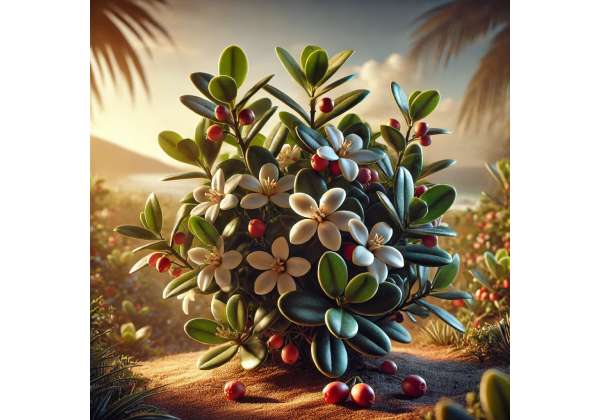
The plant has glossy green leaves, star-shaped white flowers, and red fruit that resembles a small plum or cranberry-sized berry depending on the cultivar. The fruit is the main part used for food and health-related purposes. It is commonly eaten fresh when fully ripe or turned into jams, jellies, sauces, chutneys, and preserves. Some people also use it in juice blends or fruit bars.
The safety line is simple but important: only the fully ripe fruit is considered edible. Unripe fruit and broken plant parts release a milky latex sap, which can irritate tissues and may cause stomach upset if ingested. That is one reason this plant should be treated more like a carefully handled functional fruit than a casual “pick any part and brew it” herb.
A useful practical point for home growers is that dwarf cultivars are often planted for landscaping, not food production. If your shrub has been treated with pesticides, fungicides, or ornamental plant sprays, do not eat the fruit unless the product label clearly allows edible use and the waiting period has passed. This is a common oversight with decorative plants.
From a traditional-use perspective, Carissa species as a group appear in ethnobotanical medicine in parts of Africa and Asia, but the strongest current evidence for C. macrocarpa itself is still preclinical. In other words, researchers are interested in the plant, but the best-supported day-to-day use today remains culinary: fully ripe fruit, eaten as food, in modest portions.
For most people, that food-first framing is the right starting point. It captures the real advantages of dwarf natal plum—nutrient value, antioxidant pigments, and versatility—while avoiding the biggest mistake: assuming every part of the plant is safe or medically proven.
Dwarf Natal Plum Key Compounds
The most important “key ingredients” in dwarf natal plum depend on which part of the plant you are talking about. For health-conscious readers, the fully ripe fruit is the most relevant part, and its standout compounds are anthocyanins and other phenolic compounds. These are the natural pigments and polyphenols that give the fruit its red to deep crimson color and much of its antioxidant potential.
In food and phytochemical studies, natal plum fruit is especially noted for cyanidin-based anthocyanins, including cyanidin-3-O-sambubioside and cyanidin-3-O-glucoside. These compounds are common in deeply colored fruits and are often studied for their ability to neutralize reactive molecules, support vascular health pathways, and influence carbohydrate-digesting enzymes in lab models. In plain terms, these pigments are a major reason natal plum is studied as a functional fruit.
Beyond anthocyanins, Carissa species contain a broader range of plant compounds, including:
- Flavonoids
- Phenolic acids
- Triterpenoids and related terpenes
- Steroidal compounds
- Lignans
- Some glycoside-type compounds reported across the genus
This wide chemical profile explains why researchers test Carissa extracts in different models, from antioxidant screens to antimicrobial and anti-inflammatory assays. It also explains why results can vary so much. A fruit pulp sample, a leaf methanol extract, and a stem extract are chemically different materials and should not be treated as interchangeable.
Leaf extracts of C. macrocarpa have shown diverse phytochemicals in screening studies, including phenols, flavonoids, tannins, saponins, and other secondary metabolites. These compounds are often linked to antioxidant and antimicrobial behavior in test systems. However, “contains phytochemicals” is not the same as “works as medicine in humans.” It is better to see these results as mechanistic clues rather than proof of a clinical effect.
One overlooked point is that the food matrix matters. Natal plum compounds may behave differently when the fruit is eaten alone, combined with fats or proteins, or processed into another form. This is a big deal for anthocyanins, which can degrade in digestion. Some research suggests certain combinations may improve the stability or bioaccessibility of these compounds, which means what you eat natal plum with can affect how much of its phytochemicals remain available during digestion.
So, if you want the simplest takeaway: the core active profile of dwarf natal plum comes from polyphenols—especially anthocyanins in the ripe fruit—and a wider set of phytochemicals in leaves and other plant parts. The fruit is the practical health-use choice. The leaves may be chemically interesting, but they belong in research settings, not home experimentation.
Does Dwarf Natal Plum Help
Dwarf natal plum can help, but mainly in the same way other deeply colored fruits help: as a supportive, nutrient-rich food with promising bioactive compounds. It is not a replacement for medical treatment, and it does not yet have strong human trial evidence for disease-specific claims. The most realistic benefits are nutritional and functional, with preclinical data pointing to several possible medicinal properties.
Here is the most practical way to think about its benefits.
- Food-level benefit: antioxidant-rich fruit intake
- Lab-supported potential: antimicrobial and anti-inflammatory activity
- Early metabolic interest: carbohydrate enzyme inhibition
- Research-stage use: specific extract effects in animal models
For everyday use, the strongest case is the ripe fruit itself. It contributes vitamin C and red-purple anthocyanins, which are widely valued for helping reduce oxidative stress burden in the diet. That does not mean it “detoxes” the body, but it can meaningfully improve the quality of your fruit intake, especially if you rotate it with berries and other colorful produce.
A second area of interest is glycemic support. In in vitro digestion and enzyme studies, natal plum anthocyanins and related phenolics have shown effects on alpha-glucosidase inhibition, a pathway relevant to how the body breaks down carbohydrates. This is interesting because slowing carbohydrate digestion may help moderate post-meal glucose rise. But the key limitation is that most of this work is not from human clinical trials. It suggests potential, not a guaranteed blood sugar outcome.
Leaf extracts also show antioxidant and antibacterial activity in laboratory testing, and some animal research on leaf fractions suggests anti-inflammatory and oxidative stress-related effects under specific conditions. These studies are useful for understanding mechanisms, but they are not the same as proving a home-prepared leaf tea is safe or effective. The extraction methods in research are standardized and often use solvents and doses that do not match household use.
Another real advantage is culinary versatility. Natal plum works in:
- Fresh fruit bowls
- Tart relishes
- Low-sugar compotes
- Yogurt toppings
- Chutneys with savory dishes
- Preserves and fruit spreads
This matters because the best “herbal” use for dwarf natal plum today is regular, food-based use that you can sustain. A fruit you actually eat twice a week is often more valuable than a trendy extract you buy once and stop using.
In short, yes, dwarf natal plum may help—primarily as a functional fruit with antioxidant and phytochemical value. The more dramatic medicinal claims remain promising but preliminary. If you keep that balance in mind, you can use the plant well without overestimating what the science has proven.
How to Use It Safely
The safest and most practical way to use dwarf natal plum is to treat it as an edible fruit, not a do-it-yourself medicinal herb. That means using only fully ripe fruit and avoiding the milky sap, unripe fruit, and improvised extracts from leaves, stems, or roots.
Start with identification and ripeness. Fully ripe natal plum fruit is usually red to deep red, softer than immature fruit, and less sharply bitter. Unripe fruit and damaged plant parts can release latex-like sap, which is one of the main reasons caution is needed. If you harvest from a home shrub, wear gloves if you are pruning or handling thorny branches, especially if you have sensitive skin.
Safe use options for ripe fruit include:
- Fresh, washed fruit (seed removed if needed for texture)
- Lightly cooked compote
- Jam or jelly
- Chutney
- Fruit sauce for savory foods
- Blended juice with other fruits
- Small-batch freezer puree
If the fruit is very tart, pair it with naturally sweet fruits instead of adding a lot of sugar. Natal plum combines well with apple, pear, orange, or berries. This can improve taste while keeping the fruit useful in a higher-fiber meal.
A few practical safety steps make a big difference:
- Confirm the plant is untreated.
- Ornamental shrubs are often sprayed.
- Do not eat fruit from recently treated plants.
- Harvest only ripe fruit.
- Skip green or partly green fruit.
- Discard damaged fruit with heavy latex leakage.
- Wash and inspect carefully.
- Thorns and sap can contaminate harvested fruit.
- Rinse under running water.
- Introduce it gradually.
- Start with a small serving to test tolerance.
- Watch for stomach upset or mouth irritation.
- Use food forms, not concentrated home extracts.
- Research extracts are not the same as home steeping.
- Safety of non-fruit medicinal use is not established.
If you are exploring “medicinal” use, a good middle ground is to use the fruit intentionally in a health-supportive pattern. For example, add ripe natal plum to breakfast or a snack two to four times per week, especially in place of ultra-processed sweets. That gives you consistent exposure to fruit polyphenols without introducing unnecessary risk.
One more point that is often missed: dwarf cultivars may fruit less heavily than larger forms, depending on variety and growing conditions. If your goal is nutrition rather than landscaping, fruit yield and ripeness consistency matter more than compact size. The plant can still be useful, but expectations should match the cultivar.
Used this way, dwarf natal plum becomes a thoughtful functional food—safe, realistic, and easier to maintain than an unproven supplement routine.
How Much Per Day
There is no clinically established medicinal dosage for dwarf natal plum (Carissa macrocarpa). That is the most important dose fact to know. No standard human dose has been defined for capsules, tinctures, leaf extracts, or “herbal” preparations, and research on the plant is still mostly preclinical.
Because of that, the most responsible dosing approach is food-based and conservative.
A practical food-use range for fully ripe fruit is:
- Starting amount: 30 to 60 g (about a small handful)
- Typical food serving: 80 to 150 g (about 1/2 to 1 cup, depending on fruit size)
- Juice or puree: 30 to 60 mL at first, then up to about 120 mL if well tolerated
These are not medical doses. They are practical serving ranges for introducing the fruit safely.
Timing also matters less than consistency. Natal plum does not act like caffeine or a sleep aid, so there is no best time of day for most people. A few common patterns work well:
- With breakfast, mixed into yogurt or oats
- With lunch, in a fruit side or relish
- As a snack, paired with nuts or plain yogurt
- With a main meal, in a tart chutney or sauce
If you are interested in blood sugar support, taking natal plum as part of a meal may be more useful than eating it alone, especially because food context affects digestion and polyphenol behavior. The goal is not to “dose” it aggressively, but to use it in a stable routine.
For preserves or jam, portion size should be smaller because sugar content rises fast:
- 1 to 2 tablespoons is a reasonable serving
- Use low-sugar preparation if blood sugar control is a concern
What about extracts? This is where people often overreach. Some animal studies use leaf fractions at measured doses in mg/kg, but those research doses do not translate directly into safe human self-dosing. Different extraction methods, solvents, and concentrations can change both effect and risk. Unless a standardized commercial product with clear safety testing is available, avoid extract-style dosing.
Duration is simple: food use can be ongoing if you tolerate it, the fruit is ripe, and it fits your diet. There is no evidence-based cycle such as “8 weeks on, 2 weeks off” for natal plum fruit.
A good rule is to reassess after 2 to 4 weeks of regular use. If you notice no benefit but enjoy the fruit, keep it as a food. If you notice stomach upset, reduce the amount or stop. If you are trying to address a medical condition, use natal plum as a dietary support only and keep your main treatment plan unchanged unless your clinician advises otherwise.
Side Effects and Who Should Avoid It
The side-effect profile of dwarf natal plum depends heavily on the plant part and ripeness. This is not a plant where “natural” automatically means safe. The fully ripe fruit is the edible portion. Unripe fruit, sap, and non-fruit plant parts require more caution.
The most common side effects from inappropriate use are digestive and irritation-related:
- Nausea
- Stomach upset
- Vomiting
- Diarrhea
- Mouth or throat irritation
- Eye irritation from sap contact
The milky sap is the main problem in many cases. It can leak from broken stems, leaves, or damaged unripe fruit. If it gets into the eyes, it can cause significant irritation. If it gets on the skin, some people may react more than others, especially those with sensitive skin or a history of latex-type sensitivities.
Potential interaction concerns are less clearly documented than with major medicinal herbs, but caution is still wise. Why? Because Carissa species contain diverse bioactive compounds, and concentrated extracts may have effects not seen with normal food use. If you are on multiple medications, especially for heart disease, diabetes, blood pressure, or chemotherapy support, avoid self-prescribing natal plum extracts.
Who should avoid medicinal use (and stick to clinician-approved care) includes:
- Pregnant people
- Breastfeeding people
- Young children
- People with known plant latex sensitivity
- People with severe digestive disorders
- Anyone using anticoagulants, diabetes drugs, or complex medication regimens
- Anyone considering leaf, root, or stem extracts
For these groups, even if fully ripe fruit is tolerated as food, medicinal use is a different category and should not be improvised.
A few practical safety rules help prevent most problems:
- Eat only fully ripe fruit.
- Avoid unripe fruit and all milky sap.
- Do not make leaf, stem, or root teas at home.
- Wash fruit well and remove any sap residue.
- Stop use if you develop stomach symptoms or irritation.
- Keep the plant away from unsupervised children and pets because of thorns and sap.
It is also worth noting that “dwarf natal plum” plants are often grown in yards and public landscapes. Fruit from roadside or heavily sprayed landscaping is not a good choice for consumption, even if ripe.
The overall safety message is balanced: ripe fruit can be a useful food, but the plant as a whole is not a free-for-all medicinal herb. Respecting that boundary is what makes natal plum use both safer and more practical.
What the Evidence Really Shows
The evidence for dwarf natal plum is promising, but still early. The strongest data are from phytochemical analysis, in vitro bioactivity studies, digestion models, and animal research. Human clinical trials are the major missing piece.
What researchers have shown with reasonable consistency is that Carissa macrocarpa contains meaningful bioactive compounds, especially polyphenols and anthocyanins. Fruit studies support its role as a functional food, and lab models suggest plausible mechanisms related to antioxidant activity and carbohydrate enzyme inhibition. This gives the plant scientific relevance, especially for nutrition and food science.
Researchers have also shown that the way natal plum is consumed can change what happens to its compounds during digestion. Some food-matrix studies found that combining natal plum with other foods can improve anthocyanin bioaccessibility in simulated digestion. That is a useful, practical insight because it supports a meal-based approach rather than an extract-only mindset.
Leaf studies add another layer. In vitro work and seasonal extract comparisons suggest antioxidant and antibacterial activity, and at least one animal study found that a leaf polar fraction reduced oxidative stress and inflammatory markers in a specific rat neurotoxicity model. These are important signals, but they do not prove the same effects in people, and they certainly do not validate home-made leaf remedies.
The key evidence limits are:
- Few to no human clinical trials for clear outcomes
- Large differences between fruit, leaf, stem, and extract preparations
- In vitro results that may not translate to human dosing
- Animal doses that cannot be converted directly into safe home use
- No standardized supplement products or dosing protocols
This is why the most honest conclusion is a “yes, but” answer.
- Yes, dwarf natal plum has real nutritional and phytochemical value.
- Yes, it has legitimate research interest.
- But no, it is not yet a clinically established herbal medicine with proven disease-treatment dosing.
For readers trying to make practical decisions, this evidence profile supports three good uses:
- Eat the ripe fruit as part of a varied diet.
- Use it for culinary variety and polyphenol intake.
- Avoid overclaiming medicinal effects or self-dosing extracts.
It also supports one important caution: if you are searching for a plant-based option for a serious condition such as diabetes, inflammation, or cancer support, natal plum should be considered complementary nutrition at most, not a replacement for medical care.
That may sound less exciting than supplement marketing, but it is far more useful. It lets you use the plant in a way that aligns with the evidence we actually have today.
References
- Phytochemistry, Pharmacology, and Nutraceutical Profile of Carissa Species: An Updated Review 2021 (Systematic Review) ([MDPI][1])
- Seasonal Change in Phytochemical Composition and Biological Activities of Carissa macrocarpa (Eckl.) A. DC. Leaf Extract 2022 ([MDPI][2])
- Co-Ingestion of Natal Plums (Carissa macrocarpa) and Marula Nuts (Sclerocarya birrea) in a Snack Bar and Its Effect on Phenolic Compounds and Bioactivities 2022 ([MDPI][3])
- Carissa macrocarpa Leaves Polar Fraction Ameliorates Doxorubicin-Induced Neurotoxicity in Rats via Downregulating the Oxidative Stress and Inflammatory Markers 2021 (Animal Study) ([MDPI][4])
- Natal plums – fragrant blooms, tasty fruit – UF/IFAS Extension Charlotte County 2017 (Extension) ([What’s Happening Around Florida][5])
Disclaimer
This article is for educational purposes only and does not diagnose, treat, or replace medical care. Dwarf natal plum has promising nutritional and preclinical research value, but there is no standardized medicinal dose and no established clinical treatment use for most conditions. Only fully ripe fruit is considered edible; unripe fruit, sap, and other plant parts may cause irritation or stomach upset. If you are pregnant, breastfeeding, taking prescription medicines, or managing a chronic condition, speak with a qualified healthcare professional before using natal plum for health purposes.
If you found this guide useful, please consider sharing it on Facebook, X, or your preferred platform to help others use plant remedies more safely and realistically.