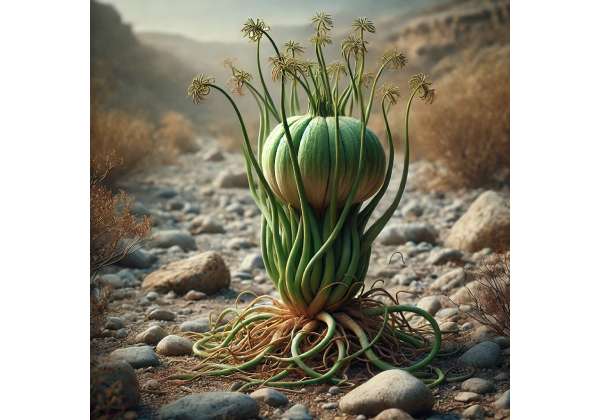
Ethiopian climbing onion, botanically known as Bowiea volubilis, is one of those medicinal plants that asks for real caution as well as curiosity. It is a bulbous African species with a striking, almost sculptural appearance, and a long history of traditional use in parts of southern and eastern Africa. Ethnobotanical records describe it for respiratory complaints, bladder and reproductive concerns, pain, swelling, and other difficult conditions. Modern laboratory research has also found compounds with anti-inflammatory, cytotoxic, and antimicrobial interest.
Yet this is not a gentle household herb. Bowiea volubilis contains cardiac glycosides and related steroid compounds that may help explain both its traditional reputation and its toxicity. That makes it very different from ordinary kitchen or tea herbs. The modern evidence base is still limited, mostly preclinical, and there is no well-established safe oral home dose.
The most honest way to understand Ethiopian climbing onion is to hold both truths at once: it is a culturally important medicinal plant with noteworthy pharmacology, and it is also a potentially dangerous species that should not be treated like a casual natural remedy.
Core Points
- Bowiea volubilis has traditional uses for respiratory, bladder, pain, and inflammatory complaints, but most modern evidence is still preclinical.
- Its strongest known active groups are cardiac glycosides and related steroid compounds, which are also the main reason for toxicity concerns.
- No evidence-based safe oral home dose in mg or g has been established for modern self-use.
- Internal use is a poor choice for people with heart disease, pregnancy, breastfeeding, childhood, or anyone taking prescription medicines with narrow safety margins.
- For most readers, the plant is better understood as a toxic ethnomedicinal species than as a practical self-care herb.
Table of Contents
- What is Bowiea volubilis
- Key compounds in Bowiea
- Does Bowiea really help
- How has it been used
- Is there a safe dose
- Safety and who should avoid it
- What the evidence actually says
What is Bowiea volubilis
Bowiea volubilis is a bulbous perennial plant native to parts of southern and eastern Africa, including regions where it has long been used in traditional medicine. Despite the common name “climbing onion,” it is not a true onion in the culinary sense and should never be treated as a food. The plant forms a large, exposed green bulb and sends up slender, twining, leaf-like stems that create a tangled climbing habit. Its unusual appearance has made it popular as an ornamental plant, but its medicinal history is far older than its modern decorative role.
In ethnomedicine, the bulb is the main part used. Traditional records describe Bowiea volubilis for a wide range of complaints, including headaches, muscular pain, infertility, bladder problems, venereal conditions, coughs, colds, and respiratory infections. That broad range suggests the plant was valued less as a single-purpose remedy and more as a powerful general medicinal species used when symptoms felt serious or persistent. In some settings it was also associated with protective, cleansing, or ritual significance, which is common for plants that occupy a strong place in local healing systems.
What makes Bowiea especially important is that it sits in the narrow space between valued medicine and real poison. Many traditional plants can be irritating or overly strong in the wrong person. Bowiea is different. The same chemistry that may contribute to its pharmacological interest also creates substantial risk. This is why a modern article on the plant cannot simply list benefits and move on. Safety has to shape the entire discussion.
A useful way to think about Bowiea volubilis is this:
- It is a historically important medicinal bulb.
- It has meaningful pharmacological activity.
- It is not a routine wellness herb.
- It is not suitable for experimental self-dosing.
- It is best approached as a high-risk ethnomedicinal plant rather than a general supplement.
Its story also overlaps with conservation. Because the bulb is the part most commonly collected and sold, wild harvesting can damage natural populations. That makes Bowiea notable not only medically, but ecologically. Plants that are simultaneously in demand, slow to replace, and pharmacologically potent often face pressure from both trade and overuse.
For readers used to gentler herbs, this context matters. Ethiopian climbing onion is not in the same category as peppermint, fennel, or lemon balm. It belongs closer to plants whose value is inseparable from their toxicity. In that sense, it resembles other cardiac-glycoside plants such as foxglove and its powerful heart-active compounds, where therapeutic promise and danger have always lived side by side.
That is the right starting point for the rest of the article. Bowiea volubilis is medicinally interesting, culturally significant, and scientifically unfinished. It also demands far more respect than its ornamental appearance might suggest.
Key compounds in Bowiea
The chemistry of Bowiea volubilis is the main reason the plant continues to draw scientific attention. It helps explain why the bulb was used traditionally, why laboratory studies keep finding biological activity, and why the plant can also be dangerous. The most important compounds reported for Bowiea are cardiac glycosides and related steroidal substances, especially bufadienolide-type constituents. These are the compounds that shape the plant’s strongest pharmacological identity.
Cardiac glycosides are not mild secondary metabolites. They can influence the sodium-potassium pump in cells and have direct effects on cardiac rhythm and contractility. In carefully controlled pharmaceutical contexts, this general class of compounds has been medically important. In crude plant form, however, the therapeutic window can be narrow and unpredictable. That is the central problem with Bowiea.
The literature also describes other compound groups in Bowiea volubilis, including:
- Steroid compounds with anti-inflammatory or cytotoxic interest
- Saponins
- Flavonoids
- Alkaloid-like or alkaloid-reported constituents in some reviews
- Additional minor phytochemicals that may vary by plant part and extraction method
One of the challenges here is consistency. The modern literature on Bowiea is still relatively sparse, and not every publication emphasizes the same compound profile. The cardiac glycosides are the most stable and most important finding across sources. Other groups, such as alkaloids and saponins, appear in more recent discussions but are not yet tied to a strong clinical-use framework. That means the safest way to describe the herb is to center the cardiac glycosides first and treat the rest as supportive but less definitive.
From a practical point of view, the likely actions of these compounds include:
- Cardiotonic-like activity
This is more a toxicological and mechanistic observation than a usable home benefit. It helps explain why the plant may affect the heart and why misuse can be dangerous. - Anti-inflammatory potential
Steroid-like constituents and related compounds have shown anti-inflammatory promise in early research. - Antimicrobial and antifungal interest
Some extracts have shown activity in laboratory systems, though the results are uneven and often weaker than traditional reputation would suggest. - Cytotoxic and anticancer interest
This area attracts attention because cardiac glycosides and related steroid compounds often show strong cell-line activity. But cell-line activity is not the same thing as safe human therapy.
This distinction matters more than usual with Bowiea. It is easy to hear “cardiac glycosides” and assume the plant must therefore be therapeutically powerful in a practical way. In truth, the same chemistry that makes it biologically active also makes it difficult to use safely outside controlled settings.
A balanced view is that Bowiea’s compound profile explains why the plant has been remembered for centuries. It probably is not medicinally inert. At the same time, its most distinctive chemistry does not point toward casual supplementation. It points toward a plant that should be studied carefully, handled cautiously, and never romanticized.
That is why the phrase “key ingredients” can be slightly misleading here. With Bowiea volubilis, the key compounds are also the key risk factors. The plant’s chemistry is its promise and its warning at the same time.
Does Bowiea really help
The most responsible answer is that Bowiea volubilis may help in some traditional-use contexts, but modern evidence does not support confident self-treatment claims. That middle ground is important. The plant has enough ethnobotanical depth and laboratory activity to justify scientific interest. It does not have enough good human evidence to justify broad wellness promises.
The best-supported traditional themes include respiratory complaints, bladder-related symptoms, pain, inflammatory conditions, and some reproductive uses. These uses have been documented across southern African medical traditions and are not random or isolated mentions. That alone gives Bowiea more ethnomedicinal weight than many trendy herbs. Still, traditional use is not the same as proven clinical efficacy, especially when the plant has serious toxicity concerns.
Where the evidence looks somewhat promising:
- Inflammation-related complaints: reviews repeatedly describe anti-inflammatory potential as one of the stronger directions in the literature.
- Respiratory and cough traditions: these uses are frequent in ethnobotanical records, though modern clinical confirmation is lacking.
- Bladder and urinary complaints: the species appears repeatedly in broader reviews of southern African plants used for urinary conditions, but this does not mean it is a validated urinary remedy.
- Antimicrobial or antiviral interest: some studies have found activity, but overall evidence is mixed and not strong enough for practical recommendations.
- Cytotoxic activity: early findings can look impressive, but cell toxicity is not a license for human cancer use.
Where claims become much less reliable:
- “Natural heart tonic”
- “Safe blood purifier”
- “General immune booster”
- “Cancer herb”
- “Daily cleansing bulb”
- “Natural fertility medicine”
Those kinds of claims turn a difficult plant into an easy marketing story, and Bowiea does not deserve that simplification. In fact, the plant is a good example of why traditional reputation and modern supplement logic do not always fit neatly together.
A realistic reader outcome from this section should be simple. Bowiea volubilis appears to have real bioactivity, and its traditional use was likely based on noticeable effects. But the evidence does not justify using it as a modern self-care herb. The strongest benefits are still largely inferential:
- traditional continuity across generations
- chemically plausible anti-inflammatory action
- some laboratory antimicrobial and cytotoxic findings
- repeated use in bladder, respiratory, and pain-related remedies
The problem is that the same plant also has cardiotoxic potential and uncertain dosing. That shifts the benefit-risk balance sharply. A mildly beneficial herb with mild risks is one thing. A potentially beneficial herb with cardiac-glycoside toxicity is another.
For readers looking for low-risk urinary support, a more conventional herb such as uva ursi for bladder-related complaints makes more practical sense than experimenting with Bowiea. That does not diminish Bowiea’s ethnomedical importance. It simply places it where it belongs: more appropriate for careful study than for home use.
So yes, Bowiea may truly help in certain traditional and experimental settings. But the current evidence does not support treating it like a broadly useful modern supplement. Its promise remains real, but incomplete, and tightly limited by safety.
How has it been used
Traditional use of Bowiea volubilis has centered on the bulb, and the bulb has been incorporated into remedies in several different ways depending on the community, the condition being treated, and the local healing system. Ethnobotanical records commonly describe oral liquid preparations, mixed remedies with other plants, and external applications. Some uses appear strongly medicinal, while others sit closer to ritual cleansing, reproductive support, or culturally specific protection practices.
The plant’s traditional indications are broad. Reported uses include:
- coughs, colds, and respiratory infections
- headaches and body pain
- muscular discomfort
- bladder complaints and cystitis-related symptoms
- infertility and reproductive concerns
- venereal and sexually related conditions
- swelling and edema-like complaints
That breadth can be interpreted in two ways. On one hand, it shows that the plant occupied an important place in traditional systems. On the other, it suggests that the herb was often used because it was seen as strong, not because it was narrowly targeted to one modern diagnosis. That difference matters. Traditional medicine often groups symptoms by pattern, strength, or body effect rather than by single-disease labels.
Preparation style also matters. In broad terms, Bowiea has been used as:
- Aqueous preparations
Decoctions or infused liquids appear often in traditional practice and in studies that try to reflect those practices. - Bulb-based combinations
The bulb may be used with other medicinal plants, which makes it even harder to isolate a modern dose or mechanism. - Topical applications
Some ethnomedical records describe external use for pain, skin problems, or localized complaints. - Mixed cultural or protective remedies
In some traditions, the plant’s importance is not purely pharmacological.
For modern readers, the crucial point is that “traditional use” does not automatically mean “good idea to copy.” Many historical remedies involved potent plants, variable preparation methods, and experienced practitioners who understood local materials in ways that are hard to reproduce from a supplement label or a social media post.
That is especially true here. The bulb is the most medicinally valued part, but it is also the part most closely associated with toxicity. Any attempt to modernize Bowiea into a capsule, tincture, or casual tea runs straight into the problem of standardization. How much glycoside is present? Which extract was used? Was the material correctly identified? Was it fresh, dried, mixed, or aged? Those questions are not side details. They are the difference between a traditional plant with power and a dangerous plant used badly.
There is also an important practical lesson hidden in the tradition itself: many strong traditional plants were used episodically, not as everyday tonics. That point often gets lost in modern wellness culture. A high-risk plant like Bowiea was not meant to be folded into a vague “daily health routine.”
So how has it been used? Historically, quite widely. How should that influence current use? Mostly by teaching caution. Traditional use tells us the plant matters. It does not remove the need for skepticism, toxicology, or modern judgment. In fact, with Bowiea volubilis, it makes those things more necessary, not less.
Is there a safe dose
For modern self-treatment, no evidence-based safe oral dose has been established for Bowiea volubilis. That is the most important dosing conclusion and the one that should guide everything else. Unlike common herbal teas or standardized low-risk botanicals, this plant does not have a modern consensus range in grams, milliliters, or capsule strength that can be responsibly recommended for home use.
This lack of a modern dose is not just because research is incomplete. It is also because the plant contains cardiac glycosides and has a narrow and uncertain safety margin. In other words, the absence of a safe dose is not an inconvenience in the literature. It is part of the plant’s core risk profile.
A few points explain why dose guidance is so difficult:
- The bulb is chemically active and potentially toxic.
- Traditional preparations were variable.
- Mixed-herb formulas make exact attribution difficult.
- Modern studies are mostly preclinical rather than clinical.
- There is no strong human trial base establishing a therapeutic oral range.
Some interaction research that used traditionally sourced aqueous extracts noted that traditional doses of medicinal herbs in this setting could vary widely, often involving large quantities of raw material extracted and taken in repeated portions. That tells us the historical use was substantial, but it does not create a safe modern dose for Bowiea specifically. At most, it tells us why interaction risk and toxicity deserve even more respect.
A practical way to read the dosing question is this:
- Safe modern self-dose: not established
- Evidence-based oral dose for home use: not established
- Short-term internal use without supervision: not advisable
- Pregnancy, breastfeeding, children, heart disease, or polypharmacy: avoid completely
People sometimes assume that if a plant was used traditionally, there must be a small “safe beginner dose.” Bowiea is one of the plants that challenges that assumption. With cardiac-active plants, very small differences in preparation and sensitivity can matter. That makes the idea of a casual starter dose misleading.
Timing and duration are also unresolved. Since no reliable oral self-dose exists, there is no trustworthy answer to questions such as “how many times daily” or “for how many weeks.” Any article that gives a neat modern capsule-style dose for Bowiea without strong qualification is overselling certainty that the literature does not actually provide.
The most honest dosage advice is therefore negative but useful:
- Do not assume the ornamental bulb is medicinally safe.
- Do not prepare homemade oral remedies from it.
- Do not copy traditional doses from informal sources.
- Do not combine it with other herbs or drugs and hope the dose will average out safely.
This can feel unsatisfying to readers who expect every herb profile to end with a number. But with high-risk plants, “no safe self-dose is established” is not a weak answer. It is the strongest honest answer available.
If a reader’s true goal is anti-inflammatory, urinary, or skin support, the better question is not how much Bowiea to take. It is which safer plant could serve the same purpose with less risk. In the case of topical skin support, something gentler such as calendula for irritated or healing skin is a more realistic place to start than Ethiopian climbing onion.
Safety and who should avoid it
Safety is the most important part of any practical discussion about Bowiea volubilis. The plant’s medicinal identity cannot be separated from its toxicity. Reviews and toxicology discussions consistently point to cardiac glycosides and related bufadienolide-type compounds as the main reason the bulb may be dangerous. Reports in the literature also note that both humans and domestic animals have been harmed by exposure.
The main concern is cardiotoxicity. Ingested cardiac glycosides can disturb electrical conduction in the heart and alter rhythm in ways that range from mild symptoms to medical emergency. That does not mean every exposure causes catastrophe, but it does mean the plant is unsuitable for casual or unsupervised internal use.
Possible symptoms of toxicity may include:
- nausea and vomiting
- abdominal discomfort
- dizziness or weakness
- slowed pulse or irregular heartbeat
- visual or neurologic disturbance
- faintness, collapse, or serious rhythm instability
Another underappreciated issue is interaction risk. An in vitro study using traditionally prepared herbal extracts found that Bowiea volubilis could inhibit CYP1A2 and CYP3A4, two important drug-metabolizing pathways. That does not prove the exact same effect will occur in every person at every exposure, but it is a meaningful caution sign. It suggests the plant could theoretically alter the metabolism of prescription medicines, especially in people already using several drugs.
People who should avoid medicinal use entirely include:
- pregnant people
- breastfeeding people
- children
- people with heart disease or arrhythmia
- anyone taking digoxin or other cardiac medicines
- people using narrow-therapeutic-index drugs
- people with complex prescription regimens
- anyone with unexplained dizziness, fainting, or palpitations
There is also no good reason for healthy adults to experiment with the plant simply because it is marketed as “African traditional medicine” or “natural.” Natural origin does not reduce glycoside toxicity. In some cases, it increases uncertainty because plant strength and preparation are poorly standardized.
External use is sometimes assumed to be safer, but even that should not be treated lightly. Damaged skin, mucosal exposure, accidental ingestion, and hand-to-mouth transfer all complicate the picture. A high-risk plant does not become harmless simply because it is not swallowed as a capsule.
A smart safety framework for Bowiea looks like this:
- Regard the bulb as medicinally potent and potentially poisonous.
- Keep it away from children and pets if grown ornamentally.
- Avoid internal use outside qualified traditional or research settings.
- Seek urgent medical help if ingestion is followed by vomiting, weakness, or rhythm symptoms.
That may sound more severe than the safety section of a typical herb article, but the plant justifies it. Bowiea volubilis is not a “generally safe herb with a few precautions.” It is a traditional medicinal species with enough toxicity concern that modern self-treatment is usually the wrong choice.
Used in this way, safety advice does not erase the plant’s cultural value. It simply respects the chemistry instead of pretending tradition alone neutralizes the risk.
What the evidence actually says
The evidence for Bowiea volubilis is intriguing, but still too limited for confident clinical claims. That is the simplest and most accurate summary. The plant has a substantial ethnobotanical record, several reviews that gather its phytochemistry and traditional uses, and a number of in vitro or preclinical studies pointing toward anti-inflammatory, cytotoxic, antimicrobial, and interaction-related effects. What it does not have is a strong body of modern human clinical trials that would support routine oral use.
The evidence is strongest in these areas:
- Traditional documentation: the plant is clearly established in southern African ethnomedicine.
- Phytochemistry: cardiac glycosides and steroid-related compounds are well supported as central features.
- Preclinical activity: anti-inflammatory and cytotoxic directions are plausible and repeatedly discussed.
- Toxicity concern: the risk profile is not hypothetical. It is consistently recognized in reviews and toxicology literature.
- Interaction potential: laboratory work suggests the plant may interfere with major drug-metabolizing enzymes.
The evidence is weaker in these areas:
- proven human benefit for respiratory complaints
- proven human benefit for bladder complaints
- standardized safe dosing
- long-term safety
- clear therapeutic superiority over safer herbs
- validated modern formulations
There is also an important nuance in the antimicrobial story. Broader reviews show that Bowiea has been used traditionally for urinary and sexually related infections, but direct experimental support is uneven. Some antimicrobial findings are modest or inconclusive. That gap matters because it reminds readers that traditional popularity does not always equal strong modern validation.
Another evidence limitation is preparation. Different studies may examine crude aqueous extracts, ethanol extracts, isolated compounds, or mixed traditional remedies. Those are not interchangeable. A promising result from one extract does not establish that the whole bulb, used another way, will have the same effect or safety profile. This is one of the main reasons the plant remains scientifically interesting yet clinically unresolved.
A practical evidence ranking would look like this:
- Strong traditional and ethnobotanical importance
- Strong toxicological caution
- Moderate phytochemical plausibility
- Limited but suggestive preclinical pharmacology
- Weak direct human therapeutic evidence
That ranking helps prevent two common mistakes. The first is dismissing the plant entirely as folklore. The second is inflating it into a proven modern remedy. Neither is accurate. Bowiea volubilis deserves respect as a genuine medicinal species with real biological activity. It also deserves restraint because the kind of evidence people need for safe modern use is still missing.
For most readers, the research leads to one clear conclusion: Ethiopian climbing onion is better treated as a plant of ethnopharmacological and toxicological importance than as a practical self-care supplement. It may eventually yield clearer therapeutic insights, perhaps through isolated compounds or better standardization. At present, though, the evidence supports caution much more strongly than routine use.
That may be less exciting than many herbal marketing claims, but it is more useful. With a plant like Bowiea, good judgment is part of good science.
References
- Bowiea volubilis: From “Climbing Onion” to Therapeutic Treasure-Exploring Human Health Applications 2023 (Review)
- A Review of Plant-Based Therapies for the Treatment of Urinary Tract Infections in Traditional Southern African Medicine 2021 (Review)
- An Inventory of South African Medicinal Plants Used in the Management of Sexually Transmitted and Related Opportunistic Infections: An Appraisal and Some Scientific Evidence (1990–2020) 2022 (Review)
- Ethnobotany, therapeutic value, phytochemistry and conservation status of Bowiea volubilis: A widely used bulbous plant in southern Africa 2015 (Review)
- The Inhibitory Activity of the Extracts of Popular Medicinal Herbs on CYP1A2, 2C9, 2C19 and 3A4 and the Implications for Herb-Drug Interaction 2014
Disclaimer
This article is for educational purposes only and is not medical advice. Ethiopian climbing onion is a potentially toxic medicinal plant, and it should not be used as a substitute for professional diagnosis, prescribed treatment, or emergency care. Anyone with heart disease, medication use, pregnancy, breastfeeding, or concern about accidental ingestion should seek qualified medical guidance rather than attempt self-treatment. If poisoning is suspected, urgent medical evaluation is appropriate.
If this article helped you, please share it on Facebook, X, or any other platform where thoughtful plant education can reach more readers.