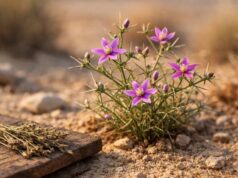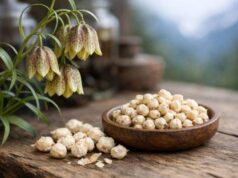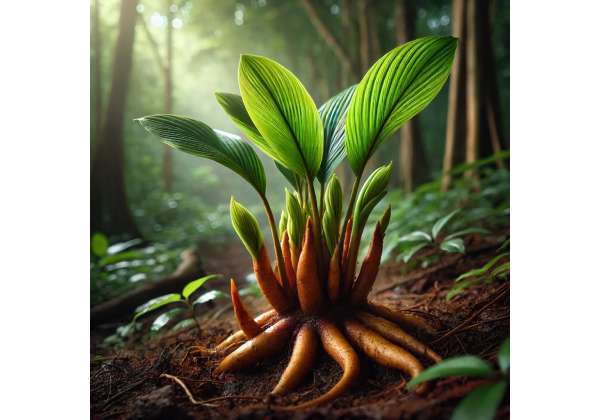
Fingerroot is a slender, aromatic rhizome from the ginger family that is widely used in Thai, Indonesian, Malaysian, and other Southeast Asian cuisines. Botanically known as Boesenbergia rotunda, it is also called krachai, Chinese ginger, or temu kunci, depending on the region. Its appeal lies in the way food and medicine overlap: the rhizome brings a peppery, warm, slightly camphor-like flavor to soups, curries, and stir-fries, while traditional medicine has used it for digestive discomfort, sluggish appetite, oral complaints, and inflammatory conditions.
Modern research gives fingerroot a credible but still developing profile. Its rhizome contains distinctive flavonoids and chalcones, especially panduratin A, pinostrobin, pinocembrin, and alpinetin, which have shown antimicrobial, anti-inflammatory, antioxidant, and metabolic effects in laboratory and animal studies. Human evidence is narrower. The clearest clinical signal so far is for functional dyspepsia, where a standardized extract showed meaningful symptom improvement over a short course. That makes fingerroot promising, but not proven for every headline claim now attached to it.
Quick Facts
- Fingerroot is most credible as a digestive herb and culinary spice, with the best human evidence in functional dyspepsia.
- Its most studied compounds include panduratin A, pinostrobin, pinocembrin, and alpinetin, which help explain its antimicrobial and anti-inflammatory activity.
- The main human study used 350 mg extract powder three times daily, totaling 1,050 mg per day for 4 weeks.
- Strong claims for weight loss, sexual performance, or antiviral treatment still rely mostly on laboratory and animal data.
- Pregnant or breastfeeding people, children, and anyone taking multiple medicines should avoid unsupervised medicinal use.
Table of Contents
- What Is Fingerroot
- Key Ingredients and Active Compounds
- What Fingerroot May Help With
- How to Use Fingerroot
- Fingerroot Dosage and Timing
- Side Effects and Who Should Avoid It
- What the Research Actually Says
What Is Fingerroot
Fingerroot is a rhizomatous herb in the Zingiberaceae family, the same broad botanical group that includes ginger, turmeric, and galangal. Unlike the knobby, chunky shape of common ginger, fingerroot produces elongated, finger-like underground stems, which is how it earned its English name. In Southeast Asian kitchens, the rhizome is valued for both fragrance and heat. In traditional herbal systems, it has also been used as a warming digestive, an appetite stimulant, and a support herb for pain, stagnation, and oral complaints.
The part used most often is the rhizome. It can be fresh, dried, powdered, or extracted. In food, fingerroot is commonly added to curries, soups, stir-fries, dipping sauces, fish dishes, and herbal broths. In traditional medicine, the same rhizome has been prepared as a decoction, infusion, paste, or alcohol extract. That dual role matters because fingerroot is one of those plants that sits naturally between spice rack and materia medica.
Naming can be confusing. Older scientific and trade references sometimes use Boesenbergia pandurata or related taxonomic forms, while current usage most often centers on Boesenbergia rotunda. Readers may also see local names such as krachai in Thailand and temu kunci in Indonesia. These labels usually point to the same medicinally relevant plant, but product labels are still worth checking carefully.
Traditional uses are broad. They include digestive upset, bloating, reduced appetite, diarrhea, stomach discomfort, oral infections, inflammatory pain, and general weakness after illness. Some traditions also associate fingerroot with reproductive vigor and circulation. Those older uses help explain why the plant remains popular in functional foods and herbal products. Still, tradition and evidence are not the same thing. The fact that fingerroot has been widely used does not mean every folk indication has been confirmed in humans.
Modern interest in fingerroot rose for several reasons. First, its rhizome turned out to be rich in unusual flavonoids and chalcones with clear biological activity. Second, antimicrobial and anti-inflammatory studies suggested it might be useful beyond ordinary culinary spice levels. Third, a human trial in functional dyspepsia gave the plant a more serious clinical foothold. Even so, most modern claims still sit in the “promising but preliminary” category.
For practical purposes, fingerroot is best understood as a traditional food-medicine herb with a strong cultural history, a distinctive phytochemical profile, and one reasonably relevant human use case in digestive support. It is less accurate to present it as a proven treatment for obesity, viral illness, fertility problems, or cancer. Those ideas are mainly research directions, not established outcomes.
As a culinary cousin of ginger and related warming rhizomes, fingerroot fits naturally into digestive and aromatic preparations, but its chemistry gives it a character of its own.
Key Ingredients and Active Compounds
Fingerroot’s medicinal reputation comes from a dense mix of flavonoids, chalcones, phenolic compounds, volatile constituents, and other secondary metabolites. Recent reviews describe more than 200 identified compounds from different parts of the plant, though the rhizome remains the main medicinal source. In practice, a smaller group of compounds accounts for most of the current research conversation.
The best-known constituents include:
- Panduratin A
- Pinostrobin
- Pinocembrin
- Alpinetin
- Cardamonin
- Boesenbergin-related chalcones
- Kaempferol and other minor flavonoids
Panduratin A is the compound most often highlighted in fingerroot research. It is a prenylated chalcone associated with antimicrobial, anti-inflammatory, metabolic, and antiviral laboratory effects. It also shows up in pharmacokinetic work because researchers treat it as a major marker compound. In plain language, panduratin A is one of the main reasons fingerroot attracts more scientific attention than many culinary spices.
Pinostrobin and pinocembrin are flavanones that appear repeatedly in chemical analyses of the rhizome. They are relevant to antioxidant activity, inflammation-related pathways, and some metabolic effects seen in preclinical studies. Alpinetin is another notable flavonoid, often discussed for anti-inflammatory and cellular signaling effects. Cardamonin, a chalcone found in fingerroot and some related plants, has also been studied for inflammatory and anticancer mechanisms in laboratory systems.
This chemistry matters because it helps explain why fingerroot is not simply “ginger by another name.” The ginger family shares aromatic and digestive themes, but the dominant compounds can be quite different from plant to plant. Fingerroot is especially rich in chalcones and flavonoids that push it toward antimicrobial, oral-health, and signaling-based anti-inflammatory research. That gives it a profile somewhat distinct from galangal and other aromatic rhizomes often used in similar cuisines.
Researchers usually group fingerroot’s potential actions into a few functional buckets:
- Antimicrobial activity, especially against oral and gastrointestinal microbes
- Anti-inflammatory signaling
- Antioxidant activity
- Digestive support
- Possible metabolic effects involving glucose handling and adipogenesis
- Tissue-protective activity in animal models
One practical issue is standardization. A fresh rhizome in a curry, a dried powder capsule, and a concentrated extract may all be “fingerroot,” but they do not deliver the same chemical profile. Extraction method matters. Supercritical carbon dioxide extraction, ethanol extraction, and simple powdered rhizome each shift the concentration and bioavailability of active compounds. Some extracts are deliberately standardized around panduratin A or related markers, while many retail products are not standardized at all.
That helps explain why users often hear contradictory stories. A person using small culinary amounts may feel little besides digestive warmth and flavor. A person using a concentrated supplement may be chasing antimicrobial or anti-inflammatory effects supported only by early research. Without knowing the plant part, extraction method, and marker compounds, it is hard to compare products in a meaningful way.
The big takeaway is that fingerroot’s medicinal identity is chemically plausible. Its active compounds are real and unusually interesting. But chemistry alone does not prove a health outcome. It only tells us that the plant has the right kind of complexity to deserve further study.
What Fingerroot May Help With
Fingerroot is often promoted for far more conditions than current evidence can justify. The most useful way to assess its benefits is to separate what has some human support from what still belongs mainly to laboratory and animal research.
The best human evidence currently points to digestive support, especially functional dyspepsia. In a randomized placebo-controlled trial, adults with functional dyspepsia who took fingerroot extract for four weeks reported significantly greater symptom improvement than the placebo group. That finding matters because it gives fingerroot one real clinical lane rather than leaving it entirely in preclinical territory. It does not prove that the plant treats every form of stomach pain or indigestion, but it supports its traditional use for upper digestive discomfort.
Digestive-related uses that make the most sense include:
- Functional dyspepsia
- Bloating or post-meal discomfort
- Reduced appetite linked to sluggish digestion
- Mild digestive heaviness after rich meals
Beyond digestion, fingerroot shows interesting antimicrobial and oral-health potential. Laboratory work suggests that extracts and purified compounds may inhibit oral pathogens, fungal growth, and biofilm formation. This is one reason fingerroot is increasingly discussed in periodontal and oral-care research. Still, most of that evidence is preclinical. At present, it is more accurate to say fingerroot is a promising oral-health herb than a proven dental treatment.
Inflammation is another major theme. Fingerroot compounds can modulate inflammatory mediators in cell and animal studies, which may help explain traditional use in pain, swelling, and post-illness recovery. Some animal models also suggest tissue-protective effects in the stomach, kidney, and heart under experimental stress. Those findings are scientifically valuable, but they are not a green light to use fingerroot as a stand-alone treatment for serious inflammatory disease.
Other popular claims need more restraint:
- Weight loss and anti-obesity claims are still mostly mechanistic or animal-based.
- Blood sugar support looks promising in vitro and in animals, but there is no robust human dosing framework for diabetes care.
- Sexual-health and aphrodisiac claims remain largely traditional or preclinical.
- Antiviral headlines, including pandemic-era attention, came mainly from cell, animal, and pharmacology studies rather than established human treatment trials.
This is where practical specificity helps. Fingerroot may be useful for a person with mild functional dyspepsia who wants a carefully chosen herbal trial. It is much less defensible as a self-prescribed remedy for diabetes, obesity, liver disease, infertility, or viral infection. The same herb can be both promising and overmarketed.
Because fingerroot sits in the ginger family, readers often compare it with curcuma and other anti-inflammatory rhizomes. That comparison is helpful only up to a point. Turmeric is more associated with curcuminoids and longer-term inflammatory support, while fingerroot has a more distinctive digestive and antimicrobial research profile.
So what does fingerroot help with most realistically right now? Digestive comfort first, oral-health potential second, and broader anti-inflammatory or metabolic interest third. Everything beyond that should be described as an active area of research, not settled herbal fact.
How to Use Fingerroot
Fingerroot can be used in three main ways: as a food, as a traditional household preparation, or as a standardized supplement. The right form depends on the goal. Culinary use is the gentlest and easiest starting point. Supplement use is more relevant when someone is trying to reproduce the kind of dosing used in research, particularly for digestive complaints.
In food, fresh fingerroot is sliced, crushed, pounded, or blended into curry pastes, soups, broths, stir-fries, and sauces. It pairs especially well with coconut-based dishes, seafood, poultry, and aromatic herb mixtures. Culinary use is not just about flavor. Many traditional systems see this food-level use as part of digestive support, especially for appetite, bloating, and post-meal heaviness.
Common practical forms include:
- Fresh rhizome in cooking
- Dried rhizome powder
- Decoction or infusion
- Capsules made from powdered rhizome
- Standardized extract tablets or capsules
- Oral-care formulas, usually experimental or specialty products
A household decoction is one of the older medicinal preparations. This usually involves simmering sliced rhizome in water to produce a warming, aromatic liquid. Traditional users may take it before or after meals for digestive discomfort. The main drawback is inconsistency. The amount of active compounds can vary a great deal depending on the plant source, age of the rhizome, storage conditions, and simmering time.
Standardized extracts are more useful when the goal is predictability. This matters because fingerroot research often focuses on concentrated preparations rather than food-level use. A good product should list the plant part, amount per serving, extraction type, and any standardized marker compounds. Labels that say only “fingerroot complex” without detail are harder to judge.
A practical approach to use looks like this:
- Decide the goal first.
- For flavor and gentle digestive warmth, use it in food.
- For a structured herbal trial, use a defined supplement.
- Choose one preparation rather than mixing many forms.
- Take oral products with or after food unless the label suggests otherwise.
- Track symptoms, especially if using it for dyspepsia or post-meal discomfort.
- Reassess after a clear trial window instead of drifting into indefinite use.
People often assume that because fingerroot is a food herb, concentrated supplements must also be automatically safe. That is not always true. Culinary exposure and extract exposure are very different. A spoonful of curry paste is not the same as a high-potency capsule standardized for panduratin A-rich constituents.
Fingerroot can also be combined sensibly with other culinary digestive herbs. In traditional food-based practice, it often sits alongside herbs such as coriander and related aromatic digestives. But once supplements enter the picture, it is usually better to keep the formula simple enough that benefits and side effects can be traced back to the right ingredient.
The most reliable use case remains a short, intentional course for digestive complaints or culinary inclusion as part of regular meals. Broader medicinal use should stay cautious until stronger human data arrive.
Fingerroot Dosage and Timing
Fingerroot does not yet have a universally accepted, evidence-based dose for all health uses. That is the most important dosage fact to understand. The best human dosing information comes from one clinical trial in functional dyspepsia, where patients received 350 mg of extract powder three times daily for four weeks. That totals 1,050 mg per day and is the clearest research-backed adult regimen currently available.
This does not mean 1,050 mg per day is the right dose for every goal. It means that if someone wants the most defensible reference point for medicinal use, this is the one human regimen that has actual trial support. Outside that setting, fingerroot dosing becomes much less certain because different supplements vary widely in extraction method, potency, and marker-compound content.
A practical dosing framework is:
- Culinary use:
- Food-level use has no standardized medicinal dose.
- Amounts depend on the recipe and are generally guided by flavor tolerance.
- Supplement use:
- Follow the exact label of a clearly identified product.
- Prefer products that state extract strength and plant part.
- Human trial reference:
- 350 mg extract powder, three times daily, for 4 weeks in functional dyspepsia
Timing is straightforward. Oral medicinal forms are best taken with or after meals unless the product instructs otherwise. This reduces the chance of stomach irritation and also fits the herb’s digestive role. People using fingerroot specifically for post-meal discomfort often find that consistency matters more than the exact hour.
A structured trial is better than casual long-term use. One useful pattern is:
- Start with the product’s labeled amount.
- Take it consistently with meals.
- Track the specific symptom you want to improve.
- Reassess after 2 to 4 weeks.
- Stop if there is no meaningful benefit.
This matters because fingerroot is increasingly marketed for weight, glucose, oral health, inflammation, and even athletic or sexual performance goals, none of which has a settled adult dosing standard. It is risky to borrow numbers from animal studies or laboratory work and turn them into self-treatment plans. A rat study using mg per kg does not translate directly into a safe human routine.
There is also a pharmacokinetic reason to stay modest. Panduratin A, one of fingerroot’s signature compounds, appears to have low oral bioavailability in animal research. That means more is not necessarily better, and extraction technology may influence how the body absorbs and handles the plant’s active compounds. A carefully designed supplement could behave quite differently from powdered kitchen rhizome.
For readers who want a clear bottom line, it is this: use culinary amounts freely within ordinary food practice, but treat medicinal dosing as underdeveloped. The dyspepsia trial offers one specific adult regimen. Beyond that, timing should be meal-based, duration should be limited and purposeful, and product labels should be followed closely.
Side Effects and Who Should Avoid It
Fingerroot appears reasonably well tolerated in both traditional food use and the limited human clinical data available so far. In the functional dyspepsia trial, the extract was generally well tolerated with few adverse events. That is reassuring, but it should not be overstated. One short clinical trial and several animal toxicology studies do not create a complete safety profile for every population, dose, or product type.
The most likely side effects are mild and digestive:
- Stomach discomfort
- Nausea
- Loose stools
- A warming or burning digestive sensation
- Mild allergy-type reactions in sensitive people
Because fingerroot is in the ginger family, people who react strongly to ginger-family plants may also react to fingerroot, though this is not inevitable. Fresh rhizome and concentrated extract may feel quite different. A food portion in a curry is one thing; a concentrated capsule taken daily is another.
The biggest safety issue is uncertainty rather than a single dramatic red flag. Human research is still limited, especially for long-term supplementation, pregnancy, breastfeeding, children, and people with complex medical conditions. That means the avoid list should lean conservative.
People who should avoid unsupervised medicinal use include:
- Pregnant people
- Breastfeeding people
- Children and adolescents
- Anyone using multiple prescription medicines
- Anyone with significant liver, kidney, or gastrointestinal disease
- Anyone using fingerroot instead of needed medical care
There are also practical caution zones. Because fingerroot may influence inflammatory and metabolic pathways, people taking diabetes medicines or other tightly monitored drugs should not assume there is no interaction risk simply because the herb is culinary. Interaction data are incomplete, not absent. That difference matters. A lack of published interaction trials is not proof of compatibility.
Another issue is exaggerated product marketing. Fingerroot supplements are sometimes sold with claims around detox, immune rescue, fat burning, antiviral action, or sexual performance. Those labels can encourage long-term or high-dose use without clear evidence. The herb is safest when it is used for a defined reason, over a defined period, in a defined preparation.
Animal toxicology data are somewhat reassuring. Recent sub-chronic work found no serious adverse effects in rats at tested doses up to 100 mg per kg per day for 90 days in a specific extract formulation. But that finding does not justify free-form high-dose human use. It simply means the toxicology story is encouraging enough to support further research.
The practical safety summary is simple: fingerroot is likely low risk in normal food use, somewhat promising in short-term standardized use, and still under-characterized for broader supplement use. That is a good reason to be thoughtful, not fearful. If a person is pregnant, medically complex, or using it for more than a culinary purpose, professional guidance makes sense.
What the Research Actually Says
Fingerroot research is strongest in breadth and weaker in clinical depth. In other words, scientists have found many interesting mechanisms, compounds, and animal-model effects, but only a small number of human studies. That pattern is common in promising herbs, and fingerroot fits it almost perfectly.
The clearest human evidence comes from functional dyspepsia. In that randomized placebo-controlled trial, 350 mg extract powder taken three times daily for four weeks improved symptom scores more than placebo, with a higher responder rate and good tolerability. That makes fingerroot more credible for upper digestive discomfort than for most of the other conditions attached to it online.
Outside dyspepsia, the picture becomes much more preclinical. Research has identified antimicrobial effects against oral pathogens and fungi, anti-inflammatory signaling effects, antioxidant activity, anti-biofilm behavior, and possible roles in metabolic regulation. Animal and cell studies have also explored gastric protection, nephroprotection, cardioprotection, bone-preserving effects in periodontal models, and antiviral actions linked to panduratin A. These are real scientific findings, but they are not the same as established clinical use.
The research strengths are:
- A rich and well-characterized phytochemical profile
- One meaningful human trial in functional dyspepsia
- Multiple plausible mechanisms involving inflammation, microbes, and oxidative stress
- Growing toxicology and pharmacokinetic work
The research limits are just as important:
- Very few human clinical trials
- Limited long-term safety data in humans
- Large variation between extracts and formulations
- Heavy reliance on cell culture and animal models
- Many popular claims still unsupported in routine clinical practice
This is why fingerroot often sounds more proven than it really is. A compound such as panduratin A may show excellent activity in a lab, but oral absorption can be limited, formulation can change exposure, and the human body is far more complex than a cultured cell line. Recent pharmacokinetic research reinforces that point by showing that major compounds from fingerroot do not necessarily have high oral bioavailability.
The pandemic years are a good example of this mismatch. Fingerroot received attention for antiviral potential, particularly because panduratin A showed compelling laboratory findings. But those results did not turn fingerroot into an established antiviral treatment for humans. The same caution applies to cancer, obesity, diabetes, and sexual-health claims. The science is intriguing, yet still early.
So where does the research leave the average reader? It supports a balanced conclusion. Fingerroot is not just folklore; it has a real biochemical and pharmacologic basis. It may be a useful digestive herb and a promising source of future oral-health or anti-inflammatory products. At the same time, it is not yet a clinically settled herb for most of the conditions now used to market it.
That balance is exactly what makes fingerroot worth watching. It has moved beyond kitchen curiosity, but it has not yet earned the right to be treated as a broad-spectrum therapeutic.
References
- Traditional usages, chemical metabolites, pharmacological activities, and pharmacokinetics of Boesenbergia rotunda (L.) Mansf.: a comprehensive review 2025 (Review)
- Efficacy and Safety of Fingerroot (Boesenbergia rotunda) Extract in Patients with Functional Dyspepsia: A Randomized, Placebo-Controlled Trial 2021 (RCT)
- Oral sub-chronic toxicity of fingerroot (Boesenbergia rotunda) rhizome extract formulation in Wistar rats 2024 (Open Toxicology Study)
- Oral Bioavailability, Tissue Distribution, Metabolism, and Excretion of Panduratin A from Boesenbergia rotunda Extract in Healthy Rats 2024 (Open Pharmacokinetic Study)
- Toward the use of Boesenbergia rotunda extracts and the chalcone panduratin A to treat periodontitis 2022 (Review)
Disclaimer
This article is for educational purposes only and is not medical advice. Fingerroot is a traditional food and medicinal herb with promising laboratory and early clinical evidence, but it does not have well-established human dosing standards for most health uses. It should not replace evaluation or treatment for persistent abdominal pain, unexplained weight loss, dental infection, metabolic disease, or any other medical condition. People who are pregnant, breastfeeding, taking prescription medicines, or living with chronic illness should consult a qualified healthcare professional before using fingerroot supplements.
Please share this article on Facebook, X, or any other platform you prefer if you found it useful.