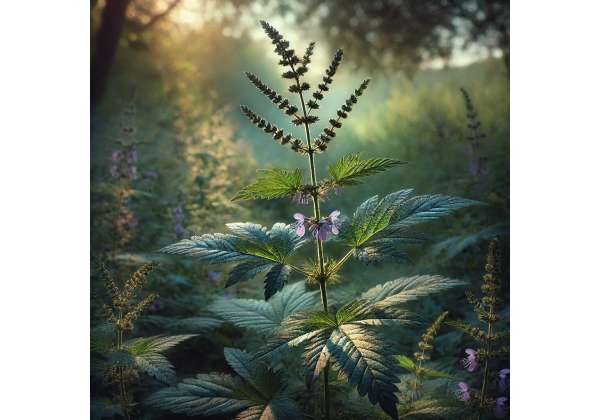
Five-leaved chaste tree, botanically known as Vitex negundo, is an aromatic shrub used across Ayurveda, Siddha, Unani, and several Southeast Asian folk traditions. Its leaves, roots, seeds, and essential oil have been used for inflammatory pain, cough, colds, swelling, skin complaints, and external insect-repellent preparations. What makes this herb especially interesting is that it combines flavonoids, iridoids, lignans, volatile oils, and phenolic compounds in a way that supports both topical and internal traditional uses.
It is also a plant that is often misunderstood. Because it shares the word “chaste” with Vitex agnus-castus, some readers assume it is mainly a women’s hormone herb. In reality, Vitex negundo is better known for pain, inflammation, respiratory support, external applications, and traditional wound care than for cycle regulation. That distinction matters. So does preparation. A leaf poultice, a steam inhalation, and a capsule do not act the same way. The best modern view of five-leaved chaste tree is balanced: it is a serious traditional herb with promising pharmacology, practical uses, and meaningful limits.
Essential Insights
- Five-leaved chaste tree is most often used for inflammatory aches, cough and congestion support, and external applications for swelling or irritated skin.
- Its leaf chemistry includes flavonoids, iridoids, phenolic acids, and essential-oil constituents linked to antioxidant and anti-inflammatory activity.
- Traditional leaf juice is commonly used at about 10 to 20 mL/day, while powders and extracts vary widely by plant part and product strength.
- Avoid medicinal use during pregnancy, breastfeeding, and in children unless guided by a qualified clinician.
- Human evidence is still limited, so it fits best as a short-term supportive herb rather than a stand-alone treatment.
Table of Contents
- What is five-leaved chaste tree?
- Vitex negundo active compounds
- Does Vitex negundo help pain and inflammation?
- Vitex negundo for breathing, skin, and external use
- How to use five-leaved chaste tree
- How much Vitex negundo per day?
- Side effects, interactions, and who should avoid it
- What the research actually says
What is five-leaved chaste tree?
Vitex negundo is a large aromatic shrub or small tree native to South and Southeast Asia and now found in many tropical and subtropical regions. It is easy to recognize by its palmate leaves, which usually have five narrow leaflets, its purple-blue flower clusters, and its strong herbal scent when the leaves are crushed. In English, it is often called five-leaved chaste tree, Chinese chaste tree, or simply nirgundi in Ayurvedic contexts.
The plant has a long medicinal history, but the most useful way to understand it is by how it has actually been used. Traditional systems have relied mainly on the leaves for swelling, pain, wounds, cough, congestion, and external inflammatory complaints. Roots and seeds also appear in older preparations, but the leaves are the most practical and the most commonly discussed part in both traditional care and modern product development.
A key point for readers is that Vitex negundo is not the same plant as Vitex agnus-castus, the better-known European chaste tree used for PMS and menstrual symptoms. The shared word “chaste” causes confusion, and some websites blur the two plants together. That is a mistake. While V. negundo has been used in some reproductive contexts in traditional medicine, its main identity is broader and more musculoskeletal-respiratory than hormone-centered.
In everyday herbal practice, Vitex negundo falls into a few practical categories:
- A pain and swelling herb
- A respiratory-support herb
- A topical leaf herb
- An external plant used in insect-repellent traditions
This combination makes it more versatile than many single-purpose herbs. It can be used internally as juice, decoction, or extract, and externally as oil, poultice, steam, smoke, or wash. That versatility is part of its strength, but it also creates a problem: not every use has the same level of evidence, and not every product reflects the same plant chemistry.
Another reason the herb remains relevant is that it occupies a middle ground between household medicine and phytopharmacology. In many regions, people know it as a practical village remedy for pain, congestion, or swelling. At the same time, researchers have spent years isolating its flavonoids, iridoids, lignans, and volatile components to explain those uses more clearly.
The most accurate description, then, is not that five-leaved chaste tree is a miracle herb. It is that it is a multi-use traditional medicinal shrub whose best-known uses center on inflammation, respiratory comfort, and topical care, with modern science gradually clarifying why.
Vitex negundo active compounds
Vitex negundo has a complex chemical profile, and that complexity is one reason it has so many traditional uses. This is not a plant driven by one famous compound. Its activity seems to come from several overlapping groups of constituents that work on inflammation, oxidation, microbial stress, tissue irritation, and aroma-mediated effects.
Among the best-known compounds are flavonoids, especially vitexin, isovitexin, isoorientin, cynaroside, scutellarin, and luteolin-related compounds. These molecules are often linked with antioxidant and anti-inflammatory effects. In practical terms, they help explain why the leaves are repeatedly used for painful swelling, joint discomfort, and irritated tissues.
Iridoids and iridoid glycosides are another important category. Negundoside, agnuside-like compounds, and related bitter glycosides are often discussed in connection with inflammation signaling and tissue protection. This group helps explain why Vitex negundo keeps appearing in pharmacology papers focused on pain, edema, and immune modulation.
The plant also contains phenolic acids and other antioxidant compounds. Recent analytical work on the leaves has highlighted chlorogenic acid and related phenolics as part of the herb’s antioxidant character. These are useful because they widen the picture beyond simple pain relief. They suggest the plant may help calm oxidative stress in inflamed or damaged tissues, which fits well with its traditional role in swelling, skin irritation, and recovery-supportive care.
Then there is the essential oil fraction. This matters especially for external use. Leaf oils contain aromatic compounds such as linalool, citronellal, myrcene, alpha-pinene, and other monoterpenes and sesquiterpenes, although composition varies by geography and growing conditions. These volatiles help explain the herb’s distinctive smell, its use in inhalation and external applications, and its long-standing role in mosquito-repellent traditions that can be loosely compared with citronella-style plant repellent use.
Other constituents reported in Vitex negundo include:
- Lignans
- Terpenoids
- Sterols
- Minor alkaloids
- Resinous and bitter principles
A practical way to think about the chemistry is to divide it into three functional zones:
- Water-friendly polyphenols and glycosides, which matter more in juices, teas, and decoctions
- Lipid-friendly volatile oils, which matter more in oils, smoke, and external aromatic use
- Mixed antioxidant compounds that support both internal and topical applications
This is also why preparation matters so much. A hot water decoction will not behave exactly like an essential oil, and a leaf paste will not act like a standardized capsule. When readers ask for the “key ingredients,” the best answer is not one single name. It is a working network of flavonoids, iridoids, phenolic acids, and essential-oil compounds that together create a broad but not unlimited medicinal profile.
The chemistry supports the herb’s reputation, but it also warns against oversimplifying it. Vitex negundo is a pharmacologically interesting plant, not a one-compound shortcut.
Does Vitex negundo help pain and inflammation?
Pain and inflammation are the strongest and most consistent modern uses of Vitex negundo. If someone asks where the herb has its clearest traditional and scientific logic, this is the answer. The leaves, in particular, have a long record in muscle pain, joint aches, swelling, bruising, and inflammatory discomfort.
The most defensible claim is not that it is a strong painkiller in the drug sense. It is that Vitex negundo appears to function as a broad anti-inflammatory support plant with modest analgesic potential. That wording fits both traditional use and modern evidence much better than dramatic claims about “natural ibuprofen.”
Why might it help? Several mechanisms are plausible:
- Flavonoids and iridoids appear to influence inflammatory signaling
- Phenolic compounds add antioxidant protection
- Volatile oils may contribute to topical soothing effects
- Some studies suggest COX-related and membrane-stabilizing actions
This layered mechanism is important because many people expect a pain herb to work through one dominant pathway. Vitex negundo seems more diffuse than that. It may reduce inflammatory tone, calm tissue irritation, and lower the intensity of minor pain rather than abruptly shutting pain off.
The human evidence is still limited, but there is one useful modern signal: a randomized placebo-controlled crossover study using a proprietary combination of Vitex negundo and ginger showed short-term improvement in activity-induced knee discomfort in healthy adults. That does not prove that isolated Vitex negundo leaf works the same way in every form, but it does support the idea that the herb belongs in the joint-support conversation. Readers looking for better-established single-herb joint evidence often compare this category with boswellia for joint-support research, which currently has a more developed clinical base.
Vitex negundo may be most realistic for:
- Minor joint pain
- Muscle soreness
- Swelling after strain or overuse
- Low-grade inflammatory discomfort
- Traditional topical use over sore areas
It is much less realistic for:
- Severe arthritis flares
- Hot, acutely swollen joints needing diagnosis
- Persistent unexplained pain
- Pain linked to infection, fracture, or autoimmune disease
Another useful insight is that external use may sometimes be more convincing than internal use. Leaf pastes, oils, and warmed applications fit the traditional evidence well because they deliver the herb directly to the irritated area. In contrast, broad oral claims often outpace the available data.
So does Vitex negundo help pain and inflammation? Yes, probably, especially when the problem is mild to moderate, inflammatory in character, and treated in a traditional, short-term way. The honest promise is supportive relief, not a full substitute for diagnosis or standard care.
Vitex negundo for breathing, skin, and external use
One of the most interesting things about Vitex negundo is that its usefulness is not limited to pain. Traditional systems also use it for cough, congestion, localized skin problems, and a variety of external household applications. This wider profile makes sense once the plant’s aromatic leaves and anti-inflammatory chemistry are taken into account.
For breathing support, the herb is traditionally used in cough, cold, catarrh, chest heaviness, and congested upper airways. In practice, this usually means leaf decoctions, steam exposure, fumigation, or oil-based external applications rather than a modern pharmaceutical-style respiratory treatment. The likely benefit is not that it directly “opens the lungs” in a dramatic way. It is that it may help reduce inflammatory irritation and support easier breathing when congestion and soreness are part of the picture. Readers familiar with aromatic herbs may recognize a partial overlap with eucalyptus for respiratory comfort, though the plants differ in chemistry and evidence.
For skin and topical use, Vitex negundo is more concrete. Traditional uses include:
- Leaf pastes over swollen areas
- Leaf oil for painful joints or stiffness
- External use for minor wounds and skin irritation
- Washes or local applications for itching or inflamed spots
These uses are especially plausible because the leaves combine volatile oils with phenolics and other soothing constituents. Several preclinical studies point toward wound-supportive and anti-inflammatory effects. That still does not make the herb a first-line treatment for infected wounds, severe burns, or chronic dermatitis. It means there is a reasonable traditional basis for using it on minor, localized external problems.
A particularly distinctive external use is insect deterrence. In several traditions, the leaves or their smoke are used to repel mosquitoes, and modern work on the essential oil supports real repellent potential. This is a valuable point because it gives the herb a practical household role beyond internal medicine. The takeaway is not that Vitex negundo oil should replace all tested mosquito-control methods. It is that the repellent tradition is one of the more interesting areas where traditional use and modern chemical research visibly overlap.
The most realistic benefit summary for this section looks like this:
- Respiratory support: plausible and traditional, but mostly preclinical
- Topical pain and swelling support: strong traditional fit
- Minor skin and wound support: plausible for simple external care
- Mosquito repellent use: distinctive and chemically credible
A useful way to frame Vitex negundo is as a leaf herb that works especially well when the problem is local, irritated, or inflamed. That is why it keeps showing up in external care more than in broad “whole-body tonic” claims. In topical herbal thinking, it may sit closer to calendula in soothing external care than to a generalized daily supplement.
Its best external uses are practical, short-term, and targeted. That is where the plant feels most convincing.
How to use five-leaved chaste tree
Five-leaved chaste tree can be used internally and externally, but the traditional pattern strongly favors matching the form to the goal. This is not a herb where one capsule automatically replaces every older preparation.
Common internal forms include:
- Fresh leaf juice
- Decoction of leaves or roots
- Powder from selected plant parts
- Capsules or tablets made from extracts
- Multi-herb formulas used in traditional systems
Common external forms include:
- Leaf paste or poultice
- Medicated oil
- Compresses and washes
- Steam or fumigation
- External insect-repellent preparations
For pain and swelling, external use is often the most intuitive route. Warmed leaves, paste, or leaf-infused oil are traditional ways to target sore joints, stiff muscles, or swollen areas. This fits the herb’s anti-inflammatory profile and reduces the temptation to treat it like a generic daily supplement.
For cough or congestion, decoction, steam, or traditional inhalation-style use makes more sense than a random capsule. These forms match the aromatic nature of the leaves and the herb’s long history in respiratory comfort.
For internal use, quality matters a great deal. Vitex negundo products may be sold as crude powder, standardized extract, or traditional formulation. These are not equivalent. A powdered leaf product may behave very differently from a concentrated extract aimed at joint support. The safest rule is to use one clearly identified preparation at a time and judge it by its intended purpose, not by a generalized assumption that “more concentrated is better.”
A practical form-by-goal guide looks like this:
- For sore joints or swelling, think external first
- For cough and congestion, think decoction or aromatic leaf use
- For convenient oral use, choose a labeled product with a defined plant part
- For insect-repellent use, think external leaf or oil tradition rather than internal use
This herb also illustrates an important herbal principle: route changes meaning. A plant used as an aromatic leaf in smoke or oil may have a different practical value than the same plant used as a capsule. That is one reason traditional systems often preserved several forms instead of collapsing everything into tablets.
The common mistakes are predictable:
- Using the wrong plant part for the wrong goal
- Taking concentrated extracts for vague “health balance”
- Treating a topical herb as though it must work better internally
- Confusing V. negundo with hormone-oriented V. agnus-castus
Vitex negundo is most useful when the reason for use is narrow and the form is chosen accordingly. In that sense, it behaves more like a toolkit herb than a one-size-fits-all supplement.
How much Vitex negundo per day?
Dosage for Vitex negundo is complicated because the plant is used in several different traditional forms and because modern standardized dosing is still inconsistent. The most honest answer is that there is no single evidence-based universal daily dose for all products.
What does exist are traditional ranges. Classical Ayurvedic sources describe fresh leaf juice, or swarasa, at about 10 to 20 mL. Root and seed powders in traditional practice are often described in gram-level doses, commonly around 3 to 6 g depending on the plant part and formula. Decoctions vary even more because they depend on how much herb is boiled, how long it is reduced, and whether the final liquid is taken once or in divided servings.
That means dosing should be guided by form:
- Fresh leaf juice: around 10 to 20 mL in traditional practice
- Powdered root or seed: often about 3 to 6 g in traditional use
- Decoctions: vary by recipe and concentration
- Modern extracts: follow the exact label and standardization, not folk averages
- Topical oils and pastes: use as directed to a limited area
This variability is not a flaw. It reflects the reality that Vitex negundo is not a modern single-molecule product. A leaf juice and a dry extract do not contain the same balance of flavonoids, volatiles, and bitter constituents.
A careful dosing mindset includes a few rules:
- Start low if using an oral product for the first time
- Use one preparation at a time
- Keep self-treatment short-term unless a clinician advises otherwise
- Do not treat concentrated extracts as interchangeable with traditional decoctions
- Let the reason for use determine the form and duration
Timing also depends on the goal. For inflammatory pain, oral products are often divided with meals, while topical forms are applied once or several times daily to the affected area. For respiratory support, decoctions are traditionally used warm and closer to the symptomatic period rather than as a chronic daily tonic.
Duration matters as much as dose. A few days to a couple of weeks for a clear, limited issue is a much better fit than taking the herb indefinitely for vague “inflammation.” If the problem is still present after a short course, the next question should be diagnosis, not automatic dose escalation.
This is also where expectations should stay realistic. Vitex negundo is not a supplement that works well under a “megadose” mindset. It is better approached as a short-term traditional herb with sensible upper limits. Higher doses do not necessarily create better outcomes, and they can make tolerance worse. With this plant, clear purpose matters more than aggressive quantity.
Side effects, interactions, and who should avoid it
Vitex negundo is generally described as well tolerated in traditional use, but that should not be mistaken for universal safety. Human safety data are still limited, products vary widely, and different preparations may behave very differently.
The most likely side effects are mild and practical:
- Stomach upset
- Nausea
- Bitter aftertaste
- Skin irritation with topical use
- Headache or dislike of the aroma in sensitive users
Topical reactions matter more than many people expect. Because leaf pastes, oils, and aromatic preparations are commonly used, some users may develop redness, itching, or irritation, especially on damaged skin or after repeated application. Patch testing a small area first is a sensible habit.
Pregnancy is one of the clearest caution areas. Because modern reproductive safety data are inadequate and because traditional plants with broad pharmacology should not be assumed safe in pregnancy, medicinal use is best avoided. The same caution applies to breastfeeding unless a knowledgeable clinician specifically advises use.
Children also require caution. Although Vitex negundo appears in some traditional pediatric cough contexts, unsupervised home use in children is not a good default because the evidence, dosing consistency, and product quality are not strong enough for casual experimentation.
Interaction data are less settled than the side-effect data. That means honesty is important: well-documented human herb-drug interactions for V. negundo are scarce. Still, caution is reasonable with:
- Prescription anti-inflammatory medicines
- Sedating multi-herb formulas
- Chronic pain regimens
- Hormone-active therapies, because species confusion with other Vitex products is common
- Any complex medication plan where a concentrated extract is being added
The biggest practical safety issues are often not biochemical but procedural:
- Wrong species or poorly labeled product
- Overreliance on concentrated extracts
- Using it too long without reassessment
- Delaying care for a condition that needs diagnosis
Who should avoid self-treatment with Vitex negundo?
- Pregnant people
- Breastfeeding people
- Children without professional guidance
- Anyone with unexplained persistent pain or breathing symptoms
- People with known plant allergies to the preparation used
- Those taking several prescription medicines without clinician review
Seek medical care promptly if swelling is severe, a wound looks infected, cough is persistent or accompanied by fever or shortness of breath, or pain is worsening instead of improving. Vitex negundo can be a useful support herb, but it should never become a reason to postpone evaluation of symptoms that may be serious.
Used for the right reason, in the right form, and for a limited time, it is often manageable. Used casually because it is “traditional,” it becomes much easier to misuse.
What the research actually says
The research on Vitex negundo is promising but uneven. This is not an herb with no science behind it. At the same time, it is not an herb with enough clinical evidence to justify confident treatment claims for every traditional use.
The strongest part of the evidence is preclinical. Vitex negundo has been studied for anti-inflammatory, antioxidant, antimicrobial, antiviral, wound-supportive, and repellent activity. Its chemistry is fairly well mapped, and recent reviews have strengthened the case that the plant contains multiple pharmacologically meaningful compounds rather than a few isolated curiosities.
The next tier of evidence is traditional validation. Vitex negundo is one of those plants whose major uses are highly consistent across systems: pain, swelling, cough, congestion, wounds, and external inflammatory states. When traditional patterns are that stable and the chemistry points in the same direction, the herb becomes more credible, even before large human trials appear.
Human evidence exists, but it is still thin. The clearest clinical signal is the knee discomfort study using a Vitex negundo and ginger combination. That study suggests the herb belongs in the pain-support conversation, but it does not prove that every standalone V. negundo product will work the same way. This is an important limit. Most modern benefits still rest on lab work, animal data, or traditional use rather than strong condition-specific clinical trials.
The research profile is best summarized like this:
- Strong for phytochemistry
- Strong for preclinical anti-inflammatory potential
- Good for traditional consistency
- Interesting for external repellent use
- Limited for standalone human clinical outcomes
This is why some claims deserve restraint. For example, respiratory support looks plausible, but it is mostly supported by traditional use and preclinical models, not robust human trials. Topical wound and swelling support also look plausible, yet the human evidence is still modest. Claims about broad immune support, hormone balancing, or chronic disease management are even less secure and often rely on confusion with other Vitex species.
A useful insight is that Vitex negundo may be more reliable as a practical traditional herb than as a modern supplement category. In other words, it makes more sense when used for short-term pain, congestion, or localized external problems than when sold as a universal anti-inflammatory capsule for everything.
So what does the evidence actually support? It supports taking the plant seriously, especially for inflammation-related traditional uses. It does not support treating it as fully clinically established. The best position is a middle one: scientifically plausible, traditionally well grounded, clinically underdeveloped, and worth using carefully rather than either dismissing or glorifying.
References
- Vitex negundo Linn.: A decade of advances in phytochemistry, pharmacological activities, and biotechnological interventions (2015-2025) – A comprehensive review 2026 (Review)
- Traditional Medicinal Uses, Phytochemistry, Biological Properties, and Health Applications of Vitex sp 2022 (Review)
- Chemical Diversity and Medicinal Potential of Vitex negundo L.: From Traditional Knowledge to Modern Clinical Trials 2023 (Review)
- Effect of E-PR-01 on Activity-Induced Acute Knee Joint Discomfort in Healthy Individuals: A Randomized, Placebo-Controlled, Double-Blind, Cross-Over Study 2023 (Clinical Trial)
- Vitex negundo L. Essential Oil: Odorant Binding Protein Efficiency Using Molecular Docking Approach and Studies of the Mosquito Repellent 2021
Disclaimer
This article is for educational purposes only and does not replace medical advice, diagnosis, or treatment. Five-leaved chaste tree may affect pain, inflammation, respiratory symptoms, and topical comfort, but it has not been established as a substitute for professional care in arthritis, asthma, wound infection, or chronic pain conditions. Do not use it to self-treat severe swelling, persistent cough, shortness of breath, infected skin, or worsening joint symptoms. Speak with a qualified healthcare professional before using Vitex negundo if you are pregnant, breastfeeding, giving it to a child, taking prescription medicines, or using concentrated extracts.
If you found this article helpful, please share it on Facebook, X, or your preferred platform so more readers can find balanced, safety-minded information about five-leaved chaste tree.