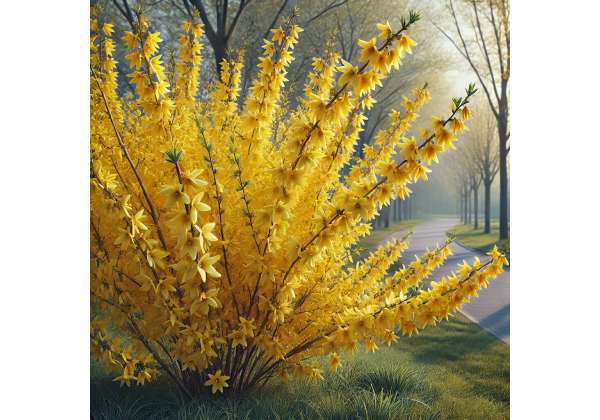
Forsythia suspensa is best known to herbal practitioners as the source of forsythia fruit, a traditional East Asian remedy used for short-term support during feverish colds, sore throat, and inflammatory skin flare-ups. While many people know forsythia as a bright yellow spring shrub, the medicinal part is the dried fruit rather than the flower. In Chinese herbal medicine, it is called lianqiao, and it is valued less as a daily wellness tonic and more as a targeted herb used when heat, irritation, and early infection-like symptoms appear.
Modern research helps explain that reputation. Forsythia fruit contains phenylethanoid glycosides, lignans, flavonoids, and other compounds that show anti-inflammatory, antioxidant, antimicrobial, and antiviral activity in laboratory and animal studies. The most studied compounds include forsythiaside A and phillyrin, also called forsythin. Even so, the strongest human evidence is still limited, so forsythia is better viewed as a promising traditional herb than a proven stand-alone treatment. The most practical questions are which form to use, how much makes sense, and when caution matters most.
Essential Insights
- Forsythia fruit is mainly used for short-term support in early cold-season, sore-throat, and inflammatory herbal formulas.
- Forsythiaside A and phillyrin appear to drive much of its anti-inflammatory, antioxidant, and antimicrobial activity.
- Traditional decoction use is commonly 6 to 12 g of dried fruit daily, but extracts and isolated compounds are not dose-equivalent.
- Digestive upset, rash, and product-quality differences are more practical concerns than dramatic toxicity in most adults.
- Avoid unsupervised use during pregnancy, while breastfeeding, and when taking multiple prescription medicines unless a qualified clinician approves it.
Table of Contents
- What Is Forsythia Fruit
- Key Compounds in Forsythia
- Forsythia Benefits and Properties
- How to Use Forsythia
- How Much Forsythia Per Day
- Forsythia Safety and Interactions
- What the Evidence Really Shows
What Is Forsythia Fruit
Forsythia fruit comes from Forsythia suspensa, a deciduous shrub in the olive family. The plant is native to East Asia and is now grown more widely as both an ornamental and a medicinal crop. In the garden, forsythia is famous for its yellow flowers that open before the leaves. In herbal practice, though, the dried fruit is the key material. That distinction matters because most traditional formulas, pharmacopoeias, and modern studies focus on the fruit, not the blossom.
In Chinese medicine the herb is called lianqiao, and in formal monographs it is often listed as Forsythiae Fructus. Two medicinal forms are commonly discussed: unripe fruit, usually harvested earlier in the season, and ripe fruit, harvested later. Practitioners traditionally view both as useful, but they are not chemically identical. Unripe fruit often contains higher levels of certain marker compounds, which is one reason some manufacturers emphasize harvest stage and standardization.
Traditional use gives a good sense of where forsythia fits. It is not usually chosen as a nourishing daily herb like oat straw or a culinary spice herb used around the clock. Instead, it is often included when symptoms feel acute, hot, swollen, red, or irritated. That is why it appears so often in formulas for the early phase of a sore throat, upper-respiratory discomfort, tender swollen glands, or inflamed skin lesions. In classic practice it is frequently paired with honeysuckle, another herb used when heat and toxicity are the central themes.
A modern reader can translate that traditional pattern more practically. Forsythia is generally aimed at short-term inflammatory situations, not long-term maintenance. That does not mean it cures infection or replaces medical care. It means herbal traditions have historically used it when symptoms suggest a sudden inflammatory burden rather than chronic deficiency, fatigue, or digestive weakness.
One more point is worth remembering: forsythia in supplements may appear as whole dried fruit, water extract, granules, capsules, or a named compound such as forsythin. These are not interchangeable. A whole-fruit decoction has a broader chemical profile than an isolated lignan, and a formula containing six or eight herbs will behave differently from a single-ingredient capsule. Anyone reading a label should first determine which part of the plant is being used, whether it is a crude herb or extract, and whether the product is meant for short-term symptom support or general wellness.
Key Compounds in Forsythia
Forsythia fruit is chemically dense. Modern reviews have identified hundreds of constituents, but a few families matter most for understanding how the herb might work. The headline groups are phenylethanoid glycosides, lignans, flavonoids, terpenoids, organic acids, and small amounts of volatile components. In practical terms, that means forsythia is not a one-compound herb. Its effects likely come from overlapping molecules rather than one magic ingredient.
The best-known compounds include:
- Forsythiaside A, also written in some papers as forsythoside A.
- Phillyrin, also called forsythin.
- Phillygenin, a related lignan metabolite.
- Flavonoids such as rutin and quercetin-related compounds.
- Various triterpenoids and phenolic acids that may contribute antioxidant and anti-inflammatory effects.
Forsythiaside A is often treated as a lead marker because it is strongly associated with anti-inflammatory, antiviral, antioxidant, and antibacterial activity in experimental work. It appears to interact with signaling pathways involved in inflammatory stress, including NF-kB, MAPK, JAK/STAT, and oxidative-stress responses. That matters because these pathways help explain why the herb keeps showing up in studies on respiratory irritation, inflammatory cytokines, and tissue damage.
Phillyrin is the other major name to know. It is one of the fruit’s signature lignans and is widely studied for anti-inflammatory and antiviral potential. Some researchers treat phillyrin or its metabolites as key candidates for future drug development, but that should not be confused with proof that a standard consumer product will deliver the same clinical effect. A purified compound can look strong in pharmacology studies while a retail herb product remains variable in quality and potency.
The balance of compounds may shift with harvest stage and processing. Unripe and ripe fruits do not share exactly the same chemical profile, which is part of why traditional systems kept separate names for them. This is also why reputable products often disclose extract ratio, plant part, or marker compounds rather than just saying “forsythia” on the front label.
From a quality standpoint, this herb is a good example of why standardization matters. If one batch is rich in phenylethanoid glycosides and another is weak or improperly processed, the real-world effect may differ even when the plant name is identical. That inconsistency is one reason people can have very different experiences with herbs that seem, on paper, to be the same product.
The key practical lesson is simple: when someone talks about the medicinal properties of forsythia, they are usually referring to the combined actions of multiple polyphenols and lignans, with forsythiaside A and phillyrin leading the discussion. Those compounds support the herb’s traditional reputation for inflammatory and antimicrobial support, but they do not turn forsythia into a guaranteed treatment. The chemistry is promising, not magical.
Forsythia Benefits and Properties
The most realistic way to talk about forsythia’s benefits is to separate traditional use from modern evidence. Traditional use is broad and confident. Modern human evidence is still narrow. When both are held together, a clear picture emerges: forsythia has credible anti-inflammatory potential, plausible antimicrobial value, and practical relevance in short-term herbal formulas, but it is not yet a strongly proven stand-alone herb for common consumer self-treatment.
The most plausible benefits include the following.
- Support during early cold-season symptoms. Forsythia is traditionally used when sore throat, feverishness, swollen glands, or irritated upper-airway symptoms first appear. In practice, that usually means it is taken early and briefly rather than after a long illness has settled in.
- Anti-inflammatory support. Lab and animal studies repeatedly show reductions in inflammatory signaling, oxidative stress markers, and pro-inflammatory cytokines. This is one of the herb’s strongest and most consistent themes.
- Antimicrobial and antiviral activity. Forsythia extracts and some isolated compounds show activity against bacteria and several viruses in experimental settings. That finding is interesting, but it does not automatically predict clinical success in people.
- Support for inflamed skin conditions. Traditional systems use it for boils, red eruptions, and heat-related skin patterns. Experimental models also suggest anti-allergic and skin-calming potential.
- Antioxidant and tissue-protective effects. Several studies suggest liver-protective, neuroprotective, and broader oxidative-stress benefits, though these remain mostly preclinical.
What should readers reasonably expect in real life? Forsythia may make the most sense as part of a short-term strategy when symptoms are acute, irritated, and inflammatory. It is less convincing as a daily capsule taken for vague immune support month after month. Many of its traditional uses also involve formulas rather than solo use, which means the herb may work best when paired with other botanicals instead of taken alone.
It is also important to avoid the strongest marketing claims. A supplement label may imply that forsythia “fights infection” or “detoxifies the body,” but those phrases are often too vague to be useful. A more grounded interpretation is that forsythia contains compounds that modulate inflammatory and oxidative pathways and may help support the body’s response during short-lived inflammatory illnesses. That wording is less dramatic, but it is closer to the evidence.
Compared with gentler beverage herbs, forsythia is a more targeted medicinal herb. It is not typically chosen because it tastes good or because people want a pleasant daily tea. Its main appeal lies in pattern-specific use, especially when the goal is to cool, clear, and calm sudden inflammatory symptoms. That profile helps explain why forsythia continues to hold a place in traditional East Asian medicine even though modern single-herb human trials are still limited.
How to Use Forsythia
Forsythia can be used in several forms, but not all of them are equally traditional or equally practical. The classic form is a decoction made from the dried fruit, usually within a formula rather than as a single-herb tea. In modern products, it may also appear as granules, capsules, tablets, tinctures, or standardized extracts. The best form depends on why it is being used and whether a practitioner is guiding the choice.
Common forms include:
- Dried fruit for decoction.
This is the most traditional approach. The fruit is simmered with water, often alongside other herbs, to create a stronger and more medicinal preparation than a casual infusion. - Granules or instant extracts.
These are common in clinical herbal practice because they are convenient, easier to standardize, and simpler for people who do not want to cook herbs. - Capsules and tablets.
These may contain powdered fruit or extract. They are convenient for travel, but labels should be checked carefully because potency can vary widely. - Tinctures or liquid extracts.
These are less common than decoctions and granules in traditional East Asian practice but may be available from modern herbal companies. - Multi-herb formulas.
This is where forsythia is most often used. In many traditional formulas, it plays one role among several, often with herbs chosen to support the throat, skin, or upper respiratory tract.
A practical user should start with form selection before worrying about milligrams. If someone wants the most traditional route, decoction or granules make the most sense. If the goal is convenience, a standardized capsule may be more realistic. If a product lists only “forsythia extract” with no ratio, no marker compounds, and no plant part, the label is too vague to inspire confidence.
Forsythia is also better suited to short-term, symptom-led use than to casual sipping. A pleasant daily tea herb is usually something milder and more familiar to the palate. Someone who wants a more beverage-like option during cold season might find elderflower for cold-season support easier to work with, while forsythia tends to fit a more medicinal and targeted niche.
Timing matters. Traditional use leans toward early use during the first stage of a sore throat, feverish feeling, tender swollen glands, or hot inflamed skin patterns. It is less commonly framed as a long-term “immune booster.” Duration also matters. Most herbalists think of forsythia as something used for days to a couple of weeks, not for months.
Finally, many products combine forsythia with other herbs. That can be useful, but it also makes the product harder to evaluate. Benefits, side effects, and interactions may reflect the whole formula rather than forsythia itself. When shopping, it helps to ask one simple question: am I buying forsythia as a single herb, or am I buying a formula in which forsythia is only one active piece?
How Much Forsythia Per Day
Forsythia dosing depends heavily on the form. The most commonly cited traditional range for the dried fruit in decoction is about 6 to 12 g per day for adults, though some sources and formulas extend that upper limit modestly depending on context, practitioner judgment, and whether the herb is being used alone or in a multi-herb prescription. That range refers to crude dried fruit, not an extract, not a tincture, and not an isolated compound.
For practical use, the best way to think about dosage is by category.
- Dried fruit in decoction: often 6 to 12 g daily, usually split across the day within a formula.
- Granules: dose depends on concentration and manufacturer conversion, so the label should state the crude-herb equivalent.
- Capsules: check whether the product contains plain powder or extract. A 500 mg capsule of powder is not the same as a 500 mg standardized extract.
- Isolated compounds: these should never be treated as dose-equivalent to the whole herb. In research settings, purified forsythin has been studied at very different amounts than crude fruit.
The most useful dosing questions are not only “how much?” but also “how long?” and “for what purpose?” Forsythia is traditionally used for short-term, acute situations. Many clinicians think in terms of several days up to around one or two weeks, then reassess. If symptoms worsen, last too long, or include significant breathing difficulty, dehydration, severe throat swelling, or high fever, a medical evaluation matters more than adjusting an herb dose.
A cautious and sensible approach looks like this:
- Start with the lowest clearly labeled adult dose.
- Match the dose to the form, not to a random internet number.
- Use it for a short, defined window.
- Reassess quickly if symptoms do not improve.
Standardized extracts deserve special caution. Extract ratios such as 5:1 or 10:1 can help, but only if the label also explains the amount of extract actually provided and, ideally, the marker compound or crude equivalent. Without that information, comparing two products is guesswork.
It is also worth noting that purified forsythin has been tested in early human safety research at doses such as 50 to 200 mg taken three times daily for a few days. That does not mean consumers should recreate that dose on their own or assume it matches a whole-fruit product. It simply shows that isolated compounds are handled differently in research than herbs are handled in traditional practice.
The best real-world rule is this: 6 to 12 g per day is a traditional whole-herb reference point for decoction use, but retail extract dosing must follow the product’s standardization details. When those details are missing, the product is not transparent enough for confident use.
Forsythia Safety and Interactions
Forsythia appears to have a fairly favorable short-term safety profile, especially when compared with many harsher medicinal botanicals. That said, “generally well tolerated” should not be confused with “risk free.” The most common practical concerns are mild digestive upset, allergic reactions, inappropriate self-treatment of a serious illness, and confusion between different product forms.
Possible side effects include:
- Nausea or stomach discomfort.
- Loose stools in sensitive users.
- Bitter aftertaste or mild throat irritation from concentrated preparations.
- Rash or allergic symptoms in people who do not tolerate the product.
Available toxicology work and a small human phase 1 study on purified forsythin are reassuring, but they do not settle every question about long-term use, pregnancy, breastfeeding, or every possible interaction. That is why most conservative guidance still favors short-term use and clinician review in higher-risk situations.
The groups most likely to need caution are:
- Pregnant people.
- People who are breastfeeding.
- Infants and young children unless a trained clinician specifically recommends a product and dose.
- Anyone with a known allergy to forsythia or a past reaction to herbal formulas containing it.
- People taking multiple prescription drugs, especially if the formula contains several herbs rather than forsythia alone.
- People with significant liver disease, kidney disease, or serious immune conditions.
Interaction data for forsythia are still limited, so most warnings are precautionary rather than based on a long catalog of proven drug-herb interactions. That makes product review even more important. A multi-herb cold formula may include ingredients with more interaction potential than forsythia itself. For that reason, people taking anticoagulants, antiplatelet drugs, immunosuppressants, diabetes medicines, or other tightly managed prescriptions should not assume an herb is harmless just because it is sold over the counter.
It is also wise to pause nonessential herbal supplements before surgery or procedures unless the medical team wants them continued. This is less about confirmed harm from forsythia alone and more about keeping medication exposure simple and predictable when clotting, anesthesia, and healing are involved.
The biggest safety mistake is using forsythia as a substitute for evaluation when symptoms clearly need medical care. Severe sore throat with drooling, shortness of breath, chest pain, rapidly spreading skin infection, persistent fever, or dehydration should not be managed by pushing the herb dose higher. Forsythia belongs in the category of supportive care, not emergency care.
In short, forsythia’s safety story is encouraging but incomplete. For most healthy adults, short-term use of a quality product is probably reasonable. For pregnancy, breastfeeding, children, long-term use, and polypharmacy, a more careful standard is appropriate.
What the Evidence Really Shows
Forsythia has a stronger research foundation than many obscure herbs, but most of that foundation is still preclinical. That is the central truth readers should keep in mind. There are many laboratory studies, many animal studies, several strong phytochemical reviews, and some early safety data in humans. What is still missing are robust single-herb clinical trials that clearly show how well forsythia fruit works for specific symptoms in everyday patients.
What the research supports fairly well:
- The fruit contains bioactive compounds with anti-inflammatory, antioxidant, and antimicrobial effects.
- Forsythiaside A and phillyrin are credible lead compounds.
- Experimental studies repeatedly show effects on inflammatory signaling pathways.
- Animal meta-analysis suggests meaningful anti-inflammatory activity across several model systems.
- Early human research on purified forsythin suggests reasonable short-term tolerability.
What the research does not yet prove:
- That a standard forsythia capsule reliably shortens a common cold.
- That forsythia alone treats bacterial infection.
- That long-term daily use is beneficial or necessary.
- That one retail preparation can be assumed equivalent to another.
A second complication is that much of forsythia’s real-world use happens inside formulas. If a multi-herb product helps a sore throat, the result cannot easily be assigned to forsythia alone. Traditional practice may still be wise in that setting, but it is not the same as modern proof of single-herb efficacy.
This is why the best summary is measured rather than dramatic. Forsythia is evidence-informed, not evidence-settled. It has enough chemistry, mechanism research, and traditional continuity to deserve serious attention, yet not enough direct human trial data to justify bold marketing promises. For readers who want a herb with stronger modern cold-season trial data, andrographis for immune support is often discussed more directly in human studies than forsythia itself.
That does not make forsythia unhelpful. It simply places it in the right category: a traditional medicinal fruit with well-described active compounds, good short-term plausibility, and limited but growing clinical relevance. Used this way, the herb makes sense. Overstated as a proven antiviral cure or universal immune booster, it does not.
The most responsible conclusion is that forsythia may be worth considering when the symptom pattern fits, the product is well made, the duration is short, and expectations are realistic. That is a narrower promise than many supplement pages make, but it is also the most useful one.
References
- The phytochemistry, pharmacology, pharmacokinetics, quality control, and toxicity of Forsythiae Fructus: An updated systematic review 2024 (Systematic Review)
- A review of pharmacological and pharmacokinetic properties of Forsythiaside A 2021 (Review)
- Safety, tolerability and pharmacokinetics of forsythin in healthy subjects: a double-blinded, placebo-controlled single-dose and multiple-dose escalation and food effect study 2023 (RCT)
- Efficacy of Forsythia suspensa (Thunb.) Vahl on mouse and rat models of inflammation-related diseases: a meta-analysis 2024 (Meta-Analysis)
Disclaimer
This article is for educational purposes only and does not replace medical advice, diagnosis, or treatment. Forsythia may not be appropriate for everyone, especially during pregnancy, while breastfeeding, in children, or alongside prescription medicines and complex herbal formulas. Seek medical care promptly for severe infection symptoms, breathing difficulty, rapidly worsening pain, or persistent fever. Use herbal products from reputable manufacturers, and ask a qualified clinician for guidance when symptoms are significant or the dose is unclear.
If you found this article helpful, please share it on Facebook, X, or your preferred platform.