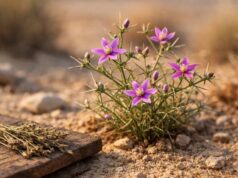
Four O’ Clock, better known to botanists as Mirabilis jalapa, is one of those plants that sits at an interesting crossroads: it is a familiar ornamental flower, a traditional folk remedy, and a plant with genuinely intriguing chemistry. In herbal practice, different parts of the plant have been used for inflamed skin, superficial wounds, boils, digestive complaints, and purgative effects, while newer laboratory research has looked at antioxidant, antimicrobial, anti-inflammatory, and metabolic actions. That sounds impressive, but the real story is more nuanced. Four O’ Clock has promise, especially for topical use, yet the strongest evidence still comes from lab and animal studies rather than well-designed human trials.
In practical terms, this is not a mainstream medicinal herb with standardized capsules and well-established dosing. It is better understood as a traditional plant whose leaves and flowers may offer gentle external support, while the roots and seeds call for more caution. The key to using it wisely is knowing which plant part is being discussed, what outcome is realistic, and where safety limits matter most.
Quick Overview
- Topical preparations are most often used for minor skin irritation, superficial wounds, and inflamed areas.
- The most convincing modern findings relate to anti-inflammatory, wound-supportive, and antimicrobial activity in preclinical research.
- A conservative external range is 2 to 4 g dried leaves or flowers per 250 mL hot water as a wash or compress.
- Seeds and roots should not be eaten casually, because they are the parts most associated with poisoning concerns.
- Children, pregnant or breastfeeding people, and anyone considering internal use without clinician guidance should avoid it.
Table of Contents
- What is Four O’ Clock and what’s in it?
- What can it realistically help with?
- Four O’ Clock for skin and inflammation
- How is it used in practice?
- How much should you use?
- Side effects, interactions, and who should avoid it
- What the evidence actually says
What is Four O’ Clock and what’s in it?
Four O’ Clock is a tuberous flowering herb in the Nyctaginaceae family. It is native to Mexico and Central America, but it now grows widely in warm climates around the world as a garden ornamental. Its common name comes from a charming habit: the flowers usually open in the late afternoon and stay open through the evening and night. That ornamental reputation matters, because many people know the plant from gardens before they ever hear about its medicinal uses.
Traditional medicine treats different parts of Mirabilis jalapa very differently. The leaves are often described as the gentlest and most practical part for external use. The flowers are mainly studied for their pigments and antioxidant compounds. The roots have a stronger traditional reputation as a purgative and for more forceful internal remedies, while the seeds are the least suitable for casual herbal use because they are the part most often associated with poisoning warnings. This plant-part distinction is not a minor detail. It is central to both the benefits and the risks.
Its chemistry is broad rather than simple. Reported constituents include:
- Betalain pigments, especially in the flowers, including betaxanthins and betacyanins that contribute color and antioxidant behavior.
- Flavonoids and other phenolic compounds, which are often linked to free-radical scavenging and tissue-protective effects.
- Alkaloid-like constituents and related secondary metabolites that may help explain some of the plant’s more active laboratory findings.
- Triterpenes and phytosterols, including compounds often discussed in relation to inflammation and membrane stability.
- Proteins and peptides, including ribosome-inactivating and antimicrobial proteins identified in the plant.
A useful insight here is that Four O’ Clock does not have one single “hero compound.” It behaves more like a chemical toolbox. That is one reason extracts from leaves, flowers, and roots can produce very different results. It is also why flower color may matter more than most readers expect. Red, pink, yellow, and mixed flowers do not carry exactly the same pigment pattern, so a flower extract studied in one paper is not automatically interchangeable with another.
In herbal terms, Four O’ Clock is best understood as a multi-constituent plant with stronger topical tradition than internal standardization. It is also worth noting that this is not the same thing as jalap root from another species, despite the similar wording. Garden plants may also be exposed to pesticides, fertilizers, or roadside contamination, so “growing in my yard” is not the same as “safe medicinal material.” For a plant like this, identity, plant part, and preparation method make all the difference.
What can it realistically help with?
The most honest answer is that Four O’ Clock may help with a few traditional targets, but the confidence level differs sharply depending on the use. The strongest practical case is for topical support, especially when the goal is to calm irritated tissue rather than to treat a serious disease. Internal benefits are more speculative, and the farther you move from skin support into broader metabolic or reproductive claims, the more cautious you should become.
Based on traditional use and preclinical research, the main realistic areas of interest are:
- Mild inflammation and tissue irritation, especially on the skin.
- Superficial wounds, minor abrasions, and inflamed boils or abscess-prone areas as part of supportive care.
- Mild pain or tenderness related to inflamed tissue.
- Experimental antimicrobial support, mainly shown in laboratory work.
- Possible metabolic effects, such as blood sugar or lipid improvement, but only at an early evidence stage.
- Possible effects on male sexual function in animal research, again not yet a clinically established human use.
What is important here is the word “realistically.” Four O’ Clock is not a proven treatment for infections, diabetes, chronic pain, erectile dysfunction, or complex skin disease. A more grounded expectation is that a properly prepared external wash or compress may help an irritated area feel calmer, cleaner, and less inflamed while the body does its own repair work.
That makes it closer in spirit to simple supportive herbs than to a high-potency standardized supplement. If your interest is mostly skin comfort and minor wound support, it belongs in the same conversation as calendula for skin healing and irritation support, though the evidence base for calendula is much broader and better defined.
There is also a traditional purgative thread in Four O’ Clock use, mainly tied to the roots and seeds. This is not a benefit most modern readers should chase. A plant with purgative action can move from “works” to “works too strongly” very quickly, especially outside a supervised traditional framework. In modern practice, that kind of effect often creates more safety problems than therapeutic value.
One more practical point: benefit claims often blur together because the plant is studied under many extraction methods. Water infusion, hydroalcoholic extract, fresh leaf juice, flower fractions, and isolated compounds are not interchangeable. When you read that Four O’ Clock is anti-inflammatory, antimicrobial, antioxidant, or hypoglycemic, those claims usually come from a specific extract under specific test conditions. That matters because the real-world herb on your counter may not behave the same way.
So, yes, Four O’ Clock has meaningful medicinal potential. But the clearest, lowest-risk expectation is still modest external support for irritated or inflamed tissue. Everything else should be viewed as promising but preliminary.
Four O’ Clock for skin and inflammation
If there is one place where Four O’ Clock makes the most practical sense, it is skin care for minor, non-emergency problems. Traditional use often centers on leaf juice, leaf decoctions, or simple external applications for wounds, boils, swelling, and inflamed areas. Modern preclinical work lines up with that use pattern better than it does with many of the herb’s broader claims.
Why might it help? Several mechanisms have been proposed. The leaf and flower extracts contain phenolics, flavonoids, and related compounds that may reduce oxidative stress around damaged tissue. Some studies also suggest anti-inflammatory action, meaning the plant may help tone down swelling, heat, and redness. Review data on wound-healing plants from Latin America also place Mirabilis jalapa among species used topically for wound support, and in vitro work suggests certain preparations may stimulate skin-cell activity relevant to repair.
In plain language, Four O’ Clock may help create a better local environment for healing. That does not mean it “heals wounds” by itself. It means it may support the normal process when the injury is minor, clean, and already being managed correctly.
Good use cases include:
- Mildly irritated skin after friction or scratching.
- Small superficial cuts after proper cleaning.
- Minor abrasions.
- Localized inflamed areas that are intact or only lightly broken.
- Compresses for skin that feels hot, tight, or reactive.
Poor use cases include:
- Deep wounds.
- Punctures, bites, or dirty injuries.
- Spreading redness or warmth.
- Pus, fever, or severe pain.
- Burns beyond mild superficial irritation.
- Suspected cellulitis, abscesses needing drainage, or wounds in people with poor circulation or diabetes.
The form matters a great deal. A mild aqueous infusion or a fresh, carefully cleaned leaf preparation is more in line with traditional topical use than a concentrated homemade alcohol extract. Stronger is not always better on compromised skin. In fact, overly concentrated plant extracts can irritate tissue that was already struggling.
This is also where comparison helps. If your main goal is wound support from a soothing leaf herb, you may also want to look at plantain for irritated skin and minor wound care, which has a more familiar topical profile for many herbal users. Four O’ Clock can fit the same general category, but it is not the first herb most clinicians would reach for.
A useful rule is this: if the problem looks simple and local, Four O’ Clock may deserve consideration as supportive care. If the problem looks infected, deep, rapidly worsening, or medically complicated, skip the herbal experiment and get proper treatment. That is the difference between thoughtful herbalism and wishful thinking.
How is it used in practice?
In real-world use, Four O’ Clock is less about capsules and more about simple preparations. Traditional practice tends to favor external forms made from leaves or, less often, flowers. The roots appear in some folk systems, but they belong to the “stronger and riskier” end of the plant, which is why they are a poor choice for unsupervised home experimentation.
The most practical forms are:
- Mild leaf or flower infusion
A water infusion is the easiest conservative option. Dried leaves or flowers are steeped in hot water, then cooled and used as a wash, rinse, or compress. This is best for irritated skin, superficial scrapes, or mildly inflamed areas. - Fresh leaf mash or poultice
In traditional settings, fresh cleaned leaves may be crushed to release juice and applied briefly to the skin. This is more variable than an infusion because leaf strength, cleanliness, and plant identity all matter. - Decoction
A decoction uses simmering rather than steeping and is more often associated with tougher plant material, especially roots. This method is where caution rises sharply, because the preparation can become stronger and less predictable. - Ointment or blended topical
Some users combine a strained aqueous or hydroalcoholic preparation with a simple base. This can be useful when you want longer contact time on dry or irritated skin.
A few practical rules make Four O’ Clock safer and more useful:
- Use only correctly identified plant material.
- Prefer external use over internal use.
- Avoid the seeds entirely for home medicinal use.
- Do not apply homemade preparations to large skin areas.
- Start with short contact time to check for irritation.
- Discard any preparation that smells off, grows cloudy, or has been stored too long.
There is also a smart question many readers forget to ask: what feel do you want from the remedy? Four O’ Clock tends to fit the “soothing and supportive” category more than the “strongly cooling” or “tightening” category. If your skin feels dry, hot, or reactive, that may be a good fit. If you mainly want immediate cooling hydration, aloe vera for skin soothing and burn care may be the more intuitive comparison.
Another overlooked issue is plant quality. Because Four O’ Clock is commonly grown as an ornamental, the plant in a garden bed may have been sprayed or fertilized in ways that are fine for landscaping but not ideal for medicinal use. If there is any doubt about chemical treatment, do not use it as a home remedy.
In short, the most defensible practical use is simple, short-term, and external: a mild wash, compress, or brief fresh-leaf application for a minor skin problem. Once the method becomes concentrated, internal, or long-term, the safety margin becomes far less comfortable.
How much should you use?
Dosage is where Four O’ Clock becomes more complicated than many herb articles admit. There is no well-established modern human dose for Mirabilis jalapa across its common uses, and there is no widely accepted standardized oral product that gives consumers a reliable benchmark. That means dosage advice should be conservative, form-specific, and honest about its limits.
For home use, the clearest and safest range is external:
- Infusion for wash or compress: 2 to 4 g dried leaves or flowers per 250 mL hot water.
- Steeping time: about 10 to 15 minutes, then strain and cool.
- Frequency: 1 to 3 times daily.
- Usual short-term duration: up to 7 to 14 days for minor, uncomplicated skin issues.
For a compress, soak a clean cloth in the cooled infusion and apply it for 10 to 15 minutes. For a wash, gently bathe the area and let it air-dry or pat dry. If the skin becomes redder, itchier, or more painful, stop.
Fresh leaf use is harder to standardize. A small amount of cleaned, crushed leaf can be applied to a limited area for a short period, usually 10 to 20 minutes, then removed. Because fresh plant material is variable, it is wise to test a very small spot first rather than covering a whole irritated area.
Internal dosing is where strong restraint is appropriate. Traditional systems do describe decoctions and root-based use, but those preparations do not translate neatly into safe modern self-dosing. The roots are tied to purgative activity, and the seeds are associated with poisoning concerns, so they should not be treated like a casual wellness tea. For that reason, I would not recommend unsupervised oral use at home, especially for children, older adults, or anyone with a medical condition.
A helpful rule is to avoid copying animal-study doses into human practice. When you see large mg-per-kg doses in rodent research, that is a signal about experimental effect, not a do-it-yourself dosage guide. It tells you the plant is being investigated, not that the same amount should be scaled to a person.
Timing also matters. Four O’ Clock is best viewed as a short-term supportive herb, not a daily maintenance supplement. If a minor skin problem is not clearly improving within several days, or if it worsens at any point, the correct next step is reassessment, not simply increasing the dose.
So the bottom line is straightforward: Four O’ Clock has a cautious external dose range, but no dependable evidence-based oral dose for general self-care. That is exactly why topical use remains the smarter starting point.
Side effects, interactions, and who should avoid it
Four O’ Clock deserves more caution than its pretty flowers suggest. The plant has genuine medicinal activity, but it is not a low-concern culinary herb. Safety depends heavily on the plant part, preparation, dose, and route of use. In broad terms, leaves and flowers used externally are the gentlest territory, while seeds and roots raise more concern, especially when ingested.
Possible side effects include:
- Skin irritation, itching, or rash after topical use.
- Stomach upset, cramping, nausea, or diarrhea with internal use.
- Excessive bowel stimulation if stronger root preparations are used.
- Unpredictable reactions from concentrated or contaminated homemade extracts.
The poisoning issue is important enough to say plainly: the seeds and roots should not be treated as harmless. Garden and government horticulture sources describe the plant as toxic on ingestion, with seeds in particular drawing repeated warnings. Even when severe poisoning is uncommon, that is not a reason to experiment. The problem with plants like this is not only toxicity in the dramatic sense; it is also dose uncertainty. The same preparation may be mild in one case and too strong in another.
Who should avoid it entirely or use it only with professional guidance?
- Children.
- Pregnant or breastfeeding people.
- Anyone planning internal use.
- People with diabetes, because experimental data suggest possible glucose effects.
- People taking laxatives, diuretics, or other herbs and medicines that affect fluid balance or bowel activity.
- People using medicines for sexual function or fertility-related concerns, because preliminary reproductive findings are not enough to predict interactions safely.
- Anyone with chronic kidney disease, significant liver disease, or frailty.
- Anyone with a history of plant-contact allergy.
Pets are worth mentioning too. Because Four O’ Clock is such a common ornamental, accidental seed or root ingestion by dogs or cats is a practical household risk.
A patch test is sensible before external use. Apply a small amount of diluted preparation to a small area and wait 24 hours. If burning, redness, swelling, or itching develops, do not continue.
There are also situations where Four O’ Clock should not delay care: worsening wounds, fever, severe vomiting, significant diarrhea, trouble breathing, widespread rash, or any accidental ingestion by a child. Those are not “watch and wait” situations.
A good herbal safety mindset is to respect uncertainty, not to fear it. With Four O’ Clock, the uncertainty mostly affects internal use. That is why the safest approach is conservative, short-term, and external. Once someone starts talking about regular oral dosing, strong root decoctions, or homemade concentrates, the risk-benefit balance shifts in the wrong direction.
What the evidence actually says
The evidence for Four O’ Clock is interesting, but it is not mature. That distinction matters. There is enough research to say the plant is pharmacologically active, yet not enough to treat it as a well-validated modern herbal medicine for everyday internal use.
Here is the current evidence picture in practical terms:
- Traditional use is broad and longstanding.
- Lab studies support antioxidant, antimicrobial, and anti-inflammatory activity in certain extracts.
- Animal studies suggest possible benefits for inflammation, pain, wound support, glucose handling, lipids, and male sexual function.
- Some cell studies point to interesting actions on iron metabolism and bioactive proteins.
- High-quality human clinical trials are either absent or too limited to guide routine care.
That last point is the most important one. Four O’ Clock has not crossed the line from “promising plant” to “clinically established herb” for most of the claims made online. If you see language suggesting that it definitively treats diabetes, infections, sexual dysfunction, or chronic inflammatory disease, that is stronger than the evidence allows.
The best-supported direction is still external use for minor inflammatory skin problems and wound support. That is where traditional use, mechanism, and preclinical data line up most cleanly. Even there, the conclusion should be modest: it may help as supportive care, not that it replaces standard wound management.
Another reason the evidence is hard to translate is chemical variability. Leaves, flowers, roots, and seeds do not behave the same way. Flower color can alter pigment composition. Water extracts and alcohol extracts pull different compounds. Fresh material differs from dried material. In other words, “Four O’ Clock” is not one fixed product. It is a moving target unless the preparation is standardized.
That variability is exactly why better-studied herbs often perform better in practice: not because Four O’ Clock lacks potential, but because clinicians and consumers need predictable preparations. With Mirabilis jalapa, prediction is still a challenge.
So what is the balanced takeaway? Four O’ Clock is a legitimate medicinal plant with credible traditional use and meaningful preclinical support. It is especially relevant for topical inflammation and superficial wound care. But it remains a second-line, caution-first herb rather than a first-choice standardized remedy. The science is enough to justify interest, not enough to justify hype.
References
- Medicinal Plants from Latin America with Wound Healing Activity: Ethnomedicine, Phytochemistry, Preclinical and Clinical Studies—A Review 2022 (Review)
- Alkaloid fraction of Mirabilis jalapa Linn. flowers has low cytotoxicity and increases iron absorption through Erythropoietin-Matriptase-2-Hepcidin pathway in iron deficiency Hepatocarcinoma cell model 2022 (In Vitro Study)
- Evaluating the Aphrodisiac Potential of Mirabilis jalapa L. Root Extract: Phytochemical Profiling and In Silico, In Vitro, and In Vivo Assessments in Normal Male Rats 2023 (Preclinical Study)
- Anti-inflammatory activity of aqueous extract of Mirabilis jalapa Linn. leaves 2010 (Preclinical Study)
- NParks | Mirabilis jalapa n.d. (Government Flora Database)
Disclaimer
This article is for educational purposes only and is not medical advice. Four O’ Clock is not a substitute for diagnosis, prescription treatment, wound care, or poison-emergency guidance. Because human research and standardized dosing are limited, speak with a qualified healthcare professional before using it internally, especially if you are pregnant, breastfeeding, taking prescription medicines, or managing diabetes, kidney disease, liver disease, or reproductive concerns. Seek urgent help after accidental seed or root ingestion, severe vomiting or diarrhea, breathing trouble, or worsening skin wounds.
If this article helped you, please share it on Facebook, X, or any platform your readers prefer.