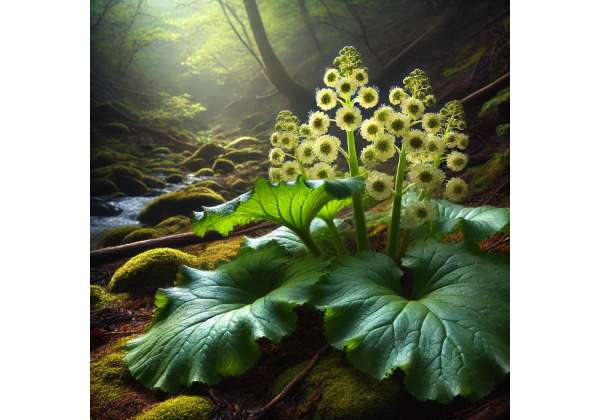
Fuki, or Petasites japonicus, is one of those plants that makes more sense when you see it as both food and medicine rather than only one or the other. In Japan and Korea, its spring flower buds and leaf stalks are prized seasonal vegetables, known for their bitterness, aroma, and unmistakable “first taste of spring” character. In traditional East Asian practice, the roots and stems were also used for headaches, spasms, and allergic or inflammatory complaints. Modern research has added scientific interest to that tradition by identifying sesquiterpenes such as petasin and bakkenolides, along with fukinolic acid, caffeoylquinic acids, flavonoids, and other antioxidant compounds. Still, Fuki is not a simple wellness herb. Petasites japonicus also contains pyrrolizidine alkaloids, compounds linked to liver toxicity and carcinogenic risk, which is why preparation, source, and dose matter so much. The most honest way to approach Fuki is to recognize both sides at once: it is a culturally important edible wild vegetable with promising bioactive compounds, but its benefits are supported mainly by laboratory and animal work, while its safety limits are clinically important.
Essential Insights
- Fuki contains petasin, bakkenolides, caffeoylquinic acids, and fukinolic acid, which help explain its anti-allergic, anti-inflammatory, and antioxidant potential.
- The strongest modern evidence is still preclinical, so Fuki is better viewed as a functional food or traditional herb than a proven clinical remedy.
- As a food, about 15 to 40 g of well-cooked prepared buds or stalks per serving is a practical range, but no validated supplement dose exists.
- Pyrrolizidine alkaloids are the main safety concern, and boiling or simmering reduces them but does not make careless use safe.
- Pregnant or breastfeeding people, children, and anyone with liver disease or known Asteraceae allergy should avoid medicinal use.
Table of Contents
- What is fuki
- Key compounds in fuki
- Possible benefits and realistic uses
- How to use fuki
- How much fuki per day
- Side effects and who should avoid it
- What the evidence actually shows
What is fuki
Fuki is the Japanese name for Petasites japonicus, a large perennial in the Asteraceae family. It is closely related to butterbur, which is why some English sources call it Japanese butterbur. That connection can be helpful, but it can also create confusion. The better-known European butterbur, Petasites hybridus, is the species linked with migraine supplements and PA-free standardized extracts. Fuki belongs to the same genus, but it is not simply the same herb under another name. In practice, Fuki is more often approached as a seasonal vegetable and traditional East Asian medicinal plant than as a modern migraine supplement. That distinction matters from the start.
The plant has broad leaves, thick leaf stalks, and early spring flower buds known as fukinoto. Those flower buds are among the first mountain vegetables of the season in Japan. They are valued not because they are mild, but because they are pleasantly bitter, aromatic, and distinctly spring-like. The stems and buds are both eaten, usually after careful preparation to soften bitterness and reduce unwanted compounds.
Traditional use goes beyond food. Historical East Asian practice used the roots and stems for the treatment or prophylaxis of migraine, tension headache, and spasms of the gastrointestinal, biliary, and urogenital tracts. That background helps explain why modern scientists became interested in its sesquiterpenes and polyphenols. It also explains why Fuki is often described in both culinary and medicinal language.
At the same time, this is not a harmless wild green simply because it is edible. Petasites species are known for pyrrolizidine alkaloids, and Petasites japonicus is no exception. That safety issue is part of the plant’s identity, not a minor footnote. It is why traditional preparation methods matter, why concentrated extracts deserve caution, and why casual supplement use is much harder to justify than culinary use.
A practical way to think about Fuki is as a bitter spring vegetable with meaningful phytochemistry and a narrow margin for careless use. It belongs to the same broader conversation as better-known butterbur relatives, but its real-world role is more culinary, more culturally specific, and less clinically established. That combination is exactly what makes it interesting.
Key compounds in fuki
Fuki’s medicinal reputation rests on a diverse group of compounds rather than one dominant nutrient. The most discussed are sesquiterpenes, especially petasin and related molecules such as isopetasin, along with bakkenolides and petatewalides. These compounds help explain why researchers keep returning to Petasites japonicus in studies of allergy, inflammation, adipocyte biology, and oxidative stress. Petasin, in particular, has drawn attention because it appears to be a major contributor to the plant’s anti-adipogenic activity in flower-bud extracts.
Another major group is phenolic compounds. Fukinolic acid is one of the signature phenolics of Fuki, and it is often described as a principal constituent in Japanese butterbur. Alongside it are caffeic acid derivatives, chlorogenic acid, and dicaffeoylquinic acids, which contribute antioxidant activity in test systems. These molecules are part of the reason the plant is increasingly discussed as a potential functional food rather than only a folk remedy.
Flavonoids also matter. Quercetin and kaempferol glycosides have been identified in leaves and buds, and several studies suggest these compounds contribute antioxidant, enzyme-modulating, and cytoprotective effects. Lignans such as petaslignolide A add another layer to the picture, especially in neuroprotective and oxidative-stress research. If you look across the chemistry as a whole, Fuki is not a simple bitter herb. It is a chemically dense plant with multiple potentially active fractions.
The problem is that the same plant also contains pyrrolizidine alkaloids, the group that shapes its safety profile. In Petasites japonicus, compounds such as neopetasitenine and petasitenine, also known as fukinotoxin, have been identified. These are not “active ingredients” in the positive sense. They are the toxicological reason caution is mandatory. Recent metabolic modeling suggests that neopetasitenine can be converted to petasitenine, a carcinogenic deacetylated metabolite, after oral intake. That means the safety issue is not hypothetical or limited to a distant relative.
So Fuki chemistry cuts in two directions at once:
- Beneficially interesting compounds such as petasin, bakkenolides, fukinolic acid, caffeoylquinic acids, lignans, and flavonoids.
- Hazard-associated pyrrolizidine alkaloids that limit how freely the plant can be used.
That duality is what makes Fuki scientifically compelling and practically tricky. It is also why readers should not equate “rich in bioactives” with “safe for routine supplementation.” In this case, the bioactivity is real on both sides of the ledger. That is why a food-style relationship to Fuki usually makes more sense than an enthusiastic supplement-style one.
Possible benefits and realistic uses
Fuki is often credited with anti-allergic, anti-inflammatory, antioxidant, metabolic, and neuroprotective benefits. The chemistry makes those claims plausible, but the key word is plausible. Most of the evidence comes from cell work, animal models, or compound-isolation studies rather than from strong human clinical trials.
The best-supported traditional benefit is probably anti-allergic support. Research on Petasites japonicus ingredients is fairly mature at the basic-science level. Extracts and isolated compounds have been shown to inhibit degranulation in mast-cell models, reduce inflammatory signaling, and dampen allergic responses in animal studies. Bakkenolide B and petatewalide B are among the compounds most often discussed in this context. That sounds impressive, but the important qualifier is that these effects have not been clinically confirmed in robust human trials. In other words, Fuki has a credible anti-allergic laboratory profile, not a proven allergy-treatment profile.
A second promising area is anti-inflammatory and antioxidant activity. Fuki extracts and specific constituents such as fukinolic acid, petasitesin A, and caffeoylquinic acids have shown the ability to reduce markers tied to oxidative stress and inflammatory pathways in experimental systems. This is one reason researchers talk about its possible role in healthy aging and chronic-disease prevention. Even so, the evidence remains mostly mechanistic. It supports further investigation, not everyday therapeutic confidence.
A third area is metabolic support. Some animal and cell studies suggest that Fuki may reduce adipocyte differentiation, improve fat metabolism, and modestly influence body-weight-related markers. Petasin appears central here, especially in flower-bud extracts. This is where marketing language can get ahead of evidence. The plant has anti-adipogenic signals in research, but that is not the same thing as a proven weight-loss herb for people.
There is also older traditional use for migraine, tension headache, and spasms. But here it is especially important not to over-borrow evidence from European butterbur. Fuki belongs to the same genus, yet the clinical trials that made butterbur famous were not trials of Petasites japonicus.
So what are the most realistic outcomes?
- Mild functional-food value when used carefully as a prepared spring vegetable.
- Plausible anti-allergic and anti-inflammatory support based on preclinical data.
- Possible metabolic interest that remains exploratory.
- No strong proof that it should be used as a routine self-care remedy.
That makes Fuki similar to other bitter spring greens that may support appetite and digestive tone while also carrying a larger traditional reputation. It can be useful, but the useful version is smaller and more restrained than the exaggerated one. Fuki is promising, not settled.
How to use fuki
The most sensible way to use Fuki is as a properly prepared food, not as an improvised supplement. In Japan, the flower buds, fukinoto, are often eaten in tempura, miso-based preparations, relishes, or seasoned dishes. The stalks are peeled, boiled, simmered, and served in soups or side dishes. What ties these uses together is preparation. Fuki is not typically treated like a raw salad green. It is usually processed to soften bitterness and reduce unwanted compounds before it reaches the table.
Boiling and simmering matter for two reasons. First, they make the plant more palatable. Second, they help reduce pyrrolizidine alkaloid concentrations. That is an important point, but it needs careful wording: reduction is not elimination, and culinary preparation should not be turned into a casual license for unlimited intake.
A practical home-use framework looks like this:
- Favor traditional food use over concentrated medicinal use.
- Use young buds or prepared stalks rather than random raw plant parts.
- Boil or simmer, then discard the water.
- Eat modest portions as part of a mixed meal.
- Avoid homemade extracts, tinctures, or powders from unscreened raw material.
There are also supplement-style preparations on the market, especially in East Asia, including leaf extracts and compound formulas. These are harder to recommend broadly because the key safety question is rarely answered clearly: how much pyrrolizidine alkaloid remains? Some experimental leaf extracts have shown encouraging toxicology findings in animals, but those results do not erase the broader PA issue or guarantee that a commercial product is suitable for self-treatment.
Topical or cosmetic use is much less central with Fuki than internal food use. Most discussion focuses on the edible buds and stems or on experimental extracts rather than on creams or poultices. That alone suggests where the plant naturally belongs in everyday life.
One helpful way to position Fuki is alongside other nutrient-dense spring greens such as stinging nettle in traditional seasonal cooking. Both are plants that reward proper preparation and moderation. But unlike nettle, Fuki carries a more serious toxicological caveat, so respect for process is even more important.
For most readers, the best use of Fuki is culinary and occasional: a prepared seasonal bitter vegetable with cultural depth and interesting plant chemistry. The least sensible use is the one many supplement shoppers are drawn to first: concentrated, unsupervised, loosely standardized internal dosing. With Fuki, how you use it changes almost everything.
How much fuki per day
There is no validated modern medicinal dose for Petasites japonicus. That is the clearest answer, and it should shape everything else. Unlike some supplements with standardized extract doses and human clinical protocols, Fuki still lives in a gray zone between food, traditional herb, and research material. That means dose guidance has to be framed very carefully.
For food use, a practical portion is modest. About 15 to 40 g of well-cooked prepared buds or stalks per serving is a reasonable culinary range for most healthy adults. This is enough to enjoy the plant’s distinctive bitterness and functional-food character without treating it like a bulk green. The exact amount depends on the preparation, because fukinoto is much more intensely flavored than simmered stalks.
What should be avoided is repeated large-volume intake, especially in crude extract or powder form. The reason is simple: no validated self-care dose exists that balances the plant’s interesting bioactives against its pyrrolizidine alkaloid risk. The more a product moves away from a traditionally prepared food and toward a concentrated supplement, the harder it becomes to justify casual use.
Animal and cell studies often use doses that sound impressive, but these are not consumer instructions. Some toxicology work on a hot-water leaf extract suggested a wide safety margin in rats, while other research continues to highlight the plant’s pyrrolizidine alkaloid hazards. Both findings can be true at once because different preparations are not equal.
A practical dose framework looks like this:
- Food use: small cooked portions, not daily large servings.
- Crude supplements: difficult to justify without clear PA control.
- Extracts: only consider if source, preparation method, and safety screening are transparent.
- Long-term use: not advisable as a casual wellness habit.
Timing is less important than context. Fuki makes the most sense in meals, not on an empty stomach and not as a “detox” add-on. The traditional culinary pattern already gets this right: it is integrated into food, balanced by other ingredients, and used seasonally.
For people seeking bitter-digestive support without this level of toxicological uncertainty, something like ginger for gentler digestive support or other better-characterized kitchen herbs is easier to recommend. Fuki is not the plant to experiment with just because it sounds earthy or traditional.
So the dosage conclusion is straightforward. There is a practical food portion, but there is no validated medicinal self-dose. That is not a weakness in the article. It is an honest reflection of where the evidence and safety profile currently stand.
Side effects and who should avoid it
The main safety issue with Fuki is pyrrolizidine alkaloid exposure. These compounds are associated with liver injury and carcinogenic risk, and Petasites japonicus is a known PA-producing plant. This is the single most important fact for readers to remember. It means that even though Fuki is eaten traditionally, it is not a plant that should be romanticized or taken in concentrated form without thought.
Possible side effects include digestive upset, nausea, bitter aftertaste, and allergic reactions. The allergy point is often overlooked. The 2020 review notes that allergic reactions to Fuki scapes have been reported, and gastrointestinal sensitization may cross-react with Asteraceae pollens such as mugwort and ragweed. For readers with strong weed-pollen allergies, that is not a trivial detail.
Who should avoid medicinal use of Fuki?
- Pregnant or breastfeeding people.
- Children and adolescents.
- Anyone with liver disease or a history of abnormal liver enzymes.
- People using other potentially hepatotoxic medicines or supplements.
- Anyone with known allergy to Asteraceae plants, especially mugwort or ragweed.
- People who want to use concentrated extracts without reliable safety screening.
Even healthy adults should be cautious with frequent large servings. Traditional food use does not automatically mean modern unrestricted safety, especially when the plant’s alkaloid content is part of the reason toxicologists continue to study it.
One confusing point is that some leaf-extract toxicology data appear reassuring. That does not overturn the PA warning. It simply suggests that certain processed preparations may behave differently from crude or poorly characterized material. For everyday use, the safer conclusion is still the conservative one: preparation method matters, and product quality matters even more.
There is also a common practical mistake to avoid. Some people assume that because boiling reduces pyrrolizidine alkaloids, home preparation solves the whole problem. It does not. Reduction is helpful, but it is not the same as controlled removal or proof of long-term safety. That is why large amounts, repeated intake, and self-made concentrates are all poor ideas.
In safety terms, Fuki belongs in the category of “food with conditions,” not “herb you can dose freely.” That makes it different from ordinary spring vegetables and different even from many traditional bitter greens. The safest way to respect the plant is to use it sparingly, prepare it properly, and never let its cultural prestige distract from its toxicology.
What the evidence actually shows
The evidence for Fuki is strong enough to justify scientific interest but not strong enough to justify broad clinical claims. That is the central conclusion.
The chemistry is well documented. Petasites japonicus contains sesquiterpenes, lignans, flavonoids, and phenolic compounds with measurable biological activity. The research base for anti-allergic, anti-inflammatory, antioxidant, neuroprotective, and anti-adipogenic effects is also substantial at the cell and animal level. If someone says Fuki is pharmacologically interesting, that is clearly true.
But the leap from interesting to proven is where the picture narrows. The 2020 review makes this explicit: the basic studies on anti-allergic effects are mature, yet clinical confirmation is lacking. It also notes that few clinical trials have been conducted specifically for Petasites japonicus, even though related Petasites species have received more attention. This means that much of the enthusiasm around Fuki lives in preclinical space.
The anti-obesity story is a good example. Petasin does appear to be a major anti-adipogenic compound in flower-bud extracts, and that is an important mechanistic insight. But it does not mean eating Fuki or taking an extract will reliably cause weight loss in humans. The same pattern holds for immune and inflammatory effects. Bakkenolide B and other compounds show clear activity in models, but clinical usefulness remains uncertain.
Safety evidence is, if anything, firmer than benefit evidence. Recent work on neopetasitenine and petasitenine strengthens the case that pyrrolizidine alkaloid exposure is not a theoretical problem. That shifts the overall balance. With some herbs, weak evidence mainly means uncertain benefit. With Fuki, weak evidence sits beside a real toxicological concern, which means the threshold for recommending it has to be higher.
So what is the fairest final reading?
- Fuki is a culturally important edible and medicinal plant.
- Its compounds support real pharmacological interest.
- The most convincing benefits are still preclinical.
- The most clinically actionable fact is the PA safety warning.
That may sound less exciting than a marketing page, but it is more useful. Fuki does not need to be dismissed, and it should not be exaggerated. It fits best as a traditional spring food used with preparation and restraint, and as a research plant whose most promising compounds may eventually become more useful than the crude herb itself. Right now, the evidence supports respect, curiosity, and caution in that order.
References
- Antioxidant compounds of Petasites japonicus and their preventive effects in chronic diseases: a review – PMC 2020 (Review)
- Metabolic profiles for the pyrrolizidine alkaloid neopetasitenine and its metabolite petasitenine in humans extrapolated from rat in vivo and in vitro data sets using a simplified physiologically based pharmacokinetic model – PubMed 2021
- Single and Repeated Oral Dose Toxicity and Genotoxicity of the Leaves of Butterbur – PubMed 2021
- Petasin is the main component responsible for the anti-adipogenic effect of Petasites japonicus – PubMed 2022
- A yeast-based screening system identified bakkenolide B contained in Petasites japonicus as an inhibitor of interleukin-2 production in a human T cell line – PubMed 2021
Disclaimer
This article is for educational purposes only and is not a substitute for medical advice, diagnosis, or treatment. Fuki contains pyrrolizidine alkaloids that may pose liver and long-term safety risks, especially in concentrated or poorly characterized products. Do not use Petasites japonicus medicinally during pregnancy, breastfeeding, childhood, liver disease, or alongside other potentially hepatotoxic products without guidance from a qualified clinician.
If this article was helpful, please share it on Facebook, X, or another preferred platform so more readers can find accurate, safety-first herbal information.