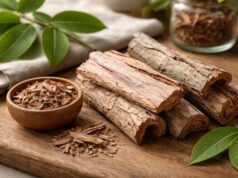
Abutilon is a large plant genus best known to gardeners for its bell-shaped flowers, yet several species have a long history in traditional herbal systems as soothing, mucilage-rich remedies. In Ayurveda, for example, Abutilon indicum is often discussed under the name “Atibala,” while Abutilon theophrasti appears in East Asian traditions under names such as “Qingma.” Across these lineages, Abutilon is most valued for its demulcent and emollient character—meaning it can help coat and calm irritated tissues.
In practical terms, Abutilon is commonly considered when the body needs gentle support rather than stimulation: a scratchy throat, an irritated cough, mild digestive discomfort, or urinary tract “heat” and burning sensations where a soothing tea feels appropriate. Modern research has also explored Abutilon extracts for antioxidant, anti-inflammatory, and tissue-protective effects, though human evidence is still limited. Because the genus includes many ornamental hybrids and region-specific species, correct identification and careful product selection matter. Used thoughtfully, Abutilon can be a calm, steady ally—especially when you prioritize the right form, modest dosing, and sensible safety boundaries.
Core Points
- May soothe irritated throat and digestive lining by providing mucilage-like coating support.
- Often used for gentle respiratory and urinary comfort when dryness or irritation is the main issue.
- Typical adult range is 2–4 g dried leaf or root per cup (tea) up to 2–3 times daily for short trials.
- Separate from oral medications by 2 hours when using thicker teas, since mucilage may slow absorption.
- Avoid if pregnant or breastfeeding, or if you have a known Malvaceae allergy or complex chronic symptoms needing evaluation.
Table of Contents
- What is Abutilon?
- Key ingredients and medicinal properties
- Abutilon health benefits and best uses
- How to use Abutilon
- How much Abutilon per day?
- Abutilon safety, side effects, and interactions
- What research says about Abutilon
What is Abutilon?
Abutilon is a genus within the mallow family (Malvaceae), a botanical group known for plants that often contain soothing polysaccharides (mucilage) in their leaves, roots, or seeds. Depending on where you live, “Abutilon” may bring to mind ornamental “flowering maples” grown in pots and patios, or it may refer to wild, weedy species such as velvetleaf. This difference matters: medicinal use typically focuses on specific species and specific plant parts, not the broad category of whatever is labeled “Abutilon.”
Two species show up most often in traditional and modern discussions:
- Abutilon indicum (Indian mallow; “Atibala” in Ayurvedic contexts): commonly used as a soothing, demulcent herb, with roots, leaves, and sometimes seeds appearing in traditional preparations.
- Abutilon theophrasti (velvetleaf; sometimes “Qingma” in Chinese contexts): historically used in regional medicine and also studied as a source of phenolic compounds and bioactive extracts.
Because the prompt is Abutilon spp., it is most accurate to treat Abutilon as a family of related remedies with overlapping themes rather than one standardized supplement. Like many plant genera, species can differ in:
- mucilage content (how “slippery” or coating it feels)
- bitterness or astringency (how drying it feels)
- aromatic compounds (how stimulating or “medicinal” the taste is)
- extraction behavior (whether tea, tincture, or powder is the better fit)
Which parts are used? Traditional use varies, but you will most often see the leaves, roots, and occasionally seeds. Leaves are typically chosen for teas and topical washes. Roots may provide a deeper demulcent effect, especially in slow infusions. Seeds are used more cautiously because they can be chemically dense and are less standardized across products.
How Abutilon is usually positioned: Abutilon is rarely the “strongest” herb in a protocol. Its classic role is supportive—helping irritated tissue feel calmer while the body resolves the underlying cause. That makes it a good fit for short-term discomfort and a poor fit for situations where red-flag symptoms require diagnosis (persistent blood in stool, recurring urinary pain with fever, chronic cough with weight loss, and similar patterns).
Finally, avoid assuming that an ornamental plant from a nursery is safe to ingest. Ornamentals may be treated with pesticides not intended for internal use. For herbal use, rely on properly sourced, clearly identified preparations that specify species and plant part.
Key ingredients and medicinal properties
Abutilon’s value comes from the way multiple plant compounds work together. While the exact profile varies by species, many Abutilon preparations share a recognizable pattern: mucilage-like polysaccharides for coating and comfort, plus polyphenols that support antioxidant and inflammation signaling balance.
Mucilage and soothing polysaccharides
The hallmark property associated with mallows is mucilage, a group of complex carbohydrates that swell in water and create a slippery, gel-like texture. In real-life use, mucilage is less about “killing germs” and more about changing how tissue feels. When a mucilage-rich tea coats the throat or stomach, it can reduce the scratchy sensation that triggers coughing or the raw feeling that makes digestion uncomfortable.
This is also why preparation method matters: mucilage is often best extracted with cool or lukewarm water over time (a “cold infusion”), which can yield a thicker, more coating result than a quick hot tea. If you already use classic demulcents like marshmallow root for mucosal soothing, Abutilon often fits in the same category—gentle, tissue-calming, and supportive rather than aggressively pharmacologic.
Flavonoids and phenolic acids
Abutilon species have been reported to contain flavonoids and phenolic acids, compounds that are frequently studied for antioxidant activity and their influence on inflammatory signaling pathways. In practical terms, these compounds may help explain why Abutilon is traditionally used for “hot” irritation patterns—where tissues feel inflamed, tender, or reactive.
Phytosterols, triterpenes, and supportive fractions
Some Abutilon species contain phytosterols and other non-volatile constituents that may support tissue repair processes and skin comfort. These are not “quick fix” compounds you feel immediately; rather, they contribute to Abutilon’s reputation as an herb that supports recovery when irritation has been ongoing.
Tannins and gentle astringency
Depending on species and harvest, Abutilon may also include mild tannins, which can feel slightly drying. This matters for formulation: a little astringency can be helpful when tissues are overly loose or weepy, but too much can be uncomfortable for dryness-dominant symptoms. If a tea tastes strongly drying or bitter, using less herb or switching to a cold infusion can bring it back into the soothing lane.
What these properties mean in plain language
A useful way to summarize Abutilon’s medicinal personality is:
- Primary action: coats and calms irritated tissues
- Secondary support: helps the body “cool down” reactivity and oxidative stress load
- Best suited for: irritation, dryness, mild inflammation, and recovery support
- Not suited for: problems that require strong antimicrobial action or urgent medical evaluation
If you approach Abutilon as a comfort-forward herb with gentle systemic support, its chemistry aligns well with realistic outcomes and safe use patterns.
Abutilon health benefits and best uses
Because Abutilon is a genus and not one standardized extract, the most responsible way to talk about benefits is to focus on common traditional use patterns and plausible, experience-based outcomes rather than dramatic promises. In most traditions, Abutilon is selected when the body needs soothing support and tissues feel irritated, dry, or inflamed.
1) Throat and cough comfort
One of the most practical uses for mucilage-rich herbs is easing the discomfort that keeps a cough going. Abutilon tea may help when:
- the throat feels scratchy or raw
- coughing is triggered by talking, dry air, or post-nasal drip irritation
- you want a gentle, non-sedating option that feels calming
A helpful detail: demulcents often work best when taken in small sips over time, allowing repeated coating rather than a single large cup taken quickly.
2) Digestive lining support
Abutilon is often discussed for digestive discomfort when the sensation is “irritation” more than “spasm.” For example:
- a tender or sensitive stomach
- occasional burning or rawness (especially when stress or irritant foods are involved)
- mild bowel irritation where a soothing tea feels stabilizing
This does not mean Abutilon replaces medical care for ulcers, chronic reflux, or inflammatory bowel disease. It means it may provide symptom-level comfort while you address the root cause.
3) Urinary tract and “heat” patterns
In several traditional frameworks, mucilaginous herbs are used when urination feels uncomfortable—burning, heat, or irritation—especially when dehydration is part of the picture. Abutilon may be used as a gentle supportive tea alongside hydration strategies. If urinary symptoms include fever, flank pain, blood in urine, or recurrent episodes, treat that as evaluation-first.
4) Skin and topical soothing
Mallow-family plants are frequently used externally for their emollient feel. Abutilon leaf preparations may be used as a wash or compress for:
- minor irritation and dryness
- “hot” itchy patches that benefit from gentle cooling moisture
- post-sun or post-wind skin discomfort
For deeper wound-healing traditions and topical strategy comparisons, plantain leaf topical uses can be a useful reference point because it occupies a similar “gentle but practical” niche in many home herbal toolkits.
5) Comfort for aches and inflammation
Abutilon is sometimes used in traditional practice for generalized aches or “inflammatory” patterns. A realistic expectation is mild support—not an herbal substitute for anti-inflammatory medication when pain is significant. In these cases, Abutilon is often paired with other herbs rather than used alone.
Overall, Abutilon’s best benefits tend to show up when you define the goal clearly: soothe irritation, reduce scratchy triggers, and support comfortable recovery.
How to use Abutilon
Abutilon can be used in several formats, but the most effective choice depends on what you want from it. If your goal is mucosal soothing, preparation technique matters as much as the herb itself.
Cold infusion for maximum soothing
A cold infusion often produces the most demulcent result because it allows mucilage to hydrate fully without being broken down by high heat.
- Add 2–4 g of dried leaf or root to 250–350 mL of cool water.
- Cover and steep 4–8 hours (or overnight).
- Strain and sip at room temperature, or warm gently (do not boil).
This method can feel surprisingly “silky.” It is especially useful for dry cough irritation, throat tenderness, or digestive rawness.
Warm tea for broader extraction
If you want a more balanced extraction (mucilage plus more polyphenols), a warm infusion works well:
- Use 2–4 g dried herb per cup.
- Steep 10–15 minutes.
- Sip slowly, ideally between meals or whenever irritation flares.
If the tea tastes too drying, reduce the dose or switch to a colder, longer infusion.
Tincture or glycerite
Liquid extracts are convenient, but they may not deliver the same “coating” effect as a thick infusion. They can still be useful when the goal is general support and you want a portable format. Choose products that clearly list:
- the species (for example A. indicum)
- the plant part (leaf, root, or seed)
- the extraction ratio and solvent
Powder and food-style use
Powdered leaf or root is sometimes mixed into warm water, broths, or soft foods. This can be helpful for people who want the mucilage effect but do not want to drink multiple cups of tea. Start with small amounts and increase gradually, since powders can be dense and occasionally cause bloating if taken too quickly.
Topical use: compresses and washes
For external comfort, you can use a strong tea (warm infusion) as a wash or compress. Keep the preparation clean, refrigerate leftovers, and discard if it develops odor or cloudiness.
Pairing strategies
If throat irritation and coughing are part of the picture, Abutilon is often paired with soothing herbs used in syrups and lozenges. For example, licorice root throat support is commonly used in traditional formulas (with important safety considerations for blood pressure-sensitive individuals). Pairing is best approached simply at first—one supportive herb plus Abutilon—so you can clearly judge your response.
In day-to-day use, Abutilon tends to work best when you treat it like a “comfort beverage” taken consistently for a short window, not like a one-time pill.
How much Abutilon per day?
Because Abutilon products vary by species and plant part, dosage is best approached as a range with a “start low and adjust” mindset. The goal is to find the minimum amount that noticeably improves comfort without creating heaviness, bloating, or unwanted interactions with medications.
Typical adult ranges by form
These ranges are common in traditional tea-based practice for demulcent herbs:
- Warm infusion (tea): 2–4 g dried leaf or root per cup, up to 2–3 cups daily
- Cold infusion: 2–4 g dried herb in 250–350 mL water, once daily (you can divide it into multiple sips)
- Powder: 1–3 g daily, mixed into warm water or soft food
- Liquid extract (tincture or glycerite): often 2–4 mL daily in divided doses (follow product specifics)
If the goal is throat soothing, many people do best not with higher dose, but with frequency—small sips throughout the day.
Timing and practical use windows
- Throat and cough irritation: sip as needed, especially in dry environments or before talking for long periods
- Digestive irritation: between meals or after irritant foods, when symptoms are most noticeable
- Urinary irritation: alongside hydration, spaced through the day
Duration and “trial” structure
Abutilon is typically used as a short-term support herb:
- 3–7 days for mild irritation or acute dryness
- 2–4 weeks for a structured trial in recurring irritation patterns, with reassessment
If you still need daily soothing after several weeks, it is worth asking why. Persistent symptoms often point to an underlying driver (reflux, allergens, chronic infection, medication irritation) that deserves targeted attention.
Spacing from medications
Mucilage can sometimes slow absorption of oral medications and supplements by creating a coating layer. A practical rule is to separate Abutilon infusions from medications by about 2 hours, especially if the tea is thick.
If you already follow this spacing strategy with other demulcents like slippery elm preparation basics, apply the same logic here.
Signs your dose is too high
Reduce dose or frequency if you notice:
- bloating or heaviness after taking it
- loose stools from overuse
- nausea from overly strong preparations
- a sense that digestion feels “slowed” rather than soothed
With Abutilon, the best dose is usually the one that feels quietly supportive, not dramatic.
Abutilon safety, side effects, and interactions
Abutilon is generally considered gentle in traditional practice, but “gentle” does not mean risk-free—especially when the species is unclear, the product is concentrated, or symptoms are complex.
Common side effects
Side effects are usually mild and dose-related. They may include:
- mild bloating or heaviness (more common with powders or very thick infusions)
- loose stools if taken in large amounts
- nausea if the preparation is overly concentrated or tastes strongly astringent
Most of the time, reducing the dose or switching to a milder infusion resolves these issues.
Allergy considerations
Abutilon is in the Malvaceae family. People with a known sensitivity to mallow-family plants should be cautious. Stop use if you develop hives, lip or tongue swelling, wheezing, or a rapidly worsening rash.
Medication interactions to consider
Two interaction themes matter most:
- Absorption timing: Thick demulcent teas may slow absorption of oral medications. Space by ~2 hours when possible.
- Metabolic overlap: Some Abutilon studies explore glucose and inflammation pathways. If you take diabetes medication or your blood sugar is tightly managed, monitor carefully and involve a clinician rather than experimenting with high-dose extracts.
Pregnancy, breastfeeding, and children
Avoid Abutilon during pregnancy and breastfeeding unless a qualified clinician recommends it. Traditional use exists in some regions, but modern safety data is not strong enough to treat it as routine.
For children, conservative practice is to avoid concentrated products. If a pediatric clinician supports use, teas are typically favored over extracts because they are easier to titrate and discontinue.
Quality and sourcing risks
One of the biggest real-world safety issues is misidentification:
- “Abutilon” may refer to ornamental hybrids not intended for internal use.
- Some products may not clearly state plant part or species.
- Wild-harvested material can vary widely in strength and cleanliness.
Choose products that list the full botanical name, plant part, and basic quality standards. Avoid ingesting leaves from ornamental plants that may be treated with pesticides.
When to seek medical evaluation instead of self-treating
Use Abutilon as supportive care, not as a substitute for evaluation, when symptoms include:
- urinary pain with fever, flank pain, or blood in urine
- cough lasting more than a few weeks, coughing blood, or unexplained weight loss
- persistent abdominal pain, vomiting, or black stools
- severe heartburn or difficulty swallowing
For topical irritation and skin recovery strategies, herbs such as calendula for skin soothing may be better suited in many cases, especially when you want an external-only approach with less concern about internal interactions.
Safety with Abutilon improves dramatically when you use the correct species, prefer tea-style preparations, keep doses modest, and treat persistent symptoms as a cue for diagnosis rather than stronger self-treatment.
What research says about Abutilon
Research on Abutilon is active but uneven. Some studies focus on traditional-use species like Abutilon indicum and Abutilon theophrasti, while others examine Abutilon primarily as an agricultural plant or a source of bioactive compounds. For a reader trying to decide whether Abutilon is worth using, it helps to separate what is well-aligned with tradition from what remains exploratory.
Where the evidence feels most aligned with real-world use
Abutilon’s traditional use as a soothing demulcent is supported by a straightforward mechanism: mucilage-rich preparations can coat irritated tissue, changing symptoms even if they do not “cure” the underlying cause. This is not the kind of effect that requires a modern randomized trial to be believable, because it is largely physical and experiential. If you have ever used a thick herbal infusion to calm a scratchy throat, the plausibility is intuitive.
Anti-inflammatory and tissue-protective research
A significant portion of modern Abutilon research explores antioxidant and anti-inflammatory signaling—often in cell models or animal models. These studies can be valuable for understanding potential, but they do not automatically translate into clinical results for humans. Dose, extract type, and study design vary widely, and that makes it hard to generalize.
Still, this body of work helps explain why Abutilon appears in traditional systems for “hot” discomfort patterns: irritated gut, inflammatory aches, and tissue reactivity. It also explains why Abutilon is sometimes studied in organ-protective contexts (liver, kidney, stomach lining), where oxidative stress and inflammation are part of the injury pathway.
Safety data is improving, but not definitive
Compared with more mainstream herbs, Abutilon has fewer large, modern safety datasets. Some recent work has explored toxicity thresholds in animal models and suggests that moderate traditional-style use is likely to be safer than high-dose extracts. Even so, the most practical safety strategy remains conservative: use tea-based preparations, limit duration, and avoid use in pregnancy or complex medical situations unless supervised.
What is still missing
For many popular consumer questions—“Does Abutilon reliably help reflux?” “Can it treat urinary infections?” “Is it proven for chronic inflammatory disease?”—the research is not strong enough to justify confident claims. What would strengthen the evidence base are well-designed human studies that clearly define:
- the Abutilon species and plant part
- the extraction method and dose
- measurable outcomes (symptom scores, biomarkers)
- adverse event tracking over time
A practical bottom line
If you choose Abutilon, choose it for what it does best: gentle, soothing, mucosal support and comfort-forward care. View anti-inflammatory and organ-protective findings as promising but preliminary, and reserve concentrated extracts for clinician-guided contexts. In most home use cases, Abutilon’s value is not as a “strong cure,” but as a stabilizing, supportive herb that helps irritated tissues feel more comfortable while you address the root driver.
References
- Pharmacognostical and phytochemical studies of Atibala (Abutilon indicum [Linn.] sweet) fruit – PubMed 2021
- Standardized aqueous extract of Abutilon theophrasti Medic. ameliorates oxidative stress and inflammatory responses against hydrochloric acid/ethanol-induced gastric ulcer in rats – PubMed 2025
- Evaluation of the Ethanolic Leaf Extract of Abutilon indicum on Isonicotinic Acid Hydrazide-Induced Proinflammatory Marker Gene Expression Changes – PubMed 2023
- Toxicological profiling of methanolic seed extract of Abutilon indicum (L.) Sweet: in-vitro and in-vivo analysis – PubMed 2024
Disclaimer
This article is for educational purposes only and does not provide medical advice, diagnosis, or treatment. Herbal products can vary by species, plant part, growing conditions, and manufacturing quality, which can change both effectiveness and safety. If you are pregnant or breastfeeding, take prescription medications, or have ongoing symptoms such as persistent cough, recurrent urinary pain, or significant digestive distress, consult a licensed clinician before using Abutilon or any mucilage-rich herb. Seek urgent medical care for severe allergic reactions, fever with urinary pain, blood in urine or stool, chest pain, or unexplained weight loss.
If you found this article helpful, please share it on Facebook, X (formerly Twitter), or any other platform you prefer so more readers can benefit.