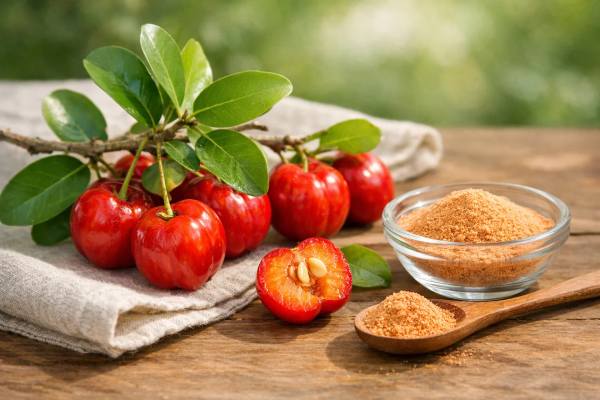
Acerola (Malpighia emarginata), often called Barbados cherry or West Indian cherry, is a tropical fruit prized for one standout reason: it can deliver exceptionally high amounts of natural vitamin C in a small serving. Beyond vitamin C, acerola provides a concentrated mix of colorful plant compounds—polyphenols, carotenoids, and anthocyanins—that help explain its growing popularity in powders, capsules, juices, and functional foods.
People most often use acerola to support immune function, antioxidant defenses, skin and collagen health, and recovery during physically demanding periods. It also appeals to those who prefer vitamin C from food-based sources rather than isolated ascorbic acid. Still, “natural” does not mean automatically gentle. Highly concentrated acerola products can cause digestive upset, and very high vitamin C intake may be a concern for people prone to kidney stones or those with iron overload conditions.
This guide explains what acerola contains, what benefits are realistic, how to use it in everyday routines, and how to choose a dose that stays effective and safe.
Top Highlights
- Can help fill vitamin C gaps and support normal immune function when intake is inconsistent
- Often used to support collagen formation for skin and connective tissue resilience over 6–12 weeks
- High-dose use can cause diarrhea or stomach cramps; keep total vitamin C intake within safe limits
- Avoid concentrated acerola if you have kidney stone history, hemochromatosis, or are managing chronic kidney disease
Table of Contents
- What is acerola
- Acerola key ingredients
- Acerola health benefits
- Acerola for skin and collagen
- How to use acerola
- Acerola dosage and timing
- Acerola safety and who should avoid
What is acerola
Acerola is the fruit of a small tropical shrub native to parts of the Americas and widely cultivated in warm climates. The ripe fruit is usually bright red, tart, and delicate—so delicate that much of the global acerola market relies on rapid processing rather than long-distance fresh shipping. That is why most people meet acerola not as a fresh fruit, but as juice concentrates, freeze-dried powders, tablets, or extracts.
Why acerola is considered “special”
Many fruits contain vitamin C, but acerola can contain dramatically higher levels than common citrus. The exact amount varies with variety, ripeness, climate, and processing, which is one reason labels can differ so much. In practical terms, acerola is best viewed as a vitamin C dense food rather than a typical “berry.” This density changes how you should use it: what feels like a small “superfood” scoop can deliver the vitamin C of many servings of other fruits.
Common names and look-alikes
Acerola is sometimes called:
- Barbados cherry
- West Indian cherry
- Tropical cherry
Despite the name, it is not a true cherry. Another important detail is that supplements may list different botanical synonyms or closely related species. If you want consistent results, look for a label that clearly states Malpighia emarginata (or a clearly stated synonym) and lists the plant part used (usually fruit).
Food use vs supplement use
Acerola sits on a spectrum:
- Food use: juices, purees, frozen pulp, and culinary powders added to smoothies
- Supplement use: standardized powders, tablets, and capsules designed to deliver a specific vitamin C dose
Food use is usually about adding a tart flavor and a nutrient boost. Supplement use is often about reliably achieving a target vitamin C intake. Neither approach is automatically better, but supplement-style dosing requires more attention to tolerance and upper limits—especially if you also take multivitamins or immune formulas.
A practical way to think about it
If your goal is general wellness, acerola works best as a supporting ingredient in a diet that already includes varied produce, adequate protein, and healthy fats. If your goal is a measurable vitamin C dose, treat acerola like a nutrient tool: read labels, track totals, and keep it within a safe range.
Acerola key ingredients
Acerola’s benefits come from more than vitamin C alone. Its “value” is a combination of ascorbic acid plus a broader constellation of phytonutrients that can influence antioxidant capacity, inflammation signaling, and tissue repair.
Vitamin C (ascorbic acid)
Vitamin C is acerola’s headline nutrient. It supports:
- Normal immune cell function and antioxidant defenses
- Collagen formation (important for skin, connective tissue, and wound repair)
- Iron absorption from plant-based foods
- Regeneration of other antioxidants in the body
Because acerola can be extremely vitamin C dense, it can help people who struggle to reach daily intake through food alone. It is also why acerola can cause side effects at high doses. If you want a deeper foundation on how vitamin C works and why dose matters, ascorbic acid functions and practical guidance offers a useful reference point.
Polyphenols and anthocyanins
Acerola contains polyphenols such as flavonoids and phenolic acids. These compounds are often studied for:
- Antioxidant behavior (helping neutralize reactive molecules)
- Support for healthy inflammatory balance
- Potential benefits for vascular function and tissue recovery
Anthocyanins—pigments that often create red and purple hues—may contribute to the fruit’s oxidative stress support profile. The key nuance is that polyphenol content can change with processing. Some powders preserve these compounds well, while heat-heavy processing can reduce them.
Carotenoids
Carotenoids such as beta-carotene and lutein-related compounds may be present in meaningful amounts depending on the product. Carotenoids support:
- Skin and eye tissue resilience
- Antioxidant capacity in fat-rich tissues
Carotenoids are not the primary reason to choose acerola, but they can complement the vitamin C profile.
Minerals and organic acids
Acerola also provides small amounts of minerals (such as potassium and magnesium) and organic acids that contribute to its tart taste. Those acids can be helpful for flavor but may be irritating for sensitive stomachs and may affect tooth enamel if used frequently without basic oral care.
Why “whole fruit” matters
Acerola’s most defensible advantage over isolated vitamin C is that it can deliver vitamin C alongside complementary plant compounds. That does not mean it is automatically better for every person, but it does explain why some people prefer acerola powders over single-ingredient ascorbic acid capsules.
Acerola health benefits
Acerola is often marketed as an “immune superfruit,” but the most useful approach is to focus on benefits that match what its nutrients actually do in the body. For most people, acerola is best used for nutrient adequacy and gentle physiologic support, not as a treatment for infections or chronic disease.
Immune support and everyday resilience
Vitamin C contributes to normal immune function, including support for immune cells involved in barrier defense and antioxidant protection. Acerola can be helpful when:
- Your diet is inconsistent due to travel, stress, or appetite changes
- You do not eat many fruits and vegetables regularly
- You want a food-based way to support daily vitamin C intake
A realistic outcome is not “never getting sick,” but potentially supporting immune readiness and reducing the likelihood that low vitamin C intake becomes one more stressor during demanding seasons.
Antioxidant support and oxidative stress balance
Acerola’s combination of vitamin C and polyphenols can support antioxidant defenses. In practical terms, antioxidant support matters most when the body is under higher oxidative load, such as:
- Heavy training blocks or physically demanding work
- Poor sleep stretches
- High stress and low produce intake
- Recovery after minor illness or inflammation-provoking periods
Still, antioxidant language is often overstated. Antioxidants support normal physiology; they do not “clean out toxins” in a dramatic way, and they do not replace sleep, protein intake, or medical care.
Inflammation signaling and metabolic context
Some human research and many mechanistic studies explore acerola for inflammation-related markers and metabolic flexibility. This is promising, but the evidence is not yet strong enough to treat acerola as a primary intervention for metabolic disease. The most reasonable view is that acerola may be supportive when it helps you meet vitamin C needs and adds polyphenols to an otherwise low-plant diet.
Iron absorption support
Vitamin C can enhance absorption of non-heme iron (the type found in plant foods). This can be useful for people who rely heavily on legumes, grains, and leafy greens. The caution is that this same property may be undesirable for people with iron overload conditions.
What to expect and what not to expect
More realistic expectations:
- Improved vitamin C adequacy
- Support for normal immune and collagen-related function
- A small, steady contribution to antioxidant balance
Unrealistic expectations:
- Treating infections without medical evaluation
- Replacing prescribed therapy for chronic disease
- “Detox” results that are not tied to measurable nutritional goals
Used with that mindset, acerola can be a high-value addition rather than a high-hype supplement.
Acerola for skin and collagen
One of acerola’s most practical, biology-aligned uses is supporting collagen-related processes. Vitamin C is essential for collagen synthesis, and collagen is central to skin structure, wound repair, gums, blood vessels, and connective tissue. This makes acerola a logical option for people who want nutrient support for skin quality and tissue resilience—especially if their diet is low in produce.
How vitamin C connects to visible results
Collagen is constantly remodeled. When vitamin C intake is low, collagen formation can be impaired. When intake is adequate, the body can maintain normal collagen production. In real life, that often shows up as:
- Better support for skin barrier recovery during dry seasons
- Improved resilience when skin is stressed by sun, friction, or cosmetic actives
- More reliable healing environment for small cuts and abrasions
This is not the same as “anti-aging reversal,” and it is not a substitute for sunscreen, sleep, hydration, and protein intake.
Skin brightness and antioxidant context
Acerola’s polyphenols and carotenoids may support skin tone and oxidative balance, particularly when combined with broader diet improvements. If you are using topical actives (retinoids, acids, benzoyl peroxide), a common mistake is adding too many new variables at once. A food-based approach like acerola is usually gentler than adding another strong topical.
Training recovery and connective tissue support
People sometimes use acerola during heavy training blocks because vitamin C contributes to connective tissue maintenance and because antioxidants can support recovery context. The best approach here is modest dosing and consistency rather than high doses. Very high antioxidant dosing immediately around training is not always helpful for adaptation in every person, so conservative, food-level support is usually a good default.
How acerola fits with other skin strategies
Acerola is a “nutrient foundation” tool. If you are specifically targeting skin elasticity and dermal hydration, some people layer nutritional strategies, including protein adequacy and collagen peptides. If your audience is exploring that direction, collagen peptides for skin and joint support can help clarify what collagen supplements can and cannot do, and how to combine them sensibly with vitamin C.
Oral health considerations
Because acerola powders and juices can be acidic, frequent sipping can stress tooth enamel. A simple habit that protects teeth without reducing benefit is to take acerola in a quick serving (not constant sipping), then rinse with water.
How to use acerola
Acerola can be used as a food, a functional ingredient, or a supplement-style vitamin C source. The best choice depends on your goal: taste and variety, or precise dosing.
Common forms
- Frozen pulp or puree: closest to whole-food use, often tart and bright
- Juice or concentrate: convenient but can be very vitamin C dense and often sweetened
- Powder: versatile, easy to add to smoothies, yogurt, or water
- Tablets and capsules: best for precise dosing and consistent daily intake
If you are using acerola mainly for vitamin C, tablets and standardized powders make it easier to know what you are getting. If you are using it for food variety, pulp and powder are usually more enjoyable.
How to choose a quality product
Acerola products vary widely. Look for:
- Clear botanical naming (Malpighia emarginata)
- A stated vitamin C amount per serving (in mg)
- A simple ingredient list (avoid unnecessary sweeteners if you are using it daily)
- Processing transparency when available (freeze-dried powders often preserve nutrients better than high-heat processing)
If a label does not provide vitamin C content, dosing becomes guesswork. In that case, it is safer to treat the product as a flavoring ingredient rather than a supplement.
Practical ways to use acerola powder
Acerola powder is tart. Many people prefer it in:
- Smoothies with banana, yogurt, or oats
- Water mixed with a small amount of honey or citrus
- Yogurt bowls with berries and nuts
- Post-meal “shot” style servings rather than slow sipping
If you are sensitive to acidity, take it with food and avoid taking it right before lying down.
Stacking with other supplements
A common mistake is stacking acerola with:
- Multivitamins
- Immune “gummies”
- Separate vitamin C capsules
- Pre-workouts that also contain vitamin C
This can push total vitamin C intake much higher than intended. If you use acerola daily, check your total vitamin C from all sources.
When to choose food over pills
If your goal is general wellness, a food-first approach is often best: use acerola a few times per week, and let it complement a broader produce routine. If your goal is correcting a consistent shortfall or supporting a higher-need period, a measured daily serving can make sense—especially when guided by a vitamin C target rather than a vague “more is better” approach.
Acerola dosage and timing
Acerola dosing is easiest when you think in terms of vitamin C milligrams per day, because powders and extracts vary. A practical plan is to decide your target intake, then choose a product that states its vitamin C content clearly.
General daily targets
Many adults aim to meet the standard daily vitamin C requirement through food. Acerola can fill gaps when dietary intake is low. For supplement-style use, common daily supplemental amounts often fall in the 250–500 mg vitamin C per day range, with higher short-term use sometimes reaching 1,000 mg per day in divided doses.
A reasonable upper boundary for most healthy adults is to keep total vitamin C intake (food plus supplements) below the established tolerable upper level. If you want a detailed, safety-centered framework for vitamin C totals and upper limits, vitamin C dosage and safety guidance can help you set a target that fits your health status.
Starting dose strategy
If you are new to acerola supplements:
- Start with a serving that provides 100–250 mg vitamin C daily for 3–7 days.
- Increase to 250–500 mg daily if tolerated and if your goal supports it.
- Reassess after 4–8 weeks rather than increasing indefinitely.
This “start low” approach reduces the most common side effects: stomach upset and loose stools.
Best timing
- With food: often improves tolerance and reduces nausea
- Split dosing: if using 500–1,000 mg/day, split into two servings to reduce GI upset
- Around meals: helpful if you are also using it to support iron absorption from plant-based foods
If you use acerola for sleep-adjacent goals (skin recovery, immune support), there is no special advantage to taking it at night. Consistency matters more than timing.
Duration and cycling
Acerola can be used as:
- A seasonal support tool (for example, 6–12 weeks during winter routines)
- A training block supplement when recovery needs are higher
- An as-needed gap filler when produce intake drops
If you find yourself needing very high doses daily to feel secure, that is a cue to strengthen the dietary foundation rather than relying on escalating supplementation.
Practical checks
- Track total vitamin C across all products
- Reduce dose if stools loosen or cramps appear
- If you have kidney stone risk or iron overload conditions, use a conservative dose or avoid concentrated forms
Acerola safety and who should avoid
Acerola is widely consumed as a food, but concentrated powders and supplements behave more like a nutrient intervention. The most important safety issues relate to digestive tolerance, kidney stone risk, and iron handling.
Common side effects
High vitamin C intake can cause:
- Diarrhea or loose stools
- Stomach cramps or nausea
- Heartburn in acid-sensitive individuals
These effects are usually dose-related and improve quickly when the dose is reduced.
Kidney stones and kidney disease
Very high vitamin C intake can increase urinary oxalate in some people, which may raise kidney stone risk—especially for those with a history of calcium oxalate stones. If you have:
- A personal history of kidney stones
- Chronic kidney disease
- Unexplained flank pain or recurrent urinary issues
it is safest to avoid high-dose acerola supplementation and to discuss vitamin C dosing with a clinician.
Iron overload and hemochromatosis
Vitamin C can enhance absorption of non-heme iron. This is helpful for some diets, but it can be risky for people with iron overload conditions such as hereditary hemochromatosis. If iron status is a concern for you, use conservative dosing and consider reviewing iron dosing and risk considerations to understand when increased absorption may be undesirable.
Medication and testing considerations
Acerola is not known for many direct drug interactions, but high vitamin C intake can:
- Irritate the stomach when combined with other acidic supplements
- Potentially affect certain lab tests in high amounts (especially if taken shortly before testing)
- Be problematic when stacked with multiple “immune” formulas that already contain vitamin C
If you take anticoagulants or other high-stakes medications, keep acerola dosing moderate and inform your clinician about supplement use.
Who should avoid concentrated acerola products
Avoid or use only with clinician guidance if you are:
- Pregnant or breastfeeding and considering high-dose supplements
- Prone to kidney stones or living with chronic kidney disease
- Diagnosed with hemochromatosis or iron overload
- Using multiple supplements that already provide significant vitamin C
- Experiencing persistent GI symptoms, reflux flares, or chronic diarrhea
Safer use habits
- Prefer labeled products with clear vitamin C amounts
- Treat acerola as one vitamin C source, not an add-on to several others
- Rinse mouth after acidic powders and juices to protect tooth enamel
- Stop and reassess if symptoms worsen rather than pushing the dose higher
References
- Acerola (Malpighia emarginata) Anti-Inflammatory Activity—A Review 2024 (Review)
- The Effect of Acerola Intake on Metabolic and Immunological Parameters in Elite Athletes 2025 (Clinical Study)
- Vitamin C – Health Professional Fact Sheet 2025 (Government Fact Sheet)
- Absorption and excretion of ascorbic acid alone and in acerola (Malpighia emarginata) juice: comparison in healthy Japanese subjects 2011 (Clinical Trial)
Disclaimer
This article is for educational purposes only and does not provide medical advice, diagnosis, or treatment. Foods and supplements can affect people differently, and high-dose vitamin C intake may be unsafe for certain individuals. Talk with a qualified healthcare professional before using concentrated acerola products if you are pregnant or breastfeeding, have kidney disease or a history of kidney stones, have iron overload conditions, or take prescription medications. Stop use and seek medical care if you develop severe or persistent abdominal pain, vomiting, allergic symptoms, or signs of kidney problems.
If you found this guide helpful, please share it on Facebook, X (formerly Twitter), or any platform you prefer so others can make safer, better-informed choices.