Allspice is one of those quiet pantry staples that does far more than add warmth to holiday desserts. Made from the dried unripe berries of the Pimenta dioica tree, this spice brings together the aromas of cinnamon, clove, nutmeg, and black pepper in a single ingredient. Beyond flavor, allspice provides concentrated fiber, minerals, and a diverse mix of plant compounds such as eugenol, gallic acid, quercetin, and other polyphenols.
Traditionally, it has been used in Caribbean, Central American, and Middle Eastern cuisines as well as in herbal preparations for digestive discomfort, aches, and respiratory issues. Modern research is beginning to explore its antioxidant, anti-inflammatory, and antimicrobial potential, although most findings come from cell and animal studies rather than large human trials. Used in modest culinary amounts, allspice can be a practical way to deepen flavor while adding small but meaningful nutritional value to both sweet and savory dishes.
Allspice Fast Facts
- Allspice offers concentrated antioxidants and polyphenols that may help protect cells from oxidative stress.
- Ground allspice is rich in fiber, with about 1 g of fiber and very few calories per 1 teaspoon (around 2 g).
- A common culinary serving is ¼–½ teaspoon per portion, or up to about 1 teaspoon per day for most healthy adults.
- People with clove or spice allergies, salicylate sensitivity, bleeding disorders, or who use blood-thinning medication should use allspice cautiously and seek medical advice.
- Essential oil or extracts of allspice are much more concentrated than the spice and should not be used internally without qualified guidance.
Table of Contents
- Allspice Origins, Flavor, and Forms
- Allspice Nutrition Profile and Key Compounds
- Science-Based Health Effects of Allspice
- Allspice Risks, Sensitivities and Interactions
- Buying Allspice, Quality and Storage
- Cooking With Allspice and Preserving Benefits
- Allspice Portions, Comparisons and FAQs
Allspice Origins, Flavor, and Forms
Allspice comes from the small evergreen tree Pimenta dioica, native to the Caribbean and parts of Central America, with Jamaica, Mexico, and Honduras being major producers. The spice consists of the dried, unripe green berries, which are harvested, fermented or dried until they turn a deep brown and develop their signature aroma. Because its flavor resembles a blend of cinnamon, clove, nutmeg, and pepper, European traders called it “allspice,” and the name remained.
In global cooking traditions, allspice appears in both savory and sweet contexts. It is a key component of Jamaican jerk seasoning, pickling blends, and Middle Eastern spice mixes, and it also anchors the warm notes in gingerbread, pumpkin pies, and mulled drinks. This versatility comes from its essential oils and phenolic compounds, which deliver spice, warmth, sweetness, and a mild peppery bite in different balance depending on how it is used.
Allspice is typically sold in three main forms:
- Whole berries (whole allspice)
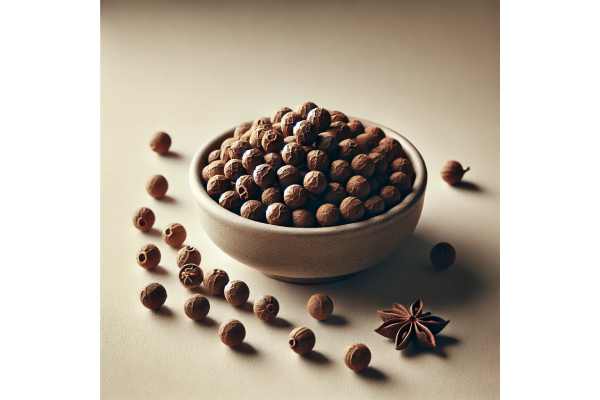
These look similar to large peppercorns. Whole berries retain their volatile oils longer than ground spice and are excellent for stews, braises, pickling liquids, and mulled beverages, where they can be simmered and then removed. - Ground allspice
The berries are finely milled into a fragrant powder. This is convenient for baking, rubs, marinades, and spice mixes. The trade-off is that ground allspice loses aroma faster as its oils are exposed to air and light. - Allspice essential oil and extracts
Essential oil is obtained by steam distillation and is far more concentrated than the culinary spice. It is mainly used in food manufacturing, perfumery, and topical preparations. Because of its high eugenol content and potency, it should be treated as a concentrated herbal product rather than as a regular kitchen ingredient.
From a culinary standpoint, allspice pairs especially well with meats (particularly pork, lamb, and game), root vegetables, legumes, and fruit-based desserts. It can add depth to tomato sauces, chili, or bean dishes with just a small pinch. Used thoughtfully, it helps reduce the need for heavy salt or sugar while still delivering a sense of richness and warmth.
Allspice Nutrition Profile and Key Compounds
Like most spices, allspice is consumed in small quantities, so its calorie contribution is minimal, but its nutrient and phytochemical density is high. Most nutrition databases list the following approximate values:
- 1 teaspoon (about 2 g) ground allspice
- Calories: around 5
- Carbohydrates: roughly 1–1.5 g
- Fiber: about 0.5 g
- Protein and fat: each well under 1 g
- 1 tablespoon (about 6 g) ground allspice
- Calories: roughly 16
- Carbohydrates: about 4–4.5 g
- Fiber: around 1.3 g
Because these values are approximate and vary by growing conditions, they should be treated as guidance rather than exact numbers. Still, they highlight a useful point: per tablespoon, allspice is fiber rich yet low in calories, making it a way to slightly increase fiber intake in a very concentrated form.
Allspice offers notable amounts of several minerals, including:
- Calcium – supports bones, teeth, and muscle function.
- Iron – essential for hemoglobin and oxygen transport.
- Magnesium – involved in energy metabolism, muscle and nerve function.
- Potassium – helps with fluid balance and normal blood pressure.
- Manganese – important for antioxidant enzyme function and bone metabolism.
Vitamins present in modest amounts include vitamin C, vitamin A (as carotenoids), and several B vitamins such as niacin, vitamin B6, and folate. Since serving sizes are small, allspice is not a stand-alone source of these nutrients but contributes to the overall nutrient density of meals.
Where allspice truly stands out is in its phytochemical profile. Key bioactive compounds include:
- Eugenol
A phenolic compound also found in cloves, with well-documented antioxidant, antimicrobial, and local anesthetic properties. In allspice essential oil, eugenol can make up a large share of the volatile fraction. - Gallic acid and other phenolic acids
These are potent antioxidants that may help protect cells from oxidative damage and may modulate inflammatory pathways in experimental models. - Quercetin and related flavonoids
Flavonoids are plant pigments with antioxidant and potential anti-inflammatory effects. They are being studied for roles in vascular health, immune function, and metabolic regulation. - Ericifolin and other unique phenolic compounds
Research has identified several compounds in allspice that are not well represented in other common foods. Some have shown anti-proliferative effects in cancer cell models and other promising biological activities.
These compounds are concentrated in the berry and, in some cases, in the leaves of the tree. Different processing methods (drying, grinding, extraction) alter their relative proportions. For everyday cooking, using fresh, well-stored allspice helps you capture more of these natural chemicals, even though precise intake amounts are difficult to quantify.
Because allspice is typically used alongside other herbs and spices, it contributes to the cumulative pool of protective phytochemicals in a varied diet, which is likely more important than the effect of any single compound alone.
Science-Based Health Effects of Allspice
Most of what we know about the health effects of allspice comes from laboratory and animal studies, along with longstanding traditional use. Human clinical trials using allspice itself are limited. That means the evidence is promising but still preliminary, and allspice should be viewed as a supportive dietary component rather than a stand-alone treatment.
Below are key areas where research and traditional practice intersect.
Antioxidant and anti-inflammatory activity
The phenolic profile of allspice—especially eugenol, gallic acid, and flavonoids—has shown strong antioxidant activity in experimental systems. These compounds can neutralize reactive oxygen species and may support the body’s own antioxidant defenses.
In various cell and animal models, extracts from allspice berries or leaves have been observed to modulate inflammatory pathways, including reductions in certain pro-inflammatory mediators. This has led researchers to explore potential roles in conditions where chronic low-grade inflammation is involved, such as metabolic, cardiovascular, and neurodegenerative disorders. However, translating these effects to realistic dietary doses in humans is still an open question.
Antimicrobial and food safety potential
Allspice essential oil and extracts have repeatedly demonstrated antimicrobial effects against a range of bacteria and fungi in laboratory studies. These include foodborne pathogens and spoilage organisms. Investigators have explored using allspice-derived compounds as natural preservatives, alone or together with conventional preservation methods.
In kitchen practice, the quantities used in recipes are much smaller than the concentrations tested in research. That said, traditional cuisines have long used allspice in pickling, curing, and marinating, which may contribute modestly to microbial control in combination with salt, acid, and refrigeration.
Digestive comfort and gas relief
Historically, allspice has been used for indigestion, gas, and mild stomach upset. Some of its essential oil components can relax smooth muscle in the gut in experimental settings, and the spice’s warming, carminative character is similar to other digestive spices like ginger, fennel, or clove.
The dietary fiber in ground allspice may also support gut health when used regularly in small amounts, though it should not replace larger fiber sources such as whole grains, legumes, fruits, and vegetables.
Metabolic and cardiometabolic effects
A few experimental studies have explored how compounds from Pimenta dioica may influence blood sugar regulation, lipid metabolism, or blood pressure through antioxidant and anti-inflammatory actions. Some components have shown effects on enzymes or signaling pathways involved in glucose handling and vascular tone in preclinical models.
At this stage, evidence is not strong enough to recommend allspice as a specific therapy for diabetes, hypertension, or dyslipidemia. Instead, it is more realistic to view allspice as one of several flavorful herbs and spices that can support a nutrient-dense, lower-sodium, lower-sugar diet, which is known to help these conditions.
Emerging research areas
Research has also investigated:
- Anti-proliferative effects of certain allspice compounds on cancer cell lines.
- Potential antiviral and immune-modulating actions of extracts and isolated constituents.
- Effects on pain perception and local analgesia, likely related to eugenol.
These findings are scientifically interesting but still far from clinical recommendations. Spices such as allspice can be part of a protective dietary pattern, but they do not replace evidence-based treatment plans for serious disease.
Allspice Risks, Sensitivities and Interactions
For most healthy people, culinary amounts of allspice are considered safe. However, like any concentrated herbal ingredient, there are situations where caution is wise.
Allergies and intolerances
True allergy to allspice is rare but possible. People who are allergic to cloves or other members of the Myrtaceae family (such as certain eucalyptus species) may be more likely to react because of similar compounds.
Potential symptoms can include:
- Oral itching or burning
- Hives or skin rash
- Swelling of the lips, tongue, or throat
- Wheezing or difficulty breathing in more severe cases
Anyone who has experienced such symptoms after eating allspice or multi-spice blends should avoid the spice and consult an allergist for evaluation.
Some individuals may not have a formal allergy but still notice digestive upset, heartburn, or discomfort after consuming heavily spiced foods. In those cases, reducing portion size, avoiding very spicy dishes, or limiting allspice may help.
Salicylate sensitivity and respiratory conditions
Many herbs and spices, including allspice, naturally contain salicylates. Most people tolerate these at dietary levels. However, in individuals with salicylate sensitivity or certain asthma phenotypes, even small amounts of salicylates can provoke symptoms such as nasal congestion, hives, or wheeze.
If you know you are sensitive to salicylates or have been advised to follow a low-salicylate diet, discuss the use of allspice with your healthcare professional and dietitian.
Interactions with blood-thinning medication
Eugenol, a main constituent in allspice, has mild antiplatelet (blood-thinning) effects in experimental models. When allspice is used in normal cooking quantities, this effect is unlikely to be clinically significant for most people.
However, for individuals who:
- Take anticoagulant or antiplatelet medications (such as warfarin, apixaban, or daily aspirin)
- Have bleeding disorders
- Are preparing for surgery or dental procedures
it is prudent to avoid high intake of allspice in supplemental or concentrated forms (such as large doses of extracts or essential oil), and to inform the treating clinician about all herbal products and spices being used regularly. Culinary amounts are generally acceptable, but medical advice should guide individual decisions.
Essential oil safety
Allspice essential oil is not the same as the culinary spice:
- It is far more concentrated and can irritate skin and mucous membranes if used undiluted.
- Ingesting essential oil can cause nausea, vomiting, abdominal pain, and potentially liver injury at high doses.
- Essential oils can interact with medications and underlying health conditions.
For these reasons, internal use of allspice essential oil should only occur under the supervision of a qualified practitioner experienced with herbal and essential oil safety. At home, it is best reserved for well-formulated topical products and used only in diluted form according to professional guidance.
Pregnancy, breastfeeding, and children
Using allspice in typical culinary amounts is generally considered acceptable during pregnancy and breastfeeding, unless an individual allergy or intolerance exists. However:
- Concentrated forms such as essential oil, tinctures, or high-dose capsules have not been well studied in these groups.
- Young children are more vulnerable to adverse effects from essential oils.
Pregnant or breastfeeding individuals, as well as caregivers of young children, should avoid medicinal doses and essential oil preparations unless specifically advised by their healthcare provider.
Buying Allspice, Quality and Storage
Choosing high-quality allspice helps you gain the most flavor and potential benefits while minimizing contamination risks and waste.
Whole versus ground
- Whole berries
- Best choice for maximum aroma and shelf life.
- Ideal in pickling brines, poaching liquids, mulled wine or cider, slow-cooked stews, and marinades where they can infuse and then be removed.
- You can grind them fresh in a spice grinder or mortar to use in baking or rubs.
- Pre-ground allspice
- More convenient for everyday cooking and baking.
- Loses volatile oils faster due to larger exposed surface area.
- Still a good option if you cook with it frequently and buy modest quantities.
A practical approach is to keep a small jar of ground allspice for quick use and a backup supply of whole berries for grinding fresh or for long-simmered dishes.
How to evaluate quality
When buying allspice, look for:
- Color and appearance
- Whole berries should be firm, well-dried, and evenly brown, not faded or shriveled.
- Ground allspice should be a uniform warm brown, without visible clumps or pale patches suggesting filler.
- Aroma
- High-quality allspice smells rich and layered—sweet, spicy, and slightly peppery.
- A faint or dusty smell usually indicates old stock.
- Packaging
- Choose airtight containers, preferably opaque or dark glass to limit light exposure.
- Avoid bulk bins in shops with poor turnover or open containers exposed to heat and humidity.
If available, spices from reputable suppliers that specify origin (for example, Jamaica or Central America) and harvest dates can offer better traceability and quality control.
Sustainability and ethical sourcing
Allspice is often harvested from wild or smallholder-managed trees. Supporting brands that prioritize:
- Fair prices for growers
- Responsible harvesting and replanting
- Transparency about origin
can encourage sustainable practices and help protect biodiversity in the regions where Pimenta dioica grows. While certifications are not perfect, labels related to fair trade, organic production, or regenerative agriculture may indicate a higher level of environmental and social standards.
Storage guidelines
To preserve flavor and minimize the risk of contamination:
- Store allspice in an airtight container.
- Keep it in a cool, dry cupboard away from direct sunlight, stoves, or dishwashers.
- Avoid keeping spice jars directly above the range, where heat and steam accelerate degradation.
Approximate shelf-life under good storage conditions:
- Whole berries: up to 3–4 years, though best aroma is typically within 2–3 years.
- Ground allspice: about 1–2 years, with peak flavor in the first 12 months.
Allspice that has lost its aroma is not dangerous but contributes little taste or phytochemical value. If you notice musty smells, signs of moisture, or visible mold, discard the spice.
Cooking With Allspice and Preserving Benefits
Allspice’s warmth and complexity make it a powerful tool in both everyday and special-occasion cooking. Using it strategically helps you capture its flavor while preserving as many beneficial compounds as practical.
Practical ways to use allspice
Some classic and modern applications include:
- Savory dishes
- Jerk-style rubs or marinades for chicken, pork, or tofu.
- Seasoning for meatballs, kofta, sausages, and lamb stews.
- Additions to chili, bean stews, lentil soups, and tomato-based sauces for depth.
- Sweet dishes and baking
- Spice cakes, gingerbread, pumpkin or sweet potato pies.
- Fruit compotes, baked apples, and crumble toppings.
- Spiced granola, oatmeal, and energy bites.
- Drinks and infusions
- Mulled cider, wine, or non-alcoholic spiced juices.
- Chai-style teas and herbal blends.
- Warm milk or plant-based beverages with honey and a pinch of allspice for a calming evening drink.
Whole berries work best in long-simmered liquids, while ground allspice is more appropriate for batters, doughs, rubs, and seasoning blends.
Timing and techniques for maximum flavor
Because allspice contains both relatively heat-stable phenolics and more volatile aroma compounds, the cooking method matters:
- To build deep, background warmth
Toast whole berries briefly in a dry pan over low heat until fragrant, then add to stews or grind for spice blends. This can enhance flavor but should be done gently to avoid burning, which damages beneficial compounds. - To preserve top notes
Add a small extra pinch of ground allspice toward the end of cooking sauces, soups, or stews. This layers fresh aroma on top of the base flavor that developed earlier. - For baking
Since baking times are relatively long, use allspice alongside other robust spices like cinnamon or ginger. The overall flavor will remain, even though some volatile compounds are lost.
Marinating and pairing tips
Allspice pairs particularly well with:
- Citrus (orange, lime), which brightens its warmth.
- Garlic, ginger, and onion, balancing sweet and savory notes.
- Other spices such as cinnamon, nutmeg, cloves, coriander, black pepper, and chili.
In jerk-style marinades, allspice is combined with fresh chilies, thyme, garlic, scallions, lime, and a touch of sweetener. The combination of acid, salt, and spices helps tenderize protein and adds complexity without needing large amounts of sugar or fat.
Nutrient retention considerations
Most of allspice’s micronutrients and phytochemicals are reasonably stable in normal cooking, particularly when used in moist-heat dishes like stews or baked goods. Still, you can make choices that likely preserve more of its beneficial compounds:
- Use fresh, well-stored spices rather than very old stock.
- Avoid prolonged high-heat dry toasting, which can degrade phenolics and create off-flavors.
- When making tea or infusions, steep gently rather than boiling for extended periods.
Since spices are only one piece of the dietary puzzle, the goal is not perfection but consistent use of fresh, high-quality ingredients as part of varied, mostly minimally processed meals.
Allspice Portions, Comparisons and FAQs
Typical serving size and frequency
Because allspice is potent, a little goes a long way:
- A typical serving per person in a cooked dish is around ¼–½ teaspoon ground allspice.
- Many recipes for a family of four use 1–2 teaspoons total.
- For most healthy adults, using up to about 1 teaspoon (around 2–3 g) of ground allspice per day as part of meals is a reasonable, conservative upper range.
This does not include concentrated supplements or essential oil, which should not be self-prescribed.
If you are new to allspice, start with smaller amounts and increase gradually to find your preferred flavor intensity while checking how your body responds.
How does allspice compare with similar spices?
- Allspice vs. clove
Both are rich in eugenol and have strong, warm flavors. Clove tends to be sharper and more pungent, while allspice tastes smoother and more rounded, with hints of cinnamon and nutmeg. Nutritionally, both provide fiber and concentrated antioxidants; differences are more a matter of flavor and culinary roles than major nutrient gaps. - Allspice vs. cinnamon
Cinnamon is often used in larger quantities (for example in oatmeal or baking), so it may contribute more fiber or polyphenols at typical serving sizes. Allspice is stronger and is therefore used in smaller amounts but adds a broader flavor spectrum and different phenolic compounds. - Allspice vs. “pumpkin spice” blends
Pumpkin spice mixes usually contain cinnamon, nutmeg, ginger, and cloves, sometimes with allspice included. Using pure allspice instead gives similar warmth with a more straightforward ingredient list. For people sensitive to one component of multi-spice blends, single-spice use can make adjustment easier.
Who might need to limit or avoid allspice?
It may be advisable to limit or avoid allspice, or to seek tailored medical advice, if you:
- Have a confirmed allergy to allspice, clove, or related spices.
- Have salicylate sensitivity or a history of spice-triggered asthma or hives.
- Use blood-thinning medications or have a diagnosed bleeding disorder, especially if considering herbal doses or essential oil.
- Are pregnant, breastfeeding, or planning pregnancy and considering more than normal culinary amounts.
- Are responsible for young children and considering using essential oils at home.
In these situations, a healthcare professional—ideally one familiar with nutrition and herbs—can help you decide on safe use or alternatives.
Frequently asked questions
Is allspice the same as a blend of spices?
No. Despite its name, allspice is a single spice made from Pimenta dioica berries, not a mixture. Its complex flavor can mimic a blend of cinnamon, nutmeg, and clove, which is why it is sometimes confused with mixed spice blends.
Can allspice help with weight loss?
Allspice by itself does not cause weight loss. However, using it liberally in cooking can make nutrient-dense, lower-sugar and lower-fat foods more satisfying, which may indirectly support weight management when combined with an overall healthy lifestyle.
Is allspice safe for people with high blood pressure?
Culinary amounts of allspice are low in sodium and can be used to flavor food without relying heavily on salt, which supports blood pressure management. As long as you do not have specific allergies or interactions, moderate use in cooking is generally acceptable. For concentrated extracts or essential oil, medical supervision is important.
Can I drink allspice tea every day?
A mild infusion made with a few whole berries or a small pinch of ground allspice is usually well tolerated by most people. If you have digestive conditions, are pregnant, on medication, or have any concerns, discuss regular use with your healthcare provider.
References
- Allspice: Nutrients, Benefits, and Downsides 2021 (Overview)
- Spices, ground, allspice nutrition facts and analysis. 2024 (Nutrient Database)
- Medicinal Properties of the Jamaican Pepper Plant Pimenta dioica L. (Myrtaceae) 2012 (Systematic Review)
- Composition and Antibacterial Activity of the Essential Oil from Pimenta dioica (L.) Merr. from Guatemala 2020 (Experimental Study)
- Pimenta dioica (L.) Merr. Bioactive Constituents Exert Anti-SARS-CoV-2 and Anti-Inflammatory Activities: Molecular Docking and Dynamics, In Vitro, and In Vivo Studies 2021 (Experimental Study)
Disclaimer
The information in this article is intended for general educational purposes only and is not a substitute for personalized medical advice, diagnosis, or treatment. Although allspice is a commonly used culinary spice, its potential health effects, benefits, and risks can vary depending on individual health status, underlying conditions, and medications. Always consult a qualified healthcare professional before making significant changes to your diet, using herbal preparations, or taking supplements, especially if you are pregnant, breastfeeding, have chronic health conditions, or take prescription or over-the-counter medications.
If you found this article helpful, you are warmly invited to share it with friends, family, or colleagues on Facebook, X (formerly Twitter), or any platform you prefer. Thoughtful sharing helps others access reliable information and supports the ongoing work required to produce high-quality, evidence-informed content.