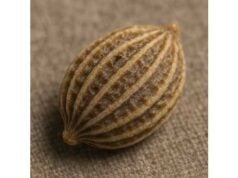
Sweetly aromatic and unmistakably licorice-like, anise seeds add warmth to breads, cookies, and liqueurs—and a gentle lift to savory dishes, teas, and spice blends. Behind the flavor sits anethole, the main volatile that gives anise its signature scent and many of its functional properties. In the kitchen, a pinch goes a long way: blooming the seeds in fat perfumes pan sauces and vegetable sautés; grinding them brings depth to baking without heaviness. Nutritionally, anise is a spice—used in grams, not handfuls—but it’s mineral-dense per 100 g and contributes fiber and polyphenols. Traditional uses center on digestive comfort, breath freshness, and soothing teas; modern research continues to explore roles in cramping, respiratory support, and antimicrobial applications. This guide brings everything together in one place: what the science says (and doesn’t), precise nutrition tables, safety notes for allergies and special groups, ways to buy and store for peak aroma, and cooking techniques that protect delicate volatiles while delivering big flavor in small doses.
Key Takeaways
- Typical culinary serving: 1–2 g (½–1 teaspoon), up to once daily in food or tea.
- Potential benefits: pleasant digestive support; broad antimicrobial activity of anethole in lab settings.
- Safety note: a common Apiaceae spice—avoid if you have proven celery, carrot, mugwort or related spice allergies; essential oils are potent.
- Who should limit or avoid: infants and toddlers (choking hazard; no essential oil), pregnancy—avoid medicinal doses; allergy-prone individuals.
Table of Contents
- Anise seeds: detailed overview
- Anise nutrition profile (per 100 g)
- Anise benefits: evidence summary
- Risks, allergies and interactions
- Selecting quality, sustainability and storage
- Preparation, cooking and nutrient retention
- Portions, comparisons and FAQs
Anise seeds: detailed overview
Anise (Pimpinella anisum) is an annual herb in the Apiaceae family, related to fennel, caraway, cumin, dill, and coriander. The “seeds” are actually tiny ribbed fruits with a gray-green hue and intense aroma. Anise’s flavor is clean and sweet, leaning licorice without the bitterness some tasters get from fennel. Its essential oil fraction—typically a few percent by weight—is dominated by anethole, with smaller amounts of estragole and other terpenes. These volatiles are highly vapor-sensitive, which is why cooking technique matters (see Preparation).
Culinary roles across cuisines
- Baking and confectionery: European and Middle Eastern breads, cookies, and cakes; Italian pizzelle; German Springerle; Greek koulourakia.
- Spirits and beverages: ouzo, arak, raki, anisette, pastis; gently crushed seeds steeped as herbal tea.
- Savory uses: spice rubs for pork and poultry; braised carrots or pumpkin; tomato sauces; Middle Eastern spice blends (e.g., baharat variations).
- Pairings: cinnamon, clove, cardamom, coriander, citrus zest, cocoa, black pepper. A small dose of anise amplifies sweetness perception without extra sugar.
How anise compares to look-alikes
- Star anise (Illicium verum): different plant family but similar anethole-forward aroma; star anise pods are stronger and more camphoraceous.
- Fennel seed (Foeniculum vulgare): greener, herbal, with mentholic notes; gentler than anise.
- Caraway (Carum carvi): earthier, rye-bread signature; less sweet than anise.
Why cooks value anise
- A tiny amount shifts flavor balance, making desserts feel more perfumed and savory dishes taste rounder.
- When used with legumes or crucifers, many diners report the meal feels lighter and less gassy.
- In pickles and liqueurs, anise’s volatile oil acts as both the flavor engine and an aromatic preservative aid (not a substitute for safe processing).
Real-world use
For everyday cooking, ¼–½ teaspoon whole seeds will season a dish for 4 servings. Briefly toasting or blooming (5–15 seconds) wakes the aroma; long frying causes bitterness. Ground anise integrates seamlessly in baked goods but stales quickly—grind small batches.
Anise nutrition profile (per 100 g)
Important: Spices are consumed in grams. These values are for technical comparison and label work; see Portions for realistic intake. Sensible rounding is applied; composition varies by cultivar and handling.
Macros and electrolytes (per 100 g)
| Nutrient | Amount | % Daily Value (%DV) |
|---|---|---|
| Energy | 337 kcal | — |
| Protein | 17.6 g | 35% |
| Total fat | 15.9 g | 20% |
| Carbohydrate | 50.0 g | 18% |
| Dietary fiber | 14.6 g | 52% |
| Total sugars | ~0–5 g | — |
| Sodium | 16 mg | 1% |
| Potassium | 1441 mg | 31% |
| Water | ~10 g | — |
Fats and fatty acids (profile varies by origin)
| Component | Amount | Notes |
|---|---|---|
| Saturated fat | ~0.6–1.0 g | Primarily palmitic and stearic acids |
| Monounsaturated fat | ~8–9 g | Oleic acid dominant |
| Polyunsaturated fat | ~4–5 g | Linoleic (omega-6) major |
| Essential oil fraction | ~2–4 g | Volatiles led by anethole |
Carbohydrates
| Component | Amount | Notes |
|---|---|---|
| Starch | ~30–35 g | Main carbohydrate store |
| Sugars | ~3–5 g | Mostly sucrose/fructose traces |
| Dietary fiber | 14.6 g | Mix of insoluble and soluble fibers |
Protein and amino acids
| Item | Amount | Notes |
|---|---|---|
| Protein | 17.6 g | Complements grains/legumes; lysine modest |
| Limiting amino acid | — | Balance with pulses or soy |
Vitamins
| Vitamin | Amount | %DV |
|---|---|---|
| Vitamin C (ascorbic acid) | ~21 mg | 23% |
| Riboflavin (B2) | ~0.3 mg | 23% |
| Niacin (B3) | ~3.1 mg | 19% |
| Thiamin (B1) | ~0.3 mg | 25% |
| Vitamin B6 | ~0.65 mg | 38% |
| Folate (DFE) | ~10 µg | 3% |
| Vitamin A (RAE) | ~10 µg | 1% |
Minerals
| Mineral | Amount | %DV |
|---|---|---|
| Calcium | 646 mg | 50% |
| Iron | 37.0 mg | 205% |
| Magnesium | 170 mg | 40% |
| Phosphorus | 440 mg | 35% |
| Zinc | 5.3 g | 48% |
| Copper | 0.9 mg | 100% |
| Manganese | 2.3 mg | 100% |
Bioactives and phytonutrients
| Compound or class | Typical content (per 100 g seeds) | Functional note |
|---|---|---|
| Anethole | ~1–3 g (dominant in essential oil) | Drives aroma; antimicrobial; antispasmodic in models |
| Estragole | Trace–low | Flavor contributor; safety margins discussed by regulators |
| Flavonoids, phenolic acids | Variable | Antioxidant capacity in extracts |
Allergens and intolerance markers
| Item | Note |
|---|---|
| Apiaceae proteins | May cross-react with celery, carrot, coriander, dill, fennel in sensitized individuals |
| Essential oil potency | Can irritate mucosa or skin at high/concentrated exposure |
Glycemic and acid–base metrics
- Glycemic load (typical 1 g pinch): negligible.
- Potassium-to-sodium ratio: favorable on a per-100-g basis; real intake is small.
- PRAL: near neutral in small culinary portions.
Footnote: Fortified “anise beverages” and flavored products do not reflect seed nutrition; check labels for added sugars and additives.
Anise benefits: evidence summary
Digestive comfort and after-meal ease
Across traditional systems and modern kitchen practice, anise appears in “carminative” blends used with legumes, cabbage, and rich meals. Mechanistically, anethole and related volatiles can relax smooth muscle in experimental models and show broad antimicrobial effects against common food microbes. In everyday terms, a pinch of anise in beans, stews, or pickles adds a soothing aroma and may help meals feel lighter—without replacing food-safety basics or medical care.
Cramping and menstrual comfort (early clinical signal)
A small randomized, placebo-controlled trial of an anise-containing herbal capsule (Menstrugole) reported reduced menstrual pain over two cycles among students with primary dysmenorrhea. Because the product combined several botanicals, we can’t attribute the effect solely to anise, but the result aligns with longstanding use for spasmodic discomfort. For self-care, culinary amounts are reasonable; for targeted symptom relief, discuss standardized products with a clinician and watch for interactions (see Safety).
Respiratory and soothing aromatics
Traditional syrups and lozenges use anise for coughs and thick mucus. Regulatory assessments in Europe recognize aniseed preparations for temporary relief of mild, self-limited respiratory complaints based on traditional use. In the home, a warm anise infusion offers a pleasant aroma and hydration; avoid giving essential oils to children or using concentrated oils internally without professional oversight.
Antimicrobial and food applications
Anise essential oil shows activity against Gram-positive and Gram-negative bacteria in vitro. In kitchens, practical applications include seasoning marinades and pickles, where acidity and salt are already doing the heavy lifting. Anise contributes flavor and an aromatic push that complements safe processing, storage temperatures, and hygiene.
Emerging areas
Extract and animal studies explore antioxidant, anti-inflammatory, and metabolic effects of anise constituents (notably anethole). These remain exploratory; culinary use should be framed as flavor-forward support, not a replacement for evidence-based treatments.
Bottom line
- Best-supported: culinary use for perceived digestive comfort and pleasant aroma.
- Promising: adjunct role in benign cramping and cough comfort within multi-herb formulas.
- Not established: disease modification or strong biomarker changes from anise alone.
Practical ways to apply the evidence
- Add ¼–½ teaspoon anise to beans, lentils, or cabbage; bloom in oil 5–10 seconds before finishing the dish.
- For a gentle tea, crush ½–1 teaspoon seeds, steep in hot water 8–10 minutes, and strain.
- Blend with fennel and caraway for a classic, balanced after-meal sprinkle.
Risks, allergies and interactions
Allergy and cross-reactivity
Anise belongs to Apiaceae. People sensitized to celery, carrot, coriander, dill, fennel, or mugwort/celery-spice pollen syndromes can cross-react to Apiaceae spices, including anise. First exposures should be small if you have pollen-related oral allergy syndrome. Stop and seek care for hives, wheeze, or throat tightness.
Essential oil cautions
Seed essential oil is far more concentrated than culinary seeds. Undiluted oils can irritate the mouth, throat, stomach, and skin; do not give essential oils orally to children. If using topically as part of a rub or aromatherapy blend, dilute in a carrier oil and keep away from eyes and broken skin. People with dermatitis or fragrance sensitivities should avoid direct skin contact.
Pregnancy, lactation, and children
Culinary amounts in food and tea are generally considered acceptable for most adults. Avoid medicinal doses (standardized extracts or essential oil) in pregnancy due to limited high-quality safety data. For infants and toddlers, avoid whole seeds (choking risk) and avoid essential oil. If you’re considering herbal teas for a child, consult a pediatric professional; ensure products are free of contaminants and not confused with star anise adulterated with toxic species.
Kidney stones and special diets
Anise is typically used in tiny quantities and doesn’t meaningfully affect oxalate loads for most adults. If you follow a strict low-oxalate diet, track your total diet pattern rather than micro-servings of spices.
Medication considerations
At culinary doses, meaningful drug interactions are unlikely. Theoretical concerns with concentrated extracts include additive effects with other GI-active herbs and potential dermal sensitization. If you use standardized botanical products regularly, share the full list with your clinician and pharmacist.
Quality and contamination
As with many spices, supply chains can face adulteration or contamination. Buying from reputable brands, choosing whole seeds, and storing properly reduce risk. Discard seeds that smell musty, look damp or clumped, or taste unusually harsh or paint-like—signs of oxidation or contamination.
Selecting quality, sustainability and storage
How to select quality anise
- Appearance: small, ribbed, green-gray seeds with minimal dust; uniform color and size.
- Aroma: rub a few seeds—fragrance should bloom immediately with a clean, sweet licorice note. Flat or musty scent suggests age or poor storage.
- Form: buy whole seeds for shelf life; grind only what you need. Pre-ground anise stales quickly.
- Transparency: favor brands that identify species (Pimpinella anisum), country of origin, and lot codes. Reputable vendors screen for heavy metals, microbes, and adulterants.
Sustainability snapshot
- Transport and packaging drive the biggest footprint for small spices. Choose modest package sizes you’ll finish within months, and recyclable packaging when available.
- Crop management: anise is often grown in rotation; integrated pest management and careful drying protect both quality and workers.
- Pollinator note: as a flowering Apiaceae, anise supports insects in field; encourage biodiversity by supporting brands that source from diversified farms when possible.
Storage for peak aroma
- Container: airtight glass or steel with tight lids.
- Environment: cool, dark, dry place—avoid cupboards above the stove.
- Time horizon: whole seeds retain best flavor 6–12 months; ground anise 2–3 months.
- Bulk strategy: if buying large bags, portion and freeze tightly sealed packets. Thaw sealed to avoid condensation.
- Freshness check: crush a few seeds; if fragrance is faint, it’s time to replenish.
Budget tips
- Whole seeds are inexpensive per recipe because doses are tiny.
- Stretch specialty blends by mixing your own (anise + fennel + caraway) and grinding fresh.
Preparation, cooking and nutrient retention
Your goal: maximize fragrance and avoid bitterness. Volatiles like anethole flash off with heat, so short, controlled exposure is key.
Core techniques
- Blooming (tempering): Heat oil or ghee until shimmering. Add ¼–½ teaspoon anise seeds; they should sizzle in 2–3 seconds. Swirl 5–15 seconds until fragrant—do not brown—then add liquids or toss with cooked vegetables.
- Dry-toasting: Warm a skillet on low-medium. Add 1 teaspoon seeds; stir until aroma lifts and color deepens slightly (30–60 seconds). Cool before grinding; over-toasting tastes medicinal.
- Grinding: Use a spice grinder for a fine powder. Grind small batches; label and date. For baking, sift to prevent clumps.
- Infusion (tea or syrup): Lightly crush ½–1 teaspoon seeds per cup; steep 8–10 minutes just off the boil. For syrups, simmer gently, then strain.
Retention tips
- Heat gently, briefly. Volatiles evaporate fast—short exposures keep flavor bright.
- Add late. For stews and braises, stir ground anise in during the last 10 minutes.
- Use fat or alcohol. Aromatics dissolve in fat and alcohol; a little butter, oil, or liqueur carries flavor evenly.
- Balance with acid and salt. A squeeze of citrus or a pinch of salt enhances anise’s sweetness, letting you use less sugar.
Smart pairings and applications
- Baking: cookies, biscotti, sponge cakes, quick breads; pair with citrus zest and cocoa.
- Savory: roasted carrots or squash, tomato sauces, pork rubs, tagines.
- Beverages: after-meal teas; syrups for coffee or mocktails; anise-forward liqueurs.
- Spice blends: equal parts anise, fennel, and caraway make a classic carminative mix; add coriander for a brighter top note.
Common mistakes
- Over-blooming until seeds darken (bitterness).
- Using stale ground anise (flat, dusty flavor).
- Confusing anise with star anise in large amounts—star anise is stronger and can overpower.
Make-ahead ideas
- Anise sugar: bury a crushed tablespoon of seeds in a jar of sugar for 1–2 weeks; use in coffee or baking.
- Spiced crumb: almond meal + crushed anise + orange zest + pinch of salt to finish yogurt, fruit, or roasted vegetables.
- Tea sachets: portion lightly crushed seeds into paper filters for quick cups.
Portions, comparisons and FAQs
Real-world portions
- Culinary use: 1–2 g (½–1 teaspoon) seeds per dish, serving 2–4 people.
- Tea: ½–1 teaspoon lightly crushed seeds per cup; steep 8–10 minutes.
- Upper limit for flavor: more than 1 teaspoon per 4 servings can dominate or taste medicinal unless balanced with bold spices.
- Children: avoid whole seeds for toddlers (choking). Do not use essential oil internally; for older children, discuss any herbal tea with a clinician.
How anise compares to similar spices
- Fennel seed: gentler, greener, with mentholic lift; use fennel when you want subtlety.
- Caraway: rye-bread, earthy; better for savory breads and cabbage; anise is sweeter.
- Star anise: stronger, resinous; great in long braises and stocks—use sparingly or it will dominate.
- Licorice root (Glycyrrhiza): sweet-bitter glycyrrhizin, not the same as anise; licorice has blood pressure concerns at high intakes, which anise seeds do not share in culinary amounts.
Who benefits most from culinary anise
- People who love beans, lentils, or crucifers but want meals to feel lighter.
- Bakers seeking a clean licorice note without heavy sweetness.
- Home picklers who want aromatic depth on top of salt and acid.
FAQs
Does anise help indigestion?
Many people find anise-flavored meals and teas soothing after heavy or gas-forming foods. Controlled clinical evidence is limited and often uses multi-herb formulas. Treat anise as a pleasant culinary aid.
Is anise safe every day?
Culinary amounts in food and tea are generally well tolerated for most adults. Avoid concentrated extracts and essential oil unless guided by a professional.
Is anise the same as star anise?
No—different plants, similar aroma. Star anise is stronger; do not confuse food-grade star anise with toxic Japanese star anise products.
Will cooking destroy benefits?
Long, high heat drives off aroma. Brief blooming, late addition, and grinding fresh preserve volatiles.
Can I substitute fennel seed?
Often, yes—start with 1.5–2 times the amount of fennel to match the punch of anise, then adjust to taste.
References
- Assessment report on Pimpinella anisum L., fructus and Pimpinella anisum L., aetheroleum 2014 (Regulatory Assessment)
- Effect of Menstrugole on primary dysmenorrhea: a randomized clinical trial 2018 (RCT)
- Pimpinella anisum L. Essential Oil a Valuable Antibacterial Agent: A Comprehensive Review 2023 (Review)
- A Multidimensional Review of Pimpinella anisum and Recommendation for Future Research to Face Adverse Climatic Conditions 2023 (Review)
- Anise seeds 2024 (Official Food Composition)
Medical Disclaimer
This guide provides general information about culinary use, nutrition, and safety of anise seeds. It is not a substitute for professional medical advice, diagnosis, or treatment. Always consult a qualified healthcare professional before using concentrated extracts or essential oils, if you have allergies or chronic conditions, are pregnant or breastfeeding, or are considering herbal products for symptom management. If you experience signs of an allergic reaction (hives, wheeze, throat tightness) after consuming anise, seek medical care immediately.
If this article was helpful, please consider sharing it on Facebook, X (formerly Twitter), or any platform you prefer. Your support helps us continue producing careful, reader-first nutrition guides.