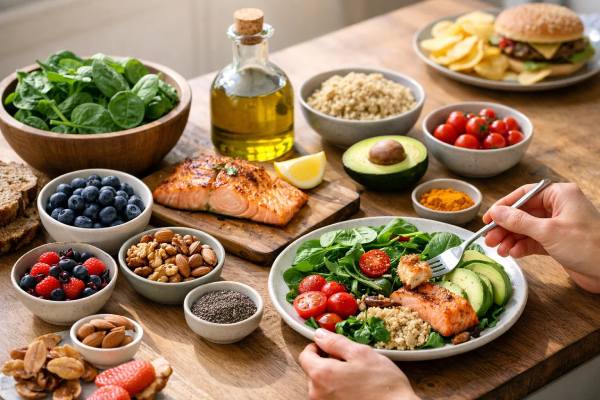
Depression is never “just in your head.” It affects sleep, appetite, energy, focus, and even how your body handles stress. In many people, those shifts overlap with a quieter biological theme: low-grade inflammation. That does not mean inflammation causes depression for everyone, or that food can replace treatment. But it does help explain why the same mind can feel heavier when the body is run down—after weeks of ultra-processed meals, poor sleep, and blood-sugar swings.
An anti-inflammatory eating pattern aims to steady that internal environment with fiber-rich plants, healthy fats, and nutrient-dense proteins, while limiting foods that tend to amplify inflammatory signals. The goal is not perfection. It is a realistic, repeatable way of eating that supports mood, brain function, and overall health—often alongside therapy, medication, and other proven care.
Core Points
- A Mediterranean-style, anti-inflammatory pattern may reduce depressive symptoms for some people when used consistently for 8–12 weeks.
- Emphasizing fiber, omega-3 fats, and colorful plants can support the gut-brain connection and steadier energy.
- Highly restrictive plans can backfire by increasing stress, cravings, and nutrient gaps, especially during low mood.
- Start with 2–3 simple swaps per week and build a repeatable “default menu” you can follow on hard days.
Table of Contents
- Why inflammation matters in depression
- What the evidence really shows
- Foods that may support mood
- Foods and habits to limit
- A simple two-week starter plan
- Personalization, safety, and support
Why inflammation matters in depression
Inflammation is your immune system’s way of responding to threats—like infection, injury, or chronic stress. In the short term, it is protective. The challenge is when inflammation becomes persistent and low-grade. That pattern has been linked to fatigue, sleep disruption, “brain fog,” and lower stress tolerance—symptoms that often overlap with depression.
A helpful way to think about it is this: the brain is not separate from the body’s chemistry. Immune messengers called cytokines can influence neurotransmitters, the stress-response system, and even motivation. In some people, higher inflammatory activity is associated with reduced sensitivity to rewarding experiences and greater sensitivity to stress. This is one reason depression can feel both emotionally painful and physically exhausting.
Diet matters because it is a daily input that shapes multiple systems tied to inflammation:
- Blood sugar stability: Repeated spikes and crashes can increase oxidative stress and inflammatory signaling, and they often worsen irritability and low energy.
- Gut microbiome: Fiber and fermented foods can support beneficial gut bacteria. In turn, gut microbes produce compounds (like short-chain fatty acids) that help regulate inflammation and may affect mood-related pathways.
- Fat quality: Certain fats (like omega-3s from fatty fish) are associated with healthier inflammatory balance, while diets dominated by ultra-processed fats can push the body toward a more inflammatory profile.
- Micronutrients: Low intakes of magnesium, folate, zinc, vitamin D, and other nutrients are common when appetite is poor or meals are repetitive—and these nutrients support brain function in practical ways.
Two important cautions keep expectations realistic. First, depression is not always an “inflammation problem.” Some people have normal inflammatory markers and still experience severe depression. Second, inflammation can be driven by many factors beyond food—sleep apnea, chronic pain, trauma, loneliness, alcohol use, metabolic issues, and more. An anti-inflammatory diet is best viewed as a supportive foundation: it can make the body easier to live in while other treatments do their work.
What the evidence really shows
When people search for an “anti-inflammatory diet for depression,” they usually want a clear answer: Does it help? The most honest answer is: it may help some people, and it tends to be most useful as an add-on to standard care.
Across research, the strongest and most consistent signals come from dietary patterns that look a lot like a Mediterranean-style approach: plenty of vegetables, fruit, legumes, whole grains, nuts, seeds, olive oil, and fish, with limited ultra-processed foods and added sugars. These patterns correlate with better mental health outcomes in large populations, and several clinical trials suggest symptom improvement in groups with depression—especially when support is structured (coaching, meal plans, shopping guidance).
Why results vary:
- Severity and subtype: Depression linked with metabolic issues (insulin resistance, obesity, fatty liver) may respond more noticeably to anti-inflammatory eating because inflammation is more “active” in the background.
- Starting point: People moving from a highly processed diet often feel a bigger change than those already eating a reasonably balanced pattern.
- Support level: Depression makes planning, shopping, and cooking harder. Studies that include practical support often show stronger benefits than “here is a pamphlet” approaches.
- Timeframe: Food rarely works like a fast-acting medication. Improvements—when they happen—often show up gradually over 6–12 weeks, with earlier changes sometimes appearing as steadier energy or fewer afternoon crashes.
It is also useful to separate three different questions that get blended together online:
- Can diet prevent depression? Observational data suggest higher diet quality is linked with lower risk over time, but it does not prove cause and effect.
- Can diet reduce symptoms if you already have depression? Trials suggest it can for some people, especially with Mediterranean-style patterns, but it is not universal.
- Can “anti-inflammatory” foods cure depression? No single food cures depression. Claims that one smoothie, supplement, or elimination plan will “fix” mood should be treated with caution.
A practical takeaway: you do not need to eat perfectly “clean” to benefit. Aim for a pattern that makes your average week more nutrient-dense, more fiber-rich, and less ultra-processed. That combination is where anti-inflammatory eating becomes realistic—and where it is most likely to support mood.
Foods that may support mood
An anti-inflammatory diet for depression works best when it is built around repeatable, satisfying staples. Think in terms of “what to add” more than “what to ban.” The foods below tend to support a healthier inflammatory balance and provide nutrients commonly linked to brain function.
The strongest “base layer” foods
- Colorful vegetables (especially leafy greens): Aim for 2–4 cups per day across meals. Greens, broccoli, peppers, carrots, and tomatoes provide polyphenols and antioxidants that support cellular resilience.
- Fruit (especially berries and citrus): A simple target is 1–2 servings daily. Berries are an easy add to yogurt, oats, or smoothies.
- Legumes: Beans, lentils, and chickpeas are affordable and high in fiber. Try 3–5 servings per week (more is fine if your digestion tolerates it).
- Whole grains: Oats, brown rice, quinoa, and whole-grain bread can help stabilize energy compared with refined grains—especially when paired with protein and fat.
- Extra-virgin olive oil: Use as your main added fat when possible. A practical range is 1–2 tablespoons daily, used on salads, vegetables, or grains.
- Nuts and seeds: Walnuts, almonds, chia, flax, pumpkin seeds—aim for a small handful most days. They add magnesium and healthy fats.
Omega-3 fats and protein choices
- Fatty fish: Salmon, sardines, mackerel, herring, and trout are rich in omega-3s. A practical goal is 2 servings per week (about 100–150 g per serving).
- If you do not eat fish: Build omega-3 intake with ground flax or chia (1–2 tablespoons daily) and consider discussing algae-based omega-3 options with a clinician if appropriate.
- Lean, minimally processed proteins: Eggs, poultry, tofu, tempeh, and plain Greek yogurt can support steady appetite and stable blood sugar.
Gut-supportive additions
- Fermented foods: Yogurt with live cultures, kefir, sauerkraut, kimchi, and miso can be useful in small daily amounts. Start with 2–4 tablespoons of fermented vegetables or one serving of yogurt/kefir.
- Prebiotic fiber: Onions, garlic, leeks, asparagus, oats, and cooled potatoes or rice can support beneficial gut bacteria.
A simple “plate formula” that’s hard to mess up
For most meals, aim for:
- Half the plate: non-starchy vegetables
- One quarter: protein
- One quarter: whole grains or starchy vegetables
- Add: olive oil, nuts/seeds, or avocado
This structure reduces decision fatigue—an underrated factor when depression makes everything feel heavier.
Foods and habits to limit
“What to limit” can feel like a lecture, especially when you are already struggling. The goal here is not guilt. It is to identify a few common patterns that tend to worsen inflammation, energy swings, and sleep—then replace them with something realistic.
Ultra-processed foods as the main target
Ultra-processed foods often combine refined starches, added sugars, industrial fats, and additives in a way that promotes overeating and unstable energy. Examples include packaged sweets, many fast foods, chips, sugary cereals, and many frozen “heat-and-eat” meals.
You do not need to eliminate them completely. A useful mindset is: make ultra-processed foods “sometimes foods,” not the foundation. If more than half your calories come from them most days, shifting even 20–30% of your intake toward whole foods can be meaningful.
Added sugars and sugary drinks
Sugar itself is not “toxic,” but frequent high-dose added sugar—especially in liquid form—can drive cravings and crashes. Consider these practical swaps:
- Replace soda or sweetened coffee drinks with sparkling water, unsweetened iced tea, or coffee with cinnamon and milk.
- If dessert is a comfort ritual, choose smaller portions and pair with protein (Greek yogurt with berries; dark chocolate after a balanced meal).
Refined carbs without protein or fiber
White bread, pastries, and many snack foods can spike blood sugar quickly. The issue is not “carbs are bad.” It is carbs alone—without fiber, fat, or protein. Try “pairing”:
- Fruit + nuts
- Toast + eggs
- Crackers + hummus
- Pasta + vegetables + olive oil + protein
Alcohol and sleep-disrupting habits
Alcohol can temporarily numb anxiety, but it often worsens sleep quality and next-day mood. For many people with depression, reducing alcohol is one of the most mood-supportive choices they can make. If quitting feels hard, start with a measurable step: 2–3 alcohol-free days per week, then reassess.
Also pay attention to caffeine timing. If you rely on caffeine to function, that is understandable—but consider limiting caffeine after midday if sleep is fragile.
The “restriction trap” to avoid
Aggressive elimination plans can raise stress hormones, worsen food anxiety, and increase the likelihood of rebound eating—especially during depression. Instead of “I can’t have that,” try: “What can I add to make this meal more supportive?” Add vegetables, add protein, add olive oil, add fruit—then adjust the rest.
A simple two-week starter plan
Depression makes consistency hard, so the best plan is the one that still works on low-motivation days. This two-week approach focuses on reducing friction, not chasing perfection.
Week 1: Build a “default menu” you can repeat
Choose 2 breakfasts, 2 lunches, and 2 dinners you can rotate. Repetition is a feature, not a failure.
Breakfast ideas
- Oats with Greek yogurt, berries, and chia or ground flax
- Eggs with spinach and whole-grain toast, plus fruit
Lunch ideas
- Lentil soup + side salad with olive oil
- Whole-grain wrap with hummus, chicken or tofu, and mixed vegetables
Dinner ideas
- Salmon (or tofu) + roasted vegetables + brown rice
- Chickpea and vegetable stew + yogurt or a small handful of nuts
If cooking feels impossible, use “semi-prep” options: bagged salad, frozen vegetables, canned beans, rotisserie chicken, microwaveable brown rice, and plain yogurt. These still count.
Week 2: Add two upgrades that move inflammation in the right direction
Pick any two:
- Fatty fish twice this week (or chia/flax daily if you do not eat fish).
- Legumes 3 times this week (beans, lentils, chickpeas).
- Two colors of vegetables at lunch and dinner.
- Swap one ultra-processed snack for nuts, yogurt, fruit, or hummus.
- Alcohol-free on weekdays (or a set number of days that feels doable).
A sample “hard day” plan
Hard days need a plan that requires almost no decisions:
- Breakfast: yogurt + frozen berries + nuts
- Lunch: canned beans + olive oil + lemon + bagged salad + bread
- Dinner: frozen vegetables + eggs (or tofu) + rice + olive oil
- Snack: fruit + peanut butter
Shopping list that covers most of the plan
- Olive oil, oats, whole-grain bread or wraps, brown rice or quinoa
- Canned beans and lentils, canned fish (if used), eggs, yogurt
- Frozen berries and frozen mixed vegetables
- Leafy greens, onions/garlic, tomatoes, citrus
- Nuts and seeds, herbs and spices
If you can only change one thing: eat a real breakfast with protein and fiber. Many people notice fewer mood dips and fewer cravings within days—not because breakfast “cures” depression, but because it reduces one avoidable stressor on the body.
Personalization, safety, and support
An anti-inflammatory diet is generally safe, but depression is a medical condition, and your food choices intersect with medications, health conditions, and personal history. A few guardrails protect both safety and progress.
When to involve a clinician or dietitian
Consider professional guidance if you have:
- Severe depression, suicidal thoughts, or rapidly worsening symptoms
- Diabetes, eating disorders, significant weight loss, or malnutrition risk
- Digestive disorders that limit fiber tolerance (for example, severe IBS or IBD flares)
- Pregnancy, breastfeeding, or complex medical conditions
A registered dietitian can tailor fiber increases, protein targets, and meal structure without triggering overwhelm.
Medication and supplement cautions
Food is not a medication, but it can interact indirectly:
- Omega-3 supplements: Often well tolerated, but higher doses may increase bleeding risk in people using anticoagulants or certain antiplatelet medications. Discuss dosing with your clinician.
- Alcohol: Can worsen depressive symptoms and interact with many psychiatric medications.
- Caffeine: Can amplify anxiety and disrupt sleep, which can worsen depression, even when caffeine “helps” temporarily.
If you take a monoamine oxidase inhibitor (MAOI), you may need to manage high-tyramine foods under medical guidance. If you are unsure, do not self-restrict—ask your prescriber.
Personalization that improves follow-through
Anti-inflammatory eating works best when it fits your life:
- If appetite is low: prioritize small, frequent meals with protein (yogurt, eggs, soups, smoothies with nut butter).
- If cravings are high: build meals around protein and fiber first; plan one satisfying treat intentionally rather than battling cravings all day.
- If cooking is unrealistic: focus on “assembly meals” (bagged salad + beans + olive oil; yogurt + fruit + nuts; frozen veg + eggs).
- If budget is tight: beans, lentils, oats, frozen vegetables, canned fish, and seasonal produce provide a high “nutrients per cost” ratio.
What progress should look like
Track outcomes that matter in daily life, not just “mood scores”:
- Fewer energy crashes
- More stable sleep and appetite rhythms
- Better concentration windows
- Less irritability or emotional “spikiness”
- Greater capacity to engage in therapy, movement, and relationships
Food is not a standalone solution—but it can lower the background noise that makes everything harder. If your symptoms remain intense after several weeks of consistent changes, that is not failure. It is a sign you deserve more support, not more restriction.
References
- The impact of the Mediterranean diet on alleviating depressive symptoms in adults: a systematic review and meta-analysis of randomized controlled trials 2025 (Systematic Review and Meta-Analysis)
- Diet Overall and Hypocaloric Diets Are Associated With Improvements in Depression but Not Anxiety in People With Metabolic Conditions: A Systematic Review and Meta-Analysis 2024 (Systematic Review and Meta-Analysis)
- Association between Western Dietary Patterns, Typical Food Groups, and Behavioral Health Disorders: An Updated Systematic Review and Meta-Analysis of Observational Studies 2023 (Systematic Review and Meta-Analysis)
- Diet quality and depression risk: A systematic review and meta-analysis of prospective studies 2025 (Systematic Review and Meta-Analysis)
- A randomised controlled trial of dietary improvement for adults with major depression (the ‘SMILES’ trial) 2017 (RCT)
Disclaimer
This article is for educational purposes and does not provide medical advice, diagnosis, or treatment. Depression can be serious and sometimes life-threatening. Dietary changes may support overall health and may help depressive symptoms for some people, but they are not a substitute for professional care, psychotherapy, or prescribed medication. If you have worsening symptoms, thoughts of self-harm, or feel unable to stay safe, seek urgent help immediately by contacting your local emergency number or a crisis service in your area. For personalized guidance—especially if you have medical conditions, take medications, are pregnant, or have a history of disordered eating—talk with a licensed healthcare professional or a registered dietitian.
If you found this helpful, consider sharing it with someone who might benefit—on Facebook, X (formerly Twitter), or any platform you prefer.