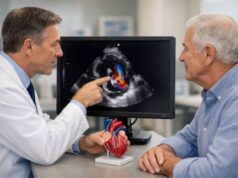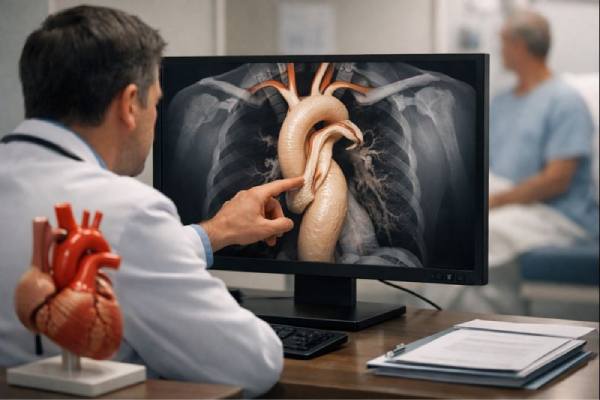
An aortic dissection is a medical emergency where the inner lining of the aorta—the body’s main artery—tears and blood forces its way between the layers of the vessel wall. This can suddenly reduce blood flow to the brain, heart, kidneys, or legs, and it can also lead to rupture. Many people describe the pain as abrupt and severe, but symptoms are not always “textbook,” which is why dissection is sometimes missed early. Fast recognition and the right treatment can be lifesaving. Some dissections need urgent surgery within hours; others are treated first with strict blood pressure control and close monitoring, sometimes followed by a stent procedure. This guide explains what dissection is, who is at risk, what warning signs to take seriously, how it is diagnosed quickly, and what treatment and long-term follow-up usually involve.
Table of Contents
- What an aortic dissection actually is
- Why it happens and who is at risk
- Symptoms, complications, and emergency signs
- How it’s diagnosed quickly
- Treatment: what happens first
- Long-term management and prevention
What an aortic dissection actually is
The aorta is the large artery that leaves the heart and delivers blood to the entire body. Its wall is built in layers. In an aortic dissection, a tear forms in the inner layer (often called an intimal tear, meaning “a rip in the inner lining”), and blood under high pressure pushes into the wall. This creates a new pathway—sometimes called a “false channel”—that can run alongside the normal channel where blood is supposed to flow.
Why dissection is so dangerous
A dissection can cause harm in several ways at once:
- It can block branch arteries. When the false channel presses on the true channel, blood flow to organs can drop suddenly. This is why a dissection can look like a stroke, a heart attack, or a kidney problem.
- It can weaken the aorta until it ruptures, causing internal bleeding.
- It can damage the aortic valve or the coronary arteries (the arteries that feed the heart), leading to heart failure or a heart attack.
- It can trigger life-threatening rhythm problems because the heart is suddenly under stress.
Type A vs Type B: the classification that guides treatment
Clinicians often use the Stanford system because it quickly points to the likely treatment:
- Type A involves the ascending aorta (the section closest to the heart). This type usually needs urgent surgery because the risk of rupture, valve failure, and heart complications is high.
- Type B starts beyond the left subclavian artery, in the descending thoracic aorta. Many Type B dissections are treated first with intensive medical therapy, with stent repair considered when complications arise.
Another system, DeBakey, divides dissections by where they begin and how far they extend, but the practical question is similar: does the dissection involve the ascending aorta?
Timing matters: acute, subacute, and chronic
You may hear dissections described by timing:
- Acute: within about 2 weeks of onset
- Subacute: weeks to a few months
- Chronic: beyond that
This matters because the aorta’s wall changes over time. Early on, it is more fragile; later, it can stiffen and remodel. Treatment choices and the timing of stent procedures may shift as the dissection evolves.
Why it happens and who is at risk
Aortic dissection usually occurs when mechanical stress (blood pressure and pulsatile force) meets a vulnerable aortic wall. Some people have obvious risks, such as long-standing high blood pressure or a known genetic condition. Others have a “silent” risk they did not know about until the event.
The most common driver: high blood pressure
Uncontrolled hypertension is a major contributor because it increases shear force against the aortic wall every heartbeat. Over years, this can weaken the middle layer of the aorta, making a tear more likely. Sudden spikes in blood pressure—during intense exertion, stimulant use, severe pain, or withdrawal states—can also act as triggers.
Structural and inherited risks
Some people are born with a higher-risk aorta. Common scenarios include:
- Connective tissue disorders (for example, Marfan syndrome or Loeys-Dietz syndrome) that weaken vessel walls.
- Bicuspid aortic valve (a valve with two leaflets instead of three), which can be associated with aortic enlargement.
- Family history of thoracic aortic aneurysm or dissection, especially at younger ages.
- Known aortic aneurysm: a widened aorta is under higher wall stress, particularly as diameter increases.
Even without a named genetic condition, a “tall, long-limbed” body type plus early aortic disease in relatives may prompt genetic evaluation.
Acquired risks and triggers
Other contributors include:
- Atherosclerosis (plaque disease), more often linked with Type B dissection in older adults
- Pregnancy and the postpartum period, especially in people with underlying aortic disease
- Inflammatory or autoimmune diseases that can affect large vessels
- Trauma (high-speed accidents) and iatrogenic injury (rare complications of procedures involving the aorta)
- Cocaine and methamphetamine, which can sharply raise blood pressure and heart rate
- Heavy weightlifting with breath-holding (Valsalva) in susceptible individuals
Risk is not only about “who,” but also about “where”
The ascending aorta faces high pulsatile stress close to the heart. That is one reason Type A dissections can occur even in people without obvious plaque disease. The descending aorta is influenced by different forces and is often involved in people with long-standing hypertension and atherosclerosis.
If you take one idea from this section, make it this: controlling blood pressure and identifying aortic enlargement early are two of the strongest levers we have to prevent dissection.
Symptoms, complications, and emergency signs
Aortic dissection symptoms depend on where the tear is, which branches are affected, and whether bleeding or valve failure occurs. Some cases are dramatic. Others are confusingly “off to the side,” which is why clinicians pay attention to patterns like sudden onset, migrating pain, and symptoms in multiple body areas.
Classic symptoms people describe
Many people report:
- Sudden, severe chest pain, often described as tearing, ripping, or sharp
- Pain that moves to the back, between the shoulder blades, or down toward the abdomen
- A sense that the pain began at a specific moment, not gradually
The location can hint at where the dissection is: chest pain is common with ascending involvement; back or abdominal pain is common with descending involvement. But overlap is common.
Symptoms that come from reduced blood flow to organs
A dissection can “steal” blood from branch vessels. This can cause:
- Stroke-like signs: weakness, facial droop, trouble speaking, vision changes
- Heart attack-like signs: chest pressure, shortness of breath, sweating, nausea
- Kidney problems: flank pain, reduced urine output, sudden lab changes
- Belly pain: especially if intestinal blood flow is affected
- Leg pain, numbness, or coldness, sometimes with a weaker pulse on one side
A key clinical clue is a combination that does not fit neatly into one diagnosis—for example, chest pain plus neurologic symptoms, or chest pain plus a cold, painful leg.
Complications clinicians watch for immediately
- Rupture and internal bleeding, causing sudden collapse or shock
- Aortic valve failure, leading to rapid heart failure and severe shortness of breath
- Pericardial tamponade (blood around the heart compressing it), often associated with Type A dissection
- Malperfusion (organ under-supply), which can be subtle at first but worsen quickly
- Spinal cord ischemia, which can cause leg weakness or paralysis in some descending dissections
Emergency signs: when every minute counts
Call emergency services immediately for:
- Sudden severe chest, back, or abdominal pain
- Fainting, severe weakness, or confusion
- Stroke-like symptoms
- New severe shortness of breath, blue lips, or chest pressure
- A cold, painful, numb, or weak limb
Do not drive yourself if symptoms are severe. Early treatment is highly time-sensitive, especially for Type A dissection, where prompt surgery can be lifesaving.
How it’s diagnosed quickly
Diagnosing aortic dissection is a balance: clinicians must move fast, but they also must choose the right test for the patient’s stability and presentation. The goal is not only to confirm dissection, but to define the type, extent, branch involvement, and complications—because those details decide treatment.
What clinicians look for at the bedside
A focused exam and history can raise suspicion quickly:
- Abrupt onset of severe pain with a clear start time
- Pain that migrates or changes location
- Blood pressure difference between arms or a noticeably weaker pulse on one side
- A new heart murmur suggesting aortic valve leak
- Signs of poor organ perfusion: neurologic deficits, cool limb, abdominal tenderness, low urine output
- Evidence of shock without an obvious cause
These findings are helpful, but none is required. A normal pulse exam does not rule out dissection.
Key tests in the emergency setting
Common early tests include:
- ECG to evaluate for heart attack or rhythm problems (an ECG can be normal in dissection)
- Chest X-ray (may show a widened mediastinum, but can also be normal)
- Blood tests to assess anemia, kidney function, and organ injury; some centers use D-dimer as part of a structured strategy, but it is not a stand-alone rule-out test
Because dissection can mimic other emergencies, clinicians often run these tests while preparing definitive imaging.
Definitive imaging: how dissection is confirmed
The most common confirmatory test is CT angiography (CTA) of the chest and often the abdomen and pelvis. CTA can show:
- The tear location and dissection extent
- Type A vs Type B anatomy
- Branch vessel involvement
- Signs of impending rupture or bleeding
Other imaging options may be used based on context:
- Transesophageal echocardiography (TEE): useful at the bedside, especially in unstable patients, and excellent for the ascending aorta and aortic valve.
- MRI angiography: very detailed but less practical in unstable emergencies due to time and monitoring constraints.
What “good diagnosis” includes beyond yes/no
A high-quality evaluation answers practical questions:
- Does it involve the ascending aorta?
- Is there organ malperfusion?
- Is there rupture, tamponade, or severe aortic valve regurgitation?
- What is the size of the aorta and what segments need ongoing surveillance?
This information guides immediate decisions: surgery, stent repair, or intensive medical therapy with careful monitoring.
Treatment: what happens first
Aortic dissection treatment begins the moment it is suspected. Even before imaging confirms the diagnosis, clinicians often start stabilizing pain and controlling blood pressure and heart rate, because reducing stress on the aorta can limit progression.
The first priorities: pain control and “anti-impulse” therapy
The goal is to reduce the force of blood hitting the aortic wall. Typical steps include:
- Strong pain control (often opioid analgesia in the acute phase) to reduce stress hormones and blood pressure spikes
- Rapid heart rate control (commonly with IV beta blockers) to reduce shear force
- Blood pressure lowering after heart rate is controlled, often using IV medications that can be adjusted minute by minute
Clinicians commonly target a low but safe blood pressure and a controlled heart rate, while making sure organs are still well perfused. This is careful, monitored treatment in an ICU or similar setting.
Type A dissection: surgery is usually the main treatment
For dissections involving the ascending aorta, urgent surgery is typically recommended because the risk of rupture, tamponade, coronary involvement, and valve failure is high. Surgery may involve:
- Replacing the damaged ascending aorta with a synthetic graft
- Repairing or replacing the aortic valve if needed
- Addressing arch involvement when present
Even with surgery, intensive blood pressure control remains essential before and after the operation.
Type B dissection: medical therapy first, then selective intervention
Many uncomplicated Type B dissections are treated initially with:
- ICU-level blood pressure and heart rate control
- Frequent symptom checks and repeat imaging
- Careful monitoring for complications
Intervention becomes more likely when Type B dissection is complicated by:
- Persistent or recurrent pain despite good control
- Uncontrolled hypertension despite medications
- Organ malperfusion (kidney, bowel, limbs, spinal cord)
- Aneurysm expansion or signs of impending rupture
In these cases, thoracic endovascular aortic repair (TEVAR) may be used. This is a stent-graft placed inside the aorta to cover the tear and redirect blood into the true channel.
Special situations that change the plan
- Dissection with stroke symptoms requires coordinated timing decisions, often prioritizing life-threatening aortic issues while protecting the brain.
- Pregnancy-related dissection demands a multidisciplinary team and individualized decisions based on gestational age and anatomy.
- Traumatic aortic injury is managed differently from spontaneous dissection and may involve different stent strategies.
A practical expectation: early treatment is intense and closely monitored. The safest outcomes come from rapid diagnosis, experienced teams, and disciplined blood pressure control.
Long-term management and prevention
Surviving an aortic dissection is the beginning of a long-term partnership with follow-up care. The main goals are to prevent another dissection, prevent aneurysm expansion, protect organ function, and support a safe return to daily life.
Blood pressure control is the cornerstone
Long-term outcomes strongly depend on steady blood pressure and heart rate control. Many patients are prescribed:
- A beta blocker as a foundation medication, if tolerated
- Additional blood pressure agents as needed to reach a consistent target
- Cholesterol therapy when atherosclerosis is present or risk is high
Consistency matters more than occasional perfect readings. A home blood pressure monitor, routine logs, and medication adherence can make a measurable difference.
Imaging surveillance: how clinicians watch the aorta
Most people need periodic imaging (often CTA, MRI, or echocardiography depending on location and prior repairs) to assess:
- Aortic diameter over time
- Healing or remodeling of the dissection
- Growth of any aneurysm segments
- Integrity of grafts or stents when present
Follow-up is typically more frequent in the first year and then spaced out if stable. The schedule is individualized based on anatomy, growth rate, and underlying risk factors.
Activity, work, and exercise: what “safe” often looks like
Many people can return to active lives, but the emphasis is on avoiding sudden pressure spikes:
- Aerobic activity (walking, cycling, swimming) is often encouraged once cleared, with gradual progression.
- Heavy lifting and breath-holding straining are usually discouraged; patients often receive specific weight limits and coaching on breathing during exertion.
- Cardiac rehabilitation or structured supervised programs can help rebuild confidence and stamina safely.
If you are unsure whether an activity is safe, ask for a clear “green/yellow/red” list rather than vague advice.
Genetic and family considerations
If a dissection occurred at a younger age, or if there is a family history of aortic disease, clinicians may recommend:
- Genetic counseling and testing
- Screening imaging for first-degree relatives
- Lifelong surveillance for the patient, even if repairs were successful
This is not about labeling. It is about preventing surprises for the patient and the family.
When to seek care quickly after discharge
Contact your care team promptly for:
- New or worsening chest, back, or abdominal pain
- New neurologic symptoms, fainting, or sudden weakness
- Shortness of breath, swelling, or rapid weight gain
- Uncontrolled blood pressure readings despite taking medications
Seek emergency care for sudden severe pain, stroke-like symptoms, collapse, or a cold painful limb. It is better to be evaluated and reassured than to miss a dangerous recurrence.
References
- 2022 ACC/AHA Guideline for the Diagnosis and Management of Aortic Disease: A Report of the American Heart Association/American College of Cardiology Joint Committee on Clinical Practice Guidelines – PubMed 2022 (Guideline)
- 2024 ESC Guidelines for the management of peripheral arterial and aortic diseases – PubMed 2024 (Guideline)
- EACTS/STS Guidelines for Diagnosing and Treating Acute and Chronic Syndromes of the Aortic Organ – PubMed 2024 (Guideline)
- Diagnosis and management of acute aortic dissection in the emergency department – PubMed 2024 (Review)
- A Comprehensive Review of Acute Type A Aortic Dissection: Epidemiology, Classification, Management Strategies, Mortality Risk Assessment, and Ethical Considerations for Patients who Refuse Blood Transfusions – PMC 2025 (Review)
Disclaimer
This article is for educational purposes only and does not provide medical advice, diagnosis, or treatment. Aortic dissection is a time-sensitive emergency that can worsen quickly and may be fatal without prompt care. If you have sudden severe chest, back, or abdominal pain; fainting; stroke-like symptoms; severe shortness of breath; or a cold, painful, numb, or weak limb, seek emergency medical care immediately. For individualized guidance on imaging schedules, blood pressure targets, exercise limits, pregnancy planning, and family screening, consult a licensed clinician who knows your medical history.
If you found this article helpful, please share it on Facebook, X (formerly Twitter), or any platform you prefer, and follow us on social media. Your support by sharing helps our team continue producing high-quality, reliable health content.