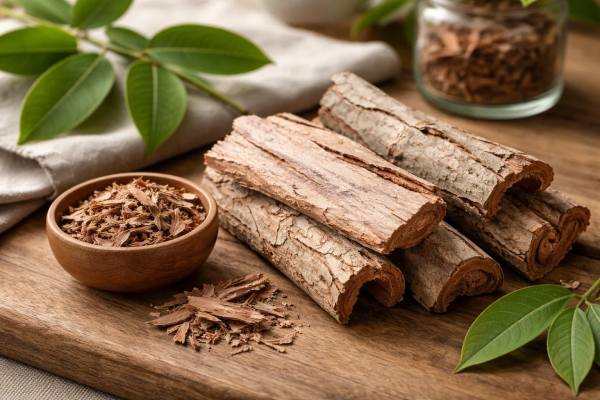
Arjuna (Terminalia arjuna) is a large tree native to the Indian subcontinent, prized in Ayurveda for its bark, which has a long tradition of use for heart and circulation support. In modern wellness, arjuna is most often taken as bark powder, capsules, or a simmered decoction, and it is commonly discussed for goals such as healthier blood pressure, improved cholesterol patterns, and better exercise tolerance. Its reputation is not built on a single “magic compound,” but on a broad profile of tannins, triterpenoids (including arjunolic acid–type compounds), flavonoids, and plant sterols that appear to influence oxidative stress, inflammation signaling, and vascular function.
Still, arjuna sits in an important gray zone: it is widely used and biologically plausible, yet the strongest clinical evidence is uneven and depends heavily on how the bark is prepared and standardized. If you are considering arjuna, the most useful approach is practical and safety-first—understanding what it is, what it may realistically help with, how to use it well, and when it is not appropriate.
Top Highlights
- May support exercise tolerance and some cardiovascular markers when used consistently alongside standard lifestyle and medical care.
- Typical intake ranges are 500–1,000 mg/day of standardized extract or 3–6 g/day of bark powder, depending on form and goal.
- Use caution with blood pressure medications, nitrates, antiplatelet drugs, and anticoagulants due to additive effects.
- Avoid during pregnancy and breastfeeding, before surgery, and if you have unstable cardiac symptoms without clinician oversight.
Table of Contents
- What is arjuna bark?
- Key ingredients and medicinal properties
- Does arjuna support heart health
- Blood pressure and cholesterol effects
- How to use arjuna
- How much arjuna per day
- Safety, interactions, and evidence
What is arjuna bark?
Arjuna refers to the bark of Terminalia arjuna, a tree in the Combretaceae family. In traditional Ayurvedic practice, arjuna is often described as a heart-strengthening remedy used for symptoms linked to circulation, stamina, and “cardiac tone.” In modern terms, it is best understood as a multi-compound botanical that may support cardiovascular function through several overlapping pathways—especially antioxidant defense, endothelial function (the health of blood vessel lining), and inflammatory balance.
Plant part matters
Most clinically relevant preparations focus on the stem bark, not the leaves, fruit, or roots. That distinction is more than botanical trivia: bark carries a different profile of tannins, triterpenoids, and flavonoids than other plant parts. When labels simply say “arjuna” without stating “bark,” you are left guessing what you are actually taking.
How it is prepared traditionally
Arjuna’s classic forms are “kashaya” (a simmered decoction) and “churna” (powder). Decoctions typically involve simmering bark in water for an extended time to extract water-soluble constituents, while powders deliver the whole bark matrix. Traditional use often pairs arjuna with supportive dietary habits and other herbs, but for modern readers the key point is this: the preparation method can change what compounds you extract and how you tolerate it.
How it is used today
In the supplement world, arjuna appears in:
- Bark powder (loose or in capsules)
- Standardized extracts (capsules or tablets, sometimes standardized to polyphenols or glycosides)
- Liquid preparations (tinctures or decoction concentrates)
- Fermented tonics (traditional-style formulas, where the dose and alcohol content can vary)
The “best” form depends on your goal. If you want gentle daily support, a moderate-dose powder or decoction is common. If you want a more research-aligned approach, a standardized extract can be easier to dose consistently.
What arjuna is not
Arjuna is not a replacement for emergency care or guideline-based cardiac treatment. If you have chest pain, shortness of breath, fainting, or sudden changes in exercise tolerance, the correct next step is medical evaluation—not a supplement experiment. Arjuna is best viewed as a supportive adjunct for stable situations, not a stand-alone solution.
Key ingredients and medicinal properties
Arjuna’s bark contains several families of compounds that can help explain both its traditional reputation and its modern research interest. The most useful way to think about arjuna is not “one active ingredient,” but a blend of compounds that may reinforce each other in cardiovascular-relevant pathways.
Tannins and polyphenols
Arjuna is rich in tannins and other polyphenols. These compounds are often discussed for antioxidant potential, but the more practical translation is that polyphenols can influence cellular signaling related to oxidative stress and inflammation. In cardiovascular support, this matters because oxidative stress can worsen endothelial function and contribute to less flexible arteries over time.
A helpful comparison category is polyphenol-rich botanicals used for vascular support, such as grape seed polyphenols and circulation support, though arjuna’s profile and traditional context are distinct.
Triterpenoids and saponin-like compounds
Arjuna bark contains triterpenoids often referenced in the literature, including arjunolic acid–type compounds and related structures. These are frequently explored for anti-inflammatory signaling, lipid metabolism effects, and tissue-protective mechanisms in preclinical models. While lab evidence does not guarantee outcomes in humans, these triterpenoids help explain why arjuna is studied for cardiometabolic endpoints.
Flavonoids and plant sterols
Flavonoids can support vascular function through multiple routes—antioxidant behavior, nitric oxide signaling, and inflammation modulation. Plant sterols are of interest because they can influence cholesterol absorption and lipid patterns when consumed in meaningful amounts, although the contribution from arjuna supplements alone is likely modest unless doses are high and consistent.
Minerals and supportive constituents
Analytical studies of arjuna bark often note minerals such as calcium, magnesium, zinc, and copper. These are not the main reason arjuna is used, but they reinforce a broader truth: whole botanicals rarely act through a single pathway. The “medicinal properties” often reflect cumulative effects on digestion, inflammation signaling, and vascular tone.
What these ingredients mean in real life
Putting it together, arjuna is most plausibly positioned for:
- endothelial and vascular support (blood vessel lining function)
- antioxidant and inflammation balance (especially over weeks to months)
- lipid and blood pressure pattern support (modest changes, not dramatic reversals)
- exercise tolerance support in some settings
This chemistry-to-outcome map also explains why results vary: different products extract different fractions, and different people start in different metabolic and cardiovascular states.
Does arjuna support heart health
Arjuna is most strongly associated with “heart health,” but that phrase can be vague. A more useful question is: Which heart-related outcomes does arjuna seem most likely to influence? The best-supported possibilities involve symptom patterns (like exertional comfort), functional capacity, and certain biomarkers—not guaranteed changes in hard outcomes like heart attacks.
Angina and exercise tolerance
Some clinical studies and older trials have explored arjuna in stable angina contexts, often using bark powder or standardized preparations over weeks to months. Outcomes commonly include exercise test parameters, frequency of anginal episodes, and nitrate use. A careful reading of the broader evidence suggests two important points:
- Studies are often small and not always well standardized.
- Effects, when present, tend to be modest improvements in comfort and exertion-related measures rather than dramatic transformation.
This is where arjuna’s traditional reputation aligns with a practical modern expectation: it may help some people feel steadier during exertion, especially when combined with a heart-healthy routine.
Heart failure and pumping capacity
A newer theme in arjuna research is its potential effect on markers like left ventricular ejection fraction (LVEF) and fatigue in specific populations. Some standardized extracts have been tested in placebo-controlled designs, with outcomes suggesting possible improvements in LVEF and perceived fatigue in select groups. These results are interesting, but they should be interpreted with guardrails:
- LVEF measurement methods and baseline participant characteristics matter.
- Short trials cannot prove long-term benefit or reduced hospitalization risk.
- People with heart failure should treat arjuna only as an adjunct and only with clinician awareness.
How arjuna might help, mechanistically
The most plausible pathways include improved antioxidant reserves, inflammation modulation, vascular relaxation signaling, and better endothelial function. These mechanisms make sense for “support” outcomes like stamina, but they do not justify replacing standard therapies.
If you are comparing cardiotonic-style botanicals, it can be useful to read about hawthorn cardiovascular support, which is another plant often discussed for functional capacity and circulation themes. Comparisons like this help keep expectations realistic: herbal supports can be meaningful, but typically in modest, additive ways.
A realistic “heart health” takeaway
Arjuna may be worth considering if you are in a stable situation and want supportive help with:
- exertional comfort
- day-to-day stamina
- cardiometabolic patterns alongside lifestyle change
It is not appropriate as a self-managed solution for unstable symptoms, severe chest pain, or new shortness of breath. For those situations, safety comes first.
Blood pressure and cholesterol effects
Beyond “heart support,” many people search arjuna specifically for blood pressure and cholesterol. These are measurable outcomes, which is helpful—because it lets you judge whether arjuna is doing anything meaningful for you rather than relying on vague feelings.
Blood pressure: potential, not guaranteed
Some trials and clinical experiences suggest arjuna may contribute to lower blood pressure, especially systolic pressure, in certain people. The most plausible explanation is a combination of vascular relaxation signaling, antioxidant effects that support endothelial function, and mild diuretic-like influences seen in some preparations. The practical caution is that effects can stack with medications.
If you already use blood pressure medication, the goal is not “as low as possible.” The goal is stable, safe control. That means arjuna should be introduced carefully, ideally with home readings and clear stop rules if you feel dizzy, lightheaded, or unusually fatigued.
For readers comparing natural options, garlic extract for blood pressure support is another well-known category. The point is not that one is always better, but that stacking multiple blood pressure-lowering supplements without monitoring can create avoidable side effects.
Cholesterol and lipid patterns
Arjuna is often discussed for lipid support, including lower total cholesterol, lower LDL cholesterol, or improved triglyceride patterns. Some older studies suggest favorable changes, sometimes compared with antioxidants or standard care, but results vary widely by preparation and study design. Here are the most grounded ways to interpret it:
- If arjuna helps lipids, the change is usually modest.
- Effects are more likely when arjuna is part of a broader dietary pattern shift.
- Product standardization matters because polyphenol and triterpenoid content can differ.
If your primary goal is cholesterol management, you should treat arjuna as a supportive tool, not a replacement for diet, activity, and clinician-guided medications when needed.
Metabolic spillover: glucose and inflammation markers
Arjuna is sometimes studied for related metabolic outcomes such as fasting glucose or inflammation markers. This is plausible because cardiometabolic health is interconnected. If you are monitoring blood pressure and cholesterol anyway, it can be useful to track waist circumference, resting heart rate, and fasting labs over time to see whether any changes cluster together.
How to track results like a clinician would
To evaluate arjuna’s impact, measure what matters:
- home blood pressure (same time of day, several days per week)
- lipids (baseline and again after 8–12 weeks)
- symptoms: dizziness, headaches, sleep disruption, stamina changes
If you cannot measure these reliably, it is harder to tell whether arjuna is helping or simply adding complexity.
How to use arjuna
Arjuna can be used in several forms, and the best choice depends on your goal and your tolerance. The guiding principle is simple: choose a form you can take consistently and safely, and avoid mixing multiple new cardiovascular supplements at once.
1) Bark powder (churna)
Bark powder is common in traditional practice and modern capsules. It can be taken with warm water, mixed into a small amount of honey, or placed into capsules for convenience. Powder is often a good “middle ground” because it is less processed than extracts but still allows a consistent daily dose.
Practical tips:
- Take with food if you tend toward reflux or stomach upset.
- Start low for a week, then increase gradually.
2) Decoction (simmered bark tea)
A decoction is more traditional than a quick steep. It typically involves simmering bark in water for 20–40 minutes to extract water-soluble constituents. Many people prefer decoction when they want a ritual-like routine and good digestive tolerance.
Practical tips:
- Make a batch for 1–2 days to reduce daily effort.
- Strain well; bark fibers can irritate sensitive throats.
3) Standardized extracts
Extracts can be useful when you want a research-aligned dose and more predictable potency. Labels may mention standardization to polyphenols, glycosides, or other markers. While numbers can help, they are only meaningful if the brand is reputable and testing is transparent.
Quality cues to look for:
- clear identification of “Terminalia arjuna bark extract”
- extraction ratio (for example, 7:1)
- third-party testing for contaminants
4) Multi-ingredient heart formulas
Some products combine arjuna with nutrients like coenzyme Q10, magnesium, or omega-3 fats. These blends can be convenient, but they also make it harder to identify what causes benefits or side effects. If you prefer a single-ingredient approach, consider keeping other supports separate until you know how you respond.
If you already use well-known heart-support nutrients, coenzyme Q10 dosing basics can help you think more clearly about timing and expectations, especially if you plan to combine approaches.
A simple use plan
- Pick one form (powder, decoction, or extract).
- Start at a conservative dose for 7–10 days.
- Track blood pressure, stamina, and digestive tolerance.
- Adjust slowly, not daily.
Consistency beats intensity with most botanical supports.
How much arjuna per day
There is no single universal dose for arjuna because studies use different preparations and traditional practice varies by person and goal. Still, you can use practical ranges that reflect common clinical use patterns while keeping safety in mind.
Typical adult ranges by form
Standardized bark extract (capsules or tablets)
- Common range: 500–1,000 mg/day, often split into 1–2 doses.
- Some standardized extracts are used at 400 mg/day in studied protocols.
- If the extract is concentrated (high ratio), start at the low end.
Bark powder (loose or capsulated)
- Common range: 3–6 g/day total, often split into two doses.
- Some traditions use higher amounts, but higher dosing increases the chance of gastrointestinal side effects and blood pressure lowering.
Decoction
- Often prepared from 6–12 g/day of bark simmered in water, then taken in divided servings.
- Decoctions vary in strength; consistency in preparation matters if you want consistent results.
Timing: morning, evening, or with meals?
- If your goal is blood pressure or daily stamina, many people take arjuna with breakfast and, if using a second dose, with dinner.
- If you feel lightheaded, shift doses earlier and reduce the total.
- If you get stomach upset, take with food and consider switching from powder to decoction or a gentler extract.
How long to try before deciding
For most cardiometabolic goals, a reasonable evaluation window is 8–12 weeks, because lipid patterns and vascular markers change slowly. For subjective outcomes (like fatigue or exertional comfort), you may notice changes sooner, but still avoid making daily judgments.
A simple evaluation approach:
- Check blood pressure trend weekly (not just one reading).
- Repeat lipids after 8–12 weeks if cholesterol is a target.
- Note exercise tolerance in a consistent way (same walk route or same gym routine).
When less is more
If you are also using other supplements that affect circulation, keep the overall plan simple. Stacking several “heart support” products can create blood pressure drops or headache patterns that are hard to untangle. If you want a safe reference point for common cardiovascular adjuncts, omega-3 fatty acid usage and precautions is a useful framework—especially because omega-3s can interact with clotting and surgery timing in ways similar to other circulation-focused supplements.
Safety, interactions, and evidence
Arjuna is often described as well tolerated, but safety depends on your health context, your medications, and how concentrated your preparation is. The most responsible way to use arjuna is to treat it like a cardiovascular-active supplement, not like a harmless tea.
Common side effects
Most reported side effects are mild and often dose-related:
- stomach upset, nausea, or reflux
- constipation or, less commonly, loose stools
- headache or dizziness (often linked to blood pressure changes)
If side effects occur, reduce the dose and increase more slowly. If dizziness or faintness occurs, stop and reassess—especially if you take blood pressure medication.
Key interactions to take seriously
Use extra caution (and involve a clinician) if you take:
- antihypertensives (risk of additive blood pressure lowering)
- nitrates or antianginal drugs (overlapping vascular effects)
- anticoagulants or antiplatelet drugs (possible additive bleeding tendency)
- statins or lipid-lowering therapy (not always problematic, but monitor labs and symptoms)
- diabetes medications (some evidence suggests glucose-related effects; watch for low blood sugar)
Also stop arjuna at least 2 weeks before surgery unless your surgical team advises otherwise. This is a conservative, safety-forward rule used for many supplements that may influence blood pressure or bleeding risk.
Who should avoid arjuna
Avoid self-directed arjuna use if you are:
- pregnant or breastfeeding (insufficient safety data for supplemental dosing)
- experiencing unstable cardiac symptoms (new chest pain, worsening shortness of breath, fainting)
- scheduled for surgery soon
- taking multiple medications that affect clotting or blood pressure without monitoring support
What the evidence actually shows
The clinical evidence for arjuna is mixed. Some trials and newer standardized-extract studies suggest improvements in functional measures (like fatigue or certain cardiac parameters), while systematic reviews note that many older studies are small, short, and poorly standardized. This gap matters because arjuna’s effects may depend on dose, extract method, and product consistency.
A grounded interpretation is:
- Most plausible: supportive benefits for endurance, exertional comfort, and select cardiometabolic markers in stable settings.
- Least supported: bold claims of preventing heart attacks or replacing conventional treatment.
- Biggest limitation: variation in products, dosing, and study quality.
If you use arjuna, make safety non-negotiable: keep your regimen simple, monitor measurable outcomes, and treat it as one piece of a larger cardiovascular plan that includes diet, movement, sleep, and clinician-guided care.
References
- Effect of E-OJ-01 on Left Ventricular Ejection Fraction and Myocardial Oxygen Consumption: A Randomized, Double-Blind, Placebo-Controlled Study 2022 (RCT)
- Terminalia arjuna, a Cardioprotective Herbal Medicine–Relevancy in the Modern Era of Pharmaceuticals and Green Nanomedicine—A Review 2023 (Review)
- Clinical study evaluating antihyperglycemic efficacy and safety of terminalia arjuna versus sitagliptin in Type-2 diabetes mellitus patients 2024 (Clinical Trial)
- Terminalia arjuna: An overview of its magical properties 2024 (Review)
- Terminalia arjuna in Chronic Stable Angina: Systematic Review and Meta-Analysis 2014 (Systematic Review and Meta-Analysis)
Disclaimer
This article is for educational purposes only and does not provide medical advice. Arjuna (Terminalia arjuna) may affect blood pressure, blood sugar patterns, and clotting-related pathways, and it can interact with prescription medications, including antihypertensives, nitrates, anticoagulants, antiplatelet drugs, and diabetes therapies. If you are pregnant or breastfeeding, have a heart condition, have upcoming surgery, or take prescription medications, consult a licensed clinician before using arjuna or changing your supplement routine. Seek urgent medical care for chest pain, fainting, severe shortness of breath, or sudden worsening of exercise tolerance.
If this guide helped, consider sharing it on Facebook, X (formerly Twitter), or your preferred platform so others can make safer, more informed choices.