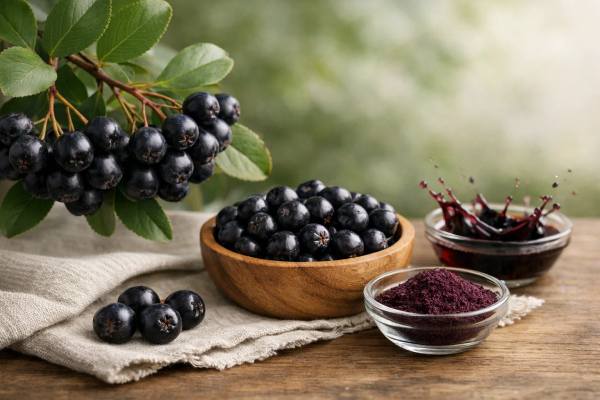
Aronia (Aronia melanocarpa), often called black chokeberry, is a dark purple berry known for its intensely astringent taste and unusually high polyphenol content. While it can be eaten fresh, most people use aronia as juice, powder, capsules, or dried berries because the raw fruit’s tartness can be striking. Interest in aronia centers on cardiovascular and metabolic wellness: antioxidant-rich anthocyanins and proanthocyanidins may support blood vessel function, oxidative balance, and inflammation signaling that influences blood pressure and lipid patterns. Some clinical studies suggest modest improvements in markers such as blood pressure, LDL oxidation, and fasting glucose in certain populations, especially when aronia is used consistently alongside diet changes. Still, aronia is not a substitute for blood pressure medicine, diabetes care, or cholesterol therapy when those are needed. The most useful way to think about aronia is as a food-based polyphenol tool: it can complement lifestyle foundations, but its benefits depend on dose, product quality, and a timeframe long enough to measure change.
Quick Summary
- May modestly support blood pressure and vascular function when used daily for 8–12 weeks.
- Polyphenols may help reduce oxidative stress and support healthier lipid patterns in some adults.
- Typical range: 150–300 ml/day juice or 500–1,500 mg/day extract, depending on product strength.
- High-tannin products can cause constipation or stomach upset, especially at larger doses.
- Avoid if pregnant or breastfeeding, on warfarin, or prone to kidney stones unless advised by a clinician.
Table of Contents
- What is Aronia melanocarpa?
- Key ingredients and medicinal properties
- Does aronia help blood pressure and vessels?
- Aronia for cholesterol and oxidative stress
- Blood sugar and metabolic support
- How to use aronia: forms and practical tips
- Dosage, safety, and evidence quality
What is Aronia melanocarpa?
Aronia melanocarpa is a small shrub in the rose family (Rosaceae) that produces deep purple to nearly black berries. The fruit is commonly called black chokeberry, a name that reflects its puckering astringency. Unlike sweeter berries that are easy to snack on, aronia is often processed into juice, concentrates, powders, or extracts to make it more palatable and to standardize polyphenol intake.
Aronia is widely grown in parts of Europe and North America and is often used in functional foods for its strong pigment and antioxidant profile. The berries contain multiple polyphenol families, but anthocyanins are the headline: they give aronia its dark color and are studied for vascular and metabolic effects. Aronia also contains notable tannins and proanthocyanidins that contribute to its drying mouthfeel.
From a health perspective, it helps to place aronia in the category of “polyphenol-dense foods” rather than “medicinal herbs that act like drugs.” Many of the outcomes people hope for—better blood pressure readings, healthier lipid patterns, improved inflammatory balance—are slow-moving systems. That means aronia is best used consistently over weeks, ideally while other variables remain stable enough to interpret results.
In practical use, most people choose aronia for one of three reasons:
- Cardiovascular support: blood pressure, circulation, endothelial function, or oxidative stress concerns
- Metabolic goals: glucose trends, insulin sensitivity, or waist-line related markers
- General antioxidant intake: as part of a broader nutrition strategy
Aronia is sometimes compared with other dark berries because they share anthocyanins. The difference is concentration and taste: aronia is typically more tannic and more intensely flavored than blueberries or blackberries. That intensity can be a benefit if you want a strong polyphenol “dose” in a smaller volume, but it can also increase the risk of constipation or stomach upset in sensitive people.
If you want a similar “berry polyphenol” idea but with a different taste and nutrient profile, bilberry is one close comparison often discussed for antioxidant and vascular support. The right choice depends on tolerance, budget, and the form you are most likely to use consistently.
The bottom line is that aronia is best understood as a functional berry that can support measurable health goals when paired with lifestyle foundations and used in a structured, time-limited trial.
Key ingredients and medicinal properties
Aronia’s medicinal properties are driven primarily by polyphenols, supported by fiber, micronutrients, and organic acids. Unlike stimulant herbs or strong essential-oil plants, aronia’s effects are largely about cell signaling and oxidative balance, which is why benefits tend to be subtle and cumulative.
Anthocyanins: the signature pigments
Aronia is well known for its high anthocyanin content, especially cyanidin-based anthocyanins. These compounds:
- act as antioxidants in laboratory testing
- may support endothelial function (the ability of blood vessels to dilate appropriately)
- may influence inflammatory signaling and oxidative stress pathways involved in cardiovascular aging
Anthocyanins are also why aronia products can stain easily and why color intensity often correlates with polyphenol density, though processing can alter levels.
Proanthocyanidins and tannins
Aronia contains substantial proanthocyanidins and tannins, which contribute to:
- the dry, puckering taste
- potential support for oxidative balance in the gut and bloodstream
- astringent effects that can be helpful for some people but constipating for others
This is one reason aronia can feel “stronger” in the mouth and stomach than other berries, especially in concentrated powders.
Phenolic acids and flavonols
Additional polyphenols, including phenolic acids and flavonols, may contribute to:
- antioxidant activity beyond anthocyanins
- support for lipid oxidation resistance (helping LDL particles stay less susceptible to oxidative modification)
- broader metabolic signaling that may influence glucose regulation
Fiber and micronutrients
Whole aronia berries and some powders also provide:
- dietary fiber, supporting satiety and gut health
- vitamin and mineral traces (variable by product, cultivation, and processing)
Juices and concentrates typically contain less fiber and may contain added sugar depending on formulation, which matters for metabolic goals.
What “medicinal” means for a berry
For aronia, “medicinal properties” is best translated into three practical themes:
- vascular support: influencing how blood vessels respond to stress and how endothelial function behaves
- oxidative balance: reducing oxidative stress markers in some contexts
- metabolic support signals: modest influences on glucose and lipid markers in certain populations
It helps to keep expectations realistic: polyphenols are not magic shields. Their effects often depend on baseline health, gut microbiota, diet, and how consistently you use them. People who already eat many fruits and vegetables may notice smaller changes than those who are starting from a low-polyphenol baseline.
If your main goal is antioxidant support, consider how aronia fits into a broader pattern rather than treating it as a stand-alone solution. For example, green tea offers a different polyphenol profile and can complement a berry-based approach, but it also introduces caffeine considerations for some people.
Aronia is at its best when used as a consistent, measurable addition—chosen for its specific polyphenol density and matched to goals that respond to slow, steady nutritional support.
Does aronia help blood pressure and vessels?
Blood pressure and vascular function are among the most common reasons people try aronia. The best evidence suggests that aronia can support modest improvements in blood pressure and endothelial function markers in certain populations, particularly adults with elevated cardiometabolic risk. These outcomes are plausible because anthocyanins and related polyphenols may influence nitric oxide signaling, vascular inflammation, and oxidative stress—factors that shape how flexible and responsive blood vessels are.
What results are realistic
When aronia helps, people may see:
- small reductions in systolic and diastolic blood pressure
- improved “vascular feel,” such as fewer tension headaches or less flushing, though these are not reliable measures
- better endothelial function markers in research settings
The magnitude is usually modest, and it is not predictable for every person. The most likely responders are those with mildly to moderately elevated blood pressure or higher oxidative stress loads rather than those with already optimal readings.
How to use aronia for blood pressure goals
A structured approach improves your chances of seeing a real signal:
- Track baseline blood pressure for 7 days (same time daily, same conditions).
- Introduce one consistent aronia form and dose.
- Keep caffeine, salt intake, alcohol, and sleep as stable as possible.
- Reassess trends at 4 weeks and again at 8–12 weeks.
Blood pressure is highly sensitive to sleep and stress. If you change your sleep schedule at the same time you start aronia, improvements may be real but not attributable.
What makes the biggest difference alongside aronia
Aronia works best as a complement to core strategies:
- sodium awareness and potassium-rich foods
- consistent walking or aerobic activity
- weight management if relevant
- adequate sleep and stress regulation
If your goal is broader cardiovascular support and you are comparing botanicals, hawthorn is another plant commonly discussed for circulation and vascular tone, though it has different mechanisms and a stronger tradition as an herbal preparation rather than a food-based polyphenol source.
When aronia is not enough
If your blood pressure is consistently high, do not delay medical care. Hypertension can be silent while still damaging blood vessels and organs. Aronia can be part of an overall plan, but it is not a replacement for:
- clinician-led risk assessment
- medication when indicated
- evaluation for secondary causes of hypertension
Who should be most cautious
If you already take antihypertensive medication, aronia may contribute to additional lowering in some people. That is usually a benefit, but it can also increase dizziness risk if you stand quickly or if you become dehydrated. Monitoring is wise, especially early in use.
Overall, aronia can be a useful, food-based tool for vascular support, but it performs best when your plan includes measurement, consistent dosing, and lifestyle foundations that address blood pressure drivers.
Aronia for cholesterol and oxidative stress
Another central promise of aronia is “cholesterol support,” but the most useful way to think about this is not simply changing LDL numbers. Aronia’s polyphenols are often studied for their ability to influence oxidative stress and inflammation pathways that affect how lipids behave in the bloodstream. In simple terms, aronia may help create an internal environment where LDL particles are less prone to oxidative modification—an aspect of cardiovascular risk that is not captured by total cholesterol alone.
What studies suggest
Research in higher-risk groups suggests aronia supplementation may:
- modestly reduce total cholesterol or LDL cholesterol in some populations
- improve triglyceride patterns in some contexts
- reduce oxidative stress markers and improve antioxidant status measures
The effects are variable. People with metabolic syndrome features may respond more than those with normal lipids.
Why oxidative stress matters
Cholesterol is not “bad” by itself. The problem is more about how lipids interact with inflammation and oxidative stress over time. Aronia’s anthocyanins and proanthocyanidins may support:
- reduced oxidative pressure on lipoproteins
- improved endothelial environment
- lower inflammatory signaling that can aggravate vascular plaque processes
These are slow, background changes. They are unlikely to be felt immediately, which is why labs and consistent use matter.
How to use aronia for lipid goals
If you want to evaluate aronia for cholesterol-related outcomes:
- Establish a baseline lipid panel and keep your diet relatively stable.
- Choose a single aronia product and use it daily.
- Recheck labs after 8–12 weeks.
- Avoid changing multiple supplements at once.
If you also make diet improvements, keep them consistent for the whole trial rather than changing every week. Otherwise, you will not know what drove the change.
Comparisons and complementary strategies
If your primary goal is LDL reduction, the most evidence-based nutrition lever is often soluble fiber and overall dietary pattern. For fiber-focused support, psyllium is a common tool used to improve lipid markers, though it works through bile acid binding rather than polyphenol signaling. Aronia can complement that approach by addressing oxidative balance while fiber addresses cholesterol handling.
Important limits
If you have high LDL or known cardiovascular disease risk, aronia should not replace therapies with proven outcome benefits. Supplements and functional foods can support a plan, but delaying medication when indicated can increase long-term risk.
Practical takeaway
Aronia’s strongest lipid-related value may be in supporting oxidative balance and vascular environment rather than producing dramatic cholesterol number changes. If you treat it as one part of a broader heart-health strategy, it can be useful. If you expect it to act like a prescription lipid-lowering drug, you are likely to be disappointed.
Blood sugar and metabolic support
Aronia is increasingly used for metabolic goals such as fasting glucose, insulin sensitivity, and waist-related markers. The rationale is plausible: polyphenols can influence oxidative stress, inflammation, and cellular signaling involved in glucose metabolism. Some clinical studies in people with metabolic syndrome features suggest modest improvements, but results are not uniform.
Who is most likely to see benefit
Aronia’s metabolic support potential is most relevant for:
- adults with prediabetes or insulin resistance
- people with metabolic syndrome traits (central adiposity, elevated triglycerides, low HDL, elevated blood pressure)
- individuals with diets low in fruits and polyphenol-rich foods who add aronia consistently
In metabolically healthy adults, changes may be small or not detectable.
How aronia may influence glucose trends
Potential mechanisms include:
- improved oxidative balance that supports healthier insulin signaling
- modulation of inflammatory pathways involved in insulin resistance
- possible influence on carbohydrate digestion enzymes and post-meal glucose peaks (product-dependent)
These are subtle effects. They do not override a diet high in refined carbs and sugary drinks.
How to use aronia for metabolic goals
A practical trial design:
- Pick one form (juice, powder, or standardized extract) and keep it consistent.
- Use it daily for 8–12 weeks.
- Track fasting glucose trends if you already monitor, or check labs with clinician guidance.
- Keep added sugar low, especially if using juice products.
Juice is a common pitfall: some aronia juices are blended with sweeter juices. That can undermine blood sugar goals. For glucose-aware use, choose products with no added sugar and treat serving size as important.
How it fits with other metabolic supports
If you are building a broader plan, aronia can complement nutrition and movement strategies that drive the majority of metabolic improvement. For a supplement that is often discussed for glucose and lipid markers, berberine is one comparison point, though it has a higher interaction burden and should be used with more caution. Aronia tends to be gentler as a food-based approach, but it usually produces smaller effects.
When to be cautious
If you use diabetes medications or insulin, any supplement that changes diet patterns or glucose response should be introduced carefully. While aronia is not known as a powerful hypoglycemic, combining multiple glucose-support products can increase the risk of low blood sugar in sensitive individuals.
What outcomes to expect
The most realistic outcomes are modest:
- slightly improved fasting glucose or insulin resistance measures in some individuals
- better post-meal glucose handling if overall diet improves
- improved inflammatory and oxidative balance markers that support metabolic health
Aronia is best thought of as a steady nutritional support, not an acute glucose-lowering intervention.
How to use aronia: forms and practical tips
Aronia is available in many forms, and your choice should match both your goal and your tolerance for astringency. The best product is the one you will use consistently for long enough to matter.
Common forms
- Juice: convenient and easy to dose, but watch for added sugars and blended juices.
- Freeze-dried powder: concentrated and versatile; can be mixed into yogurt, smoothies, or oatmeal.
- Capsules or tablets: often standardized to polyphenol content; easiest for consistency.
- Dried berries: provide fiber and chewing satisfaction but can be quite astringent.
How to reduce astringency without adding sugar
Because aronia is tannin-rich, many people struggle with the taste. Practical strategies:
- mix powder into thick foods like yogurt rather than thin smoothies
- combine with naturally sweet berries (fresh or frozen) instead of sweeteners
- use small daily doses consistently rather than forcing large servings
- choose capsules if taste limits adherence
Best timing for different goals
- General antioxidant support: any time of day with food is fine.
- Blood pressure and vascular goals: consistency matters more than timing, but many people take it with breakfast for habit.
- Metabolic goals: taking aronia with meals may support post-meal oxidative balance; avoid pairing juice with high-sugar meals.
Common mistakes to avoid
- taking a large amount once and then stopping due to taste or stomach upset
- using sweetened juice blends for “blood sugar support”
- stacking multiple new supplements at once, making results impossible to interpret
- expecting immediate effects after one or two doses
Quality cues when choosing products
Look for:
- clear labeling of Aronia melanocarpa and plant part (berry)
- polyphenol or anthocyanin standardization when using extracts
- third-party testing if available
- low added sugar and minimal fillers
If you enjoy using aronia as part of a broader polyphenol routine, rotating different sources can keep your diet diverse. For example, pomegranate extracts offer another polyphenol profile often used for vascular and oxidative balance support. Diversity often matters as much as intensity.
The simplest success strategy is to pick one form you tolerate, use it daily, and track outcomes over a realistic timeframe.
Dosage, safety, and evidence quality
Aronia is generally safe as a food, but concentrated extracts and large doses deserve a more careful approach. The benefits most people want are slow and cumulative, so a safe, consistent regimen usually beats aggressive dosing.
Typical dosage ranges
Because products vary widely, dosing is best expressed by form:
- Juice: 150–300 ml per day is a common range used in practice and research-style routines.
- Powder: 3–10 g per day, often divided or mixed into food.
- Standardized extract: 500–1,500 mg per day, depending on polyphenol concentration.
- Dried berries: 10–30 g per day, depending on tolerance and dietary goals.
A practical duration for a meaningful trial is 8–12 weeks for blood pressure, lipid, and metabolic markers.
Side effects
Most side effects are gastrointestinal and dose-related:
- constipation (tannins can be drying)
- stomach upset or nausea, especially with concentrated powders on an empty stomach
- dark stools (can occur with dark berry pigments and is not necessarily harmful)
If constipation develops, reduce dose, increase water intake, and consider switching from powder to a lower-tannin form or a smaller amount.
Interactions and who should be cautious
Aronia is not known for broad drug interactions, but caution is sensible if you:
- take warfarin or other anticoagulants (polyphenol-rich supplements can sometimes influence bleeding tendency or lab interpretation)
- take antihypertensive medication (monitor for lightheadedness if blood pressure lowers)
- use diabetes medications (monitor glucose trends if you change diet patterns)
People prone to kidney stones sometimes worry about berry polyphenols and oxalate content. The data for aronia specifically are not definitive for every product, but if you have a history of stones, it is wise to use moderate doses and prioritize hydration.
Who should avoid aronia supplements
Avoid concentrated supplements without professional guidance if you are:
- pregnant or breastfeeding
- managing significant kidney disease or complex medication regimens
- highly anemic and using many high-tannin products that could reduce iron absorption
- using multiple blood-thinning agents
Evidence quality and realistic claims
The evidence base for aronia includes human trials, but many are small, vary in product type, and involve specific populations. The strongest, most defensible claims are modest:
- potential improvement in vascular function and blood pressure in some adults
- support for oxidative balance and inflammation markers
- possible improvements in lipid and glucose trends in higher-risk groups
The limitations matter: results are not universal, and product differences can be large. The most reliable way to judge value is to choose a consistent product, use it for a realistic duration, and measure outcomes that matter to you—blood pressure logs, lipid panels, or glucose markers—rather than relying on subjective impressions alone.
References
- Effects of aronia berry supplementation on cardiovascular risk factors: a systematic review and meta-analysis of randomized controlled trials 2021 (Systematic Review and Meta-Analysis)
- Aronia melanocarpa (black chokeberry) and its polyphenols: a review of composition, bioavailability and health effects 2023 (Review)
- Effects of Aronia melanocarpa supplementation on blood pressure and endothelial function: a systematic review and meta-analysis 2023 (Systematic Review and Meta-Analysis)
- Aronia melanocarpa polyphenols and metabolic health: evidence from randomized controlled trials and mechanistic studies 2024 (Review)
- Aronia juice intake and glucose metabolism in adults with metabolic syndrome: a randomized controlled trial 2024 (RCT)
Disclaimer
This article is for educational purposes only and does not provide medical advice, diagnosis, or treatment. Foods and supplements can affect individuals differently and may interact with medications or medical conditions. Do not use aronia (Aronia melanocarpa) as a substitute for professional care for hypertension, diabetes, cardiovascular disease, or kidney disease. If you are pregnant, breastfeeding, taking prescription medicines (especially blood thinners, blood pressure medicines, or diabetes medications), or managing a chronic condition, consult a qualified clinician before using concentrated aronia extracts. Seek medical care promptly for allergic reactions, persistent gastrointestinal symptoms, unusual bleeding, or symptoms that worsen instead of improving.
If you found this guide helpful, consider sharing it on Facebook, X (formerly Twitter), or your preferred platforms so others can find clear, safety-first information.