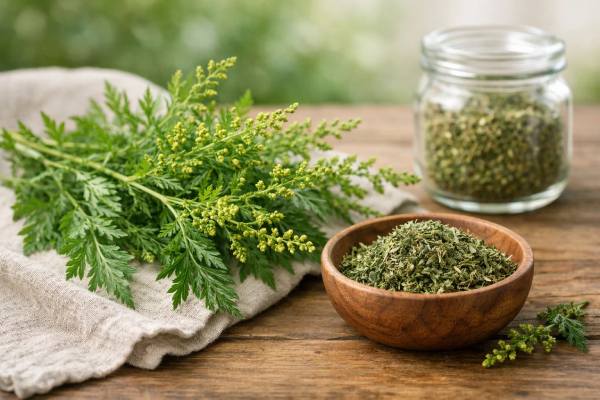
Artemisia annua—often called sweet wormwood or qing hao—is a fragrant Artemisia species best known as the original plant source of artemisinin, the breakthrough compound that transformed modern malaria treatment. That history makes it easy to assume the herb itself is a simple “natural antimalarial,” but the real story is more nuanced. Artemisia annua contains dozens of bioactive compounds beyond artemisinin, including flavonoids, phenolic acids, and essential-oil constituents that may influence inflammation, oxidative stress, and microbial activity in laboratory studies.
Today, people use Artemisia annua in teas, capsules, tinctures, and topical preparations—most often for immune support, feverish discomfort, digestion, and broad “metabolic” or wellness goals. However, product quality varies widely, dosing is not standardized, and safety concerns include drug interactions and rare but serious liver injury reports linked to artemisinin-containing supplements. Most importantly, global health authorities advise against using Artemisia plant material to prevent or treat malaria due to concerns about inadequate dosing and resistance. This guide explains what Artemisia annua is, what it contains, how people use it, what the evidence supports, and how to use it safely.
Essential Insights
- Artemisia annua is the plant source of artemisinin, a key component of modern malaria medicines.
- Early studies suggest antioxidant and anti-inflammatory potential, but human evidence is limited outside malaria drugs.
- Typical supplement ranges are often 150–300 mg once or twice daily, commonly taken before meals with water.
- Do not use Artemisia annua plant material to prevent or treat malaria due to dosing and resistance concerns.
- Avoid if pregnant or breastfeeding, and use extra caution if you take medications metabolized by CYP3A4.
Table of Contents
- What is Artemisia annua?
- Key ingredients and how they work
- What is Artemisia annua used for?
- How to use Artemisia annua
- How much Artemisia per day?
- Is Artemisia annua safe?
- What the evidence actually says
What is Artemisia annua?
Artemisia annua is an aromatic annual herb in the Asteraceae (daisy) family. It grows quickly in warm seasons, producing feathery leaves and a distinctive, sharp herbal scent. In traditional Chinese medicine, the aerial parts (leaf and flowering tops) have been used for centuries under the name qing hao, most commonly in contexts involving feverish patterns. In parts of Africa and elsewhere, it has also been used in local herbal practices, sometimes promoted for malaria—an area where it is crucial to be precise about what the plant can and cannot do safely.
A common point of confusion is the word “Artemisia.” Artemisia is a large genus that includes many plants with overlapping folk names and uses. Sweet wormwood (A. annua) is not the same as “wormwood” used historically in bitters and absinthe traditions (typically Artemisia absinthium). If you are exploring the broader genus, it helps to understand that different Artemisia species can have very different chemistry and safety profiles; see wormwood uses and history for context on one of the best-known relatives.
Modern fame for A. annua centers on artemisinin, the compound originally identified from this plant that became the foundation of artemisinin-based combination therapies (ACTs) for malaria. That discovery is a reminder of what plants can inspire in medicine—but it also highlights an important distinction: an herb is not the same as a standardized drug. Artemisinin doses in malaria treatment are carefully measured and paired with partner drugs to prevent resistance and relapse. By contrast, the artemisinin content in dried leaves, teas, and non-standardized extracts can vary widely depending on cultivar, harvest timing, drying method, and storage.
In the supplement market, “Artemisia annua” may appear as dried leaf powder, hydroalcoholic extract, water extract, essential oil, or artemisinin-isolated products. These forms are not interchangeable. The most practical starting point is to decide your intent: are you using it as a traditional bitter herb in small amounts, or are you trying to target a clinical outcome with a concentrated extract? The answer should guide both dosing and safety decisions—especially if you take prescription medications or have liver risk factors.
Key ingredients and how they work
Artemisia annua is best understood as a “multi-compound” plant. Artemisinin is the headline molecule, but the herb contains many other constituents that may shape effects, tolerability, and interactions. Because composition varies, it is safer to discuss mechanisms as likely pathways rather than guaranteed outcomes.
Artemisinin and related sesquiterpenes
Artemisinin is a sesquiterpene lactone with an unusual peroxide bridge, a feature linked to its antimalarial activity in drug form. In clinical malaria care, artemisinin derivatives work fast but are short-acting, which is why they are paired with longer-lasting partner drugs. In non-malaria supplement contexts, isolated artemisinin is sometimes used experimentally, but it is not a “general wellness” vitamin and should not be treated as one.
Beyond artemisinin, A. annua contains related terpenes (including artemisinic acid and other sesquiterpenes). These compounds are often explored for antimicrobial and anti-inflammatory potential in laboratory settings, but human data for whole-herb products remain limited.
Flavonoids and phenolic acids
A. annua contains flavonoids such as quercetin, rutin, luteolin, and apigenin, along with phenolic acids. These compounds are commonly associated with antioxidant and inflammation-modulating activity in many plants. Their presence may help explain why Artemisia extracts sometimes show broader effects than artemisinin alone in lab studies. If you are curious how one of these flavonoids behaves as a supplement—especially regarding dosing and interactions—see quercetin benefits and dosage guidance.
Coumarins and other aromatic constituents
Coumarins (such as scopoletin-related compounds) appear in some Artemisia species and may influence smooth-muscle tone, inflammatory signaling, and enzyme activity. They may also contribute to drug-interaction risk in sensitive individuals, depending on the extract type and dose.
Essential oil components
The plant’s essential oil may contain compounds such as camphor and 1,8-cineole (among others). Essential oils are concentrated and behave differently than teas or capsules. They are typically used for aroma or topical formulations and are generally not appropriate for unsupervised internal use.
What “medicinal properties” realistically means
From a practical perspective, Artemisia annua’s “medicinal properties” can be grouped into a few plausible effects:
- Supporting antioxidant defenses in the short term (lab evidence is stronger than human outcomes).
- Modulating inflammation-related pathways (plausible, but dose and extract matter).
- Influencing microbes or parasites in controlled models (not the same as self-treating infections).
- Affecting drug-metabolizing enzymes (a real-world safety issue, especially with concentrated extracts).
This last point is often overlooked: a plant can be “active” in ways that are not helpful if it alters how your medications are processed. For Artemisia annua, that interaction potential is one of the most important reasons to choose conservative dosing and avoid casual stacking with other strong supplements.
What is Artemisia annua used for?
Search intent around Artemisia annua often clusters into two worlds: malaria curiosity and general “immune or inflammation” support. Treating these as the same use leads to confusion, so it helps to separate them clearly.
Malaria and the artemisinin connection
Artemisia annua is historically linked to malaria because it is the plant source of artemisinin. However, global health guidance does not support using Artemisia plant material (teas, powders, or non-pharmaceutical preparations) to prevent or treat malaria. The concern is not only that dosing is inconsistent, but also that partial treatment can encourage parasite survival and hasten resistance—undermining life-saving therapies.
If someone suspects malaria, the appropriate action is prompt medical evaluation and guideline-based treatment. Herbal self-treatment is not a safe substitute, and “just in case” prophylaxis with teas is not reliable protection.
Feverish discomfort and traditional use
Traditional systems often describe qing hao in relation to heat, feverish sensations, and recovery from lingering heat patterns. In modern terms, people may use it when they feel run down, warm, or inflamed. Human evidence for “fever reduction” with A. annua products is not robust, so it is best approached as a traditional wellness use rather than a proven clinical intervention.
Immune support and seasonal wellness
Many supplements market Artemisia annua for immune balance. Most evidence here is mechanistic or preclinical, not definitive human outcome data. If your primary goal is immune support with better-studied herbal options, echinacea is one example with a more direct history of human trials for upper-respiratory symptom patterns, though it still requires individualized judgment.
Inflammation, oxidative stress, and metabolic interest
A. annua extracts show antioxidant and anti-inflammatory signals in laboratory research. This has led to interest in joint comfort, metabolic markers, and general inflammatory tone. The key limitation is that effects in cell studies do not reliably predict benefits in everyday dosing, especially when products differ widely.
Parasites, gut health, and “cleanses”
Online content sometimes frames Artemisia annua as a parasite cleanse. This is a high-risk category for misinformation. While artemisinin derivatives are used in medicine for specific parasitic diseases in specific contexts, self-treating “parasites” without diagnosis can delay real care and increase the risk of side effects and interactions. If you have persistent GI symptoms, unexplained weight loss, anemia, or travel-related illness, testing and medical evaluation are safer than empiric herbal protocols.
The most responsible takeaway is this: Artemisia annua may have a place in traditional-style wellness routines, but it should not be treated as an at-home infectious disease treatment. If you use it, use it for goals where modest, supportive effects would still be meaningful—and where safety monitoring is possible.
How to use Artemisia annua
Artemisia annua can be used in several forms, and the form you choose strongly affects both expected effects and safety. If you want a sensible, low-risk approach, start with the least concentrated format and only escalate if you have a clear reason.
Tea and infusion
Tea is a common traditional approach, but it has two important limitations: it is bitter, and many key compounds are poorly water-soluble. That means tea is not a reliable way to deliver artemisinin-like dosing, and it should not be used for malaria prevention or treatment.
A conservative tea approach for general wellness is:
- 1 to 2 g dried leaf per cup (about 250 mL water)
- Steep 5 to 10 minutes, then strain
- Start with 1 cup daily for several days to assess tolerance
If bitterness is an issue, some people combine small amounts with more palatable digestive herbs. For gentle digestive pairing ideas, see peppermint’s digestive benefits—keeping in mind that peppermint can worsen reflux for some.
Capsules and standardized extracts
Capsules are the most common supplement format. The challenge is quality: some products are simple dried leaf powder, while others are concentrated extracts, and labels are not always specific. If you choose capsules:
- Prefer products that specify “aerial parts” or “leaf” and clarify extract type.
- Avoid “proprietary blends” that hide the Artemisia dose.
- Treat the first 1–2 weeks as a tolerance phase, not a performance phase.
Tinctures and liquid extracts
Alcohol-based extracts may pull different compounds than water-based teas. They can also be easier to titrate drop by drop. However, the same interaction cautions apply, and dosing is highly product-specific.
Topical use and essential oil caution
Topical formulations may be used for aromatic or skin-support goals, but essential oils are concentrated and can irritate skin. Always dilute appropriately and avoid use on broken skin. Internal use of essential oil is not a casual wellness practice and is generally not recommended without professional guidance.
How to run a practical personal trial
If you are using Artemisia annua for a non-acute wellness goal:
- Pick one form (tea or a single-ingredient capsule).
- Keep other supplements steady for 2 weeks so you can interpret effects.
- Track one or two outcomes (sleep, digestion, appetite, or joint comfort) for 4–8 weeks.
- Stop if you develop yellowing skin or eyes, dark urine, significant nausea, or persistent right-upper abdominal pain.
Most importantly, avoid using Artemisia annua as a substitute for diagnosis. Herbs can support the body, but they cannot reliably tell you what condition you actually have.
How much Artemisia per day?
There is no single “standard dose” for Artemisia annua because products differ widely in strength and composition. The safest way to approach dosing is to choose a conservative range by form, start low, and avoid long, unsupervised courses—especially with concentrated extracts.
Typical ranges by form
These ranges reflect common real-world labeling and conservative practice rather than a universally proven therapeutic dose:
- Dried leaf tea: 1 to 2 g per cup, up to 1 to 2 cups daily
- Dried leaf capsules: 500 to 1,000 mg once daily to start, then up to twice daily if tolerated
- Standardized extracts: 150 to 300 mg once or twice daily (product-dependent)
If you are using a concentrated extract, follow the manufacturer’s serving size and avoid combining multiple Artemisia products simultaneously. Taking a tea plus capsules plus “artemisinin” isolates is a common way people unintentionally escalate exposure.
Timing
- Take with food if you are prone to nausea or heartburn.
- If the goal is appetite or digestive comfort, some people take it 30–60 minutes before meals, but this is not essential and may worsen nausea in sensitive individuals.
- Avoid late-evening dosing if you notice restlessness or sleep disruption.
Duration and cycling
For general wellness goals, a common, conservative structure is:
- 2 to 4 weeks on, then reassess
- Consider a break (1 to 2 weeks) before repeating
Long continuous use is where side-effect risk and interaction risk tend to rise, especially if you are also using other supplements.
Spacing from medications
Because Artemisia annua extracts may affect drug-metabolizing enzymes and may also behave like a “binding” botanical depending on formulation, separate supplements from prescription medications by at least 2 hours unless your clinician advises otherwise.
A caution about “extract thinking”
Many supplement risks come from treating plant extracts as if they are interchangeable with food. A useful comparison is green tea extract: the beverage is commonly tolerated, but concentrated extracts can behave very differently and carry different risks. Artemisia annua fits that same pattern. If you are not sure what you have, assume it is stronger than tea, use the lowest suggested dose, and monitor carefully.
If you have a specific medical goal (such as glucose control or treatment of an inflammatory condition), involve a clinician. Artemisia annua is not a plug-and-play substitute for evidence-based therapy, and dosing should not be guessed when real health risks are on the table.
Is Artemisia annua safe?
Artemisia annua is often tolerated in small, short-term doses, but safety depends on form, duration, and individual risk factors. The highest-value safety approach is to assume that a biologically active herb can also create biologically meaningful side effects and interactions.
Common side effects
- Nausea, stomach upset, or bitterness-related queasiness
- Headache or dizziness
- Sleep disturbance or restlessness in some people
- Loose stools, especially with higher doses
These are more likely with concentrated extracts, empty-stomach dosing, or stacking with other stimulating supplements.
Allergy and cross-reactivity
People allergic to plants in the Asteraceae family (ragweed, chrysanthemum, marigold) may be more likely to react. Stop use if you develop hives, wheezing, swelling, or significant mouth and throat irritation.
Liver safety
Most people will never experience liver issues from short-term, conservative use. However, there are published reports of significant liver injury linked to artemisinin-containing herbal supplements. This is one reason to avoid long, high-dose, unsupervised use, especially if you have a history of liver disease, heavy alcohol intake, or you take medications processed by the liver.
Stop immediately and seek medical evaluation if you develop:
- Yellowing skin or eyes
- Dark urine or pale stools
- Persistent nausea, vomiting, or marked fatigue
- Right-upper abdominal pain
Drug interactions
Artemisia annua extracts can affect cytochrome P450 enzymes (notably CYP3A4 and CYP2B6) in laboratory research, which raises the possibility of clinically relevant interactions for medications metabolized through those pathways. This is especially important for:
- Certain statins, calcium-channel blockers, and antiarrhythmics
- Some antidepressants and antipsychotics
- Hormonal medications and some immunosuppressants
- HIV therapies and other antivirals (where interactions can be clinically serious)
Because interaction risk can depend on dose and extract type, the safest rule is to avoid Artemisia annua supplements unless your prescribing clinician is aware of it.
Who should avoid it
- Pregnancy and breastfeeding (insufficient safety data for concentrated forms)
- Children (dosing and safety data are limited)
- People with known Asteraceae allergy or prior serious herb reactions
- People with liver disease, or a history of supplement-related liver injury
- Anyone taking multiple prescription medications without clinician oversight
If you are combining multiple supplements for inflammation or “metabolic support,” consider simplifying rather than stacking. For example, if you already use a strong anti-inflammatory supplement such as curcumin, adding Artemisia annua may increase GI burden and interaction complexity without a clear benefit.
In safety decisions, clarity beats optimism: use one product, at a conservative dose, for a defined period, and stop if anything feels off.
What the evidence actually says
Artemisia annua has one of the most famous success stories in medicinal plant history—yet much of what is confidently said online goes beyond what human evidence supports for whole-herb products. A clear view of the evidence helps you avoid two common mistakes: dismissing the herb entirely, or expecting it to act like a prescription therapy.
Where evidence is strongest
The strongest, most practice-changing evidence is not for teas or supplements, but for artemisinin derivatives as part of artemisinin-based combination therapies (ACTs) for malaria. These are standardized medicines used in carefully designed regimens to cure malaria and reduce resistance risk. This is precisely why health authorities discourage non-pharmaceutical Artemisia plant material for malaria: inconsistent dosing can leave parasites behind and increase the chance of resistance spreading.
What whole-plant and extract studies suggest
Outside malaria drugs, research on Artemisia annua includes laboratory studies, animal models, and a smaller number of human trials for varied outcomes (metabolic markers, digestive outcomes, immune-related patterns, and others). Many findings are promising at the mechanism level—antioxidant activity, anti-inflammatory signaling, and antimicrobial effects—but “promising” is not the same as “proven” for real-world use.
The strongest limitations repeat across the literature:
- Variable artemisinin content between cultivars and batches
- Different extraction methods producing different chemistry
- Small sample sizes in human studies
- Short durations that may miss both benefits and risks
- Limited independent replication for specific products
Interactions and safety as part of evidence
Evidence is not only about benefits. Some of the most actionable research around A. annua is actually about safety—particularly enzyme effects that could change drug metabolism and published liver injury reports associated with artemisinin-containing supplements. These do not mean “never use the herb,” but they do mean it deserves the same caution you would give any potent supplement.
How to apply the evidence responsibly
A practical, evidence-aligned approach looks like this:
- Do not use Artemisia annua plant material for malaria prevention or treatment.
- If you use it for general wellness, prefer conservative dosing and time-limited trials.
- Treat it as a single-variable experiment (avoid stacking) so you can judge results and tolerability.
- If you take prescription medicines or have liver risk factors, involve a clinician before starting.
Used carefully, Artemisia annua may offer supportive effects for some people. Used casually, in high doses, or for the wrong goal, it can create unnecessary risk—especially when safer, better-studied options exist for the same intent.
References
- WHO guidelines for malaria 2025 (Guideline). ([World Health Organization][1])
- The use of non-pharmaceutical forms of Artemisia 2019 (Information note). ([WHO Kobe Centre][2])
- Artemisia spp.: An Update on Its Chemical Composition, Pharmacological and Toxicological Profiles – PMC 2022 (Review). ([PMC][3])
- Artemisia annua L. Extracts Irreversibly Inhibit the Activity of CYP2B6 and CYP3A4 Enzymes – PMC 2023 (Mechanistic safety study). ([PMC][4])
- A Case of Acute Liver Failure Due to Artemisinin-Derived Herbal Supplements – PMC 2023 (Case Report). ([PMC][5])
Disclaimer
This article is for educational purposes only and does not provide medical advice, diagnosis, or treatment. Artemisia annua products vary widely in strength and composition, and concentrated extracts or artemisinin-containing supplements may cause side effects, interact with medications, or rarely contribute to liver injury. Do not use Artemisia annua plant material to prevent or treat malaria; malaria requires prompt testing and guideline-based care. If you are pregnant, breastfeeding, have liver disease, take prescription medications, or have complex health conditions, consult a qualified clinician before using Artemisia annua supplements. Seek urgent medical care for signs of a severe allergic reaction or liver injury, including trouble breathing, facial swelling, yellowing of skin or eyes, dark urine, or persistent vomiting.
If you found this guide helpful, please share it on Facebook, X (formerly Twitter), or any platform you prefer so others can make safer, more informed choices.