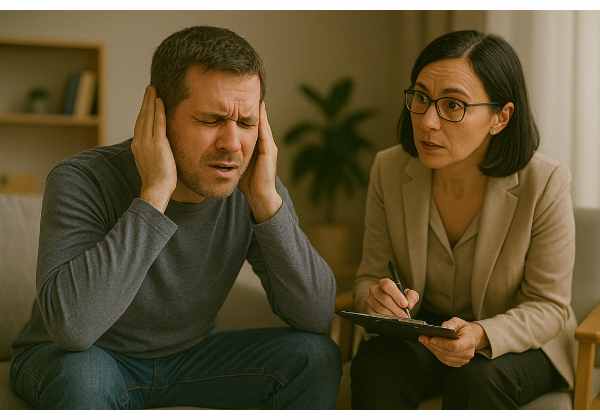
Auditory hallucinations happen when a person hears sounds, voices, music, or other auditory experiences that are not coming from an external source. They can be brief, occasional, or persistent. They may feel clearly located outside the head, seem to come from inside the mind, or shift between the two.
Hearing voices is often associated with psychosis, but auditory hallucinations are not limited to schizophrenia or other psychotic disorders. They can also occur with mood disorders, trauma-related conditions, substance use, sleep-wake transitions, neurological problems, sensory loss, delirium, and some medical illnesses. The meaning depends on the full clinical picture: what is heard, how often it happens, whether insight is preserved, what else is changing, and whether there are safety concerns.
Table of Contents
- What Auditory Hallucinations Are
- Symptoms and Signs
- Voices, Sounds, and Patterns
- Causes and Associated Conditions
- Risk Factors and Triggers
- Effects and Complications
- Diagnostic Context and Evaluation
What Auditory Hallucinations Are
Auditory hallucinations are perceptions of sound without a matching external sound source. The experience is real to the person having it, even when other people cannot hear the sound.
The most familiar form is hearing voices. These are often called auditory verbal hallucinations. A person may hear one voice, several voices, a familiar voice, an unfamiliar voice, a whisper, a shout, or a voice that comments on what they are doing. Some voices speak directly to the person. Others may seem to talk about the person in the third person.
Not all auditory hallucinations are voices. Some people hear:
- Buzzing, ringing, humming, or clicking
- Footsteps, knocking, tapping, or doors closing
- Music, singing, or fragments of songs
- Sirens, alarms, phones, or mechanical sounds
- Animal sounds, environmental sounds, or indistinct murmuring
A key distinction is that auditory hallucinations are not the same as ordinary thoughts. Thoughts are usually experienced as self-generated, even when they are unwanted or intrusive. Hallucinated voices may feel more like sound, speech, or communication. They may have tone, volume, gender, accent, personality, location, or emotional force.
They are also different from tinnitus, although the two can overlap in confusing ways. Tinnitus usually involves ringing, buzzing, hissing, or tonal noise related to the auditory system. Auditory hallucinations may involve structured sounds or voices. Musical hallucinations can sometimes occur in people with hearing loss, making the boundary between sensory and psychiatric explanations important.
Auditory hallucinations are also different from illusions. An illusion is a misinterpretation of a real sound, such as mistaking a fan for distant voices. A hallucination occurs when the perception is not explained by a real external sound.
Insight varies. Some people immediately recognize that the sound is not externally present. Others are unsure. Some feel fully convinced the voice is real or coming from a specific person, device, spiritual source, or outside force. This level of conviction matters because it can affect distress, behavior, and diagnostic interpretation.
Auditory hallucinations are best understood as a symptom, not a diagnosis by themselves. A symptom describes what someone experiences; a diagnosis explains the broader pattern, possible cause, and clinical context. That is why a careful psychosis evaluation looks not only at hallucinations, but also at mood, sleep, thinking, substance use, medical symptoms, trauma history, cognition, and safety.
Symptoms and Signs
The main symptom is hearing something that others do not hear and that does not appear to come from the surrounding environment. The most important signs are the content, frequency, emotional impact, level of insight, and whether the experience is linked with changes in behavior or thinking.
Some auditory hallucinations are neutral. A person may hear their name called once, hear indistinct chatter, or notice a sound when falling asleep. Other hallucinations are frightening, intrusive, or hard to ignore. Distressing voices may criticize, threaten, insult, accuse, command, or comment on private thoughts.
Common symptoms include:
- Hearing voices when alone or when no one nearby is speaking
- Hearing a voice that seems to come from outside the head, a nearby room, a wall, a device, or an undefined space
- Hearing voices inside the head that still feel separate from ordinary thinking
- Hearing voices that comment on actions, appearance, thoughts, or intentions
- Hearing commands to do or avoid certain things
- Hearing arguments, conversations, or running commentary
- Hearing music, sounds, or noises that repeat without an external source
- Feeling watched, judged, threatened, or controlled by what is heard
- Trouble concentrating because the sounds interrupt attention
- Sleep disruption because voices or sounds are worse at night
Observable signs vary widely. Some people show no outward sign at all. Others may pause as if listening, respond aloud to a voice, become distracted mid-conversation, cover their ears, check rooms repeatedly, or avoid certain places because they associate them with the sounds.
A person may also change routines because of the hallucinations. They may avoid social situations, stop going to work or school, keep music or television on to mask voices, or become more withdrawn. If voices are threatening or accusing, the person may appear anxious, guarded, irritable, or suspicious.
Auditory hallucinations become more clinically concerning when they occur with other symptoms, such as delusions, disorganized speech, severe mood changes, agitation, confusion, memory problems, intoxication, withdrawal, fever, seizures, or marked personality change. A sudden change in awareness or attention may point toward delirium rather than a primary psychiatric disorder, especially in older adults or medically ill people. In that situation, sudden confusion screening can be part of the diagnostic picture.
The content of the voice is important, but content alone does not define the cause. Religious, spiritual, hostile, sexual, or bizarre themes can appear in different conditions. Clinicians usually pay attention to the broader pattern: whether the person believes the voice absolutely, whether the voice is linked to mood episodes or trauma reminders, whether there is substance use, and whether the experience is new or longstanding.
Voices, Sounds, and Patterns
Auditory hallucinations vary in form, and those details can help clarify what the experience may mean. A single brief sound has a different clinical weight than persistent voices giving commands or commenting throughout the day.
One useful distinction is between simple and complex hallucinations. Simple hallucinations include noises such as buzzing, ringing, clicking, knocking, or humming. Complex hallucinations include speech, music, conversations, or recognizable environmental sounds. Voices are often the most distressing because they can feel socially meaningful, personal, or threatening.
Another distinction is internal versus external location. Some people hear voices as if they are coming through the ears from the room, street, ceiling, phone, or another person. Others hear them “in the mind” but still experience them as not fully their own. Internal voices are not automatically less serious, and external voices are not automatically psychosis. The full symptom pattern matters more than location alone.
The timing can also be revealing. Auditory experiences that happen only while falling asleep or waking up may be hypnagogic or hypnopompic phenomena. These can occur in people without a psychiatric disorder, especially during sleep loss, irregular sleep, or extreme stress. By contrast, voices that occur during full wakefulness, recur often, and interfere with functioning deserve more careful evaluation.
Patterns clinicians often ask about include:
- Frequency: once, occasionally, weekly, daily, or nearly constant
- Duration: seconds, minutes, hours, or long episodes
- Number of voices: one voice, several voices, crowds, or unclear murmurs
- Identity: familiar, unfamiliar, human, nonhuman, child, adult, or shifting
- Tone: neutral, critical, threatening, comforting, commanding, mocking, or conversational
- Volume: whispering, normal speech, shouting, or variable
- Control: whether the person can ignore, interrupt, predict, or influence the experience
- Belief: whether the person thinks the voice is internal, external, symbolic, spiritual, technological, or uncertain
Command hallucinations require special attention. A command voice tells the person to do something. Some commands are harmless or mundane, such as “stand up” or “turn around.” Others involve self-harm, aggression, neglecting basic needs, refusing food, running away, or avoiding medical help. The risk is higher when the person feels compelled to obey, believes the voice is powerful, has acted on commands before, or is also experiencing severe fear, depression, intoxication, mania, or paranoia.
Musical hallucinations have their own pattern. They may involve songs, hymns, orchestral music, or repeated fragments. They are more often reported in older adults and people with hearing loss, but they can also occur in neurological or psychiatric contexts. Their presence does not automatically mean psychosis.
Hearing one’s name called can happen occasionally in the general population, especially during stress or fatigue. The concern rises when the experience is repeated, vivid, distressing, hard to dismiss, or accompanied by broader changes in perception, belief, mood, behavior, or cognition.
Causes and Associated Conditions
Auditory hallucinations can have psychiatric, neurological, substance-related, sensory, sleep-related, or medical causes. No single cause should be assumed from the symptom alone.
Psychotic disorders are one major category. In schizophrenia spectrum disorders, auditory hallucinations may occur with delusions, disorganized thinking, reduced motivation, social withdrawal, changes in emotional expression, and functional decline. Voices may comment, converse, threaten, or seem to come from outside the person. However, schizophrenia is only one possible explanation, and hallucinations alone are not enough to diagnose it.
Mood disorders can also involve hallucinations, especially during severe episodes. In bipolar disorder, hallucinations may occur during mania, severe depression, or mixed states. In major depression with psychotic features, voices may be accusatory, guilt-focused, hopeless, or mood-congruent. The timing matters: if hallucinations occur only during clear mood episodes, the diagnostic meaning differs from hallucinations that occur independently of mood symptoms. For broader mood-pattern context, bipolar symptom screening may be relevant during assessment.
Trauma-related and dissociative symptoms can include hearing voices or voice-like experiences. Some voices may echo past abuse, criticism, threat, or shame. Others may appear during flashbacks, dissociation, or high arousal. Trauma-related voice-hearing can overlap with psychosis in appearance, which is why trauma history, dissociation, triggers, and sense of self are often explored carefully. In some evaluations, dissociation screening helps clarify whether experiences are tied to trauma-related states.
Substances and medications are another important category. Auditory hallucinations can occur with intoxication, withdrawal, or substance-induced psychosis. Alcohol withdrawal, stimulant use, cannabis-related psychosis, hallucinogens, some sedatives, and certain medication reactions can all be relevant. A hallucination that begins after a new substance, dose change, binge pattern, withdrawal period, or medication change should be assessed in that context. toxicology screening may be used when substance exposure is unclear or safety is a concern.
Neurological conditions can produce auditory hallucinations as well. Seizure disorders, migraine, brain injury, neurodegenerative disease, tumors, infections, autoimmune encephalitis, and other brain disorders can sometimes involve hallucinations or altered perception. These causes are more likely to be considered when hallucinations are new, sudden, atypical, associated with seizures or headaches, or accompanied by weakness, confusion, memory change, visual symptoms, or altered consciousness.
Hearing loss can contribute to auditory hallucinations, especially musical hallucinations or complex sounds. When the brain receives reduced auditory input, it may generate sound-like perceptions. This is sometimes compared with visual hallucinations in people with vision loss, though the mechanisms differ across conditions.
Sleep disruption can also play a role. Severe insomnia, sleep deprivation, narcolepsy, and irregular sleep-wake transitions can increase unusual perceptual experiences. Sounds heard only at the edge of sleep may not carry the same meaning as hallucinations during full wakefulness, but persistent or distressing experiences still deserve attention.
Medical causes can include delirium, endocrine problems, infections, metabolic disturbances, vitamin deficiencies, autoimmune conditions, and severe systemic illness. This is especially important when auditory hallucinations appear suddenly in someone with no prior history or occur with fluctuating attention, fever, dehydration, severe pain, or recent hospitalization.
Risk Factors and Triggers
Risk factors increase the likelihood of auditory hallucinations, but they do not guarantee that hallucinations will occur. Triggers can make existing vulnerability more noticeable or worsen symptoms temporarily.
A family history of psychotic or mood disorders can increase risk for conditions in which hallucinations may occur. Genetics are not destiny; they interact with environment, development, stress, sleep, substance exposure, and medical factors. A person with family risk may never experience hallucinations, while someone without known family history may develop them.
Age and developmental stage also matter. Psychotic disorders often begin in late adolescence or young adulthood, though symptoms can appear earlier or later. In children, hearing voices can occur for many reasons and may be transient. The level of concern depends on persistence, distress, developmental context, trauma exposure, mood symptoms, behavior changes, and functional decline.
Stress is a common amplifier. Major life stress, bereavement, social isolation, chronic threat, sleep deprivation, and emotional overload can increase voice-hearing or make it harder to dismiss. Stress does not mean the experience is “not real” or “just psychological.” It means the nervous system and brain may be under conditions that increase vulnerability to unusual perception.
Trauma exposure is another important risk factor. Childhood adversity, bullying, assault, domestic violence, neglect, and other overwhelming experiences have been associated with later voice-hearing in some people. The relationship is complex. Trauma may shape the content, emotional tone, timing, or meaning of voices, especially when voices are shaming, threatening, or linked to reminders of past harm.
Substance use can be a direct cause, a trigger, or a complicating factor. Stimulants, heavy cannabis use, hallucinogens, alcohol withdrawal, sedative withdrawal, and polysubstance use can all raise the risk of hallucinations. Risk may be higher with high-potency substances, sleep deprivation, dehydration, repeated binges, or personal vulnerability to psychosis.
Sensory impairment is often overlooked. Hearing loss can increase the chance of misperceptions, phantom sounds, or musical hallucinations. Social isolation may compound the effect by reducing external auditory stimulation and increasing attention to internal sounds.
Medical and neurological risk factors include seizures, traumatic brain injury, dementia, Parkinsonian disorders, migraine, infections, thyroid disease, autoimmune illness, and metabolic disturbances. When hallucinations appear alongside cognitive decline, fluctuating alertness, or neurological symptoms, the explanation may extend beyond a primary mental health condition. In some cases, brain MRI findings or other neurological testing may be part of the wider assessment.
Sleep loss deserves particular attention because it can both trigger and worsen unusual perceptions. Even people without a psychotic disorder can experience perceptual distortions during extreme sleep deprivation. In people already prone to hallucinations, poor sleep may increase frequency, intensity, or distress.
Common short-term triggers include:
- Several nights of poor sleep
- High stress or emotional conflict
- Substance intoxication or withdrawal
- Medication changes
- Isolation or sensory deprivation
- Trauma reminders
- Fever, infection, or dehydration
- Severe anxiety, panic, or agitation
- Major mood shifts, including mania or severe depression
The presence of a trigger does not remove the need for evaluation when hallucinations are intense, recurrent, dangerous, or linked with major changes in functioning.
Effects and Complications
Auditory hallucinations can affect attention, sleep, mood, relationships, work, school, and safety. The impact depends less on whether a voice exists once and more on how frequent, distressing, believable, intrusive, or commanding it becomes.
Concentration is often one of the first areas affected. Voices or repeated sounds can interrupt reading, conversations, studying, driving, or decision-making. A person may need to reread text, lose track of tasks, or appear distracted. If voices become constant, ordinary cognitive effort can feel exhausting.
Sleep can also suffer. Some people hear voices more clearly in quiet environments, especially at night. Others avoid sleep because they fear what they might hear. Poor sleep can then worsen stress, mood instability, and perceptual sensitivity, creating a difficult cycle.
Emotional effects vary. Neutral voices may cause curiosity or mild concern. Critical or threatening voices can cause fear, shame, anger, sadness, or panic. Voices that accuse, insult, or predict harm may contribute to depression, anxiety, irritability, or social withdrawal. Some people become afraid to tell others because they worry about being judged, dismissed, or forced into unwanted explanations.
Social complications are common. A person may pull away from family or friends, avoid public places, or become guarded if they believe the voices are connected to other people. Misunderstandings can occur when others notice distraction, muttering, sudden distress, or changes in behavior but do not know what is happening.
Functioning may decline when hallucinations interfere with daily responsibilities. School performance, work attendance, hygiene, eating, errands, and financial tasks can all become harder. In early psychosis, decline in functioning can be gradual and may appear before the person clearly explains that they are hearing voices. This is one reason a first-episode psychosis evaluation often includes questions about recent changes in school, work, relationships, self-care, and behavior.
Safety concerns are especially important when voices involve commands, threats, self-harm, violence, severe guilt, paranoia, or loss of control. Urgent professional evaluation is needed if a person hears voices telling them to harm themselves or someone else, feels unable to resist commands, is preparing to act on what a voice says, or has suicidal or violent thoughts. Urgency also increases when hallucinations occur with severe agitation, intoxication, withdrawal, confusion, fever, seizures, head injury, or inability to care for basic needs.
Auditory hallucinations can also complicate diagnosis. For example, hearing voices during severe depression may suggest a mood disorder with psychotic features, while voices with disorganized thought and functional decline may point toward a schizophrenia spectrum disorder. Voices during delirium, intoxication, or seizures require a different diagnostic approach. This is why screening and diagnosis are not the same: a positive symptom report identifies something important, but it does not by itself explain the cause.
Stigma can be a complication in its own right. Many people delay disclosure because they fear being labeled. Delayed evaluation can allow preventable risks to grow, especially when voices are escalating, sleep is deteriorating, or beliefs around the voices are becoming more fixed.
Diagnostic Context and Evaluation
Auditory hallucinations are evaluated by looking at the whole person, not by judging the symptom in isolation. The goal is to understand what is being heard, when it started, what else is happening, and whether medical, neurological, psychiatric, sleep-related, or substance-related causes are plausible.
A clinical evaluation usually begins with a detailed history. The clinician may ask when the sounds began, how often they occur, whether they are voices or nonverbal sounds, whether they happen during sleep transitions, and whether other people can verify any environmental source. They may ask whether the person recognizes the experience as unusual or believes the source is external.
Questions often cover voice content and risk. This includes whether the voices are threatening, insulting, commenting, arguing, or commanding. If commands are present, the clinician will usually ask what the commands say, whether the person feels pressured to obey, whether they have obeyed before, and whether the commands involve self-harm, harm to others, neglect, or dangerous behavior.
The evaluation also looks for associated symptoms. Delusions, paranoia, disorganized speech, mood elevation, severe depression, panic, dissociation, memory changes, confusion, personality change, sleep disruption, and trauma reminders all shape the diagnostic picture. A broader mental health evaluation may include symptom questionnaires, clinical interviews, collateral information from trusted people, and review of functional changes.
Medical history matters. Clinicians may ask about seizures, migraines, head injury, hearing loss, infections, autoimmune symptoms, endocrine conditions, medication changes, substance use, and recent illness. In some cases, labs, toxicology testing, hearing assessment, brain imaging, or an EEG test may be considered based on the pattern of symptoms.
A mental status examination is often part of the assessment. This is an organized observation of appearance, behavior, speech, mood, thought process, thought content, perception, attention, memory, insight, and judgment. It helps determine whether hallucinations are occurring alongside disorganized thinking, impaired awareness, severe mood disturbance, or reduced ability to assess reality.
The timing of symptoms is one of the most important diagnostic clues. Hallucinations that occur only during intoxication or withdrawal are interpreted differently from hallucinations that persist during sobriety. Voices that occur only during severe mood episodes differ from voices that appear outside mood episodes. Hallucinations that begin suddenly in an older adult with fluctuating attention raise different concerns than gradually developing voice-hearing in a young adult with social withdrawal.
Age, culture, and personal meaning should be handled carefully. Some people describe spiritual, bereavement-related, or culturally meaningful auditory experiences. These are not automatically pathological. Concern rises when the experience is unwanted, distressing, dangerous, impairing, out of keeping with the person’s cultural context, or accompanied by other symptoms of mental or neurological illness.
Diagnosis may take time when causes overlap. A person can have trauma history and psychosis, hearing loss and depression, substance use and bipolar disorder, or sleep deprivation layered on top of another vulnerability. Careful evaluation avoids assuming that the loudest explanation is the correct one.
References
- Auditory Hallucinations 2023 (Review)
- Perceptual Disturbances and Disorders in the ICD-11 2025 (Review)
- Examining the relationships between cognition and auditory hallucinations: A systematic review 2024 (Systematic Review)
- Identification of Psychosis Risk and Diagnosis of First-Episode Psychosis: Advice for Clinicians 2024 (Review)
- Primary care approach to first-episode psychosis 2024 (Review)
- The Role of Verbal Auditory Hallucinations in Influencing and Retrospectively Predicting Physical Harm Prevalence in Early Psychosis 2024 (Clinical Study)
Disclaimer
This article is for general educational purposes only and is not a substitute for professional medical advice, diagnosis, or treatment. Auditory hallucinations can have many possible causes, and urgent evaluation is important when voices involve self-harm, harm to others, confusion, intoxication, withdrawal, seizures, head injury, or sudden major changes in behavior.
Thank you for taking the time to read this sensitive topic; sharing it may help someone recognize when voice-hearing deserves careful, compassionate evaluation.