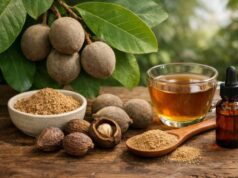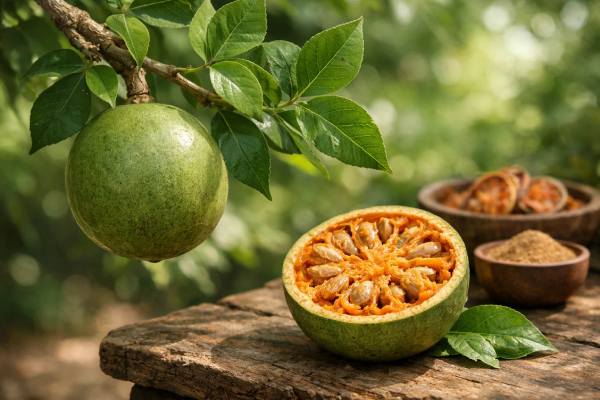
Bael, also known as Bengal quince, stone apple, or bilva, is a traditional medicinal fruit tree valued across South Asia for its gut-soothing and restorative uses. What makes bael unusual is that different parts of the plant, and even different stages of ripeness, can have very different effects. Unripe fruit is typically astringent and is used in traditional practice for loose stools and digestive upset, while ripe pulp is gentler and is often used to support regularity. Beyond digestion, bael is studied for antioxidant and anti-inflammatory activity and for potential metabolic support, including blood sugar balance in certain contexts.
Modern interest in bael centers on its diverse plant compounds—tannins, pectin-like fibers, coumarins, flavonoids, and alkaloids—that may influence the gut lining, microbial balance, and inflammatory signaling. This article explains what bael is, what is in it, realistic benefits, practical ways to use it, dosage ranges by form, and the safety considerations that matter most.
Bael quick overview
- Unripe bael preparations may help calm occasional diarrhea and gut irritation.
- Ripe bael pulp may support regular bowel movements and digestive comfort.
- Typical intake ranges from 2–4 g dried fruit per cup of tea, up to 1–2 times daily.
- Avoid if pregnant or breastfeeding, and use caution with diabetes medications due to possible blood sugar lowering.
Table of Contents
- What is bael fruit?
- Bael key compounds and actions
- Does bael help digestion?
- Bael for blood sugar support
- How to use bael
- How much bael per day?
- Safety, interactions, and evidence
What is bael fruit?
Bael (Aegle marmelos) is a hardy, slow-growing tree in the citrus family (Rutaceae). It produces a round, hard-shelled fruit with aromatic pulp inside. In food traditions, the ripe pulp is used in beverages and preserves; in herbal traditions, the fruit, leaves, and sometimes bark and root are used for specific complaints—most famously digestive issues.
A practical point that many first-time users miss: bael’s effects depend heavily on ripeness and preparation.
- Unripe or partly ripe fruit is typically considered more drying and astringent. Traditional use often focuses on calming loose stools and supporting the intestinal lining.
- Ripe fruit pulp is softer, sweeter, and more mucilaginous. It is usually described as gentler and can be used when the goal is comfort and regularity rather than “drying” the gut.
Because of this, bael is less like a single supplement and more like a small toolkit: you choose the form that matches your symptoms. If you have alternating stool patterns, it is worth approaching bael with extra care—using smaller doses and clear tracking—so you do not accidentally push your system too far in one direction.
Common names and look-alikes
Bael may be called Bengal quince, golden apple, stone apple, or bilva. Some names overlap with other fruits in everyday speech, so it helps to confirm the botanical name on packaging: Aegle marmelos. For supplements, look for the plant part (fruit vs leaf) and whether it is a whole-herb powder or a concentrated extract.
How bael is used in traditional practice
Traditional systems often describe bael as supportive for digestion, appetite, and overall resilience, especially during seasonal changes, travel, or recovery from GI upset. Modern use tends to mirror that: people most often reach for bael tea or powder for digestive comfort, and for leaf-based products when exploring metabolic support.
As with any herb that can affect digestion and blood sugar, bael works best when paired with fundamentals: hydration, adequate electrolytes when stools are loose, and a meal pattern that matches your current gut tolerance.
Bael key compounds and actions
Bael contains a wide range of plant compounds that help explain why the fruit and leaves can feel so different in the body. While exact amounts vary by growing conditions, harvest timing, and processing, several groups show up repeatedly in research and traditional descriptions.
Tannins and astringent polyphenols
Unripe bael fruit is known for its tannins—polyphenols that create a drying, “tightening” sensation. In practical terms, tannins may:
- Support the gut’s barrier and reduce the “weepiness” that can accompany loose stools
- Bind certain proteins and influence the feel and frequency of bowel movements
- Contribute to antimicrobial and antioxidant activity in the digestive tract
Astringent herbs can be very helpful when the issue is watery stool, but they can be counterproductive if constipation, dehydration, or low fiber intake is the main driver.
Pectin-like fibers and mucilage
Ripe bael pulp is valued for its soothing texture and gentle fiber content. Soluble fibers can support stool formation and feed beneficial gut microbes, but they can also cause bloating in sensitive people if introduced too quickly. This is why “start low” matters with bael—especially if you are prone to gas or have a history of fermentable fiber sensitivity.
Coumarins, flavonoids, and phenolic acids
Bael contains coumarins and flavonoids that are studied for antioxidant and anti-inflammatory actions. In general, these compounds are investigated for their ability to:
- Help neutralize oxidative stress
- Modulate inflammatory signaling
- Support vascular and metabolic pathways (indirectly relevant to blood sugar and lipid health)
Alkaloids and aromatic constituents
Leaves contain alkaloids and aromatic compounds that may contribute to metabolic effects observed in preclinical studies. This is one reason leaf-based products are often marketed for blood sugar support. The flip side is that concentrated extracts can be more potent and less forgiving than traditional food-like preparations.
What this means for real-world use
If you want one “rule of thumb,” it is this: bael fruit is usually the first choice for digestive goals, while bael leaf products are more often explored for metabolic goals. Even then, effects can vary based on dose, preparation, and your baseline health. A food-style bael drink is not equivalent to a capsule of a standardized extract.
Does bael help digestion?
Bael’s strongest reputation is digestive support, particularly when the gut feels irritated or unpredictable. The most helpful way to think about bael is to match the preparation to the pattern you are dealing with: loose and urgent vs sluggish and dry.
For occasional diarrhea and loose stools
Traditional practice often uses unripe bael as a calming, astringent preparation. People use it when stools are loose, frequent, or accompanied by a “raw” feeling in the abdomen. Plausible mechanisms include tannins’ astringent effect on the gut lining and the way soluble fibers can help improve stool consistency.
A realistic expectation: bael is not a substitute for medical care when diarrhea is severe or persistent, but it may be a supportive option for mild, occasional episodes—especially when paired with hydration and electrolyte replacement. If you are looking for other gentle strategies that can be used alongside dietary adjustments, you may also explore arrowroot-based digestive support, which is often chosen for its bland, easy-to-tolerate profile.
For constipation and “stuck” digestion
Ripe bael pulp is traditionally used differently. Because it is softer and more mucilaginous, it may be used to support regularity when constipation is driven by dryness, low fluid intake, or low dietary fiber. This is not an aggressive laxative effect; it is closer to a “stool comfort and lubrication” approach.
If constipation is caused by medications, pelvic floor dysfunction, or obstruction, herbs are not the right first step. In those situations, getting the cause evaluated is more important than experimenting with astringent or fiber-rich remedies.
For bloating and gut sensitivity
Some people find bael soothing, while others feel more bloated—usually from increasing soluble fiber too quickly or using sweetened bael drinks. If you are prone to fermentation-related bloating, smaller doses and lower-sugar preparations tend to be better tolerated. A warm tea made from dried slices is often easier than a concentrated syrup-like beverage.
When to be cautious
Avoid self-treating with bael if you have fever, blood in stool, severe dehydration, persistent vomiting, or diarrhea lasting more than a couple of days. In those cases, the priority is medical evaluation and safe rehydration.
Bael for blood sugar support
Bael is increasingly discussed for metabolic wellness, particularly blood sugar balance. Most of the excitement comes from leaf-focused studies and from the broader antioxidant and enzyme-modulating properties seen in laboratory research. The key is to keep expectations realistic and to treat bael as adjunct support, not a replacement for proven diabetes care.
How bael may influence glucose control
Several plausible pathways are discussed in the research landscape:
- Carbohydrate-digesting enzyme modulation: Leaf and fruit extracts are often studied for effects on enzymes involved in breaking down starches and sugars. This could, in theory, support lower post-meal glucose spikes for some people.
- Oxidative stress and inflammatory signaling: Oxidative stress is closely tied to metabolic dysfunction. Antioxidant-rich plant foods and herbs are sometimes explored for supportive effects on markers of inflammation.
- Insulin sensitivity support: Some human and animal studies suggest improvements in glucose handling, though results vary by preparation and study quality.
What outcomes are realistic?
If bael helps, the effect is typically modest—more in the category of supporting a broader plan (nutrition, activity, medication when needed) than producing dramatic standalone changes. In practice, people often notice benefits only when they are consistent for several weeks and when the preparation is matched to the goal (leaf-based product for metabolic support, fruit-based for digestive comfort).
If your primary goal is metabolic support and you want a better-studied supplement comparison point, you might review berberine for glucose and cholesterol support and discuss options with a clinician, especially if you take prescription medications.
Who should be especially careful
If you use insulin or glucose-lowering medications (such as metformin, sulfonylureas, GLP-1 medications, or SGLT2 inhibitors), adding bael—especially a concentrated leaf extract—may increase the risk of low blood sugar. This does not mean bael is “unsafe,” but it does mean you should:
- Start with a low dose
- Monitor glucose more frequently during the first 1–2 weeks
- Avoid stacking multiple glucose-lowering herbs at the same time
A note on sweetened bael drinks
Traditional bael beverages can be nutritious, but many modern versions are sweetened heavily. If blood sugar is your priority, choose unsweetened tea, diluted pulp, or products with clearly stated sugar content.
How to use bael
Bael can be used as a food, a tea, or a supplement, and each form fits different goals. The most important decision is not “which brand,” but which plant part and preparation matches your intended use.
1) Bael tea (dried slices or powder)
Tea is a practical starting point because it is easy to dose gradually. Dried fruit slices or dried pulp powder can be steeped like a tea or simmered as a light decoction.
- For gentler daily use, a short steep (like tea) is often enough.
- For a stronger traditional approach, a brief simmer (decoction-style) can pull more astringent compounds from unripe material.
Tea tends to be the most flexible option when you want digestive support without committing to a concentrated extract.
2) Ripe bael pulp as a food
Ripe pulp is often mixed with water to make a cooling drink, sometimes with spices. If you use this approach for regularity, keep these details in mind:
- Strain the pulp well if the texture bothers you.
- Keep added sweeteners minimal if you are watching blood sugar.
- Consider pairing it with meals rather than taking it on an empty stomach if you are sensitive.
3) Capsules, tablets, and extracts
Supplements may use leaf extract, fruit extract, or whole powders. They are convenient, but they require more label-reading:
- Look for the plant part (leaf vs fruit).
- Prefer products that state an extract ratio or standardization approach.
- Avoid multi-ingredient “detox” or “fat burner” blends where bael is not the main ingredient and dosing is unclear.
4) Practical combinations
Some people combine bael tea with soothing kitchen herbs. For example, adding small amounts of ginger for digestive comfort can make a warm blend that feels more supportive during nausea or travel, while keeping the bael dose moderate. If you do this, keep the overall blend gentle—too many strong herbs at once makes it harder to know what is helping (or causing side effects).
5) The “symptom-matching” habit
A useful way to use bael safely is to match it to what your body is doing that week:
- Loose stools: consider unripe fruit tea or powder, small dose, short duration
- Constipation or dryness: consider ripe pulp or a gentler tea, moderate hydration
- Metabolic support: consider leaf-based products, with glucose monitoring if relevant
How much bael per day?
Bael dosing is not fully standardized, so a smart approach is to use conservative ranges, start low, and adjust based on response. The right dose also depends on whether you are using fruit or leaf, and whether the goal is calming loose stools, supporting regularity, or exploring metabolic support.
Common dosage ranges by form
These ranges reflect typical traditional and supplement-style use patterns rather than a single universal standard:
- Dried bael fruit tea: 2–4 g dried fruit (or 1–2 teaspoons powder) per cup, steeped 10–15 minutes; up to 1–2 cups daily.
- Decoction-style simmer (stronger): 2–6 g dried unripe fruit simmered gently in water; taken once daily for short-term digestive support.
- Ripe bael pulp (food use): 10–25 g pulp mixed with water as a drink, often with meals; start at the lower end if you are sensitive to fiber.
- Capsules (whole powder): commonly 500–1,000 mg per day, split into 1–2 doses.
- Standardized extracts (often leaf-based): commonly 250–500 mg once or twice daily, depending on concentration.
Because extracts vary widely, it is safest to follow the label dosing and treat the lower end as your starting point.
Timing and how long to use it
- For occasional loose stools: many people use bael for 1–3 days. If symptoms persist, the priority should shift to identifying the cause and preventing dehydration.
- For constipation support: give a gentler approach 1–2 weeks, focusing on hydration and overall fiber balance.
- For metabolic goals: allow at least 4–8 weeks to judge whether it is helping, and track glucose and how you feel, not just a single number.
How to “start low” in a concrete way
If you are unsure how you will respond, try one of these starter strategies:
- Begin with 1 cup/day of tea made with 2 g dried fruit for 3 days.
- If tolerated, increase to 2 cups/day or slightly increase the grams per cup.
- Only after you know your response should you consider capsules or extracts.
Signals you may be taking too much
- Constipation, dry stools, or reduced bowel frequency (more common with unripe preparations)
- Cramping or increased gas (more common with fiber-rich pulp, especially if intake jumps quickly)
- Lightheadedness, shakiness, or unusual fatigue in people vulnerable to low blood sugar
If you notice these, reduce the dose or stop and reassess.
Safety, interactions, and evidence
Bael is widely used as a traditional food and herb, but “natural” does not automatically mean “risk-free.” Safety depends on the person, the form, and the dose—especially when moving from food-like preparations to concentrated extracts.
Common side effects
Most issues are digestive and dose-related:
- Constipation or overly firm stools (more likely with unripe fruit preparations)
- Gas or bloating (more likely with ripe pulp or higher fiber intake)
- Nausea or stomach discomfort (more likely with concentrated products or taking on an empty stomach)
If you are using bael to calm diarrhea and it begins to constipate you, that is a sign the “astringent dial” is turned too high for your current needs.
Who should avoid bael
Avoiding bael is a reasonable choice if you are in any of these groups unless a qualified clinician recommends otherwise:
- Pregnant or breastfeeding (limited safety data for supplemental use)
- Children (especially with concentrated extracts)
- People with chronic constipation or a history of bowel obstruction
- People with known allergy to plants in the citrus family (Rutaceae) or who have had reactions to similar botanicals
Medication interactions to consider
- Diabetes medications: bael, particularly leaf-based extracts, may add to glucose-lowering effects. Monitor and coordinate with your prescriber.
- Blood pressure medications: if bael supports vascular relaxation in some individuals, it could theoretically add to blood pressure lowering.
- Anticoagulants or antiplatelet drugs: bael contains diverse plant compounds, and cautious spacing and monitoring is prudent if you are on blood thinners, even though definitive interaction data may be limited.
If you take multiple medications, the safest habit is to introduce bael alone (not in a multi-herb blend), at a low dose, and track changes.
Quality and product selection safety
Choose products that clearly state the plant part, avoid “proprietary blends,” and come from reputable manufacturers with contaminant testing. This matters because adulteration and inconsistent extract strength are more common risks than the plant itself.
What the evidence actually says
The evidence base for bael is promising but uneven:
- Traditional use for digestion is strong and long-standing.
- Preclinical research (lab and animal studies) is extensive and supports plausible mechanisms for gut comfort and metabolic pathways.
- Human clinical research exists but is limited, often small, and not standardized across preparations.
A practical takeaway: bael can be a reasonable supportive herb for the right person and the right symptom pattern, but it should not replace evaluation for persistent digestive symptoms, nor should it be used as a standalone treatment for diabetes or other chronic diseases.
References
- Phytochemical and biological review of Aegle marmelos Linn 2023 (Review)
- Phytochemical Analysis and Evaluation of Antioxidant, Antidiabetic, and Anti-inflammatory Properties of Aegle marmelos and Its Validation in an In-Vitro Cell Model 2024
- Effect of Aegle Marmelos Fruit Pulp Powder on Chronic Subclinical Inflammatory Status (Phase 3 clinical trial) of Type 2 Diabetic Patients 2021
- Phytochemical and pharmacological profile of Aegle marmelos (L.) Correa: A comprehensive review of therapeutic potential, mechanisms of action, and translational relevance 2026 (Review)
Disclaimer
This article is for educational purposes only and does not replace personalized medical advice, diagnosis, or treatment. Herbal products can vary widely in strength and purity, and “natural” remedies can still cause side effects or interact with medications. If you are pregnant or breastfeeding, have a chronic health condition (especially diabetes, kidney disease, or gastrointestinal disease), or take prescription medicines, consult a qualified clinician before using bael in supplement form. Seek urgent medical care for severe or persistent diarrhea, dehydration, blood in stool, high fever, or sudden unexplained symptoms.
If you found this guide useful, consider sharing it on Facebook, X (formerly Twitter), or your preferred platform to help others make safer, better-informed choices.