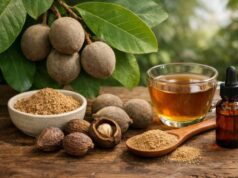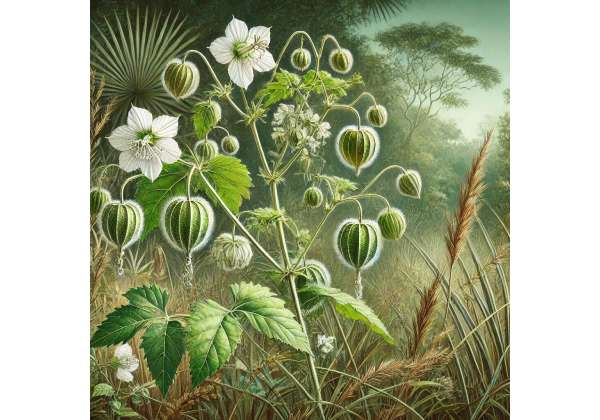
Balloon vine (Cardiospermum halicacabum) is a delicate climbing plant best known for its “inflated” seed pods and long history in traditional wellness practices. Today, it is most commonly used as a topical botanical for itchy, irritated, or inflamed skin—especially when dryness and redness flare together. In many herbal traditions, it is also prepared as a tea, decoction, or extract for joint discomfort and heat-related symptoms, although internal use has far less human research than topical use.
What makes balloon vine interesting is not one single “magic” compound, but a practical blend of plant chemicals that may help calm inflammatory signals and support the skin barrier. When used thoughtfully—especially as a short course during flare-ups—it can be a gentle option for some people. Like any herb, though, it comes with caveats: product quality varies, sensitive skin can react, and certain groups should avoid it.
Essential Insights
- Balloon vine is most often used topically to soothe itching, redness, and flare-prone dry skin.
- Oral use is traditional, but evidence is stronger for skin-focused applications than for internal benefits.
- Typical adult oral range is about 1–3 g/day of dried herb as tea (divided doses), if used.
- Patch-test first; stop if burning, hives, or worsening rash appears.
- Avoid if pregnant, breastfeeding, or if you take blood-thinning medications unless a clinician approves.
Table of Contents
- What is balloon vine
- Key ingredients and properties
- Does balloon vine help with inflammation
- How to use balloon vine
- How much balloon vine per day
- Side effects and who should avoid it
- What the research actually shows
What is balloon vine
Balloon vine (Cardiospermum halicacabum) is a fast-growing climber in the soapberry family (Sapindaceae). You may also see it called love-in-a-puff, heartseed, or balloon plant, names that come from its papery, balloon-like pods and dark seeds that often carry a pale heart-shaped mark. In warm regions it can grow aggressively, winding through fences and shrubs, and it is commonly found along roadsides, field edges, and disturbed ground.
In traditional systems, balloon vine is valued in two main ways:
- Skin support (topical): Leaves and aerial parts are made into pastes, washes, oils, and modern creams for itch-prone, inflamed skin. Many people reach for it during cycles of dryness, redness, and scratchiness—especially when the discomfort is worse at night or after bathing.
- Comfort and cooling (internal): Teas and decoctions are used in folk practice for “heat” symptoms, joint stiffness, and occasional digestive upset. Some culinary traditions even use tender parts in cooking, which is one reason it is sometimes described as both a food and a medicinal plant.
The part of the plant used depends on the goal. Leaves and aerial parts are most common for skin preparations and teas. Seeds appear in some traditional uses, but they are less commonly used in modern over-the-counter skin products.
A helpful way to think of balloon vine is as a flare-up herb rather than an everyday staple: people typically use it when symptoms rise, then taper when the skin settles. For long-term, barrier-first care, balloon vine often works best as an add-on to basics—gentle cleansing, consistent moisturization, and trigger management—rather than a stand-alone solution.
If you are comparing skin botanicals, balloon vine is frequently mentioned in the same practical conversation as centella (gotu kola), which is often used for barrier and repair support; see gotu kola health benefits for a complementary perspective.
Key ingredients and properties
The “active” profile of balloon vine is best understood as a bundle of supportive compounds rather than a single dominant ingredient. While exact composition varies by plant part, harvest timing, and extraction method, the following categories are commonly discussed in relation to balloon vine’s traditional and modern uses:
Phytosterols (plant sterols)
Plant sterols are structurally similar to cholesterol and are often highlighted in skin-focused discussions because they can interact with lipid environments. In practical terms, sterol-rich extracts are often used in topical formulas aimed at calming irritation and supporting barrier comfort. When a formula feels “soothing but not greasy,” the balance of sterols, fatty components, and humectants is often part of the reason.
Flavonoids and other polyphenols
Flavonoids are common plant pigments with antioxidant potential. In balloon vine, they are often described in connection with “calming” activity: helping buffer oxidative stress that can intensify redness and discomfort during a flare. This does not mean the herb is a substitute for medical treatment, but it helps explain why some people experience a reduction in itch intensity or a softer “edge” to irritation when used consistently for a short period.
Saponins and glycosides
These compounds can influence how extracts behave in water and how they interact with membranes. In herbal practice, plants containing saponins are sometimes used in preparations meant to “wash” or “clear” the surface. For balloon vine, this aligns with its frequent use in rinses and washes for reactive skin—though sensitive users should still patch-test because “cleansing” botanicals can be too stimulating for some.
Tannins and mild astringent components
Astringent plant compounds can feel tightening or drying, which may be helpful for weepy, irritated patches but unhelpful for very dry skin if overused. This is one reason formula design matters: a well-made balloon vine cream usually pairs plant extracts with barrier-friendly lipids and humectants so you get soothing effects without stripping.
Fatty acids and supportive lipids (in some preparations)
If balloon vine is prepared in oil (infused oil, salve, or lipid-rich extract), the end product can be more “cushioning” on the skin. This can be useful when itching is driven partly by dryness and friction.
The practical takeaway: balloon vine products tend to work best when they are matched to your skin’s texture and trigger pattern. If your flare is dry, tight, and itchy, a richer cream or salve is often more comfortable than a watery wash. If your flare is hot, red, and weepy, a lighter formula (or short-contact wash) may feel better—provided it does not sting.
Does balloon vine help with inflammation
People most often turn to balloon vine for inflammation that shows up on the skin—especially when itching, redness, and sensitivity rise together. The most realistic, experience-aligned goals are not dramatic overnight clearing, but steadier improvements such as:
- less frequent “scratch spirals”
- reduced feeling of heat or sting
- smoother texture and fewer rough patches
- improved comfort after bathing or at night
Skin flare support (itch, redness, reactive patches)
Balloon vine is commonly used in creams for flare-prone dry skin and dermatitis-like irritation. Many users describe it as a “calming layer” that reduces the urgency to scratch. This matters because breaking the itch-scratch cycle often does more for long-term outcomes than any single ingredient. When you can scratch less, the skin barrier has a better chance to recover.
Joint and muscle discomfort (topical and traditional internal use)
In traditional practice, balloon vine is also associated with rheumatic discomfort. Modern use here is often topical—applied to hands, knees, or shoulders—where it may feel soothing due to its general calming profile. For internal use, the evidence is less clear in humans, so it is best approached cautiously and as a short trial rather than a long commitment.
If your main goal is joint inflammation, balloon vine is usually considered a secondary option compared with better-studied botanicals. For example, boswellia benefits and research may be more relevant when you want a more evidence-forward starting point.
Occasional “heat” symptoms and comfort uses
Some traditional preparations are used for sensations of internal heat, mild feverishness, or discomfort after exertion. These uses are culturally important, but they are also the areas where marketing can outpace evidence. A grounded approach is to treat these claims as traditional context, not promises.
What results to expect and when
For topical use, many people gauge usefulness within 3–14 days, especially for itch relief and comfort. For internal use (if chosen), a cautious trial is typically 2–4 weeks, with a clear stop rule if no benefit appears.
A useful mindset is: balloon vine can be a supportive tool during flares, but it should not replace diagnosis, trigger identification, and a barrier-first routine—especially if symptoms are persistent, widespread, or severe.
How to use balloon vine
Balloon vine can be used in several practical forms, and the “best” option depends on whether you are targeting skin comfort, localized soreness, or a traditional internal trial.
Topical forms (most common)
1) Creams and ointments
These are the most user-friendly options for irritated skin. Look for a product that feels comfortable within the first minute—no burning, no strong scent, and no lingering tackiness that invites scratching. A good cream is often applied:
- after bathing (when skin is slightly damp)
- before bed (to reduce night scratching)
- after handwashing (for hand irritation)
2) Salves and infused oils
Oil-based preparations can be helpful when the main issue is dryness plus itch. They tend to “seal” the surface and reduce friction. If you are prone to clogged pores, reserve salves for body areas rather than the face.
Simple infused oil method (for experienced users):
- Use fully dried aerial parts (to reduce spoilage risk).
- Cover with a stable carrier oil in a clean jar.
- Keep in a cool, dark place for 2–4 weeks, shaking occasionally.
- Strain well; store away from heat and discard if smell changes.
3) Short-contact wash or compress
A mild tea can be cooled and used as a compress for small areas. This is sometimes preferred when skin feels “hot,” but it can sting on cracked skin—so start with intact areas only.
Internal forms (more cautious)
Tea or decoction
Traditional use often relies on a tea made from dried aerial parts. The taste is typically mild to moderately bitter. If you notice nausea, reflux, or cramping, it is a sign the preparation is not a good fit.
Capsules or extracts
If you prefer convenience, choose a product that clearly states the plant part, extraction ratio, and serving size. Avoid products that hide behind “proprietary blend” language.
Combining balloon vine with other soothing ingredients
Many people pair balloon vine topicals with barrier-friendly moisturizers or soothing gels. If you tolerate it, aloe vera benefits and safety can be a helpful companion for cooling comfort—though it is not ideal for everyone, and sensitivities are possible with any botanical.
No matter the form, the most important practical step is to match the preparation to your skin’s condition: richer for dry and itchy, lighter for warm and reactive, and always gentle on broken skin.
How much balloon vine per day
Because balloon vine is used in different ways (topical vs. internal), “dosage” is less about one number and more about form, frequency, and stop rules. The ranges below reflect common traditional patterns and practical supplement conventions—not a guarantee of effectiveness for every person.
Topical dosing (preferred starting point)
Cream or ointment:
- Apply a thin layer 2–3 times daily to affected areas.
- Use for 7–14 days as a flare support, then taper to once daily or stop if the skin settles.
Stronger is not always better. If a product stings, tingles sharply, or leaves the skin feeling tighter, reduce frequency or switch to a richer base formula.
Patch test (highly recommended):
- Apply a small amount to the inner forearm once daily for 2–3 days.
- If itching, burning, or rash develops, avoid use.
Oral dosing (only if appropriate for you)
Tea (dried aerial parts):
- Typical adult range: 1–3 g/day, often as 1–2 g per cup, up to 1–3 cups daily.
- Steep covered for 10–15 minutes to reduce harsh volatiles and bitterness.
Tincture (common herbal style):
- A practical adult range is often 2–4 mL, up to 2–3 times daily, depending on concentration.
Capsules or extracts:
- Product strengths vary widely, so follow label directions and start low. A common approach is one serving daily for 3–4 days, then increase only if well tolerated.
Timing and duration
- For itch and skin discomfort: topical use is often timed after bathing and before bed.
- For internal trials: take with food if you have a sensitive stomach.
- Trial length: 2–4 weeks for internal use is usually enough to decide if it helps.
When to stop or seek medical guidance
Stop use and get medical help promptly if you notice facial swelling, wheezing, hives, severe blistering, or rapid worsening of a rash. For persistent eczema-like symptoms, recurring infections, or extensive body involvement, self-treatment alone is not enough—professional evaluation is important.
If you are considering balloon vine for a child, for long-term daily use, or alongside prescription medications, it is best handled with clinician guidance and conservative dosing.
Side effects and who should avoid it
Even gentle herbs can cause problems when the fit is wrong. Balloon vine is generally used most safely as a short-course topical, but side effects and interactions are still possible.
Common side effects
Topical reactions (most relevant):
- stinging or burning on application
- increased redness (especially on broken skin)
- contact dermatitis-like rash
- itch worsening (rare, but important to recognize early)
These reactions are more likely if the formula contains fragrance, alcohol-heavy extracts, essential oils, or preservatives that your skin does not tolerate.
Oral side effects (if used):
- nausea, stomach upset, cramping
- loose stools
- headache or lightheadedness in sensitive individuals
If you experience GI symptoms, stop and reassess rather than “pushing through.”
Who should avoid balloon vine (or use only with clinician approval)
- Pregnant or breastfeeding individuals: safety data is limited, so avoidance is the prudent choice.
- Infants and very young children: use only if a pediatric clinician approves, and prioritize gentle, fragrance-free basics.
- People with severe, infected, or widely open skin lesions: topical botanicals can sting and may complicate irritation; medical evaluation is safer.
- Those with a history of strong plant allergies or contact dermatitis: patch testing becomes essential, and avoidance may be best if reactions are frequent.
Medication and supplement interactions (practical cautions)
Research on interactions is limited, so use a conservative “risk management” lens:
- If you take blood thinners or antiplatelet drugs, avoid adding multiple herbs with potential blood-thinning effects without clinician input. For context on one such herb, see willow bark benefits and pain relief.
- If you use prescription topical steroids or calcineurin inhibitors, balloon vine creams may still be used in some routines, but spacing matters. A common approach is to separate applications by a few hours and keep the routine simple so you can tell what is helping.
Safety rules that prevent most problems
- Patch test first, especially with sensitive skin.
- Use the smallest effective amount, then taper.
- Avoid layering multiple new products at once during a flare.
- Stop promptly if symptoms worsen, and do not re-challenge without guidance.
Safety is not just about the plant—it is also about the formula, your skin barrier, and your medication context.
What the research actually shows
Balloon vine has a reputation that ranges from “gentle and helpful” to “overhyped,” and both impressions can be true depending on what you expect from it. The most balanced way to read the evidence is to separate topical skin use (where human data exists) from internal use claims (where human evidence is thinner).
Where evidence is most convincing
Topical dermatitis and itch support
Human reports and small clinical experiences suggest balloon vine-containing creams can improve comfort in dermatitis-like skin conditions over short periods, especially when itch and redness are prominent. Importantly, many studies and observations focus on symptom relief and tolerability rather than complete clearance. For real-world use, that is still meaningful: sleeping better and scratching less can be a major win.
Where evidence is promising but indirect
Anti-inflammatory and antioxidant mechanisms
Laboratory and mechanistic studies suggest balloon vine extracts can influence oxidative stress markers and inflammatory signaling in cell models. This supports plausibility for soothing effects, but cell-based findings do not automatically translate to real-world outcomes, especially for oral use.
Topical gels for joint inflammation (preclinical)
There is emerging interest in topical formulations for inflammatory discomfort, including gel-based preparations. This line of work is promising, but early-stage and not a substitute for established care.
Where the evidence is limited
Internal uses for complex conditions
Claims around blood sugar, infections, asthma, or major systemic benefits are largely supported by preclinical data or traditional use. That does not mean the herb is useless—it means it should not be marketed as a stand-alone solution or a replacement for medical treatment.
How to choose a product that matches reality
- Prefer simple formulas: fewer fragrances, fewer essential oils, clear labeling.
- Look for transparency about plant part and concentration (or at least a clear extract listing).
- If your skin is highly reactive, choose a formula designed for sensitive skin and avoid “tingly” botanicals.
A practical decision flow
- Is your main issue itch and irritated skin? Start with a topical product, patch test, and trial for 7–14 days.
- Is your main issue deep joint pain? Balloon vine may be supportive topically, but consider more evidence-forward options first and treat balloon vine as an adjunct.
- Are you considering oral use? Keep it short-term, start low, and avoid if you have higher-risk medication or pregnancy-related considerations.
Used with realistic goals, balloon vine can be a helpful flare-support tool—especially for the skin—while you build the habits that drive the biggest long-term improvements: barrier repair, trigger control, and consistent gentle care.
References
- Ethnomedical, phytochemical and pharmacological insights on an Indian medicinal plant: The balloon vine (Cardiospermum halicacabum Linn.) 2022 (Review). ([PubMed][1])
- Antioxidant and Antiinflammatory Effects of Epilobium parviflorum, Melilotus officinalis and Cardiospermum halicacabum Plant Extracts in Macrophage and Microglial Cells 2021 (Mechanistic Study). ([PMC][2])
- Design, optimization, and evaluation of topical gel of Cardiospermum halicacabum and Ricinus communis L. leaves extract for the treatment of rheumatoid arthritis 2024 (Preclinical Study). ([PubMed][3])
- Cardiospermum halicacabum in atopic dermatitis: Clinical evidence based on phytotherapic approach 2020 (Clinical Study). ([PubMed][4])
Disclaimer
This article is for educational purposes only and does not provide medical advice, diagnosis, or treatment. Herbal products can cause side effects and may interact with medications or medical conditions. If you are pregnant, breastfeeding, managing a chronic condition, treating a child, or using prescription drugs (including topical therapies), consult a qualified healthcare professional before using balloon vine. Seek urgent medical care for signs of a severe allergic reaction, infection, or rapidly worsening skin symptoms.
If you found this helpful, consider sharing it with friends or family on Facebook, X (formerly Twitter), or any platform where people look for practical, safety-first wellness guidance.