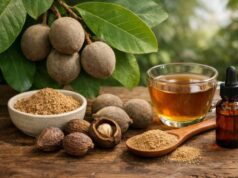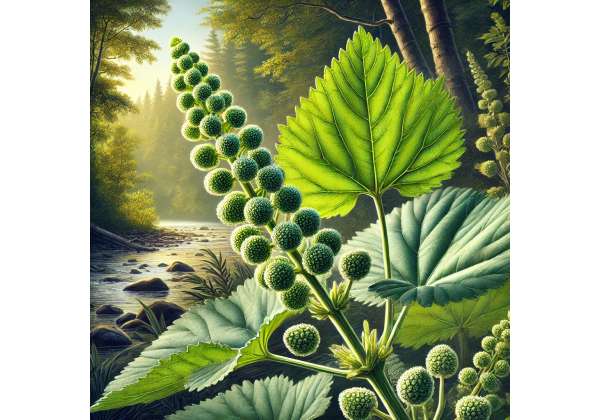
Balm of Gilead is a traditional herbal preparation most often made from the sticky spring buds of certain poplar trees—commonly Populus candicans and closely related balsam poplars. When warmed in oil or extracted in alcohol, these buds release a fragrant resin that herbalists have long used for soothing sore muscles and joints, calming irritated skin, and supporting the body’s response to minor inflammation.
In modern terms, Balm of Gilead is best understood as a resin-rich topical remedy. Its chemistry overlaps with what makes poplar buds and propolis interesting: salicylate-related compounds, aromatic phenolics, and flavonoids that can support a comforting “warming” effect on tissues. It is not a miracle cure, and it is not the same as the famous biblical “balm” (which may refer to other resins). But as a practical home preparation—especially as an infused oil or salve—Balm of Gilead can be a useful part of a simple first-aid and comfort toolkit when used with care, realistic expectations, and attention to safety.
Essential Insights
- Topical use may help soothe minor aches, stiffness, and tender muscles after activity.
- Resin-rich salves and oils can support dry, irritated skin and minor discomfort from chafing.
- Typical topical use is a thin layer 2–4 times daily, and typical tincture dosing is 1–2 mL up to 3 times daily.
- Avoid if you have an aspirin or salicylate allergy, and stop if a rash or burning develops.
- Avoid during pregnancy and breastfeeding, and use extra caution with blood thinners or before surgery.
Table of Contents
- What is Balm of Gilead
- Key ingredients and medicinal properties
- What does it help with
- How to use it forms and practical uses
- How much and when to use
- Side effects interactions and who should avoid
- What the evidence says
What is Balm of Gilead
“Balm of Gilead” can mean different things depending on where you live and who you ask. In herbal practice today, it most often refers to a resinous preparation made from poplar buds, especially from balsam-type poplars such as Populus candicans and related species. These buds are easy to recognize in early spring: they are tight, pointed, and coated with a sticky, aromatic resin that smells sweet, green, and slightly medicinal.
Traditionally, people prepared Balm of Gilead in a few core ways:
- Infused oil: buds are gently warmed or slowly steeped in a carrier oil to dissolve resin and aromatic compounds
- Salve: the infused oil is thickened with beeswax to make a portable ointment
- Tincture: buds are extracted in alcohol, producing a strong, concentrated resin extract
- Poultice or compress: crushed buds or warmed infused oil used as a local application
In practice, Balm of Gilead is most valued as a topical comfort remedy. Many people reach for it the way they might reach for a warming muscle rub: after a long walk, during seasonal stiffness, or when a small patch of skin is irritated and needs protective moisture.
It is also important to clear up a common confusion. The phrase “Balm of Gilead” is sometimes used in spiritual or historical contexts to describe an ancient, valuable balm traded in the Near East. That historical “balm” may refer to entirely different plants and resins. The poplar-bud Balm of Gilead is a North American and European folk preparation with its own identity and chemistry.
Because poplar bud resins are chemically rich and vary by species, region, and harvest timing, “Balm of Gilead” is best treated as a preparation style rather than a single standardized product. If you want a closer look at how poplar buds are used more broadly, see poplar buds health benefits and traditional applications.
Key ingredients and medicinal properties
Poplar buds are not “one active ingredient.” They are a complex resin-and-phenolic package designed by the tree to protect new growth. That is part of why Balm of Gilead can feel both soothing and “medicinal” on the skin: multiple compound families contribute to aroma, texture, and biological activity.
Key bioactive groups
Commonly discussed constituents in balsam-type poplar buds include:
- Phenolic glycosides (often described as salicylate-related compounds): these are part of what gives poplar buds their traditional reputation for easing discomfort and supporting a calmer inflammatory response
- Flavonoids: plant pigments and protective compounds that often contribute antioxidant activity and can help explain why resin preparations are used for irritated tissues
- Phenolic acids and related aromatics: compounds such as caffeic acid derivatives and cinnamic-type aromatics that can influence microbial balance and overall tissue comfort
- Volatile oils and terpenes: the aromatic fraction that gives Balm of Gilead its distinctive scent and contributes to a “warming” sensory effect
- Resins and waxes: the sticky matrix that helps the preparation form a protective film on skin
Medicinal properties people use it for
When you translate folk use into modern language, Balm of Gilead is typically used for a combination of:
- Soothing and protective topical action: resins can create a light barrier that reduces friction and supports comfort on dry or stressed skin
- Anti-inflammatory support: a blend of salicylate-related and polyphenol compounds may support a more balanced inflammatory response in superficial tissues
- Antimicrobial and “skin-clearing” support: poplar bud extracts show activity in lab settings against certain microbes, which helps explain its traditional use in salves for minor skin concerns
- Antioxidant support: relevant mostly as a background property that can support tissue resilience over time
A helpful comparison is propolis. Bees often collect resins from poplars and related trees, and many propolis products share overlapping flavonoids and aromatic phenolics. If you are curious about that overlap, propolis benefits and practical uses provides a useful parallel—just remember that propolis is a bee product, while Balm of Gilead is a plant preparation, and sensitivities can differ.
Because chemistry varies across species and harvests, the most reliable way to get consistent effects is to use a known plant source (or a reputable supplier) and a gentle extraction method that preserves the resin without scorching it.
What does it help with
Balm of Gilead is best known for topical comfort, particularly where tissues feel tender, stiff, or irritated. It is not usually a first-choice internal remedy, and it should not be used to self-treat serious infections, deep wounds, or unexplained pain. But within its traditional lane, it can be surprisingly practical.
Muscle and joint comfort
Many people use Balm of Gilead the way they would use a warming liniment:
- post-exercise muscle soreness
- mild joint stiffness from overuse or seasonal changes
- localized tension in shoulders, neck, hands, or knees
- general “achy” feelings after long periods of sitting or standing
The effect is often described as gentle and steady rather than numbing. The resin base also helps keep the product in place, which is useful for hands and joints that move a lot.
Skin support and minor irritation
As an infused oil or salve, it is commonly used for:
- dry patches that feel tight or itchy
- chafing, windburn, and roughness
- minor redness after friction (for example, from shoes or sports gear)
- small areas of irritation where a protective layer feels helpful
Some people also use it as a “comfort salve” for bug bites or mild irritation, but results vary. If you have reactive skin, patch testing is essential.
Respiratory comfort in traditional use
In some traditions, poplar buds are used to support:
- a feeling of open, easier breathing
- seasonal throat and chest comfort
- a soothing aromatic experience (often via chest rub or steam)
Here, Balm of Gilead is often used externally (for example, rubbed on the chest) rather than taken internally.
Where it may not be a good fit
Avoid relying on Balm of Gilead alone for:
- severe swelling, heat, or rapidly worsening pain
- deep cuts, punctures, or infected wounds
- rashes that spread, ooze, or blister
- joint pain with fever, sudden weakness, or unexplained weight loss
For bruises and minor knocks, some people prefer a more bruising-specific herb. If that is your primary need, arnica uses and topical safety may be a more direct match, while Balm of Gilead can be reserved for stiffness, dryness, and general comfort.
Overall, Balm of Gilead is most satisfying when you treat it as a supportive topical: useful for everyday aches and skin discomfort, but not a substitute for medical evaluation when symptoms are intense or persistent.
How to use it forms and practical uses
Most people get the best results from Balm of Gilead when they choose the right form for the job and use it consistently for a short window, rather than applying it once and expecting a dramatic change.
Most common forms
- Infused oil: ideal for massage, dry skin, and broad areas (legs, shoulders, hands). Oils spread easily and feel gentle.
- Salve: best for targeted spots (knuckles, elbows, heels) or when you want a protective layer that stays put.
- Tincture: a concentrated extract used in tiny amounts, often as an ingredient in liniments or added to salve-making. Some people take it internally, but that is a higher-sensitivity route and not the default choice.
- Chest rub: an infused oil or salve rubbed on chest and upper back for comforting aroma and warmth.
- Compress: a warm cloth with a small amount of infused oil pressed to a stiff area for 10–15 minutes.
How to apply for best effect
For muscle or joint comfort:
- Warm a small amount between your hands.
- Massage into the area for 30–60 seconds.
- Cover with a thin layer rather than a thick glob—resins work well when spread evenly.
- Repeat later the same day if needed.
For dry or irritated skin:
- Apply a thin layer after bathing, when skin is slightly damp.
- Use once daily for maintenance or 2–3 times daily for short-term support.
Simple pairing ideas
If you make your own salve, you can keep it simple (just infused oil and beeswax). If you prefer a broader “skin comfort” blend, some people pair poplar-bud oil with gentle skin herbs. For example, calendula for skin soothing is often used in similar salves and can make a formula feel more cushiony and calming.
Common mistakes
- Overheating the buds: high heat can scorch resin, degrade aroma, and make the oil smell burnt. Gentle warmth and patience work better.
- Skipping patch testing: poplar resins can trigger contact reactions in sensitive people.
- Using on broken or infected skin: Balm of Gilead is not a sterile wound product. Do not pack it into deep wounds or use it on actively infected areas.
- Expecting immediate pain relief: it often supports comfort gradually, especially for stiffness.
As a rule, choose the simplest form that fits your goal: oil for massage and broad areas, salve for small zones and protection, and tincture mainly as a concentrated ingredient rather than the first-line route.
How much and when to use
Dosage for Balm of Gilead depends heavily on whether you are using it topically or internally, and whether you are working with an infused oil, salve, or tincture. Topical dosing is the most common and usually the easiest to personalize.
Topical dosing guidelines
For infused oil or salve:
- Apply a thin, even layer to the area 2–4 times daily as needed.
- For a small joint (knuckles, wrist, ankle), a pea-sized amount is often enough.
- For a larger muscle group (shoulder, thigh), start with 1–2 teaspoons of oil and adjust based on how your skin absorbs it.
Timing tips:
- Use after activity or at the end of the day for stiffness.
- For dry skin, apply after showering or washing hands, when the barrier benefit is most noticeable.
Duration:
- For acute soreness, many people use it for 3–10 days.
- For recurring stiffness, it may be used longer, but consider taking breaks and reassessing what is driving the discomfort.
Internal use dosing, with extra caution
Some traditions use poplar bud preparations internally for cough or general discomfort. If you choose to do this, it should be conservative, and it is best discussed with a clinician if you have health conditions or take medications.
Typical traditional-style ranges seen in herbal practice include:
- Tincture (often 1:5 in 40–60% alcohol): 1–2 mL, up to 3 times daily, taken with water
- Infusion (dried buds): 1–2 g (about 1–2 teaspoons of dried buds) steeped 10–15 minutes, up to 2 times daily
Because poplar buds contain salicylate-related compounds, internal use is not appropriate for everyone. If you are exploring plant-based pain support and want a clearer salicylate-focused comparison, willow bark pain relief guidance can help you think about the aspirin-like caution category in a more structured way.
How to start
- Start with topical use first, once daily, to check for skin sensitivity.
- Increase to 2–3 times daily if tolerated and needed.
- If considering internal use, start at the lowest dose and stop if you notice stomach upset, ringing in the ears, unusual bruising, or any allergic symptoms.
The safest approach for most people is simple: keep Balm of Gilead primarily topical, use modest amounts, and treat it as a short-term comfort support rather than a daily internal supplement.
Side effects interactions and who should avoid
Balm of Gilead is often well tolerated when used on intact skin, but it can still cause problems—especially for people with allergies, asthma triggers, or medication interactions related to salicylates.
Common side effects
Topical:
- Skin irritation (redness, itching, burning)
- Contact dermatitis in sensitive individuals
- Occasional headache or nausea from strong aroma in enclosed spaces (rare, but possible)
Internal (when used as tincture or tea):
- Stomach upset or reflux
- Nausea from resinous compounds
- Sensitivity reactions in people who do not tolerate salicylate-containing plants
Who should avoid Balm of Gilead
Avoid, or use only with qualified medical guidance, if you:
- Have an aspirin allergy or known salicylate sensitivity
- Have a history of severe eczema reactions or frequent contact dermatitis
- Are pregnant or breastfeeding (safety data are limited, so avoidance is the conservative choice)
- Are giving it to young children, especially on large skin areas (their skin absorbs more, and allergy risk is harder to predict)
Medication and condition cautions
Use extra caution if you take:
- Blood thinners or antiplatelet medications (because salicylate-like compounds can be a concern in sensitive contexts)
- NSAIDs (for the same general caution category)
- Medications that already irritate the stomach, if using Balm of Gilead internally
- If you have kidney disease, internal use is a poor idea without clinician input
If you have asthma, note that some people react to salicylates with respiratory symptoms. That does not mean everyone with asthma will react, but it is a reason to start cautiously and avoid internal use.
Patch testing and practical safety
- Patch test on the inner forearm first and wait 24 hours.
- Avoid applying to broken skin, mucous membranes, or near eyes.
- If you are having surgery or a procedure, discuss all supplements with your clinician; a common conservative approach is to stop nonessential herbal products 1–2 weeks beforehand.
When used thoughtfully—thin layers, intact skin, short time frames—Balm of Gilead is often a low-risk comfort tool. The biggest safety wins come from respecting allergy risk and not treating it like a harmless cosmetic.
What the evidence says
Balm of Gilead sits in an interesting evidence zone. Traditional use is long-standing, and modern chemical analysis strongly supports that poplar buds contain compounds with plausible anti-inflammatory, antimicrobial, and antioxidant activity. But the leap from “contains active compounds” to “proven clinical results in humans” is not automatic.
What research supports most clearly
Across studies of poplar buds and related poplar extracts, the strongest and most consistent findings are:
- Rich phytochemistry: poplar buds contain phenolic glycosides, flavonoids, and aromatic phenolics that are biologically active in lab testing
- Antioxidant activity in standardized assays
- Antimicrobial activity in vitro, often more noticeable against certain Gram-positive bacteria than against Gram-negative strains
- Formulation potential: poplar bud extracts can be incorporated into gels, emulsions, and wound-dressing materials in ways that preserve active compounds and allow controlled release
These findings help explain why Balm of Gilead is often used as a skin and comfort remedy. They also suggest why the poplar bud “resin family” overlaps with propolis chemistry and topical use patterns.
What remains limited
- Human clinical trials specifically on Balm of Gilead preparations are scarce.
- Many studies focus on extracts from related poplar species, not exclusively Populus candicans. In practice, that means we often infer that “balsam-type poplar bud resins” have a shared activity profile, while acknowledging that species differences matter.
- Lab findings do not fully capture real-world issues such as skin absorption, product stability, and individual allergy risk.
How to set expectations realistically
If you want the most honest, practical use of Balm of Gilead, treat it as:
- a supportive topical for mild aches, stiffness, and skin irritation
- a preparation where quality and extraction method influence results
- something you test with simple tracking (for example, comfort during movement, reduced tightness, less dryness), rather than expecting a dramatic shift overnight
A useful mindset is “evidence-informed tradition.” The chemistry and early pharmacology align with folk use, but the best outcomes usually come from careful preparation, appropriate use cases, and avoiding riskier internal use unless you have strong reasons and professional guidance.
References
- Characterization of Secondary Metabolites of Leaf Buds from Some Species and Hybrids of Populus by Gas Chromatography Coupled with Mass Detection and Two-Dimensional High-Performance Thin-Layer Chromatography Methods with Assessment of Their Antioxidant Activity 2024 (Review)
- Balsam Poplar Buds Extracts-Loaded Gels and Emulgels: Development, Biopharmaceutical Evaluation, and Biological Activity In Vitro 2023 (Experimental Study)
- Extracts of Poplar Buds (Populus balsamifera L., Populus nigra L.) and Lithuanian Propolis: Comparison of Their Composition and Biological Activities 2021 (Comparative Study)
- Bud-Poplar-Extract-Embedded Chitosan Films as Multifunctional Wound Healing Dressing 2022 (Experimental Study)
Disclaimer
This article is for educational purposes only and does not replace medical advice, diagnosis, or treatment. Herbal products can cause allergic reactions and may interact with medications, including blood thinners and anti-inflammatory drugs. Balm of Gilead preparations may contain salicylate-related compounds and are not appropriate for everyone. If you are pregnant, breastfeeding, managing a chronic condition, or taking prescription medications, consult a licensed clinician or pharmacist before use. Stop using the product and seek medical guidance if you develop a rash, swelling, breathing symptoms, or other concerning reactions.
If you found this guide useful, consider sharing it on Facebook, X (formerly Twitter), or any platform where you discuss evidence-informed herbal care.