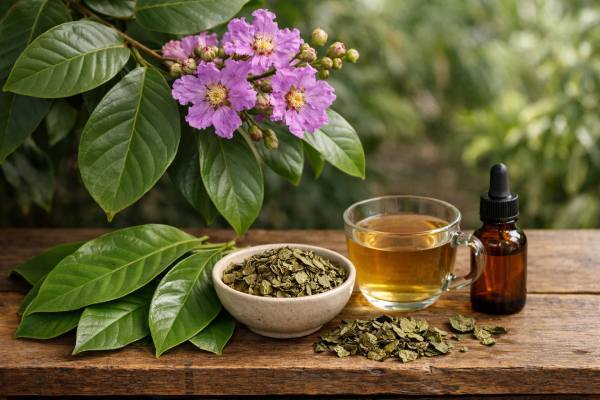
Banaba (Lagerstroemia speciosa) is a tropical tree whose leaves have long been brewed as a tea and used in extracts for metabolic wellness—especially for blood sugar support. While it is not a replacement for medical treatment, banaba has earned modern attention because its leaf compounds (notably corosolic acid and several tannins) may influence how the body handles glucose after meals and how sensitive tissues are to insulin. Some small human studies also suggest possible benefits for triglycerides and other metabolic syndrome markers.
What makes banaba interesting is that it is usually taken in practical, everyday ways: as a leaf tea, capsule, or standardized extract. That said, “natural” does not automatically mean “risk-free.” If you use glucose-lowering medication, banaba can amplify effects and increase the chance of low blood sugar. Quality, dosing, and personal health context matter—especially if you are pregnant, breastfeeding, or managing a chronic condition.
Quick Overview
- May support healthier post-meal glucose and insulin sensitivity when paired with diet and activity
- Can increase low blood sugar risk when combined with diabetes medications
- Typical supplemental range: 500–1,000 mg/day standardized leaf extract (often 1% corosolic acid)
- Avoid if pregnant or breastfeeding, or if you have frequent hypoglycemia unless supervised
Table of Contents
- What is banaba?
- Key ingredients in banaba
- What banaba may help
- Best ways to use it
- How much banaba per day?
- Side effects and interactions
- What the evidence says
What is banaba?
Banaba (Lagerstroemia speciosa) is a flowering tree native to parts of Southeast Asia and nearby regions. You may also hear it described as “queen’s crape myrtle” (a common name that can be confusing, since other crape myrtle species exist). For wellness purposes, the leaf is the primary part used—dried for tea, powdered, or extracted into standardized supplements. In traditional practice, banaba leaf preparations were commonly used in the context of thirst, frequent urination, and metabolic balance—patterns that today often overlap with impaired glucose tolerance.
From a practical standpoint, banaba sits in the same category as many “metabolic botanicals”: it is usually taken as a supportive tool alongside the basics that actually move the needle—consistent meals, adequate protein and fiber, daily movement, and sleep. It is also often included in multi-ingredient formulas that target insulin sensitivity, appetite regulation, or cardiometabolic markers.
A useful way to think about banaba is as a “leaf-based polyphenol and triterpene source.” Polyphenols are plant compounds that often interact with oxidative stress and inflammation pathways, while triterpenes are a broad group of molecules that can influence metabolism-related signaling. Banaba’s best-known constituent is corosolic acid, sometimes nicknamed “plant insulin” in marketing. That nickname is catchy, but it oversimplifies what likely happens: rather than replacing insulin, banaba compounds may help the body respond to insulin more effectively and may reduce glucose spikes after meals in some people.
Because products differ widely, it helps to know what form you are using (tea vs. standardized extract), what it is standardized to (if anything), and whether it fits your goals. People exploring banaba typically fall into one of three groups: those trying to support post-meal glucose, those with early insulin resistance or metabolic syndrome markers, and those looking for a plant-based adjunct while they work on lifestyle foundations.
Key ingredients in banaba
Banaba leaf contains a mix of bioactive compounds, and its effects likely come from the combination rather than a single “magic” ingredient. Still, understanding the major players makes it easier to evaluate products and claims.
Corosolic acid (a pentacyclic triterpene)
Corosolic acid is the most famous banaba compound and is commonly used as a standardization target in supplements (often 1% corosolic acid). Mechanistically, corosolic acid is discussed in relation to glucose handling—particularly how muscle and fat cells transport glucose from the bloodstream. The best interpretation is that it may support insulin signaling and cellular glucose uptake rather than acting as insulin itself.
Tannins and ellagitannins (including lagerstroemin-type compounds)
Banaba also contains tannins—polyphenols that can influence carbohydrate digestion and absorption. Some tannins may help moderate post-meal glucose rise by slowing the breakdown of certain carbohydrates or blunting rapid absorption. This is one reason whole-leaf extracts can behave differently from isolated corosolic acid.
Other triterpenes and related compounds
Banaba leaf may contain additional triterpene acids such as oleanolic acid, ursolic acid, and asiatic acid. These compounds appear in many plants and are studied for metabolic and inflammation-related effects. In the real world, they can contribute to overall activity, but amounts vary by extraction method and plant sourcing.
Flavonoids and general polyphenols
Flavonoids like quercetin- and kaempferol-type compounds show up across many herbs and foods. In banaba, these may add antioxidant capacity and support inflammatory balance—relevant because chronic low-grade inflammation often travels with insulin resistance.
What “standardized” actually means
A label that says “standardized to 1% corosolic acid” usually means the manufacturer has tested the extract to ensure corosolic acid content hits that target. It does not guarantee the presence (or dose) of tannins or other compounds unless they are also listed. If your main goal is post-meal glucose support, a balanced extract may matter as much as the corosolic acid number.
Why product variation matters
Two banaba products can produce very different experiences even at the same capsule dose, because extraction solvent (water vs. alcohol), leaf quality, and standardization targets change the chemistry. For this reason, the most reliable approach is to choose a product that clearly states: plant part used (leaf), extract ratio or concentration, standardization (if any), and a suggested serving size that aligns with real-world research ranges.
What banaba may help
Most people take banaba for one core reason: supporting healthier blood sugar patterns, especially after meals. The most realistic expectation is modest improvement—think “smoother curves,” not a dramatic transformation. If you already have strong habits (balanced meals, consistent movement, adequate sleep), banaba may act as a small enhancer. If those basics are missing, it is unlikely to compensate.
1) Post-meal glucose and insulin response
Banaba is commonly used before or with meals to reduce sharp glucose spikes. This can matter because repeated spikes can drive cravings, energy dips, and long-term metabolic strain. Some people notice they feel steadier after carbohydrate-containing meals when using a standardized banaba extract. Others notice little. Response often depends on baseline insulin resistance, meal composition, and whether the supplement is taken consistently.
2) Insulin sensitivity and metabolic syndrome markers
Banaba is also discussed for broader metabolic support—insulin sensitivity, triglycerides, and other markers that cluster in metabolic syndrome. In practical terms, this could mean incremental improvements in fasting glucose, triglycerides, or waist measures over a period of weeks when paired with lifestyle changes. If your goal is metabolic syndrome support, consider banaba as an adjunct to a structured plan: a higher-fiber diet, strength training, and weight management strategies.
3) Lipids and cardiovascular-adjacent outcomes
Some banaba users take it hoping to support triglycerides or general metabolic health. The rationale is that improved glucose handling can indirectly support lipid metabolism. Realistically, if triglycerides are high, the biggest levers are alcohol reduction (if relevant), carbohydrate quality, omega-3 intake, and weight loss when appropriate. Banaba may be a “supporting actor,” not the lead.
4) Weight and appetite patterns
Banaba is sometimes included in “weight support” formulas. The best-case scenario is indirect: fewer glucose spikes can mean fewer cravings and steadier appetite, which may help adherence to a healthier pattern. It is not a stimulant and should not be marketed as a rapid fat burner.
5) Inflammation and oxidative stress balance
Banaba’s polyphenols and triterpenes are studied for antioxidant and inflammation-modulating properties. While that sounds broad, it matters because metabolic dysfunction often overlaps with inflammatory signaling. In real life, this is hard to “feel,” but it may contribute to longer-term metabolic resilience.
If you are building a more complete plan for glucose stability, pairing banaba with proven lifestyle strategies—and, when appropriate, other supportive tools—tends to work better than relying on any single supplement. For a wider look at complementary options, see plant-based approaches to blood sugar control.
Best ways to use it
Banaba is flexible: you can use it as a tea, a capsule, or a standardized extract. The “best” choice depends on how precise you want dosing to be, how sensitive you are to supplements, and whether you are targeting post-meal glucose, fasting markers, or general metabolic support.
Banaba leaf tea (gentle, ritual-friendly)
Tea is a traditional format and can be a practical daily habit. It is usually milder than concentrated extracts, which can be a benefit if you are cautious or prone to low blood sugar.
- Simple method: Steep 1–2 teaspoons of dried banaba leaf in hot water for 10–15 minutes.
- When to drink: With meals or in the late afternoon when cravings tend to rise.
- Taste tips: Many people prefer it with lemon or a cinnamon stick (avoid sweetening heavily if glucose control is the goal).
Tea is also a good option if you want the “whole-plant” profile, though the exact amounts of specific actives (like corosolic acid) are not predictable.
Capsules and tablets (convenient, more consistent)
For most people, capsules are the easiest way to get a repeatable dose. Look for labels that specify leaf extract standardization (commonly to corosolic acid) and avoid vague “proprietary blend” products that hide exact amounts.
Standardized extracts (most precise)
If your goal is measurable metabolic support, standardized extracts are typically the most practical because you can match the product to the dose range used in studies. A common standardization is 1% corosolic acid, though some products use different targets or list corosolic acid in milligrams.
Common stacking and food strategy
Banaba is often combined with other metabolic supports, especially those that help with carbohydrate metabolism. One popular companion is cinnamon—used in food and supplements for glucose support—though effects vary by form and dose. If you want to compare approaches, see cinnamon’s health benefits and practical uses.
Quality and safety checkpoints before you start
- Choose products that identify Lagerstroemia speciosa leaf (not vague “banaba”).
- Prefer brands that offer third-party testing for identity and contaminants.
- If you use diabetes medication, plan to monitor glucose more closely during the first 1–2 weeks.
- Start with a lower dose and increase only if you tolerate it well.
Used thoughtfully, banaba can fit into an everyday routine without feeling complicated. The key is consistency and pairing it with the habits that make supplements matter: balanced meals, movement, and sleep.
How much banaba per day?
Banaba dosing depends heavily on the form you use (tea vs. extract), whether the product is standardized, and your goals (post-meal glucose vs. broader metabolic markers). If you are new to banaba, a “start low, assess, and adjust” approach is the safest way to find your personal sweet spot.
Typical dosing ranges by form
1) Leaf tea
- Common range: 1–2 cups per day
- How to prepare: 1–2 teaspoons dried leaf steeped for 10–15 minutes
- Best timing: With meals or shortly before meals, especially higher-carbohydrate meals
Tea is often better for people who want a gentle approach or who are sensitive to supplements.
2) Standardized leaf extract (capsules/tablets)
- Common supplemental range: 500–1,000 mg/day, often split into 250–500 mg twice daily
- Typical timing: 15–30 minutes before meals, or with meals if stomach sensitivity is an issue
- Standardization note: Many products are standardized to 1% corosolic acid, which would provide ~5–10 mg corosolic acid per day in the above range (depending on dose)
3) Corosolic acid-labeled products
Some labels list corosolic acid directly in milligrams. In practice, people often aim for a low single-digit milligram range daily, but it is best to follow the product’s evidence-based serving size and avoid “megadosing,” especially if you take glucose-lowering medication.
How long to take it
- Trial window: 8–12 weeks is a reasonable period to evaluate effects on fasting glucose, post-meal response, or triglycerides.
- Checkpoints: Reassess how you feel (energy, cravings, digestive comfort) and—if relevant—review lab markers with your clinician.
- Cycling: Some people use banaba daily; others cycle it (for example, several weeks on, then a break). There is no universal rule, but breaks can help you verify whether it is making a meaningful difference.
Practical personalization tips
- If your goal is post-meal control, prioritize timing around meals and start with the lower end of the range.
- If you are targeting metabolic syndrome markers, consistency matters more than perfect timing.
- If you are prone to hypoglycemia, start with tea or a low-dose extract and monitor carefully.
Finally, if you are comparing banaba to other metabolic supplements, it helps to consider your tolerance, medication list, and how strong the evidence is for your specific situation. For example, berberine is a common alternative with different pros and cons; see berberine’s guide for glucose and cholesterol support.
Side effects and interactions
Banaba is often well-tolerated, but safety depends on dose, product quality, and your health context—especially if you use medication that already affects blood sugar.
Common side effects
Digestive effects are the most frequently reported:
- Loose stools or mild diarrhea
- Stomach cramping or discomfort
- Gas or bloating
- Occasional nausea (more likely on an empty stomach)
If you experience digestive upset, taking banaba with meals or reducing the dose often helps.
Low blood sugar risk (the most important concern)
Banaba may lower glucose, which can be beneficial—but it also means it can amplify the effect of diabetes medications. Use extra caution if you take:
- Insulin
- Sulfonylureas (and other medications that can cause hypoglycemia)
- Combination regimens for type 2 diabetes
Signs of low blood sugar can include shakiness, sweating, dizziness, irritability, fast heartbeat, headache, or confusion. If you notice these, stop the supplement and follow your hypoglycemia plan.
Potential interactions and special situations
- Antidiabetes medications: Increased risk of hypoglycemia or stronger-than-expected glucose lowering.
- Blood pressure medications: If banaba supports modest blood pressure lowering in some users, effects could add up. Monitor if you are prone to low blood pressure.
- Diuretics or dehydration risk: Traditional use includes diuretic-type effects in some contexts. If you are sensitive to dehydration, pay attention to fluid and electrolyte intake.
- Before surgery: Consider stopping banaba 1–2 weeks before planned procedures, since perioperative glucose management may be affected.
Who should avoid banaba or use only with supervision
- Pregnant or breastfeeding individuals: Safety data are limited, so avoidance is the cautious choice.
- People with frequent hypoglycemia: Especially if episodes occur without clear triggers.
- Children: Not recommended unless specifically advised by a qualified clinician.
- Those with complex medical conditions or polypharmacy: Especially if you have kidney or liver disease, or take multiple metabolic drugs.
Safer use checklist
- Start low (tea or low-dose extract).
- If you monitor glucose, increase monitoring frequency for 1–2 weeks.
- Avoid stacking multiple glucose-lowering supplements at once until you know your response.
- Choose products with clear labeling and quality testing.
Banaba can be a reasonable option when used thoughtfully, but the safest path is treating it as a targeted tool—not a casual add-on—when medications or chronic conditions are involved.
What the evidence says
Banaba sits in an “encouraging but still developing” evidence zone. The mechanisms are plausible, the traditional use is long-standing, and early human data are promising—yet the research base is not as deep as it is for first-line lifestyle interventions or prescription therapies.
What research supports most consistently
Glucose handling and insulin sensitivity are the best-supported targets. Across studies, banaba leaf extracts and corosolic acid are most often linked to:
- Reduced post-meal glucose rise in some participants
- Improvements in insulin resistance markers in certain populations
- Possible benefit for related metabolic syndrome markers (such as triglycerides) in some trials
These outcomes make sense mechanistically: banaba’s triterpenes and tannins may influence cellular glucose uptake, insulin signaling, and carbohydrate digestion. Importantly, these are supportive effects, not a “replacement” for insulin or diabetes medication.
Where the evidence is limited
- Long-term outcomes: We have far less data on whether banaba meaningfully changes long-term endpoints such as diabetes progression, cardiovascular events, or sustained weight loss.
- Product consistency: Studies use different extracts, standardization targets, and doses. That makes it harder to translate results to any one supplement on a shelf.
- Population differences: Effects can look stronger in people with impaired glucose tolerance than in metabolically healthy participants.
- Isolated corosolic acid vs. whole extract: Some data point to benefits from corosolic acid, but whole-leaf extracts may work differently due to tannins and other compounds.
A grounded way to interpret “works” for banaba
For most people, “works” should mean one of the following:
- A measurable improvement in post-meal glucose patterns (if you track them)
- A modest improvement in fasting glucose or insulin resistance markers over 8–12 weeks
- Better adherence to healthy eating because cravings and energy dips are reduced
If you do not see a meaningful change in one of those areas after a reasonable trial window, it may not be the right tool for you—or the product may not be well-matched to an effective dose.
Bottom line
Banaba is best viewed as an adjunct for adults who are actively working on metabolic health, especially those with early insulin resistance concerns. The strongest approach is pairing it with proven fundamentals—high-fiber meals, resistance training, daily walking, and sleep consistency—while using dosing and safety guardrails that fit your medication list and risk profile.
References
- Effect of Banaba (Lagerstroemia speciosa) on Metabolic Syndrome, Insulin Sensitivity, and Insulin Secretion 2022 (Randomized Controlled Trial)
- Corosolic acid and its structural analogs: A systematic review of their biological activities and underlying mechanism of action 2021 (Systematic Review)
- The Efficacy and Safety of DLBS3233, A Combined Bioactive Fraction of Cinnamomum burmanii and Lagerstroemia speciosa Plants on The Endocrine-Metabolic Profile of Women with Polycystic Ovary Syndrome: A Randomized Clinical Trial 2024 (Randomized Clinical Trial)
- Identification of Bioactive Substances Derived from the Probiotic-Induced Bioconversion of Lagerstroemia speciosa Pers. Leaf Extract That Have Beneficial Effects on Diabetes and Obesity 2024 (Mechanistic and Phytochemical Study)
Disclaimer
This article is for educational purposes only and does not provide medical advice, diagnosis, or treatment. Supplements and herbal products can interact with medications and may not be appropriate for everyone—especially people who are pregnant or breastfeeding, have chronic medical conditions, or use glucose-lowering drugs. If you have diabetes, insulin resistance, or any condition requiring ongoing care, speak with a qualified healthcare professional before starting banaba or changing your routine. If you experience symptoms of low blood sugar or other adverse effects, stop use and seek medical guidance promptly.
If you found this guide helpful, consider sharing it with friends or family on Facebook, X (formerly Twitter), or your favorite platform so others can make safer, more informed choices.