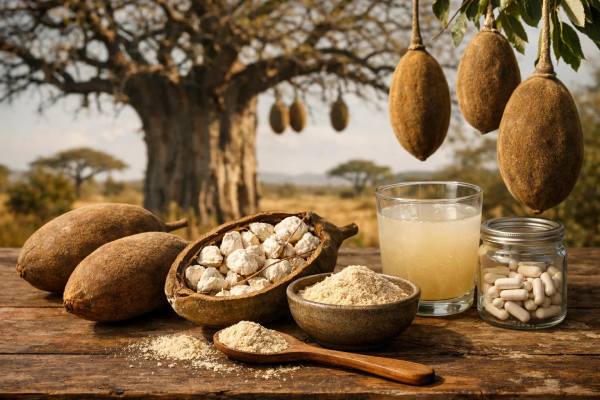
Baobab (Adansonia digitata) is often called the “tree of life,” and not just for its dramatic silhouette across African savannas. The fruit’s dry pulp is naturally concentrated—tangy, slightly citrus-like, and rich in fiber, vitamin C, minerals, and polyphenols. That combination is why baobab has become a popular functional-food powder in smoothies, yogurts, and drinks, and why it continues to hold a place in traditional food and herbal practices across many regions.
Most modern baobab interest centers on a few realistic goals: supporting digestive regularity, helping meals feel more satisfying, and improving post-meal blood sugar response when baobab is taken with carbohydrate-rich foods. Its antioxidant profile also makes it appealing for general wellness, especially when someone wants a nutrient-dense add-in rather than an aggressive “cleanse.” Still, baobab isn’t a miracle ingredient. Results depend on dose, preparation, and the rest of the diet, and the most common downside is simple: adding too much too fast can cause gas or bloating.
This guide explains what baobab contains, what it may help with, how to use it in daily life, practical dosage ranges, and safety considerations for special populations.
Quick Summary for Everyday Use
- Baobab fruit pulp powder can support regularity and gut comfort when introduced gradually.
- It may help blunt post-meal blood sugar spikes when used with carbohydrate-rich foods.
- A common daily range is 5–15 g (about 1–3 teaspoons) mixed into food or drinks.
- Avoid if you have a severe fruit allergy history, are pregnant without clinician guidance, or are using glucose-lowering medication without monitoring.
Table of Contents
- What is baobab and what parts are used
- Key ingredients in baobab
- Baobab health benefits and realistic outcomes
- How to use baobab in food and supplements
- How much baobab per day
- Side effects, interactions, and who should avoid
- What the evidence actually says
What is baobab and what parts are used
Baobab (Adansonia digitata) is a long-lived tree native to sub-Saharan Africa, prized for both nourishment and practical utility. Nearly every part of the tree has been used traditionally—fruit, leaves, seeds, and bark—though modern wellness products focus mostly on the fruit pulp and, secondarily, seed oil and leaf powders.
Fruit pulp: the best-known modern form
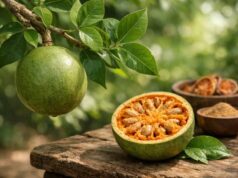
The baobab fruit is an unusual “dry fruit” with a hard shell. Inside is a powdery pulp naturally wrapped around seeds. When the pulp is separated and milled, it becomes the familiar baobab fruit powder used in foods and beverages. This pulp is not a stimulant, not a laxative, and not a dramatic detox agent. It behaves more like a fiber-rich, vitamin- and mineral-containing food ingredient that can support regularity and satiety when used consistently.
A helpful mental model is to treat baobab powder like a “nutritive sour fiber.” The tangy taste comes from natural organic acids, which is why baobab blends so easily into smoothies, yogurt, or water.
Leaves: nutrient support in traditional diets
Baobab leaves are eaten as a vegetable or used as a thickener in soups and stews in several regions. Leaf powders are sometimes marketed for mineral content and general nutrition. The experience is different from fruit pulp: leaves are less acidic and may be more “green” tasting, and traditional culinary use often involves cooking rather than raw consumption.
Seeds and seed oil: fats for food and skin
Baobab seeds can be roasted or processed, and baobab seed oil is used in skincare and sometimes in food contexts. Seed oil is not the same as fruit pulp. It contains fatty acids and fat-soluble components, while the pulp’s strengths are fiber, vitamin C, and polyphenols.
Bark and other parts: traditional, not routine
Bark and other tree parts appear in traditional practices for various complaints, but they are not common in regulated consumer products and are not ideal for self-directed supplementation. Sustainability and safety also matter here—baobab trees are ecologically and culturally important, and bark harvesting can harm the tree when done irresponsibly.
If your intent is everyday wellness, the best-supported and most practical entry point is food-grade baobab fruit powder, used gradually and consistently rather than in “cleanses.”
Key ingredients in baobab
Baobab’s appeal comes from its blend of fiber, micronutrients, organic acids, and polyphenols. Instead of one headline compound, it offers a “stack” of ingredients that influence digestion, post-meal metabolism, and antioxidant capacity.
Dietary fiber: soluble and fermentable fractions
Baobab fruit pulp powder is fiber-rich, with both insoluble fiber (supporting stool bulk) and soluble or fermentable fractions (supporting microbial fermentation in the colon). Practically, this can translate into:
- More predictable stool form over time
- A steadier appetite curve when baobab is added to meals
- Increased gas in some people if they increase intake too quickly
Fiber is also why baobab is best treated as a slow-build ingredient. If your current diet is low in fiber, baobab can feel surprisingly strong at first—not because it is irritating, but because fermentation changes quickly when fibers increase.
For a familiar comparison point, many people use chia as a gentle way to raise fiber in meals. If you want a simple “fiber ramp” strategy that pairs well with baobab, see chia nutrition and everyday uses and use the same gradual approach with baobab.
Vitamin C and minerals
Baobab pulp is commonly described as a meaningful source of vitamin C and minerals such as potassium, calcium, and magnesium. Exact amounts vary with geography, processing, and storage, so it is better to think of baobab as “nutrient-dense for a fruit powder” rather than as a precise vitamin supplement. If you are using baobab primarily for vitamin C, remember that heat and long storage can reduce vitamin C content, which is another reason to prefer reputable suppliers and reasonable shelf-life practices.
Polyphenols and antioxidant compounds
Baobab contains polyphenols such as procyanidins and catechin-like compounds. These are of interest for antioxidant and inflammatory signaling pathways, and they may also play a role in post-meal glucose handling by influencing digestion and absorption dynamics.
Organic acids and taste profile
Baobab’s tart flavor reflects organic acids (including citric acid), which help it “fit” naturally into water, juice blends, and yogurt. This acidity can be useful for palatability, but for people with reflux or very sensitive enamel, frequent acidic drinks may not be ideal without protective habits (such as drinking through a straw and rinsing with water afterward).
In short, baobab is best viewed as a whole-food ingredient: fiber-forward, micronutrient-rich, and polyphenol-containing—useful for daily routines when introduced with care and realistic expectations.
Baobab health benefits and realistic outcomes
Baobab is often marketed with sweeping promises, but its most realistic benefits are grounded in what its ingredients tend to do in the body: support digestion and satiety, provide nutrient density, and influence post-meal metabolic responses. Think “steady support,” not dramatic transformation.
Digestive regularity and gut comfort
Because baobab is fiber-rich, it can support more regular bowel habits over time—especially when paired with hydration and consistent meal patterns. Many people notice benefits as small shifts:
- Stool texture becomes easier to pass
- Irregular patterns become less “spiky”
- Hunger between meals feels less urgent
The most common mistake is starting with a full tablespoon right away. If bloating happens, it does not necessarily mean baobab “doesn’t agree” with you; it often means the dose increased too quickly for your current microbiome and fiber baseline.
If constipation is a primary concern and you want a more structured, dose-based fiber tool, consider learning the basics of soluble fiber dosing and timing from psyllium husk benefits and dosage and then use baobab as a supportive “food fiber” rather than the only strategy.
Satiety and snack control
Fiber and acidity can make meals feel more complete. In practice, baobab works well when used as an ingredient in a meal you already eat, such as yogurt, oatmeal, or a smoothie. The goal is not appetite suppression; it is smoother appetite rhythms. That distinction matters because aggressive restriction can backfire, while gentle satiety support tends to be more sustainable.
Antioxidant and inflammatory balance support
Baobab’s polyphenols and vitamin C contribute to its antioxidant profile. The most realistic interpretation is “supports the body’s normal antioxidant defenses,” not “prevents disease.” People sometimes report subjective benefits such as better recovery after long days or a general sense of “lighter” digestion, but those experiences are individual and usually show up when baobab is part of an overall nutrient-dense pattern.
Immune support as a nutrition strategy
Baobab is sometimes framed as immune support because of vitamin C and polyphenols. A grounded view is that nutrient adequacy supports immune function, and baobab can contribute to that adequacy. It is not a substitute for sleep, protein intake, vaccination when appropriate, or medical care when you are ill.
Skin support: indirect rather than topical
Some people use baobab because they associate digestion and skin clarity. The most plausible path is indirect: better regularity and dietary fiber can improve overall dietary pattern adherence and reduce high-sugar “snack drift,” which may influence skin in some individuals. Baobab seed oil is also used cosmetically, but that is a separate conversation from fruit pulp powder.
Baobab’s best “health benefit” is that it makes it easier to add fiber and micronutrients to everyday foods in a way that is simple and repeatable.
How to use baobab in food and supplements
Baobab is easiest to use when you treat it like an ingredient rather than a standalone supplement. The powder blends well, but small technique choices can improve texture, taste, and tolerance.
Baobab powder: practical ways to use it
Most people use baobab fruit pulp powder in one of three ways:
- Stirred into yogurt, kefir, or cottage cheese
- Mixed into oatmeal, chia pudding, or muesli
- Blended into smoothies or shaken into cold water
If you mix it into water, whisking or shaking helps prevent clumps. In thicker foods like yogurt, it disperses more easily and often feels gentler on digestion because it is consumed with protein and fat.
Flavor pairing tips
Baobab’s tartness pairs well with:
- Banana, mango, berries, or dates
- Vanilla, cinnamon, and ginger
- Cocoa and coffee notes
If you want a rich smoothie base that “rounds out” baobab’s acidity, cacao is a common fit—see cacao active compounds and uses for ideas on building a more balanced, less sugary blend.
Timing: with meals beats empty stomach
For most people, baobab is best taken with or alongside food. This supports tolerance and aligns with why people use it: fiber and polyphenols tend to matter most when they interact with a meal. If you are experimenting with post-meal blood sugar effects, try adding baobab to a breakfast or lunch that contains carbohydrates and track how you feel (energy, hunger, cravings) over the next two to three hours.
Leaf powders and teas
Baobab leaf powder is more common in traditional diets than in Western supplement routines. If used, it is typically incorporated into soups, stews, or savory dishes. Teas exist, but leaf preparations vary and are not as standardized as fruit pulp products. For most readers focused on “baobab benefits,” fruit pulp powder is the most predictable form.
Baobab seed oil
Baobab oil is frequently used topically for dry skin and hair, and it is sometimes marketed as a culinary oil. If you use it on skin, patch testing is wise, especially if you have a history of nut, seed, or fruit sensitivities. If you use it in food, treat it like other specialty oils: store it away from heat and light and keep it within its freshness window.
In practice, “how to use baobab” comes down to consistency: small daily amounts added to foods you already eat. That approach supports tolerance and makes it easier to benefit from baobab’s strengths without turning it into a short-lived fad.
How much baobab per day
Baobab dosing is best approached like fiber dosing: start low, increase gradually, and choose a dose that fits your goals and your digestion. There is no single perfect dose because baobab is used as both a food ingredient and a functional supplement.
Common daily range for baobab powder
A practical daily range for many adults is:
- 5–15 g per day (roughly 1–3 teaspoons), mixed into food or drinks
People who are already eating a high-fiber diet may tolerate more, while people with sensitive digestion may prefer the low end.
How to start (a simple ramp plan)
If you are new to baobab or to fiber-rich add-ins:
- Days 1–3: 1 teaspoon daily with food
- Days 4–7: 2 teaspoons daily if comfortable
- Week 2 onward: adjust within your target range
If bloating shows up, pause the increase rather than quitting immediately. Many people do well by holding a smaller dose for a week, then increasing again.
Goal-based dosing suggestions
- Regularity and gut comfort: 5–10 g daily, with water intake kept steady
- Satiety support: 5–15 g daily, used in a meal (not as a stand-alone drink)
- Post-meal balance experiments: use your chosen amount with the same meal for 1–2 weeks so you can compare patterns
Timing and frequency
Once daily is often enough. If you prefer divided servings, split across two meals. For many people, adding baobab to breakfast is a simple anchor because it can influence appetite and energy earlier in the day.
Duration: how long to use it
Baobab works best as a routine ingredient used for weeks, not days. If your goal is digestion, give it at least two to four weeks to judge. If your goal is post-meal balance, you may notice changes sooner, but it still helps to run a consistent two-week “trial” with similar meals.
When to avoid higher doses
Choose a conservative dose if you:
- Have IBS-like sensitivity to fermentable fibers
- Are prone to reflux (acidic drinks can irritate symptoms)
- Are increasing multiple fiber supplements at the same time
If you are combining baobab with other “blood sugar support” foods, avoid overcomplicating the plan. It is usually better to add one tool at a time. Cinnamon, for example, is often discussed in the same context, but it has its own dosing and safety considerations—see cinnamon benefits and safe use before stacking strategies.
Baobab dosing is successful when it feels easy: small, consistent, and matched to your digestion rather than pushed to the maximum.
Side effects, interactions, and who should avoid
Baobab fruit pulp is widely used as a food, and for most healthy adults it is well tolerated. The main “risk” is not toxicity—it is digestive discomfort from adding a concentrated fiber source too quickly, plus a few practical cautions for special populations.
Common side effects
- Gas and bloating (most common, usually dose-related)
- Mild stool loosening if intake rises quickly
- Reflux irritation if taken frequently in acidic drinks
- Rare allergy-like symptoms (itching, hives, lip swelling) in sensitive individuals
Most digestive side effects improve with a smaller dose, slower ramping, and taking baobab with meals instead of on an empty stomach.
Medication interactions to consider
Baobab is not known for dramatic drug interactions, but two categories deserve attention:
- Glucose-lowering medications: If you use insulin or oral diabetes medications, adding a food that may improve post-meal glucose response can change your readings. That is not automatically dangerous, but it can become risky without monitoring.
- Medications sensitive to fiber timing: High-fiber intake can affect the absorption timing of certain medications. A conservative approach is to separate baobab (and fiber supplements) from important medications by 1–2 hours unless your clinician advises otherwise.
Who should be cautious or avoid baobab
Avoid or seek clinician guidance before regular use if you are:
- Pregnant or breastfeeding (food-level amounts are usually the safer approach, but supplements should be discussed)
- Managing diabetes with medication or have frequent hypoglycemia
- Living with chronic gastrointestinal conditions where fermentable fibers trigger symptoms
- Allergic to multiple fruits, or have a history of severe allergic reactions
- Following a medically prescribed low-fiber diet
Special note for children
Baobab is sometimes used in family foods, but “supplement dosing” for children should be conservative and clinician-guided. The main concern is not toxicity, but digestive upset and the possibility of displacing more balanced nutrition with a single “superfood” focus.
Practical safety habits
- Start with small servings and increase slowly.
- Prefer mixing into foods rather than sipping large acidic drinks all day.
- Choose reputable suppliers with clear labeling and good storage practices.
- If you experience allergy symptoms, stop immediately and seek care if symptoms are severe.
Baobab is safest when used as a food ingredient, not as a high-dose supplement taken on faith. If you treat it like fiber and nutrition—rather than medicine—you get most of the upside with far less downside.
What the evidence actually says
Baobab research spans nutrition chemistry, traditional use descriptions, laboratory work, and a smaller number of human studies. The most useful evidence pattern for everyday readers is this: baobab’s likely benefits are consistent with its fiber and polyphenol content, and human studies have mainly explored post-meal metabolic effects and feasibility of longer-term interventions.
Human evidence: strongest signals so far
- Postprandial glycemia: Controlled trials in healthy adults have investigated baobab fruit preparations taken with carbohydrate loads and reported improvements in post-meal glucose measures compared with control conditions. The most plausible mechanisms include slowed starch digestion and altered absorption dynamics, shaped by polyphenols and fiber.
- Dietary intervention feasibility: More recent clinical research includes structured protocols that test daily baobab fruit powder intake over several weeks while tracking gut and cardiometabolic markers, including tolerability and safety monitoring. These designs help move baobab from “interesting ingredient” toward “testable functional food,” even when final outcome data are still emerging.
What is still limited
- Long-term outcomes: Baobab is not yet supported by large, long-duration trials showing sustained changes in HbA1c, LDL cholesterol, or disease endpoints. Most claims in that direction should be treated as preliminary.
- Standardized dosing across products: Nutrient and polyphenol content can vary by origin, processing, and storage. This variability makes it hard to promise a single dose-response relationship for every product on the market.
- Broad disease claims: Laboratory studies often explore antibacterial, anti-inflammatory, and enzyme-inhibiting properties, but those results do not automatically translate to clinically meaningful effects in humans at typical food doses.
How to use the evidence in real life
A grounded, evidence-aligned approach looks like this:
- Use baobab as a consistent food ingredient (not a “cleanse”).
- Aim for a realistic target such as regularity, satiety, or post-meal steadiness.
- Evaluate results over 2–4 weeks, then decide whether it is worth continuing.
- If you are using it for glucose patterns, monitor readings and involve a clinician if you use medication.
Baobab’s evidence profile is promising but not overstated: it looks like a nutrient-dense, fiber-forward ingredient that may improve post-meal responses and support gut comfort for some people, especially when it helps them maintain a higher-quality dietary pattern.
References
- Adansonia digitata L. (Baobab Fruit) Effect on Postprandial Glycemia in Healthy Adults: A Randomized Controlled Trial – PMC 2022 (RCT) ([PMC][1])
- Adansonia digitata L. (Baobab) Bioactive Compounds, Biological Activities, and the Potential Effect on Glycemia: A Narrative Review – PMC 2023 (Review) ([PMC][2])
- Effects of Baobab fruit powder on gut and cardiometabolic health in obesity—Protocol for a randomised placebo-controlled trial | PLOS One 2025 (Trial Protocol) ([PLOS][3])
- Nutritional and pharmacological attributes of baobab fruit pulp | Food Production, Processing and Nutrition | Springer Nature Link 2024 (Review) ([Springer Link][4])
Disclaimer
This article is for educational purposes only and does not provide medical advice, diagnosis, or treatment. Baobab (Adansonia digitata) is commonly used as a food ingredient, but individual responses vary, especially with higher fiber intake. If you are pregnant or breastfeeding, have a chronic gastrointestinal condition, have food allergies, or use medications—particularly glucose-lowering drugs—consult a qualified healthcare professional before using baobab regularly or in supplement-style doses. Stop use and seek urgent medical care if you develop symptoms of a serious allergic reaction, such as facial swelling, trouble breathing, or widespread hives.
If this article was helpful, consider sharing it on Facebook, X (formerly Twitter), or your preferred platform so others can make more informed choices.