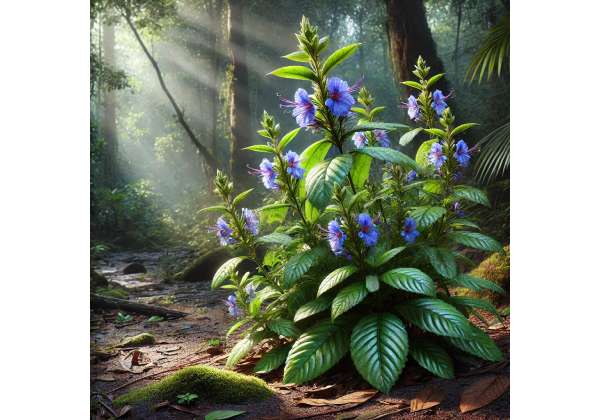
Barleria (Barleria strigosa) is a lesser-known medicinal plant in the Acanthaceae family, used in parts of South and Southeast Asia in traditional systems for everyday complaints such as feverish colds, minor bleeding, and “body heat” or toxin-clearing preparations. Modern interest in B. strigosa is growing for a different reason: laboratory profiling shows it contains a rich mix of phenylethanoid glycosides (including verbascoside), iridoid glycosides, and flavonoids—compounds commonly associated with antioxidant, anti-inflammatory, and antimicrobial activity.
It is important to set expectations. Most research on B. strigosa is preclinical, meaning test-tube studies, enzyme assays, and cell-based experiments rather than large human trials. Still, these early findings help explain why communities have used the plant as a general tonic and topical support. If you are considering Barleria as a supplement, your best strategy is to focus on practical use (form, timing, quality), conservative dosing, and safety screening—especially if you take medications, have liver conditions, or are pregnant or breastfeeding.
Essential Insights
- May support antioxidant and inflammation balance based on early lab research, not confirmed clinical outcomes.
- Shows antibacterial and blood-sugar enzyme inhibition activity in preclinical testing, which may align with traditional use as a “tonic.”
- Conservative adult tea range is 1–2 g dried leaf per cup, up to 2 cups daily for short trials.
- May affect drug-metabolizing enzymes; use extra caution if you take liver-metabolized medications.
- Avoid if pregnant, breastfeeding, under 18, or with liver disease, unless a clinician recommends it.
Table of Contents
- What is Barleria strigosa?
- Key ingredients and medicinal properties
- What does Barleria help with?
- How to use Barleria
- How much Barleria per day?
- Side effects and who should avoid it
- What the research actually shows
What is Barleria strigosa?
Barleria strigosa is a flowering plant traditionally gathered as a whole herb or by leaf, depending on local practice. In botanical terms, it belongs to the Acanthaceae family, a group that includes many ornamentals and a smaller number of plants used in folk medicine. While the species is not as widely commercialized as “mainstream” herbs, it appears in regional materia medica as a tonic-style plant—often meaning it is used to support resilience during minor illness, fatigue, or seasonal transitions.
People may encounter B. strigosa under regional names, and it is sometimes confused with other Barleria species. That matters because closely related plants can share some chemistry yet still differ in strength, safety profile, and best use. If you are buying a product labeled “Barleria,” look for a full botanical name (Barleria strigosa), the plant part used (leaf vs whole plant), and ideally a batch or lab identifier. Without that, it is hard to know what you are actually taking.
Traditional use patterns tend to fall into three broad buckets:
- Short-term internal use as a warm preparation (infusion or decoction) during feverish colds, body aches, or “hot” symptoms
- General tonic use in small amounts, sometimes combined with other herbs
- Topical use for minor skin stressors, often as a wash, compress, or poultice-style preparation
In practical terms, B. strigosa is best approached like other “new-to-you” herbs: start with a clear goal, choose a preparation that matches that goal, and run a short, conservative trial rather than making it a daily staple immediately.
Before you decide to use it, it helps to ask two questions:
- What is my intent? (immune-season support, topical soothing, metabolic support, or general antioxidant support)
- What is my risk profile? (pregnancy, liver conditions, medication interactions, history of allergies)
When a plant’s human evidence is limited—as is the case here—these two questions prevent the most common mistakes: taking too much, taking it too long, or taking it as a substitute for medical evaluation.
Key ingredients and medicinal properties
The most helpful way to understand Barleria strigosa is through its compound families, because they explain both the promise and the limits of what the plant can realistically do. Research on B. strigosa highlights several groups that are common in medicinal plants with calming, protective, or antimicrobial reputations.
Phenylethanoid glycosides
This is the group most often associated with Barleria research. The best-known example is verbascoside (also called acteoside), a polyphenol-rich compound studied for antioxidant and inflammation-modulating activity in many plants. In B. strigosa, verbascoside and related molecules (such as isoverbascoside and decaffeoylverbascoside) are often discussed as “marker compounds” because they are measurable and biologically active in lab assays.
Iridoid glycosides
Iridoids are bitter-tasting compounds found in many traditional “cooling” or fever-support plants. They are often explored for anti-inflammatory pathways and antimicrobial support. In chemical isolation studies of B. strigosa, iridoid glycosides appear alongside polyphenols, suggesting the plant’s activity is not driven by a single ingredient.
Flavonoids and phenolic acids
Flavonoids are the workhorse antioxidants of the plant world. They can help explain why extracts show free-radical scavenging in lab tests. Importantly, antioxidant activity in a test tube is not the same thing as proven disease prevention, but it does give a plausible “mechanism layer” behind traditional tonic use.
Plant sterols and other supportive constituents
Some analyses of Barleria species also identify compounds such as phytosterols and vitamin-like antioxidants in the broader genus. These are not unique to B. strigosa, but they may contribute to the overall biological “signature” of extracts.
A practical takeaway from this chemistry: B. strigosa is likely to behave as a multi-target herb—mildly antimicrobial, mildly anti-inflammatory, and supportive rather than aggressive. That makes it more suitable for short-term, low-dose use than for “high-dose, long-term” protocols.
Because multi-compound herbs can behave unpredictably in the body, quality and extraction method matter. Water-based preparations pull more water-soluble polyphenols, while alcohol extracts can pull a broader range of constituents. If you are sensitive to supplements, start with a simpler water infusion first; it is easier to adjust and generally less concentrated than many commercial extracts.
What does Barleria help with?
Most claims about Barleria strigosa fit into a “supportive benefits” category rather than a “treats a disease” category. Think of it as a plant with promising biological activities that may or may not translate into meaningful outcomes for a specific person. The most defensible potential benefits are those repeatedly suggested by preclinical research and aligned with traditional practice.
Antioxidant and inflammation balance
In lab testing, B. strigosa extracts show antioxidant activity across multiple assay types. This is consistent with its polyphenol content, especially phenylethanoid glycosides and flavonoids. In everyday terms, people use plants like this to support recovery during periods of stress, frequent travel, or seasonal immune challenges. The realistic expectation is subtle: less “a dramatic feeling” and more “support while your body does its job.”
Antibacterial and microbe-facing support
Extracts have demonstrated antibacterial activity in laboratory settings against certain bacterial strains. That does not mean it replaces antibiotics or is appropriate for serious infections. Where it may fit, if at all, is as a short-term supportive tea or traditional tonic during early, mild symptoms—paired with rest, hydration, and medical care when needed. If your main goal is immune-season support with a stronger evidence base in common use, you may prefer better-known options such as andrographis for immune support.
Metabolic and enzyme-related interest
Some preclinical models explore the plant’s effects on enzymes related to blood sugar handling and inflammation signaling. This is an early research area, but it helps explain why the plant sometimes appears in “tonic” traditions that overlap with metabolic wellness.
Topical comfort traditions
Traditional topical use often points toward skin-calming applications: gentle washes, compresses, or poultices for minor irritation. Here, the benefit may come from a combination of anti-inflammatory compounds and the simple physical support of a warm compress.
A good way to choose whether Barleria is worth trying is to match it to a clear, low-stakes goal:
- “I want a short seasonal tea trial for general support.”
- “I want a topical wash for mild skin discomfort.”
- “I want a gentle tonic-style herb, not a stimulant.”
If your goal is high-stakes (blood sugar control, treating infections, managing inflammatory disease), it is smarter to use Barleria only as an adjunct—if at all—and only with professional guidance.
How to use Barleria
How you prepare Barleria strigosa matters as much as how much you take. Because the herb is not standardized across most markets, your safest approach is to pick a form that is both easy to dose and appropriate for your goal.
1) Tea (infusion)
Best for: gentle daily support, short seasonal use, and people who want the lowest-complexity option.
How to do it well:
- Use dried leaf or aerial parts from a clearly labeled source.
- Pour hot (not violently boiling) water over the herb.
- Cover while steeping for 10–15 minutes, then strain.
- Start with a lighter tea and increase strength only if well tolerated.
Tea is the best “starter form” because you can stop immediately if you notice drowsiness, stomach upset, or a headache.
2) Decoction (simmered preparation)
Best for: traditional-style use when tougher plant material is included (stems, whole plant).
How: simmer gently for 10–20 minutes, then cool slightly before drinking. Decoctions can be stronger than infusions, so use smaller volumes at first.
3) Powder and capsules
Best for: convenience and consistent daily routines.
What to look for:
- Full botanical name (Barleria strigosa)
- Plant part used
- Extraction ratio if it is an extract (for example 10:1)
- Avoid “proprietary blends” if you want to understand effects
Because capsules can deliver a higher dose quickly, they are not ideal for your first exposure unless you have clear labeling and you start low.
4) Tincture or fluid extract
Best for: dose precision and short trials.
Tip: tinctures vary widely in strength. Start with the smallest suggested amount and assess next-day effects before increasing.
5) Topical use
Best for: localized skin discomfort when you want a low-risk trial. A simple cooled infusion can be used as a wash or compress. If you want a well-known, gentle topical herbal option to compare, calendula for skin soothing is often used in similar low-intensity situations.
For all forms, the simplest rule is: change one variable at a time. If you start Barleria while also starting a new sleep supplement, a new tea blend, and a new skincare product, you will not know what helped—or what caused a problem.
How much Barleria per day?
There is no universally established clinical dosage for Barleria strigosa. Most available data comes from chemical profiling and preclinical testing, which cannot be cleanly converted into a “human dose.” That means dosing should be guided by three priorities:
- Conservatism (start low)
- Short trials (limit duration until you know your response)
- Form-specific logic (tea doses differ from extracts)
Below are practical, cautious ranges often used for non-standardized herbs when human dosing data is limited. Use them as a conservative starting point, not as a guarantee of safety or effectiveness.
Tea and decoction ranges
- Tea (infusion): 1–2 g dried herb per cup, up to 2 cups daily
- Decoction: 1–2 g per cup, once daily at first (often stronger-feeling than tea)
Timing suggestions:
- For general support: morning or early afternoon
- For “sick day” use: split into 1–2 smaller servings rather than one large cup
- Avoid late-night dosing until you know whether it affects alertness or sleep
Capsules or powdered herb
If you choose capsules, start lower than you think you need:
- Dried herb powder: 300–600 mg once daily for 3–4 days, then up to twice daily if well tolerated
- Extracts: follow label directions, but consider starting at half the label dose for the first week
Because product strength varies, the label matters more here than with tea. A 10:1 extract and a plain powdered herb are not interchangeable.
How long to use it
A sensible trial structure looks like this:
- First trial: 7–14 days
- Stop and reassess: any time you notice side effects or no clear benefit
- Avoid long continuous use (beyond 6–8 weeks) unless a clinician is monitoring you
If your goal is metabolic support, do not rely on Barleria as a primary tool. Focus on proven foundations (dietary pattern, movement, sleep, and medical evaluation), and consider evidence-backed options if appropriate, such as berberine for blood sugar management—with clinician guidance, especially if you take glucose-lowering medication.
The “best dose” is the smallest dose that gives a meaningful benefit without side effects. If you feel you need to keep increasing, that is usually a sign to stop and reassess rather than pushing higher.
Side effects and who should avoid it
When an herb is not widely standardized, safety is less about memorizing one list and more about thinking clearly: How concentrated is this? How long am I using it? What medications do I take? With Barleria strigosa, the most important safety topic is uncertainty—there is not yet a deep base of large human trials.
Possible side effects
Reported or plausible effects based on compound families and preclinical testing include:
- Stomach upset, nausea, or loose stool (often dose-related)
- Headache or “wired” feeling in sensitive individuals
- Drowsiness or fatigue (less common, but possible with some herbal extracts)
- Skin irritation if used topically on very reactive skin
If you notice side effects, the first fix is usually to reduce the dose or switch to a weaker tea rather than a concentrated extract.
Medication interactions
A key reason to be cautious is that some Barleria research explores effects on drug-metabolizing enzymes (often discussed as CYP450 pathways). In practical terms, this raises a flag for people taking medications that require stable blood levels. Examples include (not a complete list):
- Certain antidepressants and antipsychotics
- Some heart rhythm medications
- Blood thinners
- Immunosuppressant medications
- Anti-seizure medications
If you take any of these, do not experiment on your own. A pharmacist or clinician can help you screen risk.
Who should avoid Barleria unless advised by a clinician
- Pregnant or breastfeeding individuals
- Children and teens under 18
- People with known liver disease or elevated liver enzymes
- Anyone with a history of severe allergic reactions to herbs
- People on multiple prescriptions, especially those processed through the liver
Extra caution for liver health
Some cell-based testing on Barleria extracts suggests species differences in how “liver-like” cells respond. That does not prove harm in humans, but it is enough to justify a conservative stance: avoid high doses, avoid long durations, and avoid use if you already have liver concerns.
Safety is not just about avoiding worst-case scenarios. It is also about protecting the basics: if an herb makes you feel unwell, foggy, or nauseated, it is not a good fit—even if the internet calls it “powerful.”
What the research actually shows
The strongest way to summarize the evidence on Barleria strigosa is: the chemistry is compelling, and the clinical evidence is still thin. That is not unusual for lesser-known medicinal plants, but it should shape how confidently anyone makes claims.
What we know with decent confidence
- B. strigosa contains phenylethanoid glycosides (including verbascoside) and iridoid glycosides—compound families frequently associated with antioxidant and inflammation-related activity.
- Extracts can show measurable activity in lab assays for oxidation, inflammation signaling, and microbial inhibition.
- More recent profiling work uses advanced chromatography and mass spectrometry to map a broad metabolite “fingerprint,” which supports quality control efforts.
These points are useful because they connect traditional use to plausible mechanisms. They do not confirm that drinking the tea prevents disease or treats a condition.
What the evidence suggests, but does not yet prove
- Anti-inflammatory potential: often shown through reductions in lab markers (such as enzyme or mediator measures), but this does not equal clinically meaningful anti-inflammatory effects in people.
- Metabolic relevance: enzyme inhibition studies can look promising, but human metabolism is more complex, and dose matters.
- Immune activity and anticancer interest: some studies explore immune-cell activation and cancer cell effects in controlled settings. This is research interest, not a basis for self-treatment.
What is missing
- Large, well-designed human trials using standardized B. strigosa preparations
- Clear dose-response data in humans (what dose helps, what dose causes side effects)
- Long-term safety monitoring, particularly for liver-related concerns and medication interactions
- Standardization norms (for example, minimum levels of key marker compounds)
How to use this evidence responsibly
If you want to try Barleria, the most evidence-aligned approach is to treat it as a short-term supportive herb rather than a primary intervention:
- Choose a conservative form (often tea first).
- Set a narrow goal (seasonal support, mild topical use).
- Track response for 1–2 weeks.
- Stop if there is no benefit or if side effects show up.
A useful mindset is: the research supports curiosity, not certainty. With that mindset, Barleria can be explored thoughtfully—without turning early lab findings into health promises it cannot yet keep.
References
- Phytochemicals and Biological Activities of Barleria (Acanthaceae) 2021 (Review)
- UPLC–ESI–QTOF–MS profiling, antioxidant, antidiabetic, antibacterial, anti-inflammatory, antiproliferative activities and in silico molecular docking analysis of Barleria strigosa 2023 (Preclinical Study)
- Barleria extracts containing barlerin and verbascoside boost immunity and regulate CYP450 gene in prostate cancer 2025 (Preclinical Study)
- Phenylethanoid and iridoid glycosides from the Thai medicinal plant, Barleria strigosa 2004 (Phytochemistry Study)
Disclaimer
This article is for educational purposes only and does not provide medical advice, diagnosis, or treatment. Evidence for Barleria strigosa is largely preclinical, and there is no universally established safe and effective dose for all people. Herbal products can cause side effects and may interact with prescription medicines, especially those metabolized by the liver. If you are pregnant, breastfeeding, have liver disease, take prescription medications, or are considering Barleria for a minor, consult a licensed healthcare professional before using it. Seek urgent care for severe allergic reactions, persistent high fever, significant bleeding, shortness of breath, severe abdominal pain, or any rapidly worsening symptoms.
If this guide was useful, consider sharing it on Facebook, X (formerly Twitter), or your preferred platform to help others make safer, better-informed choices.