Basilar artery occlusion is one of the most time-sensitive emergencies in neurology. The basilar artery feeds the brainstem, a compact control center for breathing, alertness, swallowing, eye movements, and balance. When a clot blocks this vessel, symptoms can look confusing at first and can change quickly, sometimes over minutes. Because the posterior part of the brain can be harder to assess in a quick exam, people may be misdiagnosed as having intoxication, migraine, or an inner-ear problem. Yet, with rapid recognition and modern reperfusion treatments that reopen blocked arteries, outcomes have improved for many patients. This guide explains what basilar artery occlusion is, why it happens, who is at risk, how it typically presents, how clinicians confirm the diagnosis, and what treatment and recovery usually involve.
Table of Contents
- What is basilar artery occlusion and why it is so serious
- What causes it and who is at risk
- Early symptoms, red flags, and possible complications
- How doctors diagnose it fast
- Treatment options and what to expect in the first 24 hours
- Recovery, management, prevention, and when to seek help
What is basilar artery occlusion and why it is so serious
Basilar artery occlusion happens when blood flow through the basilar artery is blocked, most often by a clot. The basilar artery runs along the base of the brain and supplies the brainstem, parts of the cerebellum (coordination and balance), and deep structures involved in vision and consciousness. This is why basilar artery occlusion is often described as a “posterior circulation” large-vessel stroke.
What makes it uniquely dangerous is anatomy. The brainstem is small, but it carries densely packed nerve pathways and vital automatic functions. A relatively small area of injury can disrupt:
- Breathing and airway protection (leading to aspiration or respiratory failure)
- Wakefulness and attention (ranging from confusion to coma)
- Eye movement control (double vision, abnormal gaze, unequal pupils)
- Swallowing and speech (slurred speech, choking, voice changes)
- Motor pathways (weakness on one or both sides)
Symptoms can also fluctuate. A person might have brief spells of dizziness, vision loss, or weakness that improve, only to worsen later when the artery closes completely or collateral circulation fails. Some patients have a “stuttering” course over hours, which can create a false sense of safety if the first exam looks mild.
Clinicians sometimes distinguish between partial occlusion, complete occlusion, and “top of the basilar” occlusion, which affects branches near the end of the artery and can cause prominent visual and consciousness changes. Even when the initial deficits appear subtle, the risk of sudden deterioration is high.
In practical terms, basilar artery occlusion is treated like a race against brain injury. The goal is to recognize the pattern quickly, confirm the blockage with vascular imaging, and restore blood flow when possible. Time matters, but so does tissue: imaging helps estimate whether brainstem structures are already irreversibly damaged or still salvageable.
What causes it and who is at risk
Basilar artery occlusion is usually caused by one of two mechanisms: an embolus (a clot traveling from elsewhere) or local thrombosis (a clot forming at the site of narrowing). Understanding the cause is not just academic. It shapes acute decisions, guides secondary prevention, and affects recurrence risk.
Common causes include:
- Large-artery atherosclerosis: Cholesterol plaque narrows vertebral or basilar arteries. A clot can form on the plaque and block the artery, sometimes after a brief warning phase of transient symptoms.
- Cardioembolism: A clot forms in the heart and travels upward, often linked to atrial fibrillation, recent heart attack, cardiomyopathy, or valve disease.
- Artery-to-artery embolism: Plaque in the vertebral artery or the origin of major branches sheds debris that lodges in the basilar artery.
- Arterial dissection: A tear in the artery wall (often vertebral) creates a flap and clot. This can occur after neck trauma, sudden neck movement, or sometimes without a clear trigger.
- Less common causes: Hypercoagulable states (including cancer-associated clotting), severe dehydration with thickened blood, inflammatory vessel disease, or rare genetic and autoimmune conditions.
Risk factors overlap with other ischemic strokes, but posterior circulation events have a few practical nuances. The strongest modifiable risks include:
- High blood pressure, especially long-standing or uncontrolled
- Diabetes and insulin resistance
- Smoking and nicotine exposure
- High LDL cholesterol and metabolic syndrome
- Obesity and low physical activity
- Atrial fibrillation and other rhythm disorders
- Sleep apnea (often underdiagnosed and strongly linked to vascular risk)
Age increases risk, but basilar occlusion can occur in younger adults, particularly when dissection, clotting disorders, migraine with aura plus smoking, or stimulant drug exposure is present.
A useful way to think about prevention is to separate “clot source” from “artery vulnerability.” A person with atrial fibrillation has a high clot-source risk even if arteries are relatively healthy. A person with vertebrobasilar atherosclerosis has artery vulnerability even without a heart rhythm issue. Many people have both, which is why evaluation after the emergency phase is so detailed.
Early symptoms, red flags, and possible complications
Basilar artery occlusion can present dramatically, but it can also start with symptoms that seem “benign.” The key is pattern recognition: posterior circulation strokes often affect balance, eye movements, speech clarity, and consciousness more than they affect a single arm or face.
Common early symptoms include:
- Sudden dizziness or vertigo, especially when severe and new
- Trouble walking, clumsiness, or sudden falls (ataxia)
- Double vision, blurry vision, or loss of part of the visual field
- Slurred speech or difficulty finding words
- Nausea and vomiting out of proportion to a stomach illness
- New numbness or weakness in the face, arm, leg, or both sides
- Difficulty swallowing, choking, or drooling
- Confusion, agitation, drowsiness, or episodes of “passing out”
Red flags that should raise urgent concern include:
- Any combination of dizziness plus neurologic symptoms (double vision, slurred speech, weakness, numbness, severe imbalance)
- New trouble speaking or swallowing
- Sudden severe headache with neurologic symptoms (especially if paired with neck pain, which can suggest dissection)
- Fluctuating symptoms that recur over minutes to hours
- Reduced alertness, new abnormal breathing pattern, or seizures
One classic but relatively uncommon presentation is “locked-in syndrome,” where a person is awake and aware but cannot move the limbs or speak, sometimes only able to communicate with vertical eye movements. This occurs when the ventral pons is severely affected. Even when locked-in syndrome is not present, brainstem strokes can cause profound disability.
Complications can develop quickly and may include:
- Aspiration pneumonia from impaired swallowing and cough
- Respiratory failure requiring ventilatory support
- Brain swelling in the cerebellum or brainstem, which can worsen consciousness
- Hydrocephalus (fluid buildup) if swelling blocks normal cerebrospinal fluid pathways
- Bleeding into the stroke area, especially after reperfusion therapies
- Heart rhythm instability and blood pressure swings from autonomic disruption
Because the symptoms are variable and can mimic other conditions, the safest rule is simple: sudden onset neurologic symptoms, especially involving balance, vision, speech, or alertness, should be treated as a stroke emergency until proven otherwise.
How doctors diagnose it fast
Diagnosing basilar artery occlusion is a sprint that blends bedside clues with targeted imaging. Clinicians start by stabilizing airway, breathing, and circulation, because reduced consciousness and swallowing problems can threaten the airway early. At the same time, the team gathers “last known well” time, medications (especially blood thinners), bleeding risks, and key history such as atrial fibrillation or recent neck trauma.
The neurologic exam focuses on posterior circulation signs:
- Eye movement abnormalities (limited gaze, nystagmus, skew deviation)
- Pupillary changes and eyelid droop
- Facial weakness or sensory loss
- Limb weakness, abnormal reflexes, or coordination deficits
- Severe gait instability or inability to sit upright
- Speech clarity and swallowing safety
- Level of consciousness and ability to follow commands
Bedside exams for acute vertigo can help separate inner-ear causes from central brain causes, but in suspected basilar occlusion, clinicians do not rely on bedside testing alone. Imaging is decisive.
Core imaging steps often include:
- Noncontrast head CT: This is fast and helps rule out hemorrhage. Early posterior circulation ischemia may be hard to see on CT, so a normal scan does not rule out a basilar occlusion.
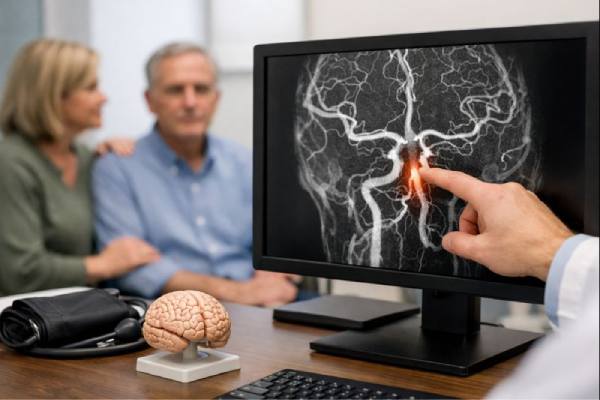
- CT angiography (CTA) or MR angiography (MRA): These show the arteries. Identifying a basilar artery blockage quickly changes the treatment pathway.
- Perfusion imaging or MRI diffusion: Many centers use CT perfusion or MRI diffusion-weighted imaging to estimate how much tissue is already infarcted versus still at risk. This can be especially helpful if symptom onset time is unclear or prolonged.
Blood tests and ECG are done in parallel. Glucose testing is immediate, because low blood sugar can mimic stroke and must be corrected. Clinicians also check platelet count, coagulation measures, and kidney function when contrast imaging is used.
After the emergency window, additional testing aims to find the cause:
- Continuous heart monitoring for atrial fibrillation
- Echocardiography to look for clots or structural heart sources
- Lipid and diabetes evaluation
- Vascular ultrasound or specialized imaging for vertebral dissection
- Targeted clotting tests in selected younger patients or those with unusual features
The practical goal is twofold: confirm the occlusion fast enough to act, and identify the underlying mechanism so the prevention plan is specific rather than generic.
Treatment options and what to expect in the first 24 hours
Treatment for basilar artery occlusion is centered on reperfusion: reopening the artery before irreversible brainstem injury occurs. The first 24 hours are often intense, because the patient can worsen suddenly and because multiple therapies may be considered based on timing, imaging, and medical risks.
Key acute treatments may include:
- Intravenous thrombolysis: If the patient arrives within the appropriate time window and has no major bleeding risks, clot-busting medication may be given to dissolve the clot. This is time-dependent and requires careful screening (recent surgery, bleeding history, current anticoagulants, very high blood pressure that cannot be controlled quickly, and other contraindications).
- Endovascular thrombectomy: This is a minimally invasive procedure in which a neurointerventional specialist threads a catheter through an artery (often from the groin or wrist) up to the brain and removes the clot with a stent retriever, aspiration, or a combined approach. For basilar occlusion, thrombectomy can be considered beyond the earliest hours in selected patients when imaging suggests salvageable tissue.
Because basilar occlusion can involve underlying atherosclerotic narrowing, some procedures require “rescue” strategies:
- Balloon angioplasty and or stenting if severe narrowing prevents durable reopening
- Antithrombotic medications around the procedure in carefully selected situations, balanced against bleeding risk
Supportive care is not secondary; it is often lifesaving:
- Airway protection and ventilation when swallowing and consciousness are impaired
- Controlled blood pressure management (targets vary depending on whether reperfusion therapy is used)
- Careful oxygenation, fever control, and glucose management
- Early swallowing evaluation and aspiration precautions
- Prevention of deep vein thrombosis with mechanical methods and, when safe, medication
In the ICU or dedicated stroke unit, clinicians monitor for:
- Neurologic worsening from brain swelling or extension of infarction
- Re-occlusion after initial reopening
- Hemorrhagic transformation (bleeding into the infarcted area)
- Pneumonia, cardiac arrhythmias, and autonomic instability
Families often want to know what to expect immediately. A realistic explanation is that the first day is about stabilizing and restoring flow, the next several days are about preventing complications and understanding the extent of injury, and recovery predictions become clearer over 1–2 weeks as swelling settles and rehabilitation begins. Many patients need feeding support temporarily and may require tracheostomy or longer ventilation if brainstem function is severely affected.
Recovery, management, prevention, and when to seek help
Recovery after basilar artery occlusion ranges from near-complete return of function to severe long-term disability. What happens next depends on how quickly blood flow was restored, how much brainstem tissue was injured, the patient’s baseline health, and whether complications occurred. Rehabilitation is often intensive, but targeted therapy can produce meaningful gains even months later.
Rehabilitation commonly addresses:
- Swallowing and speech: Speech-language therapy focuses on safe swallowing, voice strength, articulation, and communication strategies. Some people need temporary feeding tubes; many transition back to oral intake with careful retraining.
- Mobility and balance: Physical therapy works on gait, coordination, dizziness management, strength, and endurance. Cerebellar injury can create persistent imbalance that improves with repeated practice.
- Vision and eye movements: Neuro-ophthalmology and occupational therapy help with double vision, visual field deficits, and scanning strategies for reading and walking.
- Breathing and airway protection: Respiratory therapy may be needed after prolonged ventilation or if cough is weak.
- Cognition and fatigue: Brainstem and thalamic involvement can cause slowed thinking, sleep disruption, and profound fatigue. Structured pacing, sleep evaluation, and mood screening are important.
Secondary prevention is a long-term project with short-term urgency. A typical plan includes:
- Antithrombotic therapy chosen for the cause (antiplatelet therapy for atherosclerosis; anticoagulation for atrial fibrillation or certain cardiac sources)
- Blood pressure control with a clear home target and a plan to reach it
- LDL cholesterol lowering, often with high-intensity statin therapy, sometimes with add-on medications when needed
- Diabetes management with specific A1C goals and medication adjustments
- Smoking cessation support and avoidance of nicotine relapse
- Sleep apnea screening and treatment when suspected
- Nutrition and activity: a heart-healthy eating pattern, gradual return to activity, and supervised exercise when balance is affected
When to seek urgent care after discharge:
- Any sudden new neurologic symptom, even if it lasts only minutes (new double vision, slurred speech, weakness, severe dizziness, loss of coordination, or confusion)
- New trouble swallowing, choking, or shortness of breath
- Severe headache with neurologic symptoms
- Signs of bleeding if on antithrombotic medications (vomiting blood, black stools, severe unexplained bruising, sudden severe headache)
Many people and families find it helpful to keep a one-page “stroke summary” that lists the cause (if known), the artery involved, key imaging findings, and the exact medication list with doses. It reduces errors during future emergency visits and keeps follow-up care coordinated.
References
- European Stroke Organisation and European Society for Minimally Invasive Neurological Therapy guideline on acute management of basilar artery occlusion – PMC 2024 (Guideline)
- Trial of Endovascular Treatment of Acute Basilar-Artery Occlusion – PubMed 2022 (RCT)
- Trial of Thrombectomy 6 to 24 Hours after Stroke Due to Basilar-Artery Occlusion – PubMed 2022 (RCT)
- 2021 Guideline for the Prevention of Stroke in Patients With Stroke and Transient Ischemic Attack: A Guideline From the American Heart Association/American Stroke Association – PubMed 2021 (Guideline)
Disclaimer
This article is for educational purposes only and does not replace professional medical advice, diagnosis, or treatment. Basilar artery occlusion is a medical emergency. If you think you or someone else may be having a stroke, call your local emergency number immediately. Treatment decisions depend on timing, imaging findings, medications, and individual risks, and should be made by qualified clinicians.
If you found this helpful, please consider sharing it on Facebook, X (formerly Twitter), or any platform you prefer, and follow us on social media. Your support through sharing helps our team keep producing high-quality, evidence-informed health content.