Basilar artery thrombosis is a life-threatening form of ischemic stroke where a clot forms within the basilar artery itself and blocks blood flow to the brainstem and nearby structures. The brainstem manages breathing, wakefulness, swallowing, and many eye and balance functions, so even a small interruption can cause rapid changes that look confusing at first. Some people develop brief warning episodes—severe dizziness, double vision, slurred speech, or sudden imbalance—that come and go before the artery closes completely. Others deteriorate quickly, sometimes within minutes, and may become drowsy or unresponsive. Because early symptoms can mimic inner-ear problems, migraine, or intoxication, delays are common and can be dangerous. This article explains what basilar artery thrombosis is, why it happens, how to recognize early warning signs, how clinicians confirm the diagnosis, which treatments can reopen the artery, and how to reduce future risk.
Table of Contents
- What it is and why it can worsen fast
- What causes basilar artery thrombosis and who is at risk
- First symptoms and red flags you should not ignore
- How it is diagnosed in the emergency setting
- Treatment options and what happens in hospital
- Recovery, prevention, and when to seek urgent care
What it is and why it can worsen fast
The basilar artery is a major blood vessel running along the base of the brain. It forms where the two vertebral arteries join and then supplies the brainstem, parts of the cerebellum (coordination), and deep structures involved in vision and alertness. Basilar artery thrombosis means a clot develops inside the artery, often on top of a narrowed segment, and reduces or completely blocks blood flow.
A useful way to understand the danger is to think about “density of function.” The brainstem is small, but it contains tightly packed pathways that control:
- Breathing rhythm and airway reflexes (cough and gag)
- Wakefulness and attention (from mild confusion to coma)
- Swallowing and speech clarity
- Eye movements and pupil responses
- Motor and sensory pathways to the arms and legs
Because of this, symptom severity can change quickly. Many patients do not follow the classic “face droop, arm weakness, speech trouble” pattern seen in other strokes. Instead, they may present with a cluster of balance and eye symptoms, unusual weakness patterns, or waxing-and-waning alertness.
Basilar artery thrombosis may progress in stages. A partial blockage can allow enough flow for symptoms to improve temporarily, especially if smaller collateral (backup) vessels help supply the area. As the clot grows, blood flow can fall below a critical threshold, leading to abrupt deterioration. This “stuttering” course is one reason clinicians treat posterior circulation warning spells as emergencies, not reassurance.
Location also matters. A clot lower in the basilar artery may affect brainstem motor pathways and breathing early. A clot near the top can disrupt thalamic and midbrain circuits, leading to prominent changes in consciousness and eye movements. In severe cases, widespread brainstem injury can cause locked-in syndrome, where a person is awake but cannot move or speak, sometimes communicating only with vertical eye movements. Preventing that outcome depends on recognizing the problem quickly and restoring blood flow whenever possible.
What causes basilar artery thrombosis and who is at risk
Basilar artery thrombosis most often forms on a background of artery wall disease. The two most common pathways are atherosclerosis (plaque buildup) and artery injury. It is closely related to basilar artery occlusion, but the term thrombosis emphasizes a clot forming locally rather than a clot traveling from elsewhere.
Common causes include:
- Intracranial atherosclerosis: Fatty plaque narrows the basilar artery or vertebral arteries. Blood flow becomes turbulent at the narrowed segment, platelets stick, and a clot can form and enlarge. This is a frequent cause when symptoms fluctuate over hours.
- Artery-to-artery clot formation: Plaque or clot in a vertebral artery can extend into the basilar artery, or small pieces can break off and lodge downstream.
- Vertebral artery dissection: A tear in the inner lining of the artery wall creates a false channel where blood collects and clots. Dissection may follow neck trauma, sudden neck movement, chiropractic manipulation, or sometimes occur spontaneously.
- Hypercoagulable states: Cancer, major infections, autoimmune disease, inherited clotting disorders, and pregnancy-related conditions can increase the tendency to clot, especially when combined with dehydration or immobility.
- Less common triggers: Severe low blood pressure, stimulant drug exposure, or inflammatory diseases of the blood vessels can contribute in selected cases.
Risk factors strongly overlap with other ischemic strokes, but certain patterns are especially important for basilar thrombosis:
- High blood pressure: Long-standing hypertension damages artery walls and accelerates plaque formation.
- Diabetes and insulin resistance: These promote inflammation and plaque instability.
- Smoking or nicotine exposure: This increases clotting tendency and damages vascular lining.
- High LDL cholesterol and elevated triglycerides: These fuel plaque buildup.
- Sleep apnea: Repeated oxygen dips raise blood pressure and vascular stress.
- Older age and male sex: Risk rises with age, though younger adults are not immune.
- Prior transient ischemic attacks: Brief spells of posterior symptoms can be a warning that a narrowed artery is about to clot off.
A practical prevention insight is to separate “plaque-driven” risk from “clotting tendency.” Someone with intracranial plaque needs aggressive risk-factor control and antiplatelet strategy. Someone with a dissection may need a different approach and careful follow-up imaging. After the emergency phase, clinicians focus on pinpointing the mechanism because the long-term plan should match the cause, not just the label.
First symptoms and red flags you should not ignore
Basilar artery thrombosis can start subtly, but it rarely stays subtle. The most important skill for patients and families is recognizing posterior circulation warning signs—especially when symptoms appear suddenly and do not fit a typical “ear infection” or “stomach bug” story.
Common first symptoms include:
- Sudden severe dizziness or vertigo, often with trouble standing or walking
- Loss of coordination, clumsiness, or veering to one side
- Double vision, blurry vision, or difficulty focusing
- Slurred speech, thick speech, or an unusual change in voice quality
- Nausea and vomiting that feel disproportionate to any food illness
- New numbness or weakness in the face, arm, leg, or both sides
- Difficulty swallowing, coughing when drinking, drooling, or choking
- Confusion, unusual sleepiness, agitation, or episodes of near-fainting
Red flags that strongly suggest a brain cause rather than an inner-ear cause include:
- Dizziness plus any neurologic symptom (double vision, slurred speech, weakness, numbness, or severe imbalance)
- Inability to walk unassisted when you could walk before
- New abnormal eye movements or a fixed gaze
- Symptoms that come and go in waves over minutes to hours
- Sudden decline in alertness, new abnormal breathing, or seizures
Some presentations are misleading. A person may say, “The room spins,” which sounds like an ear problem, but central vertigo often comes with other clues: trouble coordinating the arms, a “drunken” gait, or vision changes. Neck pain or a sudden headache, especially after a neck twist or minor trauma, can point toward dissection. Severe hiccups, facial numbness, or unexplained hoarseness can also occur because the brainstem coordinates swallowing and vocal cord function.
Complications can develop early and can be as dangerous as the stroke itself:
- Aspiration pneumonia due to impaired swallow
- Respiratory failure if brainstem breathing centers are affected
- Brain swelling in the cerebellum or brainstem, worsening consciousness
- Heart rhythm problems and blood pressure swings from autonomic disruption
If symptoms suggest stroke, do not self-drive. Call emergency services. Even if symptoms improve, that improvement can be temporary, and the window for restoring blood flow may be narrow.
How it is diagnosed in the emergency setting
Diagnosing basilar artery thrombosis requires speed and precision. Clinicians first stabilize airway, breathing, and circulation because reduced alertness and swallowing problems can threaten breathing early. At the same time, they determine the time the person was last known well, current medications (especially blood thinners), and any recent trauma or neck strain.
The bedside neurologic exam focuses on posterior circulation clues:
- Eye movement problems (limited gaze, double vision, nystagmus)
- Pupillary abnormalities and eyelid droop
- Slurred speech or abnormal voice
- Swallowing difficulty and cough strength
- Severe imbalance, inability to sit or stand safely
- Weakness patterns that may involve both sides or shift over time
- Level of consciousness, from mild confusion to coma
Because early posterior strokes can be hard to see on a standard head scan, imaging strategy matters. Most emergency pathways use a combination of:
- Noncontrast head CT: This is fast and primarily rules out bleeding. A normal CT does not rule out basilar thrombosis.
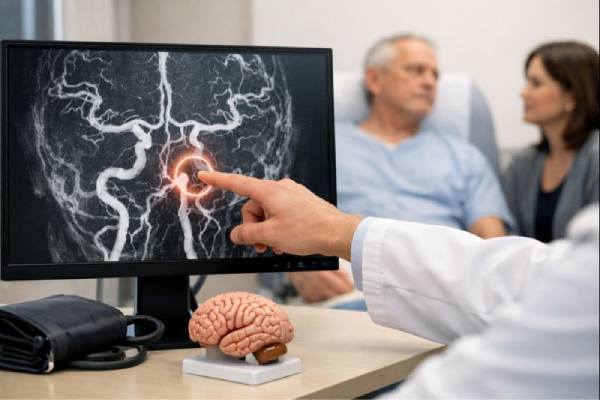
- CT angiography or MR angiography: This is the key test to visualize the basilar artery and confirm an occlusion or critical narrowing.
- MRI diffusion or CT perfusion (when available): These help estimate how much tissue is already infarcted versus still salvageable. This is especially helpful if symptom onset is unclear or outside the earliest time windows.
Blood tests run in parallel. Clinicians check glucose immediately because low blood sugar can mimic stroke. They also check platelet count and clotting parameters to assess bleeding risk if thrombolysis is being considered, and kidney function if contrast imaging is planned.
After the immediate crisis, teams look for the “why,” because long-term prevention depends on cause:
- Heart rhythm monitoring to detect atrial fibrillation
- Echocardiography in selected cases to assess cardiac sources of clots
- Vascular imaging of the vertebral arteries for dissection or plaque
- Cholesterol and diabetes evaluation
- Focused clotting evaluations in younger patients or those with unusual features
A practical point is that diagnosis is not only “is there a blockage,” but also “is this a clot on plaque, a dissection, or something else.” That distinction affects both procedural choices and the safest medication plan after the acute phase.
Treatment options and what happens in hospital
Treatment has one primary goal: restore blood flow before the brainstem suffers irreversible injury. Even when time has passed, imaging may show that some tissue is still at risk rather than fully infarcted, which can keep treatment options open for selected patients.
Acute reperfusion options may include:
- Intravenous thrombolysis: If the patient arrives within the appropriate time window and meets safety criteria, a clot-dissolving medication may be given. Clinicians screen carefully for bleeding risks, recent surgeries, and use of anticoagulants.
- Endovascular thrombectomy: A specialist threads a catheter through an artery to the brain and removes the clot using aspiration, a stent retriever, or both. Thrombectomy is a major advance for basilar artery blockages and can be considered in broader time windows than many people realize, depending on imaging and clinical factors.
Basilar thrombosis often sits on top of a narrowed artery segment. When severe narrowing remains after clot removal, teams may need “rescue” strategies:
- Balloon angioplasty to widen the narrowed segment
- Stenting in carefully selected situations when re-occlusion risk is high
These decisions are individualized because they can increase bleeding risk and may require specific antiplatelet regimens.
Supportive care is critical and often determines survival:
- Airway protection and ventilation when consciousness or swallowing is impaired
- Blood pressure management tailored to whether reperfusion therapy was used
- Oxygenation, fever control, and careful glucose management
- Early swallow evaluation before oral intake to prevent aspiration
- Prevention of deep vein thrombosis with mechanical devices and, when safe, medication
Clinicians also watch closely for complications and act early:
- Brain swelling that can compress vital structures
- Hydrocephalus if swelling blocks fluid pathways
- Hemorrhagic transformation, especially after reperfusion
- Pneumonia, urinary infections, and pressure injuries during immobility
Families often want clarity about the first 24 to 72 hours. In general, the early phase is about stabilizing, reopening the artery if possible, and preventing secondary injury. Prognosis becomes clearer as swelling settles and neurologic exams stabilize, usually over days rather than hours. Even in severe cases, careful critical care and early rehabilitation planning can make a meaningful difference.
Recovery, prevention, and when to seek urgent care
Recovery after basilar artery thrombosis can be unpredictable, especially in the first weeks. Some people regain independence with rehabilitation, while others require long-term support for swallowing, mobility, or breathing. The strongest predictors of outcome are how quickly blood flow was restored, how much brainstem tissue was injured, baseline health, and whether complications occurred.
Rehabilitation usually starts early and targets specific deficits:
- Swallowing and speech therapy: Many patients need a formal swallow study. Therapy can help rebuild safe swallowing patterns and improve speech clarity. Temporary feeding tubes are common; many patients transition back to oral eating with structured retraining.
- Physical therapy for balance and mobility: Posterior circulation strokes often cause severe imbalance. Therapy focuses on gait safety, coordination drills, and endurance, often using assistive devices at first.
- Occupational therapy for vision and daily tasks: Double vision, visual field loss, and slowed scanning can make walking and reading difficult. Therapists teach compensatory strategies and safe routines.
- Cognitive and fatigue management: Brainstem and related circuit injury can cause slowed thinking, sleep disruption, mood changes, and intense fatigue. Structured pacing, sleep evaluation, and depression screening are practical parts of recovery.
Prevention is not one-size-fits-all. The medication plan depends on the cause:
- Atherosclerotic thrombosis often leads to antiplatelet therapy, aggressive cholesterol lowering, and strict blood pressure control.
- Dissection may involve antiplatelet or anticoagulation decisions based on clinical context and follow-up imaging.
- If a cardiac source is discovered, anticoagulation may be indicated.
Lifestyle and risk-factor control are the backbone of prevention:
- Blood pressure control with a clear home target and consistent monitoring
- LDL reduction, often requiring high-intensity statin therapy and sometimes add-on agents
- Diabetes control with individualized goals
- Smoking cessation with structured support
- Sleep apnea evaluation and treatment when suspected
- Gradual return to activity, aiming for regular aerobic movement as tolerated, with supervision when balance is impaired
When to seek urgent care after discharge:
- Any sudden neurologic symptom, even if it lasts only minutes (new double vision, slurred speech, weakness, severe dizziness, or sudden imbalance)
- New trouble swallowing, choking, or shortness of breath
- New severe headache with neurologic symptoms, especially with neck pain
- Signs of significant bleeding if taking antithrombotic medications (vomiting blood, black stools, sudden severe headache, or fainting)
A practical tool for patients and caregivers is a one-page summary listing the stroke mechanism, key imaging findings, and exact medication doses. It reduces confusion during follow-up visits and helps emergency teams act faster if symptoms recur.
References
- European Stroke Organisation (ESO) and European Society for Minimally Invasive Neurological Therapy (ESMINT) guideline on acute management of basilar artery occlusion – PubMed 2024 (Guideline)
- Trial of Endovascular Treatment of Acute Basilar-Artery Occlusion – PubMed 2022 (RCT)
- Trial of Thrombectomy 6 to 24 Hours after Stroke Due to Basilar-Artery Occlusion – PubMed 2022 (RCT)
- 2021 Guideline for the Prevention of Stroke in Patients With Stroke and Transient Ischemic Attack: A Guideline From the American Heart Association/American Stroke Association – PubMed 2021 (Guideline)
Disclaimer
This article is for educational purposes only and does not replace professional medical advice, diagnosis, or treatment. Basilar artery thrombosis is a medical emergency. If you think you or someone else may be having a stroke, call your local emergency number immediately. Treatment choices depend on timing, imaging findings, medications, and individual risks, and must be made by qualified clinicians.
If this article helped you, please share it on Facebook, X (formerly Twitter), or any platform you prefer, and follow us on social media. Your support through sharing helps our team continue producing high-quality, evidence-informed health content.