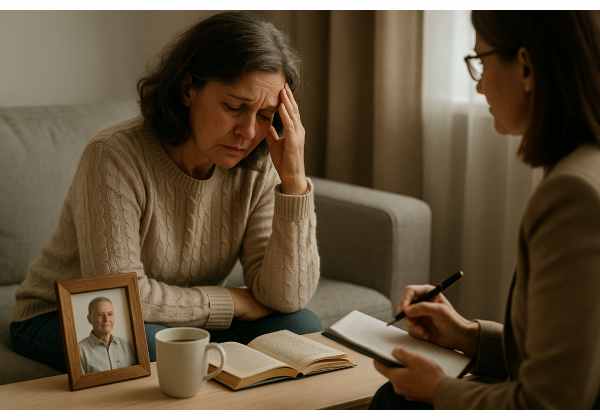
Grief can bring deep sadness, shock, longing, fatigue, poor sleep, and changes in appetite. Those reactions can be painful without automatically meaning a person has a depressive disorder. Bereavement-related depression refers to a clinically significant depressive episode that occurs after the death of someone important, with symptoms that go beyond expected mourning in persistence, severity, impairment, or risk.
The distinction matters because grief and depression can overlap. A person may miss the person who died intensely while still having moments of connection, meaning, or emotional range. Depression tends to narrow life more broadly, affecting mood, interest, energy, thinking, self-worth, and safety. A careful assessment looks at the whole pattern, not just the presence of sadness after a loss.
Table of Contents
- What bereavement-related depression means
- Symptoms and signs to recognize
- Grief, depression, and prolonged grief
- Causes and loss-related triggers
- Risk factors that raise vulnerability
- Effects on body, thinking, and daily life
- Complications and urgent warning signs
- Diagnostic context and assessment
What bereavement-related depression means
Bereavement-related depression is not simply “being very sad” after a death. It describes a depressive episode that arises in the setting of bereavement and includes a broader pattern of low mood, loss of interest, impaired functioning, and depressive thinking.
Modern psychiatric diagnosis no longer treats bereavement as an automatic reason to rule out major depression. A recent death still matters greatly in the evaluation, but it does not make depression impossible. Loss can be a powerful stressor, and in some people it can trigger a major depressive episode, worsen an existing depressive illness, or appear alongside another grief-related condition.
A useful way to understand the condition is to separate three related but different ideas:
- Bereavement is the state of having lost someone through death.
- Grief is the emotional, cognitive, physical, and social response to that loss.
- Bereavement-related depression is a depressive syndrome that develops after the loss and causes clinically meaningful distress, impairment, or risk.
This distinction helps avoid two common mistakes. The first is pathologizing normal grief. Crying, yearning, disrupted sleep, reduced appetite, waves of disbelief, and difficulty concentrating can all occur after a major loss. The second mistake is dismissing serious depression as “just grief” when the person is persistently unable to function, feels worthless, becomes detached from all areas of life, or has thoughts of death or suicide.
In ordinary grief, painful emotions often come in waves connected to reminders of the person who died. Between waves, some people can still feel warmth, humor, gratitude, or connection, even if briefly. In depression, the mood state is often more constant and global. The person may feel empty, hopeless, slowed down, guilty, or unable to experience pleasure across most situations.
Bereavement-related depression can occur soon after a death or become clearer over weeks and months. It may be especially difficult to recognize early because grief itself can disrupt sleep, appetite, motivation, and concentration. The question is not whether the person is grieving “correctly.” The question is whether a depressive disorder is present in addition to grief, especially when symptoms are severe, persistent, disabling, or unsafe.
For readers trying to understand the boundary between mourning and depressive illness, a separate discussion of grief and depression differences can be helpful, but the core point is this: grief and depression can coexist, and neither one cancels out the other.
Symptoms and signs to recognize
The central signs of bereavement-related depression are persistent low mood or loss of interest, plus changes in thinking, body function, behavior, and daily functioning. Symptoms are usually more concerning when they are present most of the day, nearly every day, and are not limited to brief waves of grief.
Common emotional symptoms include sadness, emptiness, numbness, hopelessness, irritability, anxiety, guilt, and a sense that life has permanently lost meaning. Some people feel emotionally flooded; others feel shut down. A bereaved person with depression may describe feeling “flat,” “gone,” “heavy,” or unable to care about things that used to matter.
Loss of interest is especially important. In grief, a person may still feel drawn to certain memories, relationships, rituals, or small moments of comfort. In depression, interest and pleasure often fade more broadly. Food may seem tasteless, conversations may feel impossible, hobbies may lose all appeal, and future events may feel pointless.
Physical and behavioral symptoms may include:
- Sleeping far more than usual or being unable to sleep despite exhaustion.
- Appetite loss, overeating, or significant weight change.
- Fatigue that does not lift with rest.
- Moving, speaking, or thinking more slowly than usual.
- Agitation, pacing, or feeling unable to settle.
- Reduced attention to hygiene, bills, meals, medications, or household tasks.
- Withdrawal from friends, family, work, school, faith communities, or daily routines.
Cognitive symptoms can be particularly distressing. The person may have trouble making decisions, remembering details, following conversations, or completing basic tasks. Some describe a fog-like state. Others experience repetitive thoughts about regret, blame, or what they “should have” done differently. Guilt can occur in normal grief, but in depression it often becomes harsh, global, and unrealistic: “I ruin everything,” “I do not deserve to live,” or “Everyone would be better off without me.”
Not every symptom is visible from the outside. Family members may notice missed appointments, unopened mail, a neglected home, increased alcohol use, or long periods in bed. The person may say little because they do not want to burden others, fear being judged, or assume suffering is the only acceptable response to loss.
Some depressive presentations are less obvious. Irritability, anger, emotional numbness, or “functioning on autopilot” may be more noticeable than crying. In men, older adults, caregivers, and people used to suppressing emotion, depression may appear as withdrawal, overwork, physical complaints, or increased risk-taking rather than openly expressed sadness. A broader discussion of depression symptoms and causes can help clarify how varied depressive episodes can look.
Grief, depression, and prolonged grief
Bereavement-related depression overlaps with grief and prolonged grief disorder, but they are not the same condition. The most important differences involve the focus of distress, the pattern over time, and the way symptoms affect identity, meaning, and functioning.
Normal grief is painful but usually changes over time. The person may continue to miss the deceased deeply, especially on anniversaries, holidays, or in places linked to the relationship. Grief may remain part of life, but it gradually becomes more integrated. Many people can resume roles, feel moments of connection, and carry the loss without being continuously overwhelmed by it.
Bereavement-related depression is broader than separation distress. The person may not only miss the deceased but also lose interest in nearly everything, feel worthless, become persistently hopeless, or experience major changes in sleep, appetite, energy, and concentration. The emotional tone is often less about longing alone and more about pervasive despair or self-condemnation.
Prolonged grief disorder is a distinct diagnosis centered on persistent, intense grief after the death of a close person. It commonly involves yearning, preoccupation with the deceased, difficulty accepting the death, identity disruption, avoidance of reminders, emotional pain, loneliness, or a sense that life is meaningless because of the loss. In adults, diagnostic frameworks generally require that enough time has passed after the death for the grief response to be considered unusually persistent and impairing in cultural context.
| Pattern | Main focus | Typical clues |
|---|---|---|
| Acute grief | Missing and adjusting to the person who died | Waves of sadness, yearning, disrupted sleep, reminders that trigger emotion, some preserved emotional range |
| Bereavement-related depression | Depressive syndrome after a death | Persistent low mood or loss of interest, hopelessness, guilt, impaired functioning, possible suicidal thoughts |
| Prolonged grief disorder | Persistent separation distress and difficulty adapting to the loss | Intense yearning, preoccupation with the deceased, identity disruption, avoidance, impairment beyond expected cultural norms |
These patterns can occur together. A person may have prolonged grief and major depression, or depression and post-traumatic stress symptoms after a sudden, violent, or witnessed death. For example, intrusive images, hypervigilance, avoidance of trauma reminders, and a sense of ongoing threat may point toward trauma-related symptoms as well as grief. A focused overview of PTSD symptoms may be relevant when the death involved violence, medical trauma, disaster, suicide, or frightening circumstances.
Culture also matters. Mourning practices, expected expressions of grief, spiritual beliefs, family roles, and community rituals shape how grief appears. A careful evaluation should not label culturally expected mourning as illness simply because it looks intense. At the same time, cultural respect should not prevent recognition of severe depression, inability to function, psychosis, or suicidal risk.
Causes and loss-related triggers
Bereavement-related depression develops when the stress of loss interacts with biological vulnerability, psychological patterns, relationship factors, and the practical disruption that follows a death. The death is the trigger, but the depressive episode usually reflects more than sadness alone.
Loss affects the brain and body as a major stressor. Sleep may fragment, appetite may change, stress hormones may rise, and daily routines may collapse. The person may lose not only a loved one but also a source of emotional regulation, identity, financial security, caregiving support, companionship, or future plans. These changes can increase vulnerability to depression, especially when they happen suddenly or accumulate with other stressors.
The nature of the relationship often shapes the depressive response. Depression may be more likely when the deceased was a spouse, partner, child, parent, primary attachment figure, caregiver, or someone central to the person’s daily life. A death can also bring complicated emotions when the relationship was conflicted, dependent, abusive, estranged, or unfinished. In such cases, grief may include love, anger, relief, shame, longing, and guilt at the same time.
The circumstances of the death can also matter. Sudden, violent, stigmatized, preventable, or medically traumatic deaths may leave the bereaved person with shock, intrusive memories, unanswered questions, or self-blame. Deaths after prolonged caregiving can bring exhaustion and identity loss. Suicide, overdose, homicide, miscarriage, stillbirth, or deaths that are not openly acknowledged may increase isolation because others may not know what to say or may avoid the topic.
Psychological meaning plays a central role. A person may interpret the death as proof that the world is unsafe, that they failed, that closeness always ends in catastrophe, or that their future no longer exists. These interpretations can deepen depressive symptoms, especially when they become rigid and global. Depression often narrows attention toward evidence of failure, abandonment, or hopelessness, making it harder to hold a balanced view of the relationship and the loss.
Previous mental health history also changes the picture. A person who has had major depression before may be more vulnerable after bereavement. Anxiety disorders, bipolar disorder, substance use disorders, trauma histories, and chronic sleep problems can also affect how the mind and body respond to loss. This does not mean depression is inevitable; it means the threshold for a depressive episode may be lower under intense stress.
Medical and neurological factors can add to the presentation. Thyroid disease, anemia, vitamin deficiencies, chronic pain, medication effects, alcohol use, sleep apnea, and neurocognitive disorders can worsen fatigue, low mood, poor concentration, and sleep disruption. When symptoms are severe, unusual, or not following an expected course, clinicians often consider medical contributors as part of the diagnostic picture.
Risk factors that raise vulnerability
No single risk factor can predict bereavement-related depression, but certain patterns make it more likely. Risk rises when the loss is highly disruptive, the person has fewer supports, or there is a prior vulnerability to depression, trauma, or prolonged grief.
Important relationship and loss-related risk factors include the death of a spouse or partner, the death of a child, loss of a primary caregiver, or the loss of someone who was central to the person’s identity and daily structure. Sudden deaths, violent deaths, suicide bereavement, disaster-related deaths, and multiple losses in a short period can intensify risk. A person may also be more vulnerable when they witnessed the death, made difficult medical decisions, or feels responsible for what happened.
Personal history matters. Previous major depression, bipolar disorder, anxiety disorders, post-traumatic stress disorder, substance use problems, suicide attempts, childhood trauma, or longstanding emotional dysregulation can increase vulnerability. A strong prior history of depression is especially relevant because bereavement can act as a recurrence trigger.
Social context can either buffer or worsen risk. Depression is more likely when the bereaved person is isolated, has limited practical help, faces financial strain, lacks safe housing, or belongs to a community where the loss is stigmatized or minimized. Disenfranchised grief can be especially difficult. This may include the death of an ex-partner, same-sex partner not recognized by family, pet, unborn baby, patient, client, or person connected to a hidden or complicated relationship.
Caregiving history can also raise risk. Long periods of caregiving may involve sleep loss, anticipatory grief, financial pressure, medical trauma, and exhaustion before the death occurs. Afterward, the caregiver may lose daily purpose and structure at the same time they are physically depleted.
Some risk factors are practical but powerful: unresolved legal issues, conflict over inheritance or funeral arrangements, unstable employment, immigration stress, lack of bereavement leave, or being responsible for children while grieving. These pressures can turn grief into a prolonged state of survival stress.
Risk can also rise when the person’s coping patterns narrow. Total withdrawal, heavy drinking, misuse of sedatives or opioids, compulsive overwork, avoidance of all reminders, or inability to sleep for long periods can worsen mood and judgment. These patterns are not moral failures; they are signs that the loss may be overwhelming the person’s usual capacity to adapt.
Risk factors should not be used to label someone as destined for depression. They are signals for closer attention. A person with multiple risk factors may still adapt over time, while someone with few obvious risks may develop severe depression. The severity, duration, functional impact, and safety profile of symptoms matter more than any single background factor.
Effects on body, thinking, and daily life
Bereavement-related depression can affect nearly every part of daily functioning. Its impact is often felt not only as sadness, but as slowed thinking, physical heaviness, disrupted routines, and reduced ability to meet ordinary demands.
Sleep is one of the most common areas affected. Some people cannot fall asleep because the mind replays events, conversations, regrets, or images from the death. Others wake early with dread or sleep much longer than usual without feeling restored. Poor sleep can worsen concentration, pain sensitivity, irritability, appetite changes, and emotional control. It can also make grief waves feel more intense.
Appetite and energy may change sharply. A person may forget to eat, lose interest in food, rely on alcohol or convenience foods, or eat for numbness rather than hunger. Fatigue may feel physical, mental, or both. Even simple tasks such as showering, answering messages, opening mail, or preparing a meal may feel unmanageable.
Thinking can become slower and more negative. Bereavement-related depression often brings a narrow mental filter: the person may focus on mistakes, missed chances, imagined blame, or the belief that nothing can improve. Concentration problems can interfere with work, school, parenting, driving, financial decisions, and medical appointments. In older adults, depressive cognitive symptoms may sometimes be mistaken for early dementia, especially when memory, attention, and processing speed decline noticeably.
Daily life can shrink. A bereaved person may stop returning calls, avoid places linked to the deceased, miss work, leave responsibilities unfinished, or lose interest in previously meaningful roles. This withdrawal may be misunderstood as rejection or indifference when it is actually a sign of depressive depletion.
Bereavement-related depression can also affect the body. Headaches, stomach symptoms, chest tightness, muscle pain, low libido, dizziness, and a general sense of physical heaviness may appear or worsen. These symptoms should be interpreted carefully because grief and depression can coexist with medical illness. New, severe, or unexplained physical symptoms deserve appropriate medical evaluation, especially chest pain, fainting, major weight loss, or sudden confusion.
Relationships often change. The bereaved person may need connection but lack the energy to seek it. Friends may initially offer support and then return to their routines, leaving the person feeling abandoned. Family members may grieve differently, which can create conflict: one person wants to talk, another wants silence; one wants to keep belongings, another wants to clear them away. Depression can intensify these differences into feelings of rejection, anger, or isolation.
Work and school functioning may also suffer. Attention, memory, emotional regulation, and motivation can all decline. Some people appear outwardly productive while privately feeling numb or hopeless. Others cannot maintain attendance or performance. Neither pattern proves or disproves depression; impairment can be visible or hidden.
Complications and urgent warning signs
The most serious complications of bereavement-related depression include suicidal thoughts, self-neglect, substance misuse, prolonged impairment, and worsening of other mental or physical health conditions. These risks deserve direct attention without assuming that every bereaved person is unsafe.
Thoughts of death can be complicated after bereavement. A grieving person may think, “I wish I could be with them,” or “I do not know how to live without them.” Such thoughts can range from passive longing to active suicidal intent. The level of risk is higher when the person thinks about killing themselves, has a plan, has access to lethal means, feels unable to stay safe, uses substances heavily, hears voices commanding self-harm, or believes others would be better off without them.
Urgent professional evaluation is needed when any of the following are present:
- Active suicidal thoughts, a suicide plan, or recent self-harm.
- Statements about being unable to stay safe.
- Severe self-neglect, dehydration, not eating, or inability to care for dependents.
- Psychotic symptoms, such as hearing the deceased giving commands or fixed false beliefs that create danger.
- Extreme agitation, confusion, disorientation, or sudden personality change.
- Heavy alcohol or drug use that increases risk.
- Threats of harm toward others.
- Severe depression in someone with a history of suicide attempts, bipolar disorder, psychosis, or recent psychiatric hospitalization.
A structured suicide risk screening may be used in medical or mental health settings when safety is unclear. More detailed tools, such as the C-SSRS suicide risk assessment, can help clinicians ask about suicidal thoughts and behaviors in a consistent way. These tools do not replace clinical judgment, but they can make difficult questions more direct and less dependent on guesswork.
Substance misuse is another important complication. Alcohol, sedatives, opioids, cannabis, or stimulants may be used to sleep, numb feelings, or get through responsibilities. Over time, substances can worsen mood, reduce inhibition, disrupt sleep, increase impulsivity, and complicate bereavement-related depression.
Self-neglect may develop gradually. Bills go unpaid, medical appointments are missed, chronic illnesses are not monitored, or the person stops eating regularly. Older adults, people living alone, and caregivers who have lost their main support person may be especially vulnerable.
Bereavement-related depression can also worsen existing conditions. Anxiety may become more severe. Panic attacks may appear. Trauma symptoms may intensify after sudden or frightening deaths. Chronic pain, insomnia, heart disease, diabetes, and immune-related problems may become harder to manage when depression reduces energy and follow-through.
Complications are not signs of weakness. They are signs that bereavement has become medically or psychologically risky. The key warning pattern is not grief itself, but danger, loss of basic functioning, distorted depressive thinking, or symptoms that keep deepening rather than slowly shifting.
Diagnostic context and assessment
Diagnosis depends on the full symptom pattern, not on a single feeling or a fixed number of days after the death. Clinicians consider depressive criteria, grief context, safety, medical contributors, culture, and whether another condition better explains the symptoms.
A typical assessment begins with the person’s account of the loss and current symptoms. Clinicians may ask when the death occurred, what the relationship was like, how symptoms have changed over time, and how the person is functioning. They may ask about sleep, appetite, energy, concentration, guilt, hopelessness, irritability, substance use, medical conditions, and thoughts of death or suicide.
For major depression, clinicians look for a cluster of symptoms such as depressed mood, loss of interest or pleasure, significant appetite or weight change, sleep disturbance, psychomotor slowing or agitation, fatigue, feelings of worthlessness or excessive guilt, poor concentration, and recurrent thoughts of death or suicide. The symptoms must cause meaningful distress or impairment and not be better explained by substances, another medical condition, mania or hypomania, or an expected cultural expression of grief alone.
Screening questionnaires may be part of the evaluation. Tools such as the PHQ-9 can quantify depressive symptoms, while brief safety screens can ask directly about suicidal thoughts. A positive screen is not the same as a diagnosis; it is a signal that a fuller clinical assessment is needed. For more detail on how screening fits into diagnosis, see depression screening and diagnosis and PHQ-9 score interpretation.
A careful diagnostic process also considers conditions that can resemble or overlap with bereavement-related depression. These may include prolonged grief disorder, post-traumatic stress disorder, adjustment disorder, bipolar disorder, substance-induced mood symptoms, anxiety disorders, insomnia disorder, neurocognitive disorders, and medical causes of low mood or fatigue. The presence of grief does not eliminate these possibilities.
Culture and context should be part of the assessment. Some mourning practices include ongoing conversations with the deceased, dreams, rituals, intense public emotion, or prolonged periods of visible mourning. These are not automatically symptoms of illness. Clinicians should ask what is expected in the person’s family, faith, and community, while still evaluating severity, impairment, and safety.
The diagnostic context is also time-sensitive. Very early after a death, many depressive-like symptoms can be part of acute grief. However, severe symptoms can still require urgent evaluation at any time, especially suicidality, psychosis, inability to function, or dangerous self-neglect. Later in bereavement, persistent and impairing depressive symptoms may become easier to distinguish from grief waves.
A good assessment avoids both extremes: it does not reduce love and mourning to a checklist, and it does not ignore serious depression because the sadness has an understandable cause. Bereavement-related depression is recognized when the depressive syndrome is strong enough, broad enough, and impairing enough to need clinical attention as more than expected grief.
References
- Prolonged grief disorder 2025 (Review)
- Risk factors for prolonged grief symptoms: A systematic review and meta-analysis 2024 (Systematic Review and Meta-analysis)
- Grief, Bereavement, and Coping With Loss (PDQ®) 2024 (Review)
- Screening for Depression and Suicide Risk in Adults: US Preventive Services Task Force Recommendation Statement 2023 (Recommendation Statement)
- Prolonged Grief Disorder: Course, Diagnosis, Assessment, and Treatment 2021 (Review)
- Bereavement-related depression in the DSM-5 and ICD-11 2012 (Editorial)
Disclaimer
This article is for general educational purposes only and is not a substitute for professional medical advice, diagnosis, or treatment. Bereavement-related depression, suicidal thoughts, severe self-neglect, psychosis, or major functional decline should be evaluated by a qualified health professional or emergency service as appropriate.
Thank you for reading; sharing this resource may help someone recognize when grief has become more than ordinary mourning.