Dandruff is often treated like a simple cosmetic annoyance, yet it is usually a biological pattern happening on the scalp: faster-than-normal skin cell turnover, visible flaking, and often itch. The right shampoo can do more than hide flakes for a day—it can lower yeast overgrowth, calm inflammation, and keep scales from rebuilding as quickly. But results depend on choosing ingredients that match the true cause, using them correctly, and knowing when “dandruff” is actually something else.
Most effective anti-dandruff shampoos fall into three functional families: antifungals (to reduce Malassezia yeast), keratolytics (to lift and thin scale), and anti-inflammatory agents (to quiet redness and itch). Each has a different job, and many formulas combine more than one. This article breaks down what the best-performing ingredients actually do, which symptoms they fit, how long improvement typically takes, and how to build a routine that keeps the scalp clear without drying out your hair.
Quick Overview
- Antifungal actives can reduce flakes and itch by lowering Malassezia overgrowth, often with noticeable improvement in 2–4 weeks.
- Keratolytic ingredients help lift thick scale so medicated actives can reach the scalp surface more evenly.
- Sensitive scalps can react to fragrance, harsh surfactants, or frequent use, even when the active ingredient is appropriate.
- For best results, massage shampoo into the scalp (not just hair) and leave it on 3–5 minutes before rinsing.
Table of Contents
- What dandruff actually is and is not
- Antifungal ingredients with the strongest track record
- Scale-lifting and itch-calming ingredients
- How to choose based on scalp and hair needs
- How to use anti-dandruff shampoo for real results
- Side effects, safety, and when to seek help
What dandruff actually is and is not
Most “classic” dandruff is a mild form of scalp seborrheic dermatitis: flaking driven by a mix of yeast activity (especially Malassezia), scalp oil composition, and an inflammatory response that varies person to person. It often shows up as white or yellowish flakes, mild redness, and itch that can flare with stress, cold weather, infrequent washing, heavy styling products, or sweating under hats.
A key detail: dandruff is not always “dry scalp.” In fact, many people with dandruff have an oily scalp, and the flakes form because the scalp is irritated and shedding faster—not because it needs more oil. Over-using rich oils or heavy butters can sometimes make the environment friendlier for yeast and worsen flaking.
When it is probably dandruff
- Diffuse flaking across the scalp rather than one isolated patch
- Itch that improves (even partially) after washing
- Greasy scale near the hairline, crown, or behind the ears
- A history of waxing and waning flares
When it might be something else
Several scalp conditions mimic dandruff but respond better to different treatments:
- Scalp psoriasis: thicker, more adherent silvery scale; may extend beyond the hairline; often paired with elbow, knee, or nail changes
- Contact dermatitis: burning, stinging, or sudden itch after a new product; scalp may feel “hot” and reactive
- Tinea capitis (fungal infection): more common in children; can cause broken hairs, tender patches, or swollen nodes
- Eczema or rosacea overlap: itch and redness with less classic greasy scale
- Product buildup: flaking that improves dramatically with thorough cleansing and changes in styling habits
If your symptoms include marked redness, persistent soreness, or flaking in eyebrows and sides of the nose, it often fits the seborrheic dermatitis spectrum. For deeper context on triggers and patterns, see seborrheic dermatitis signs and shampoo options.
Antifungal ingredients with the strongest track record
If you want one category most likely to create meaningful change, start with antifungals. For many people, dandruff improves when Malassezia levels and yeast-driven irritation are reduced. Antifungals tend to help both visible flakes and the “background” symptoms—itch, scalp tightness, and greasy scale—because they address a common upstream driver.
Ketoconazole
Ketoconazole is a well-studied antifungal used in both OTC and prescription strengths (varies by country). It is often a strong choice when dandruff is persistent, itchy, and oily, or when you suspect scalp seborrheic dermatitis. Practical expectations:
- Many routines use it 2 times weekly during a flare for 2–4 weeks, then reduce to maintenance as symptoms settle.
- It can feel drying on some hair types; pairing with conditioner on mid-lengths and ends (not scalp) can help.
- If the scalp becomes stingly or tight, you may be using it too often or leaving it on too long.
Selenium sulfide and selenium disulfide
Selenium-based shampoos have antifungal activity and also reduce excessive cell turnover that contributes to flake formation. They can be particularly helpful when dandruff is greasy and recurrent. They are sometimes used 2–3 times weekly short-term, then stepped down to maintenance.
Two cautions are worth knowing: selenium shampoos can be more irritating if left on too long, and they may affect the feel of color-treated or very porous hair. Rinsing thoroughly and conditioning lengths helps.
Ciclopirox olamine
Ciclopirox is another antifungal used in medicated shampoos, commonly for seborrheic dermatitis patterns. It can be a good option if ketoconazole is too drying or if you need a different antifungal family. Some regimens use it 1–3 times weekly, depending on severity and tolerability.
Other antifungal options you may see
Depending on region, products may include piroctone olamine, climbazole, or related agents. Evidence depth varies, but the logic is similar: reduce yeast activity and calm the inflammatory loop.
One reason antifungals work so well is that the scalp is an ecosystem—oil, microbes, and barrier function shape each other. If you are curious how scalp microbes influence inflammation and flakes beyond dandruff alone, a scalp microbiome overview can add useful context.
Scale-lifting and itch-calming ingredients
Antifungals do not always solve everything on their own—especially when scale is thick, hair products accumulate, or the scalp is inflamed. That is where keratolytics (scale lifters) and anti-inflammatory ingredients matter. Think of them as “access and comfort” tools: they help active ingredients reach the scalp more evenly and make symptoms feel manageable while the root cause improves.
Salicylic acid
Salicylic acid is a keratolytic that loosens the bonds between dead skin cells, helping thick flakes lift off without aggressive scratching. It is most helpful when:
- Flakes are adherent and build up quickly
- You see scalp “plaque-like” scale but psoriasis is not obvious
- You use styling products that form residue
Because salicylic acid can be drying, it often works best 1–3 times per week or as an “alternating wash” rather than daily. If your scalp is sensitive, start lower and use shorter contact time. For practical frequency guidance and irritation pitfalls, see how to use salicylic acid for scalp flakes.
Coal tar
Coal tar slows rapid skin cell turnover and can reduce scaling and itch. It has a long history in scalp conditions that involve thick scale. Some people love it for stubborn flakes; others dislike the scent or find it too drying. It can also increase sun sensitivity on exposed skin and may affect the feel of light or porous hair. If you are weighing whether it fits your situation, coal tar shampoo uses and alternatives can help you compare options.
Sulfur and urea
Sulfur can reduce scale and has mild antimicrobial properties. Urea helps soften and hydrate the outer skin layer, making scale less tight and easier to remove. These are often helpful when flaking is mixed with dryness and the scalp feels tight.
Soothing and anti-inflammatory support
Some formulas add ingredients that aim to calm irritation (for example, niacinamide, panthenol, bisabolol, or glycyrrhetinic acid). These do not replace antifungals when yeast is a driver, but they can improve comfort and tolerability so you can stay consistent long enough to see results.
How to choose based on scalp and hair needs
The “best” anti-dandruff shampoo is the one you can use consistently without irritating your scalp or drying your hair. Choosing well is less about brand hype and more about matching ingredients to your pattern.
If your dandruff is oily, sticky, or fast-rebuilding
This pattern often responds best to an antifungal-first approach:
- Start with ketoconazole, ciclopirox, or a selenium-based shampoo as the primary active.
- If flakes are thick, add a keratolytic wash (like salicylic acid) once weekly to reduce buildup.
If your scalp is dry, tight, or easily irritated
Sensitive scalps can still have yeast-driven dandruff, but you may need a gentler plan:
- Use the medicated shampoo less often (for example, 1–2 times weekly) with a mild non-medicated cleanser on other days.
- Keep contact time closer to 3 minutes at first, then increase only if tolerated.
- Avoid aggressive scrubs, high-menthol “tingle” products, and frequent hot-water washing.
Fragrance and preservatives can trigger itch and inflammation that looks like “dandruff that will not go away.” If your scalp flared after switching products, fragrance allergy and common irritants can help you spot patterns worth avoiding.
If you have curly, coily, or highly textured hair
Hair that thrives on moisture can be challenged by frequent medicated washing. A useful compromise is a scalp-first technique:
- Apply medicated shampoo directly to the scalp in sections.
- Let it sit briefly, then rinse and follow with conditioner on the lengths only.
- Consider spacing medicated washes (for example, every 4–7 days) while keeping the scalp clean with careful, gentle cleansing.
If your hair is color-treated or very porous
Some medicated shampoos can shift tone, increase dryness, or roughen the cuticle. You do not need to avoid treatment, but you may need strategy:
- Limit medicated washes to the scalp and rinse thoroughly.
- Use a conditioner or mask on mid-lengths and ends.
- If a formula consistently dulls your hair, try a different active family rather than forcing it.
If symptoms are moderate to severe
If you have intense itch, visible redness, or heavy scale that returns within 24–48 hours, choose an evidence-supported antifungal active and use it in a structured way (see next section). Many people do best with a short “clearance phase” followed by a lighter maintenance routine.
How to use anti-dandruff shampoo for real results
Even the best active ingredient fails if it never truly touches the scalp or is rinsed off too quickly. Most anti-dandruff shampoos work by contact time and repetition, not by a single heroic wash.
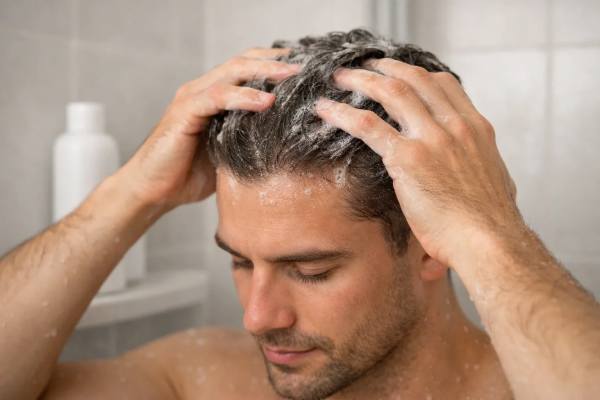
Step 1: Treat the scalp, not the hair
- Wet hair thoroughly.
- Part hair in a few sections and apply shampoo to the scalp skin.
- Massage gently with fingertips (not nails) for 30–60 seconds.
Step 2: Use the “leave-on” window
A practical baseline is 3–5 minutes of contact time before rinsing. This is long enough for many antifungals and keratolytics to act without pushing irritation too far. If the scalp is very sensitive, start at 2–3 minutes and build gradually.
Step 3: Build a clear schedule
A simple, effective structure is:
- Clearance phase (2–4 weeks): medicated shampoo 2–3 times per week (depending on tolerance), alternating with a gentle cleanser if needed.
- Maintenance phase: once symptoms improve, reduce to once weekly or every 7–10 days to prevent relapse.
Some people prefer rotation (for example, antifungal shampoo on one day and salicylic acid shampoo on another). Rotation can help if scale and yeast are both strong drivers, but more is not always better. If your scalp becomes tight, shiny, or sore, scale back.
Step 4: Rinse thoroughly and condition strategically
Residue can worsen itch. Rinse until the scalp feels clean, then condition the hair lengths only. If you have long hair, applying conditioner first to the ends (before shampoo) can reduce stripping.
Step 5: Align washing frequency with your scalp type
There is no universal “correct” frequency. Oilier scalps often do better with regular cleansing, while very dry scalps need a gentler cadence. If you want a framework to personalize frequency without guessing, how often to wash based on scalp type can help.
When to expect results
- Itch often improves first, sometimes within a few washes.
- Flakes typically decrease over 2–4 weeks with consistent use.
- If you see no meaningful change by week 4, the diagnosis may be different, the routine may be too mild, or irritation may be masking progress.
Side effects, safety, and when to seek help
Medicated shampoos are generally safe when used as directed, but “safe” still includes the possibility of irritation—especially if you stack multiple actives or use them too frequently.
Common side effects to watch for
- Dryness and brittleness: more likely with frequent antifungal or salicylic acid use, especially on treated hair
- Stinging or burning: can signal irritant dermatitis or an impaired barrier
- Increased flaking after starting: sometimes this is loosened scale shedding; if it comes with redness and discomfort, it may be irritation
- Changes in hair feel: roughness, tangling, or dullness can improve with conditioning and scalp-targeted application
If irritation appears, adjust one variable at a time: reduce frequency, shorten contact time, or switch to a different active family. Many people over-correct by stopping everything; a gentler, consistent plan often works better.
Special situations
- Children: dandruff-like flaking in children may have different causes, and some actives are not appropriate at younger ages without guidance.
- Pregnancy and breastfeeding: routine shampoos are often acceptable, but medicated actives can vary by product and region. When in doubt, ask your clinician.
- Regulatory differences by region: certain ingredients may be allowed in one country and restricted in another, which is why you might not find the same “classic” formulas everywhere.
When you should get medical input
A clinician visit is worth it if you have:
- Thick plaques, bleeding, crusting, or significant pain
- Patchy hair loss, broken hairs, or tender swollen scalp areas
- Persistent redness and scale that does not improve after 4 weeks of correct use
- Signs of infection (pus, spreading warmth, fever)
- Severe itch that disrupts sleep or daily function
If itch is the dominant symptom and you are unsure whether it is dandruff, allergy, or another scalp condition, itchy scalp causes and red flags can help you decide what to address first and what deserves prompt evaluation.
References
- An Overview of the Diagnosis and Management of Seborrheic Dermatitis – PMC 2022 (Review)
- Ketoconazole Shampoo for Seborrheic Dermatitis of the Scalp: A Narrative Review – PMC 2024 (Review)
- A Comparative Randomized Clinical Study Assessing the Efficacy of a 1% Selenium Disulfide-Based Shampoo versus 2% Ketoconazole Shampoo in Subjects with Moderate to Severe Scalp Seborrheic Dermatitis – PMC 2024 (RCT)
- Seborrheic Dermatitis Revisited: Pathophysiology, Diagnosis, and Emerging Therapies—A Narrative Review – PMC 2025 (Review)
- Opinion on Zinc Pyrithione (ZPT) (CAS No 13463-41-7) – Submission III 2020 (Scientific Opinion)
Disclaimer
This article is for educational purposes only and does not provide medical advice, diagnosis, or treatment. Dandruff can overlap with seborrheic dermatitis, psoriasis, fungal infection, and allergic or irritant contact dermatitis, and each may require different care. If you are pregnant, breastfeeding, treating a child, immunocompromised, or using prescription scalp medications, consult a qualified clinician before starting or changing medicated shampoos. Seek prompt medical care for severe scalp pain, spreading redness, pus, fever, patchy hair loss, or symptoms that do not improve after several weeks of correct use.
If this guide clarified what to look for, consider sharing it on Facebook, X (formerly Twitter), or any platform where it might help someone choose an effective routine and avoid unnecessary trial and error.