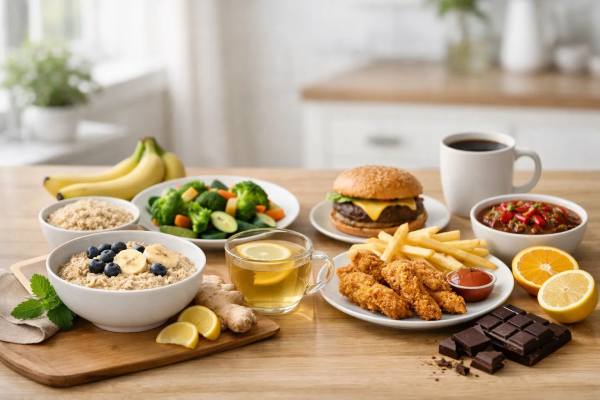
Acid reflux is not just “too much stomach acid.” For many people, it is a timing and pressure problem: stomach contents move upward when the lower esophageal sphincter relaxes or when the stomach is too full, and the lining of the esophagus reacts. Food choices can help in two ways—by reducing the likelihood of reflux episodes and by making reflux less irritating when it happens. The goal is not a perfect list of “safe” foods, but a practical pattern you can repeat without feeling restricted or confused. With a thoughtful approach, many people can reduce heartburn, regurgitation, throat symptoms, and nighttime reflux while still eating enjoyably. This guide focuses on foods that tend to be better tolerated, common triggers to watch, and the meal habits that often matter as much as ingredients—so you can build a plan that fits your body and your life.
Quick Overview
- Emphasizing higher-fiber, lower-fat meals often reduces reflux frequency and intensity over time.
- Smaller portions and earlier dinners can improve nighttime symptoms even without major food restrictions.
- Trigger foods are dose-dependent and individual, so targeted testing works better than broad elimination.
- Start with a 14-day “low-trigger” baseline, then reintroduce one suspected trigger every 3 days.
Table of Contents
- Why reflux flares after eating
- Foods that usually soothe reflux
- Foods and drinks that trigger reflux
- Meal timing and habits that matter
- Cooking methods and condiment swaps
- A simple reflux-friendly meal plan
Why reflux flares after eating
Reflux symptoms often feel random until you separate two drivers: what increases reflux events and what makes the reflux burn more. Many foods do both, but not always.
Reflux is often a pressure and valve problem
Your lower esophageal sphincter is a ring of muscle that should stay closed most of the time. After you eat, the stomach expands and pressure rises. If the stomach is very full—or if the sphincter relaxes at the wrong time—contents can move upward. That is why large meals, tight waistbands, bending over after eating, and lying down too soon can trigger symptoms even if the meal itself was “healthy.”
Acid matters, but volume and sensitivity matter too
Some people have frequent reflux with modest burning. Others have few reflux episodes, but intense discomfort because their esophagus is more sensitive. That helps explain why two people can eat the same food and have very different reactions.
Also, “acid reflux” can include:
- Acidic reflux that burns and irritates
- Non-acid reflux (less acidic contents) that still causes regurgitation, cough, throat clearing, or a sour taste
- Reflux plus bloating where distention and gas push contents upward
Why food lists can mislead
Most trigger lists treat reflux like an allergy: avoid a food and you will feel better. Reflux is more often about a trigger load, meaning the combination of factors that stack up:
- A higher-fat meal
- A large portion
- A late dinner
- Carbonation
- Alcohol
- Stress and shallow breathing
- Poor sleep or a tight belt
Any one factor might be tolerated. Several together may overwhelm your “reflux threshold.”
The most helpful mindset is this: choose foods that lower pressure in the stomach and reduce irritation in the esophagus, then use careful testing to identify your personal high-impact triggers. That approach tends to improve symptoms without turning eating into a long list of “no.”
Foods that usually soothe reflux
No food is guaranteed, but certain patterns are consistently easier on reflux because they are lower in fat, higher in fiber, and less likely to irritate the esophagus. Think of these as reflux-friendly building blocks rather than a rigid menu.
Gentle carbohydrates that buffer and settle
Many people do well with simple, minimally processed starches because they are filling without being greasy:
- Oatmeal and other warm cereals
- Brown rice, quinoa, and barley
- Potatoes and sweet potatoes (baked or boiled rather than fried)
- Whole-grain toast, tortillas, or pita (choose what you digest comfortably)
If you are prone to bloating, start with smaller servings of higher-fiber grains and increase gradually. For some, too much fiber too fast increases gas and pressure, which can worsen reflux.
Low-acid fruits and non-starchy vegetables
Fruits and vegetables can be protective when you choose varieties that are less acidic and less likely to trigger burning:
- Bananas, melons, pears, and apples (some tolerate cooked apples better than raw)
- Leafy greens, zucchini, cucumbers, carrots, green beans, and broccoli (cooked often feels easier)
- Squash, cauliflower, and mushrooms
A useful rule: if raw vegetables trigger symptoms, try cooked versions first. Cooking breaks down fibers and often reduces stomach distention.
Lean proteins that do not linger
High-fat proteins can slow stomach emptying and raise reflux risk. Leaner options are often better tolerated:
- Skinless poultry, fish, and shellfish
- Egg whites or whole eggs in smaller portions
- Tofu, tempeh, and well-rinsed beans or lentils (start small if they cause gas)
- Low-fat yogurt or kefir if dairy is tolerated
A simple plate formula
If you want an easy default meal pattern, aim for:
- Half plate: cooked non-starchy vegetables
- Quarter plate: lean protein
- Quarter plate: gentle starch
- Added fat: small amount (1–2 teaspoons of olive oil, for example) rather than a heavy sauce
This structure tends to reduce reflux pressure while keeping meals satisfying enough to prevent late-night snacking.
Foods and drinks that trigger reflux
Trigger foods are real, but they are rarely universal. Most people have a few consistent triggers and many “sometimes foods” that depend on portion, timing, and what else is happening that day. The goal is to identify your high-impact triggers without unnecessarily restricting your diet.
High-probability triggers
These categories commonly worsen reflux by relaxing the lower esophageal sphincter, slowing stomach emptying, increasing pressure, or irritating the esophagus:
- High-fat meals: fried foods, heavy cream sauces, rich pastries, fatty cuts of meat
- Chocolate: often a double hit due to fat content and compound effects on the sphincter
- Mint and peppermint: can relax the sphincter in some people (peppermint tea is not always “soothing” for reflux)
- Alcohol: increases reflux risk and can irritate tissue directly
- Coffee and caffeinated drinks: can trigger symptoms in some, though tolerance varies widely
- Carbonated beverages: gas expands the stomach and increases upward pressure
- Tomato and citrus products: can burn the esophagus when reflux occurs
- Spicy foods: can intensify burning even if they do not increase reflux events
- Onion and garlic: often problematic, especially raw, but not for everyone
Portion size changes the story
Many foods become triggers only beyond a certain dose. For example:
- A few bites of chocolate may be fine, while a large dessert is not.
- A small cup of coffee with food may be tolerated, while a large coffee on an empty stomach is not.
- A small amount of tomato in a mixed dish may be fine, while tomato sauce as the main feature may not.
This is why “avoid forever” lists often fail. They are too blunt.
How to test triggers without guessing
A practical method is to test one variable at a time:
- Create a low-trigger baseline for 10–14 days (simpler meals, earlier dinner, smaller portions).
- Reintroduce one suspected trigger in a controlled way (same portion, same time of day).
- Watch symptoms for 48–72 hours, then decide whether the trigger is consistent or situational.
If a food triggers symptoms only when eaten late, after alcohol, or in a large portion, your best strategy may be timing and portion—not total avoidance.
Meal timing and habits that matter
Food choices matter, but reflux is often improved most by how you eat. These habits reduce stomach pressure and limit the chances of reflux reaching sensitive tissue—especially at night.
The most impactful timing rule
Finish your last full meal at least 3 hours before lying down. This single change often improves nighttime reflux, morning throat symptoms, and sleep disruption because the stomach has time to empty before gravity stops helping you.
If you truly need something later, aim for a small, low-fat snack rather than a full meal—think oatmeal, a banana, or a small portion of low-fat yogurt if tolerated.
Smaller meals reduce “reflux load”
Large meals are a common reflux trigger because they stretch the stomach and increase pressure. Consider:
- Three moderate meals instead of two large meals
- A slightly larger lunch and a smaller dinner
- Stopping at “comfortably satisfied” rather than “full”
A simple portion cue: if you feel tight under the ribs or you need to loosen your waistband after eating, your stomach is likely too distended for reflux comfort.
Eating speed and chewing are not cosmetic
Fast eating often means more swallowed air, larger bites, and delayed satiety signals. For reflux-prone people, that can lead to both bloating and overeating. Try:
- Putting the fork down between bites
- Chewing until the texture is smooth
- Taking a brief pause halfway through the meal
Post-meal positioning helps
For 30–60 minutes after eating:
- Stay upright
- Avoid deep bending, heavy lifting, or tight clothing around the abdomen
- Consider a gentle walk for 10–15 minutes if it feels comfortable
If nighttime symptoms persist, elevating the head of the bed (or using a wedge) can reduce reflux exposure during sleep. Pillows alone often fold the body and increase abdominal pressure, so positioning matters.
These habits are not “extra credit.” For many people, they are the difference between occasional reflux and daily symptoms.
Cooking methods and condiment swaps
Many reflux “triggers” are not the base food but the preparation: frying, heavy oils, acidic sauces, and large seasoning loads. Reflux-friendly cooking aims to reduce fat, reduce burn potential, and keep meals satisfying.
Cook in ways that lower reflux risk
Methods that usually sit well:
- Baking, broiling, steaming, poaching, roasting, and grilling with minimal added fat
- Slow-cooking soups and stews with lean proteins and vegetables (watch onions and tomato if those trigger you)
- Stir-frying with a small amount of oil and more liquid-based flavor (broth, ginger, mild herbs)
Strategies that often help:
- Drain fat from cooked meat
- Choose lean ground poultry or fish instead of higher-fat meats
- Use measured oils rather than free-pouring
Acid and heat are different problems
Two common irritants are acidity and spice heat. If those trigger you, consider swaps that preserve flavor:
- Use herbs like basil, oregano, parsley, dill, and thyme instead of hot peppers
- Try ginger for warmth without the same burn response in many people
- Use small amounts of mild mustards or non-citrus seasonings if tolerated (test carefully)
For sauces, many people do better with:
- Olive oil and herbs
- Light gravies made with broth
- Yogurt-based sauces if dairy is tolerated
- Pureed vegetables (like roasted squash) for creaminess without heavy fat
Beverages: choose what reduces pressure and irritation
Helpful defaults:
- Still water
- Non-mint herbal teas (test one at a time)
- Low-fat milk or fortified plant milks if tolerated
- Warm drinks can feel soothing for some, but temperature tolerance varies
Common beverage pitfalls:
- Carbonation (pressure and belching)
- Alcohol (sphincter relaxation and irritation)
- Large caffeinated drinks, especially on an empty stomach
If coffee is important to you, experiment with:
- Smaller servings
- Having it with food
- Lower-acid or cold brew styles (not a guarantee, but sometimes easier)
- Half-caffeinated or decaf
The best approach is not “never.” It is building predictable defaults and then deciding where you want flexibility.
A simple reflux-friendly meal plan
A plan works when it is specific enough to follow but flexible enough to live with. This sample day is designed to be lower in reflux triggers while still providing protein, fiber, and satisfaction. Use it as a template, not a rulebook.
Sample day of meals
Breakfast ideas:
- Oatmeal topped with banana and a small spoon of nut butter (if nut butter is tolerated; use a modest amount)
- Scrambled eggs with spinach and a side of whole-grain toast
- Low-fat yogurt with oats and chopped pear (if dairy is tolerated)
Lunch ideas:
- Rice or quinoa bowl with grilled chicken or tofu, steamed vegetables, and a light olive-oil herb drizzle
- Turkey and cucumber wrap with a side of roasted carrots
- Lentil soup with whole-grain bread (start with a small bowl if legumes cause gas)
Snack ideas:
- A banana, melon, or applesauce
- A small handful of nuts (portion matters)
- Crackers with hummus in a small serving (test tolerance)
Dinner ideas (aim to finish 3 hours before bed):
- Baked fish, sweet potato, and sautéed zucchini
- Chicken and vegetable soup with a side of rice
- Tofu stir-fry with mixed vegetables and a mild ginger-forward flavor
A two-week baseline that clarifies your triggers
If symptoms are frequent, try this structured experiment:
- For 14 days, keep meals lower in fat and avoid your top suspected triggers (often alcohol, carbonation, tomato sauce, citrus, and heavy fried foods).
- Keep dinner earlier and smaller than lunch.
- Track symptoms briefly: time, severity, and what you ate.
Then reintroduce one item every 3 days (for example, coffee, then chocolate, then tomato) to see what truly matters for you.
When food changes are not enough
Seek medical guidance promptly if you have trouble swallowing, vomiting blood, black stools, persistent chest pain, unexplained weight loss, or ongoing symptoms despite consistent changes. Reflux symptoms can overlap with other conditions, and persistent inflammation needs proper evaluation.
A reflux-friendly diet should make you feel nourished, not deprived. The best long-term plan is the one that reduces symptoms while keeping your eating pattern sustainable.
References
- ACG Clinical Guideline: Guidelines for the Diagnosis and Management of Gastroesophageal Reflux Disease 2022 (Guideline)
- AGA Clinical Practice Update on the Personalized Approach to the Evaluation and Management of GERD: Expert Review 2022 (Expert Review)
- Dietary and Lifestyle Factors Related to Gastroesophageal Reflux Disease: A Systematic Review 2021 (Systematic Review)
- The Efficacy of Dietary Interventions in Patients with Gastroesophageal Reflux Disease: A Systematic Review and Meta-Analysis of Intervention Studies 2024 (Systematic Review and Meta-Analysis)
Disclaimer
This article is for educational purposes only and does not provide medical advice, diagnosis, or treatment. Acid reflux and GERD symptoms can have multiple causes, and the right approach depends on your medical history, medications, and symptom pattern. If you have difficulty swallowing, persistent vomiting, blood in vomit, black or tarry stools, unexplained weight loss, anemia, or chest pain, seek urgent medical evaluation. If you are pregnant, have chronic health conditions, or take prescription medications, consult a qualified healthcare professional before making major dietary changes or using over-the-counter reflux remedies.
If this article was useful, please consider sharing it on Facebook, X (formerly Twitter), or any platform you prefer.