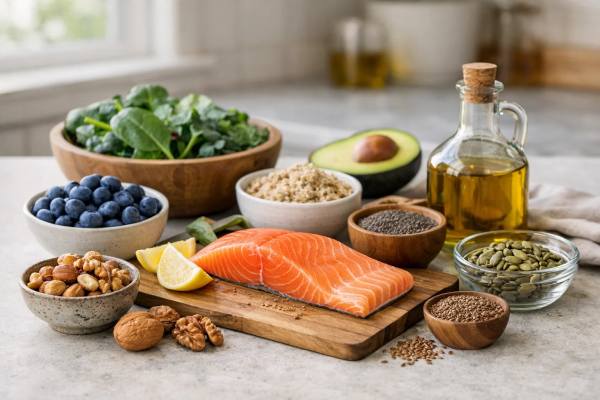
A brain-friendly diet is not about a single “superfood.” It is about giving your nervous system the raw materials it uses every day: fats to build flexible cell membranes, antioxidants to buffer normal wear-and-tear, and vitamins and minerals that keep blood flow, neurotransmitters, and energy metabolism steady. Over time, those inputs shape how clearly you think, how resilient your mood feels, and how well you maintain memory as life gets busier and sleep gets shorter.
The good news is that brain-supportive eating is practical. It looks like recognizable foods—fish, berries, leafy greens, beans, eggs, nuts, olive oil, and spices—prepared in simple ways. You do not need perfection; you need repeatable patterns. This guide explains what to prioritize, what to limit, and how to build a weekly approach you can actually stick with.
Core Points
- Emphasize omega-3-rich seafood or algae options several times per week for long-term brain support
- Eat a wide spectrum of colorful plants daily to increase antioxidant and polyphenol intake
- Do not treat supplements as a shortcut for poor overall diet quality or chronic sleep loss
- Reduce ultra-processed foods to lower unnecessary inflammatory and metabolic strain
- Build a weekly template so healthy choices happen automatically, even on busy days
Table of Contents
- How food powers brain function
- Omega-3 foods and how to get enough
- Antioxidant-rich produce and polyphenols
- B vitamins and choline for neurotransmitters
- Minerals for focus mood and blood flow
- Brain-healthy patterns and what to limit
- A practical 7-day brain-food template
How food powers brain function
Your brain is only about a small fraction of body weight, yet it is metabolically demanding. It runs on a constant supply of energy, and it is built from highly specialized fats, proteins, and micronutrients. When people talk about “brain fog,” they are often describing the downstream effects of uneven fuel delivery (blood sugar swings), inflammation, and poor sleep quality—all of which can be influenced by diet.
A useful way to think about brain nutrition is to separate it into four needs:
1) Stable energy and circulation
Neurons depend on a steady supply of glucose and oxygen. Diets that push frequent spikes and crashes—especially when paired with long gaps between meals—can make attention and mood feel unpredictable. Meals that combine fiber-rich carbohydrates (beans, oats, vegetables, fruit) with protein and healthy fats typically produce steadier energy. Just as importantly, the brain depends on blood vessels. Foods that support vascular health—olive oil, nuts, fish, legumes, and produce—also tend to be the same foods linked with better cognitive aging.
2) Membrane and myelin building blocks
Brain cells are wrapped in membranes and insulating myelin that influence how efficiently signals travel. The types of fats you eat matter here. Omega-3 fats (especially DHA) are prominent in brain tissue and help keep membranes flexible, which supports signaling at synapses.
3) Antioxidant protection and inflammation control
Normal brain activity produces oxidative stress. That is not inherently “bad,” but it needs balancing. Colorful plants provide vitamins, minerals, and polyphenols that help buffer oxidative damage and support the body’s own antioxidant systems. Chronic low-grade inflammation—often worsened by poor diet quality—can interfere with neurotransmitters, sleep regulation, and energy levels.
4) Neurotransmitter and repair chemistry
Your brain manufactures chemical messengers (like acetylcholine, dopamine, and serotonin) and constantly repairs cellular components. Nutrients such as choline, folate, vitamin B12, vitamin B6, iron, zinc, magnesium, and iodine play key roles in these pathways. If intake is low—or absorption is impaired—focus and memory can suffer even before a clear deficiency is diagnosed.
The practical takeaway: brain health responds best to patterns you can repeat—steady meals, plenty of plants, enough protein, and the right fats—rather than occasional “brain-boosting” hacks.
Omega-3 foods and how to get enough
Omega-3s are among the most discussed brain nutrients for a reason: DHA is a structural fat in the brain and retina, and EPA influences inflammatory signaling that can affect blood vessels and neural function. Food sources matter because they deliver omega-3s alongside other helpful compounds (selenium in seafood, protein, vitamin D in some fish) and because they naturally fit into dietary patterns associated with better long-term outcomes.
Know the three main omega-3 types
- DHA and EPA: Found mainly in fatty fish and algae. These are the forms most directly used by the body.
- ALA: Found in plants (flax, chia, walnuts). Your body can convert some ALA into DHA and EPA, but conversion is limited and varies by person.
If you eat seafood, aiming for two servings of fatty fish per week is a practical baseline. A serving is typically about 3 to 4 ounces cooked. Common options include salmon, sardines, trout, herring, and mackerel (some varieties are higher in contaminants than others, so variety matters).
Best food sources and simple ways to use them
- Salmon or trout: Bake with olive oil, lemon, and herbs; leftovers make an easy lunch salad.
- Sardines: Mash with mustard and a little yogurt or olive oil; eat on whole-grain toast with tomatoes.
- Anchovies: Use small amounts to season sauces, vegetables, or bean dishes—intense flavor, minimal effort.
- Algae-based DHA and EPA foods or supplements: Useful if you do not eat fish.
- Walnuts, chia, and ground flaxseed: Excellent for ALA; add to oatmeal, yogurt, or smoothies.
Safety and quality considerations
Seafood is nutritious, but contaminants are a real-world concern. The simplest approach is to choose lower-mercury fish more often and vary your choices. If you are pregnant, breastfeeding, or feeding young children, follow stricter low-mercury guidance and discuss personalized targets with a clinician.
What about fish oil supplements
Supplements can be helpful for people who rarely eat omega-3-rich foods, but they are not automatically better than food. If you consider a supplement, prioritize quality testing, take it with meals to improve tolerance, and avoid very high doses unless medically advised. High-dose omega-3 products can interact with blood-thinning medications and may not be appropriate for everyone.
Bottom line: build omega-3s into your meals first; use supplements only when food patterns cannot realistically meet your needs.
Antioxidant-rich produce and polyphenols
Antioxidants and polyphenols are less about “detoxing” and more about resilience. Your brain is rich in fats and uses a lot of oxygen, which makes it vulnerable to oxidative stress. Over years, that stress can contribute to inflammation, vascular strain, and slower cellular repair. A diet rich in colorful plants helps because it supplies both classic nutrients (like vitamin C, folate, potassium) and thousands of bioactive compounds that influence blood flow, inflammation, and cell signaling.
Start with a color target, not a single food
A practical goal is at least three different colors of plants per day and two to five total servings depending on your calorie needs. Color variety increases the odds you are getting a broad mix of protective compounds.
High-value choices include:
- Berries (blueberries, strawberries, blackberries): Rich in anthocyanins; easy to use daily.
- Leafy greens (spinach, kale, arugula): Provide folate, carotenoids, and nitrate compounds that support circulation.
- Cruciferous vegetables (broccoli, cabbage, Brussels sprouts): Support cellular defense pathways.
- Tomatoes and red peppers: Provide carotenoids and vitamin C.
- Legumes (lentils, chickpeas, beans): Not just fiber—also polyphenols and minerals.
Polyphenol “boosters” that fit real life
Some of the most concentrated polyphenol sources can be added in small amounts:
- Extra-virgin olive oil: Use as the default cooking and dressing fat when possible.
- Cocoa and dark chocolate: Choose minimally sweetened options; a small square can be enough.
- Green tea or black tea: A gentle daily habit that often replaces sugary drinks.
- Coffee (for those who tolerate it): Works best earlier in the day to protect sleep.
- Spices and herbs (turmeric, cinnamon, oregano, rosemary): Use to add flavor while reducing the need for excess salt or sugar.
Make antioxidants automatic
The easiest way to “win” this category is to attach it to routines:
- Keep frozen berries for quick breakfasts.
- Put a bag of baby greens where you will see it first in the fridge.
- Add one vegetable you like to lunch every day, even if dinner varies.
- Build one “default” snack: nuts plus fruit, or yogurt plus berries, or hummus plus vegetables.
If you do these consistently, you will often notice improvements in energy stability and digestion within weeks—while long-term brain protection is a cumulative benefit.
B vitamins and choline for neurotransmitters
When people focus on fats and antioxidants, they often overlook a quieter truth: your brain runs on chemistry. Neurotransmitters, myelin maintenance, DNA repair, and methylation pathways all require specific vitamins and compounds—especially choline, folate, vitamin B12, and vitamin B6.
Choline: the acetylcholine building block
Choline supports the production of acetylcholine, a neurotransmitter involved in memory and attention. It is also part of phospholipids that make up cell membranes. Many people get some choline, but intake can be low if eggs and certain animal or soy-based foods are avoided.
Food sources that fit a brain-healthy pattern:
- Eggs (especially yolks): A concentrated, affordable source.
- Soy foods (edamame, tofu, tempeh): Useful for plant-forward diets.
- Fish and poultry: Provide choline plus protein.
- Cruciferous vegetables and legumes: Contribute smaller amounts that add up with consistency.
Folate, B12, and B6: homocysteine and neural upkeep
Folate, vitamin B12, and vitamin B6 work together in pathways that regulate homocysteine, a compound that tends to rise when these nutrients are insufficient. Elevated homocysteine is often treated as a marker of metabolic strain and has been linked with worse cognitive outcomes in some research.
- Folate sources: leafy greens, beans, lentils, asparagus, avocado, and citrus.
- B12 sources: fish, dairy, eggs, and meat; fortified foods can help for plant-based diets.
- B6 sources: chickpeas, potatoes, bananas, poultry, and some nuts and seeds.
Who should pay extra attention
- Adults over 50: B12 absorption can decline with age.
- People taking acid-suppressing medications or metformin: B12 status may be affected.
- Vegetarians and vegans: B12 needs special planning through fortified foods or supplements.
- Heavy alcohol use: Can impair absorption and increase nutrient losses.
Supplement caution that matters
B vitamins can be beneficial when intake or absorption is low, but more is not always better. High-dose vitamin B6 can cause nerve symptoms in some cases, and high folate intake can mask B12 deficiency. If you suspect a deficiency—fatigue, numbness, memory changes, balance issues—testing and clinician guidance are the safest path.
In daily life, a strong foundation is simple: eggs or soy for choline, leafy greens and beans for folate, and reliable B12 sources appropriate to your dietary pattern.
Minerals for focus mood and blood flow
Minerals rarely get the spotlight, but they shape the “hardware” that keeps your brain steady: nerve signaling, oxygen delivery, and stress regulation. Even mild shortfalls can show up as fatigue, irritability, poor sleep, or difficulty concentrating—symptoms that are easy to blame on workload alone.
Magnesium: calm signaling and sleep support
Magnesium helps regulate nerve transmission and muscle relaxation, and it is commonly under-consumed in modern diets. Food-first sources include:
- Pumpkin seeds, almonds, cashews
- Beans and lentils
- Leafy greens
- Whole grains like oats and brown rice
- Dark chocolate with minimal added sugar
If sleep is fragile, magnesium-rich dinners (beans, greens, whole grains) can be a gentle lever. Supplements can help some people, but they may cause digestive upset and are not appropriate for everyone with kidney issues.
Iron: oxygen delivery and mental stamina
Iron is essential for oxygen transport. Low iron can cause fatigue, poor concentration, and low mood. Menstruating people, frequent blood donors, and those who eat little meat are higher-risk groups.
- Heme iron sources: red meat and seafood (more absorbable).
- Non-heme sources: lentils, beans, spinach, tofu (absorption improves when paired with vitamin C foods like citrus or peppers).
Avoid self-prescribing iron supplements unless deficiency is confirmed; excess iron can be harmful.
Zinc and selenium: immune balance and brain protection
Zinc supports neurotransmitter function and immune regulation. Selenium supports antioxidant enzymes and thyroid function.
- Zinc sources: pumpkin seeds, meat, shellfish, dairy, legumes.
- Selenium sources: seafood, eggs, and a small number of Brazil nuts (do not overdo it; selenium can accumulate).
Iodine: thyroid and cognitive speed
Thyroid hormones influence energy, mood, and cognitive tempo. Iodine sources include iodized salt, dairy, seafood, and seaweed. Seaweed can be very high in iodine, so portion control matters.
Potassium and overall vascular tone
Potassium supports blood pressure regulation, which matters for brain circulation. Prioritize beans, yogurt, potatoes, bananas, and leafy greens.
A simple mineral strategy: rotate legumes, nuts or seeds, leafy greens, and seafood through the week, and reserve supplements for targeted needs verified by a professional.
Brain-healthy patterns and what to limit
People often ask for a ranked list of “best foods for brain health,” but research and real life point to something more reliable: dietary patterns. Patterns matter because foods interact. Fiber changes glucose response. Olive oil changes how vegetables and herbs are used. Fish replaces processed meats. Over months and years, those swaps influence inflammation, blood pressure, lipid balance, and gut health—systems that feed into brain function.
Two patterns with strong practical logic
- Mediterranean-style eating: abundant vegetables, fruit, legumes, whole grains, nuts, olive oil, and regular fish; limited processed meats and sweets.
- MIND-style eating: similar foundation, with extra emphasis on leafy greens and berries and clear limits on fried foods, butter-heavy choices, and sweets.
You do not need to label your diet to benefit. If most meals follow these principles, you are effectively doing the pattern.
What to limit for clearer thinking and long-term protection
- Ultra-processed foods: packaged snacks, sugary cereals, many ready meals, and highly processed meats often combine refined starch, added sugar, poor-quality fats, sodium, and additives. They are easy to overeat and tend to displace nutrient-dense options.
- Added sugars and refined grains: frequent intake can worsen energy swings and, in some people, cravings and irritability.
- Processed meats: often high in sodium and certain preservatives; better replaced with fish, beans, poultry, or tofu.
- Alcohol: even moderate intake can disrupt sleep architecture and next-day attention. If you drink, keep it occasional and pair it with food.
- Excessive saturated fat in a low-fiber diet: not because saturated fat is “poison,” but because it can become problematic when it crowds out fiber-rich plants and unsaturated fats.
Sleep and caffeine deserve a nutrition mention
Caffeine can improve alertness, but timing matters. Many people feel sharper when caffeine is kept earlier in the day and paired with food, rather than used to replace breakfast. If sleep is impaired, the best “brain supplement” is often simply protecting bedtime consistency.
A useful rule: prioritize what you add (greens, berries, legumes, fish, olive oil) and what you reduce (ultra-processed foods and sugar-heavy snacks). That combination is more powerful than obsessing over any single nutrient.
A practical 7-day brain-food template
A brain-healthy diet becomes easy when it becomes predictable. The goal is not culinary novelty; it is a repeatable structure that keeps omega-3s, plants, and steady protein in rotation. Use this template as a starting point and adapt it to your culture, budget, and preferences.
A simple weekly structure
- Fish or algae-based omega-3: 2 to 3 times per week
- Legumes: 3 to 5 times per week
- Leafy greens: daily if possible
- Berries or another deeply colored fruit: 4 to 7 times per week
- Nuts or seeds: most days (small handful)
- Olive oil as default fat: most meals
Brain-friendly grocery list with practical amounts
- Fatty fish (salmon, sardines, trout): enough for 2 to 3 meals
- Eggs: 6 to 12 for the week
- Leafy greens: 2 large bags or bunches
- Mixed vegetables: at least 5 to 7 servings total (fresh or frozen)
- Berries: fresh or frozen, enough for 4 to 7 servings
- Legumes: 4 to 6 cups cooked (or several cans)
- Whole grains: oats plus one of brown rice, quinoa, or whole-grain bread
- Nuts or seeds: walnuts plus chia or ground flaxseed
- Plain yogurt or a fortified alternative (if tolerated)
- Olive oil, herbs, spices, garlic, onions, lemons
Seven days of plug-and-play meals
- Breakfast options: oatmeal with berries and ground flaxseed; eggs with greens and whole-grain toast; yogurt with berries and walnuts.
- Lunch options: lentil soup with a side salad; sardines on whole-grain toast with tomatoes; chickpea bowl with olive oil and herbs.
- Dinner options: baked salmon with roasted vegetables; tofu stir-fry with broccoli and brown rice; bean chili with avocado and greens.
Low-effort prep that changes everything
- Roast a sheet pan of vegetables twice per week.
- Cook one pot of beans or lentils (or stock up on no-salt-added canned options).
- Wash and portion leafy greens so they are ready to grab.
- Keep frozen berries on hand so breakfast always has a “brain food” built in.
Smart substitutions for common constraints
- No fish: use algae-based DHA and EPA options and emphasize walnuts, chia, and flax.
- Dairy-free: choose fortified alternatives and lean on beans, greens, and canned fish with bones (if you eat fish) for minerals.
- Budget focus: prioritize frozen vegetables and berries, canned sardines or salmon, beans, oats, and eggs.
If you follow this template most weeks, you will cover omega-3s, antioxidants, and key micronutrients without daily decision fatigue—and that consistency is what drives results.
References
- A systematic review and dose response meta analysis of Omega 3 supplementation on cognitive function 2025 (Systematic Review and Meta-analysis)
- Effects of the MIND Diet on the Cognitive Function of Older Adults: A Systematic Review 2025 (Systematic Review)
- Dietary Flavonoids and Human Cognition: A Meta‐Analysis 2022 (Meta-analysis)
- B vitamins and prevention of cognitive decline and incident dementia: a systematic review and meta-analysis 2022 (Systematic Review and Meta-analysis)
- Ultra-processed food consumption and risk of dementia and Alzheimer’s disease: The Framingham Heart Study 2025 (Prospective Cohort Study)
Disclaimer
This article is for educational purposes only and does not provide medical advice, diagnosis, or treatment. Nutrition needs vary based on age, medical conditions, medications, pregnancy status, allergies, and individual risk factors. If you have symptoms such as sudden confusion, severe headache, weakness, speech changes, or rapid memory decline, seek urgent medical care. For personalized guidance—especially if you have cardiovascular disease, diabetes, kidney disease, a history of bleeding disorders, or you are considering high-dose supplements—consult a licensed clinician or registered dietitian.
If you found this helpful, consider sharing it on Facebook, X (formerly Twitter), or any platform you prefer so others can benefit too.