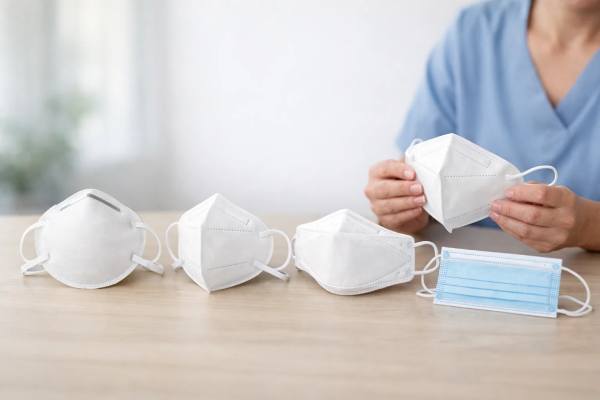
Cold and flu season is when masking becomes less about abstract risk and more about practical life: protecting a vulnerable family member, showing up at work without sharing germs, or getting through a crowded commute without bringing an infection home. Masks differ widely in how well they filter particles and, just as important, how well they seal to your face. That seal is why some people feel “this mask works” while others struggle with foggy glasses and gaps that leak air with every breath. In real-world use, the best mask is the one that fits your face, matches the situation, and is comfortable enough to wear consistently. This article compares N95, KN95, KF94, and surgical masks for cold and flu, explains where each one shines, and walks through the small details—fit checks, strap choices, and when to replace—that often matter more than the label on the box.
Fast Facts
- Well-fitting respirators (especially N95) usually provide the strongest protection against airborne particles that carry cold and flu viruses.
- KN95 and KF94 masks can perform well, but quality and fit vary more, especially with ear-loop designs.
- Surgical masks help with source control and splash protection, but gaps often limit protection from fine aerosols in crowded indoor air.
- Any mask can underperform if it leaks; a good seal and consistent wear are the main “multipliers” of benefit.
- For best results, choose one mask style you can wear for an entire outing and do a quick seal check each time you put it on.
Table of Contents
- How these mask types differ
- Fit and leakage decide protection
- Choosing the right mask for the moment
- How to wear for best performance
- Reusing, storing, and knowing when to toss
- Avoiding fakes and buying wisely
- Kids, asthma, and comfort issues
How these mask types differ
The quickest way to understand N95, KN95, KF94, and surgical masks is to separate two ideas: filtration (what the material can block) and fit (how much air slips around the edges). A mask with excellent filter material can still perform poorly if most of your breath bypasses the filter through gaps.
N95 respirators
N95s are designed as tight-fitting respirators with head straps that help create a seal. When they seal well, they are typically the strongest option for reducing inhalation of airborne particles. Many people notice that an N95 feels “structured,” holds its shape, and pulls snugly across the cheeks and nose. That structure is part of why they can stay sealed during talking and walking, not just while standing still.
KN95 masks
KN95 is commonly used to describe respirators made to a Chinese standard. In everyday shopping, “KN95” can mean anything from excellent products to questionable ones, and the ear-loop style is common. Ear loops are convenient, but they often create less consistent tension than head straps, which can reduce the seal on some faces. A high-quality KN95 that fits your face well can be a strong choice for routine errands, but the range in quality is wider than many people expect.
KF94 masks
KF94 is a Korean standard and is often associated with a “boat” or “3D” shape that creates space in front of the mouth. Many people find this design more comfortable for talking and less likely to collapse onto the lips. Like many KN95s, most KF94s use ear loops, so fit still varies by face shape and ear loop tension. When fit is good, KF94 masks can provide high filtration with better comfort than stiffer styles for some wearers.
Surgical masks
Surgical masks are loose-fitting and primarily designed to block splashes and provide source control in clinical settings. They can reduce the amount of respiratory droplets expelled into the environment, but gaps at the sides and top often limit their ability to filter fine aerosols in crowded indoor air. Their biggest advantage is convenience and broad availability, not a tight seal.
The bottom line: the category tells you the intention, but your face and the mask’s design determine the result you actually get.
Fit and leakage decide protection
For cold and flu, fit is not a minor detail. It is often the difference between “the mask filtered the air I breathed” and “the mask mostly decorated my face while air leaked around it.” This matters because viruses can travel in a range of particle sizes, including fine aerosols that behave like smoke in still indoor air. A leak near the nose or cheeks becomes a preferred pathway for that air.
Why tight fit matters more than you think
Imagine two paths for airflow: through the filter and around the edges. Your body will take the path of least resistance. If the seal is loose, a large fraction of air moves around the mask, especially during a deep inhale (climbing stairs, hurrying to catch a train, speaking for long stretches). That is why people often feel that a respirator with head straps “works better” even before they know anything about filtration numbers.
Head straps versus ear loops
Head straps usually provide more uniform tension and help maintain a seal as you move your jaw. Ear loops can work well on some faces, but they often loosen with time and can lift off the cheeks during speech. If you rely on an ear-loop mask, the most practical upgrades are choosing a model that fits your face shape and using consistent adjustments to improve tension and reduce gaps.
Quick fit check you can do at home
This is not a formal fit test, but it is a useful habit:
- Put the mask on and shape the nose area firmly so it sits flush against the bridge of the nose.
- Inhale sharply. If you feel air rushing in around the cheeks or nose, adjust straps and nose shaping and try again.
- Exhale and notice where air escapes. If most of it shoots upward into your eyes, the nose area is leaking.
- Talk for 20 seconds and move your head side to side. If the mask slides or gaps open, you will likely lose protection during real use.
Common leak patterns and easy fixes
- Nose leak with foggy glasses: stronger nose shaping, a better-fitting size, or a design with a more supportive nose area.
- Cheek gaps: try a different shape (cup, duckbill, or 3D style) rather than tightening endlessly.
- Chin slip: choose a model with a longer chin panel or a structure that anchors under the chin.
A simple but powerful idea: the best “mask upgrade” is often switching to a model that matches your face, not buying a more expensive label.
Choosing the right mask for the moment
“Best” depends on the setting. Cold and flu risk rises with three conditions: indoor air, crowding, and time. Your mask choice should track those conditions the same way you choose a coat based on temperature and wind, not based on what you wore yesterday.
High-exposure settings
These are the moments when the strongest protection makes the most sense:
- Crowded public transit during peak hours
- Waiting rooms and urgent care clinics
- Caring for a sick person at home at close range
- Long flights or buses where you cannot control the ventilation and you sit near others for hours
In these situations, a well-fitting N95 is often the most reliable option, especially if you want protection for yourself, not just source control. If you cannot tolerate an N95, a high-quality KN95 or KF94 that fits tightly is a reasonable alternative, but your priority should be minimizing gaps.
Moderate-risk everyday errands
For quick grocery trips, pharmacy stops, or brief indoor visits, many people do well with a KF94 or KN95 that fits their face and stays comfortable. Comfort matters because it reduces mask-touching and ensures you keep it on. If the mask is constantly slipping, you lose both protection and convenience.
When surgical masks still make sense
Surgical masks can be useful when you need simple source control, you are around others briefly, or you have limited access to respirators. They can also be appropriate when you need to communicate clearly and a structured respirator makes speaking harder. The main caution is to avoid overestimating what they can do in aerosol-heavy environments like crowded indoor events.
Scenario-based recommendations
- You are sick with a cough and must be near others: prioritize a comfortable mask you can wear consistently to reduce spread, and upgrade to a respirator if you will be in close contact with higher-risk people.
- You are trying to avoid catching illness during a local outbreak: prioritize respirator-grade fit in crowded indoor settings, not just a high filtration claim.
- You are visiting someone high risk: a well-fitting respirator is the “best single layer” you can add, alongside good ventilation and staying home if you have symptoms.
If you are deciding between two options, choose the mask you can keep on without fuss for the entire exposure window.
How to wear for best performance
Most masks fail in predictable ways: they are worn under the nose, shaped loosely at the nose bridge, adjusted constantly, or removed for “quick moments” that add up. A few practical techniques can improve performance more than switching brands.
Put it on with intent
Start with clean hands. Place the mask, then adjust it once with care:
- Make sure it covers nose and mouth fully.
- Shape the nose area firmly so it is flush against the nose bridge.
- Check that the chin area sits securely and does not ride upward when you talk.
If you are using a head-strap respirator, straps should sit in the intended positions: one high on the head and one lower near the neck. If both are high or both are low, the mask often leaks or slides.
Reduce mask-touching
Touching the mask is not automatically dangerous, but it often indicates poor fit or discomfort. It also breaks the seal. If you find yourself touching it repeatedly, treat that as feedback: the size or shape is not working for you.
Common causes and fixes:
- Itches and tickles: try a softer inner layer or a different brand shape.
- Slipping: try a different size or a head-strap design.
- Collapsing onto the mouth: consider a more structured shape, often KF94-style or a structured respirator.
Seal check for respirators
A quick seal check takes seconds and can prevent hours of “leaky wear”:
- Inhale and feel whether the mask pulls slightly inward without obvious leaks.
- Exhale and feel for air escaping near the eyes and cheeks.
- If you cannot improve the seal with adjustments, switch models rather than forcing it.
Facial hair and skin care realities
Beards and stubble interfere with the seal of tight-fitting respirators. If you cannot shave, assume your protection from an N95-style seal is reduced and focus on the best fit you can achieve with the least leakage, plus other measures such as ventilation.
For skin comfort:
- Start with clean, dry skin to reduce slipping.
- Use a simple moisturizer after masking, not right before, so the mask does not slide.
- If you develop persistent irritation, change mask style rather than tightening aggressively.
Small, consistent habits—good placement, one careful adjustment, and minimal touching—are what keep a high-quality mask performing like it should.
Reusing, storing, and knowing when to toss
Many people reuse respirator-style masks for errands, especially outside of healthcare settings. While manufacturers often label disposable respirators as single use, careful reuse for everyday tasks is common when the mask remains clean and structurally intact. The key is to avoid reuse practices that increase contamination or degrade fit.
When reuse is reasonable
Reuse is most reasonable when the mask is worn for low-contact activities such as commuting, shopping, or office work where it does not get splashed, heavily soiled, or saturated. If you wore the mask while caring closely for someone acutely ill, or if you were in a setting with heavy coughing nearby, it is safer to replace it sooner.
How to store between uses
Good storage aims to keep the mask dry and preserve its shape:
- Let it air-dry after use if it feels damp from breath.
- Store it in a clean, breathable container so moisture does not build up.
- Avoid crushing it in a pocket or bag where the seal and nose area can deform.
Handle masks by the straps rather than by the filter surface. This reduces contamination and helps preserve fit.
Clear signs it is time to replace
Replace the mask if any of these occur:
- The straps feel loose or stretched and the mask no longer seals.
- The mask is visibly dirty, wet, or has makeup and oil buildup that affects fit.
- Breathing resistance increases noticeably compared with a fresh mask.
- The mask has a persistent odor, which can signal contamination or moisture retention.
- The nose area will not hold its shape, causing repeated leakage into the eyes.
Surgical masks should generally be treated as single use, particularly once they become damp. They lose structure, and gaps typically worsen as the material softens.
A practical rotation approach
If you want a simple routine, rotate through several respirators for errands so each one has time to dry between uses. This is less about “disinfecting” and more about keeping the mask dry and comfortable so you are not tempted to adjust it constantly.
The most important rule: the moment a mask stops fitting well, it stops being the mask you think you are wearing. Fit degradation is the real endpoint, not a calendar date.
Avoiding fakes and buying wisely
Mask labels can be confusing, and counterfeits exist. The goal is not to become an expert in every standard, but to build a few reliable checks that reduce your odds of buying a product that cannot perform as claimed.
What to prioritize when buying
For cold and flu protection, prioritize:
- Clear identification of the mask type and standard it claims to meet
- Consistent manufacturing information and packaging
- A design that supports fit (often a supportive nose area and stable straps)
For N95s, the most reliable protection usually comes from products that are genuinely approved as respirators and designed to seal with head straps. Be cautious of products marketed as “N95” with ear loops, vague labeling, or packaging that looks improvised.
Common red flags
These features should make you pause:
- Misspellings, missing manufacturer information, or shifting brand names across listings
- “Too good to be true” bulk deals without clear origin
- Claims that sound medical but avoid specifics, such as “hospital grade” without any stated standard
- Lack of consistent markings on the mask itself
Why KN95 and KF94 require extra attention
KN95 and KF94 products can be excellent, but quality depends on the manufacturer and the integrity of the supply chain. Two masks that look similar can perform very differently. If you find a model that fits you well and comes from a reliable source, consistency often matters more than chasing the newest listing.
Buy for fit, not just filtration claims
A practical shopping strategy is to buy a small pack first, test fit at home, and only then purchase larger quantities. A mask that gaps on your face is not “a high-filtration mask” in practice, even if the material is strong.
Keep one high-protection option ready
Many households benefit from having a few well-fitting N95-style respirators on hand for higher-risk moments: caring for a sick family member, attending a packed indoor event, or visiting a healthcare setting during peak season. That is often more effective than owning many lower-performing masks that you do not trust or do not wear consistently.
Buying wisely is mostly about avoiding confusion: choose reputable sourcing, verify labeling, and pick the shape that stays sealed on your face when you talk and move.
Kids, asthma, and comfort issues
Mask advice becomes more personal when children, asthma, or sensory comfort are part of the picture. The best mask is not simply the one with the highest filtration claim. It is the one a person can wear safely, correctly, and consistently.
Masks for children
Children need masks that match their face size. An adult mask that “almost fits” usually leaks badly at the cheeks and chin. Look for child-sized options designed to seal comfortably without constant adjustment. In general, tight-fitting respirators such as standard N95 models are often not designed for children, and a poor seal can give a false sense of security. For school and errands, a well-fitting child-sized KF94-style mask or a well-fitting child-sized high-filtration mask can be a practical option when the child can tolerate it.
Teach two simple habits:
- Keep it over nose and mouth without frequent touching.
- Swap it when it becomes wet, crumpled, or hard to breathe through.
Asthma and other breathing conditions
Respirators can increase breathing resistance, especially during exertion. Many people with mild, well-controlled asthma tolerate them well, but those with significant lung or heart conditions should be cautious and consider clinical advice if masking makes breathing difficult. If you wheeze, feel chest tightness, or cannot catch your breath with a respirator, step away to fresh air, remove the mask safely, and prioritize medical guidance if symptoms persist.
A helpful compromise for some people is:
- Use a higher-protection respirator for shorter, higher-risk exposures.
- Use a more breathable option for low-risk moments, paired with ventilation and distance.
Comfort issues that affect real protection
If a mask causes headaches, jaw fatigue, or panic-like sensations, it is unlikely to be worn consistently. Comfort improvements that often help:
- Try a different shape rather than tightening more.
- Choose a style that creates space in front of the mouth for easier talking.
- Adjust the nose area carefully to reduce eye irritation and fogging.
- If glasses fog, improve the nose seal and consider a mask shape that sits higher on the cheeks.
When not to push through
Do not force masking if a person cannot remove the mask independently or if it creates unsafe breathing difficulty. In those situations, focus on other measures: staying home when ill, improving ventilation, and keeping distance from high-risk people.
The goal is practical protection. A mask that is worn correctly and comfortably nearly always beats a “perfect” mask that stays in a pocket.
References
- Respirators and Mask Types and Performance | Personal Protective Equipment | CDC 2025 (Guidance)
- N95 Respirators, Surgical Masks, Face Masks, and Barrier Face Coverings | FDA 2024 (Guidance)
- Masks and respirators for prevention of respiratory infections: a state of the science review – PMC 2024 (Review)
- Craniometric determinants of the fitted filtration efficiency of disposable masks – PMC 2024 (Study)
Disclaimer
This article is for general educational purposes and does not provide medical advice, diagnosis, or treatment. Mask performance depends on fit, correct use, and the specific product, and no mask eliminates all risk of infection. People with chronic respiratory or cardiac conditions, severe anxiety symptoms triggered by masking, or other medical concerns should consider individualized guidance from a qualified clinician. Seek urgent medical care for severe or worsening symptoms such as difficulty breathing, chest pain, confusion, bluish lips or face, or signs of dehydration, regardless of masking.
If you found this guide helpful, please consider sharing it on Facebook, X (formerly Twitter), or any platform you prefer so others can make safer choices during cold and flu season.