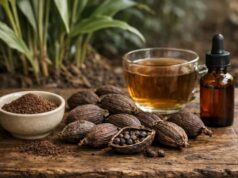
Betel leaf (Piper betle) is a glossy, heart-shaped leaf from a tropical climbing vine that has been used for centuries across South and Southeast Asia. It is best known for its cultural role in “betel chewing,” but the leaf itself is also a traditional medicinal plant—valued for its warming, aromatic character and its ability to support oral freshness, digestive comfort, and skin hygiene when used appropriately. The leaf contains a distinctive blend of phenolic compounds and essential-oil constituents that help explain its antimicrobial and antioxidant reputation, especially in topical and oral-care preparations.
At the same time, betel leaf carries an important public-health caveat: many people consume it as part of betel quid with areca nut, slaked lime, and sometimes tobacco—combinations linked to serious oral disease. This article separates the leaf’s potential wellness uses from the risks of quid chewing, then offers practical ways to use betel leaf more safely, including realistic dosage ranges, common mistakes to avoid, and who should not use it.
Key Takeaways
- Betel leaf may support oral freshness and plaque control when used as a rinse or short-term mouthwash.
- It may aid mild post-meal bloating due to its aromatic, carminative compounds.
- Typical tea range is 1–3 fresh leaves or 1–2 g dried leaf per 250 mL, up to 1–2 times daily.
- Avoid betel quid with areca nut or tobacco due to major oral health risks.
- Avoid if pregnant, breastfeeding, under 18, or with oral lesions, unless a clinician advises otherwise.
Table of Contents
- What is betel leaf?
- Key ingredients in betel leaf
- Benefits and realistic outcomes
- Does betel leaf support oral health?
- How to use betel leaf
- How much betel leaf per day?
- Side effects, interactions, and evidence
What is betel leaf?
Betel leaf comes from Piper betle, a perennial vine in the pepper family (Piperaceae). The plant climbs with the help of supports, producing smooth, bright green leaves with a strong, spicy aroma. In daily life, the leaf is used in two very different ways: as a traditional chew (often wrapped around other ingredients) and as a medicinal leaf prepared as a tea, rinse, or topical wash. Those uses should not be treated as interchangeable, because the risk profile depends less on the leaf and more on what you combine with it and how frequently you use it.
One of the most common sources of confusion is language: people often say “betel nut” when they mean areca nut, and “betel leaf” when they mean the entire betel quid mixture. Betel leaf is the wrapper; areca nut is the hard seed that is frequently chewed inside the wrap. This distinction matters because safety concerns concentrate around the quid habit and areca nut exposure rather than occasional culinary or topical use of the leaf alone.
Betel leaf is also easy to mix up with other “chewing leaves” used regionally. Always confirm the botanical name if you are using it for a health purpose, especially in a supplement or extract. Fresh leaves should smell distinctly aromatic when torn, with a sharp, peppery-green note. Dried leaves and powders vary widely in quality and can lose key volatile compounds over time.
If you are curious how Piper betle fits into the broader pepper family from a wellness perspective, the overview of black pepper benefits and uses offers helpful context on how Piper-family plants tend to combine aromatic oils with polyphenols, and why form and dose matter.
From a practical standpoint, betel leaf is best approached as a “functional leaf” rather than a daily essential supplement. Used occasionally as a rinse, tea, or small culinary addition, it can be a supportive tool. Used as a frequent chew—especially when paired with areca nut or tobacco—it becomes a very different decision with much higher stakes.
Key ingredients in betel leaf
Betel leaf’s effects are best explained by its combination of phenolic compounds and aromatic essential-oil constituents. This chemistry gives the leaf its unmistakable smell and helps explain why many traditions use it for oral freshness, topical cleansing, and “warming” digestive support. The challenge is variability: different cultivars, growing conditions, and extraction methods can shift the balance of active compounds, which is why two betel-leaf products may feel surprisingly different.
A commonly discussed hallmark compound is hydroxychavicol (also called 4-allylpyrocatechol in some scientific contexts). It is a phenolic compound associated with antioxidant activity and antimicrobial effects in laboratory research. Betel leaf is also known for related phenolics such as chavibetol (often described as betel phenol) and may contain eugenol and other phenylpropanoids depending on the chemotype. These molecules are part of what gives the leaf its spicy, clove-like edge and contributes to the “cleaning” sensation many people notice in oral use.
Alongside phenolics, betel leaf contains terpenes and other volatile compounds that influence aroma and may contribute to antimicrobial activity in vitro. Volatiles tend to be more abundant in fresh leaves and in essential oils, but essential oils are also where safety concerns can rise, because concentration increases exposure dramatically.
Betel leaf also contains general plant nutrients in small amounts—trace minerals and vitamins—but its wellness value is not primarily nutritional. It behaves more like a botanical “active leaf” than a meaningful dietary source of micronutrients.
To translate chemistry into practical use, it helps to map the compound families to the most likely outcomes:
- Phenolics (such as hydroxychavicol): often associated with antioxidant behavior and antimicrobial activity in lab models.
- Volatile oils: often associated with aroma-driven digestive comfort and a freshening mouthfeel.
- Tannins and other polyphenols (in smaller amounts): may contribute to an astringent feel in the mouth, which some people interpret as “tightening” or cleansing.
A key safety insight is also chemical: concentrated extracts and essential oils amplify exposure to phenolics and volatiles. That can increase benefits in a lab setting, but it can also increase irritation, nausea, and mouth or skin sensitivity in real-world use. For most readers, the safest “sweet spot” is still modest, short-term use in traditional forms: rinses, mild teas, or topical washes on intact skin.
Benefits and realistic outcomes
Betel leaf is often described as a multipurpose traditional remedy, but modern readers benefit from a clearer lens: which benefits are plausible in daily life, and which are mostly based on early research? In practical use, betel leaf tends to perform best when goals are local and symptom-focused—especially oral comfort, breath freshness, and minor skin hygiene—rather than broad claims such as “detox,” “immune boosting,” or disease treatment.
1) Oral freshness and comfort
This is the most intuitive benefit because the leaf is aromatic and contains compounds with antimicrobial activity in laboratory studies. Many people describe a noticeably “clean” mouthfeel after rinsing with betel leaf infusion. Realistically, that can support fresher breath and short-term comfort, especially when combined with brushing, flossing, and tongue cleaning. It is not a substitute for dental care, and it is not a reliable treatment for periodontal disease, but it may be a useful adjunct.
2) Mild digestive support
Aromatic “warming” plants are often used for mild bloating, sluggish digestion, or post-meal heaviness. Betel leaf may support this in two ways: it can stimulate saliva and digestive secretions through taste and aroma, and it may reduce discomfort through carminative effects. In practice, this tends to be subtle and works best for occasional use, such as after a heavy meal.
3) Topical cleansing for minor skin concerns
Traditional use often includes leaf washes for small areas of irritation, sweaty skin, or minor cuts and scratches. The goal is hygiene support and comfort rather than rapid healing of serious wounds. If your skin is reactive, this is also where patch testing matters most.
4) Antioxidant and inflammation balance
Much of the excitement around betel leaf in modern research relates to antioxidant markers and inflammation signaling in preclinical models. That does not automatically translate to strong, felt benefits in humans. A grounded way to interpret this category is: betel leaf contains antioxidant-active compounds, but that alone is not a reason for high-dose supplementation.
Benefits to treat cautiously
You may see claims about blood sugar, cholesterol, liver health, or anticancer effects. Some preclinical research supports these directions, but human evidence is limited and not sufficient for self-treatment—especially given the broader public-health harms tied to betel quid chewing. If you have a medical condition, treat betel leaf as an optional adjunct only, and involve a clinician before using extracts.
Overall, the most realistic outcome profile looks like this: betel leaf may help you feel fresher and more comfortable locally (mouth, mild digestion, small skin areas), and it may offer supportive antioxidant activity—but it is not a low-risk daily habit when used as a chew, and it is not a replacement for diagnosis-driven care.
Does betel leaf support oral health?
Oral health is where betel leaf is both most interesting and most misunderstood. On one hand, the leaf contains compounds studied for antimicrobial activity and has been explored in mouthwash and dentifrice-style products. On the other hand, the most common real-world way people consume betel leaf—betel quid chewing—has strong associations with oral disease when it includes areca nut and especially tobacco. To use betel leaf responsibly for oral care, you have to separate “leaf as a rinse” from “quid as a habit.”
Where it may help
Used as a mouth rinse or in a well-formulated oral product, betel leaf may support:
- Fresher breath through a strong aromatic profile
- Reduced plaque regrowth over short windows when used consistently
- A calmer mouth feel in people who experience mild gum irritation, especially after dental cleaning
The most realistic effect is incremental: a supportive addition to brushing and flossing, not a replacement. If you have gingivitis or periodontitis, the foundation remains professional cleaning, daily mechanical plaque removal, and risk-factor management.
How to use it without inheriting quid risk
If your goal is oral support, aim for these “safer use” patterns:
- Choose a rinse or short infusion, not a chew held in the mouth for long periods.
- Avoid adding areca nut, tobacco, or slaked lime.
- Keep exposure time limited: rinse for 30–60 seconds, then spit.
If you prefer herbal oral traditions, betel leaf is sometimes compared with clove-based strategies because both can contain eugenol-like aromatic notes. The guide to clove benefits for oral comfort and pain relief provides a useful contrast: clove is often used in very small, localized amounts due to its potency, and betel leaf should be approached with similar respect for concentration and irritation potential.
What to avoid
Avoid using betel leaf for oral care if you have:
- Mouth ulcers that do not heal within two weeks
- White patches, red patches, thickened areas, or unexplained mouth pain
- Bleeding gums that worsen, loose teeth, or persistent bad breath despite good hygiene
These can be signs that need dental evaluation. Also avoid “self-medicating” with betel quid if your intent is oral health. The cultural practice is complex and meaningful for many communities, but from a health standpoint, the combination of areca nut and tobacco is the main risk driver, and frequent chewing is not a safe oral-care strategy.
A practical rule: if you want betel leaf’s oral benefits, keep it in the category of “rinse or short-term product use,” not “daily chew.”
How to use betel leaf
Betel leaf can be used in several forms, and the safest choice depends on your goal. In general, the lowest-risk approaches are brief oral rinses and mild teas, while the highest-risk approaches involve chewing mixtures that include areca nut or tobacco. Extracts and essential oils sit in the middle: potentially useful, but easier to overdo.
1) Fresh leaf (culinary or brief oral use)
Fresh leaf is commonly used for aroma and mouth feel. If you use it for wellness:
- Tear the leaf to release aroma and use small amounts.
- For oral freshness, prefer a rinse (below) rather than prolonged chewing.
- If you do chew the leaf alone, keep it brief and occasional, and do not combine with areca nut, tobacco, or lime.
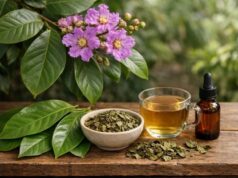
2) Betel leaf tea (mild infusion)
Tea is best framed as short-term, occasional support for digestive comfort or general warming.
- Use fresh leaves or dried leaf.
- Pour hot water over the leaf and steep 10–15 minutes, then strain.
- Keep the tea mild at first; overly strong preparations can cause nausea.
3) Mouth rinse or gargle (most targeted use)
For oral support, a rinse can deliver benefits locally without turning betel leaf into a chewing habit.
- Use a cooled infusion.
- Swish 30–60 seconds and spit.
- Use once or twice daily for a short window (for example, 1–2 weeks), then reassess.
4) Topical wash (intact skin only)
A cooled infusion can be used as a wash for small areas of sweaty irritation, minor superficial concerns, or as part of a hygiene routine. Patch test first, and avoid eyes and mucous membranes. If you’re managing skin that is prone to microbial imbalance, some people compare botanical washes with essential-oil approaches; the overview on tea tree uses and safety can help you understand why dilution and skin tolerance matter.
5) Extracts and essential oil (high-caution category)
These forms concentrate active compounds and can increase both effectiveness and irritation risk.
- Choose products with clear labeling of plant part and concentration.
- Avoid internal use of essential oil unless under professional supervision.
- For topical use, dilute appropriately and patch-test.
A smart way to think about form choice: if you want a “felt” benefit quickly, you are more likely to reach for concentrated forms—but that is also where adverse effects and misuse become more likely. For most readers, betel leaf works best as a local, time-limited tool: rinse, mild tea, or diluted wash, used with a clear purpose and a clear stop point.
How much betel leaf per day?
Betel leaf dosage depends heavily on the form. Fresh leaves used in food or mild tea are very different exposures than extracts or essential oils. Because standardized products are inconsistent and human dosing studies are limited, the safest approach is conservative dosing with short durations and frequent reassessment.
Fresh leaf (food-level use)
For culinary or occasional wellness use:
- 1–2 fresh leaves per day is a conservative range for short trials.
- If you use it purely as a flavoring, smaller amounts are common and typically well tolerated.
If you notice mouth irritation, nausea, or headache, reduce the amount or stop.
Tea (infusion)
A practical adult range is:
- Fresh leaf: 1–3 leaves per 250 mL hot water, steep 10–15 minutes
- Dried leaf: 1–2 g per 250 mL hot water, steep 10–15 minutes
- Frequency: once daily, up to twice daily for short periods
Duration: 7–14 days, then take a break and reassess. If your goal is digestive comfort after meals, use tea after your largest meal rather than all day.
Mouth rinse
For oral support, dosing is more about frequency than volume:
- Use a cooled infusion, swish 30–60 seconds, then spit
- Once daily to start, up to twice daily
- Trial window: 1–2 weeks, then reassess
Tincture or extract (if used)
Because concentrations vary, follow a product’s label only when it clearly states dosage, concentration, and plant part. A cautious starting point for many herbal tinctures is:
- 1–2 mL, up to 1–2 times daily, short-term
Avoid stacking multiple betel products (tea plus tincture plus chew) because cumulative exposure increases irritation risk.
Timing and spacing considerations
- If you take medications for blood sugar, blood pressure, or clotting, separate betel leaf supplements from medicines and monitor for changes.
- If betel leaf causes stomach upset, take it after food rather than on an empty stomach.
- If oral use causes burning or dryness, dilute further or reduce frequency.
A simple dosing philosophy keeps most people safer: aim for the smallest amount that achieves your goal, and avoid turning betel leaf into a daily, indefinite habit—especially in chew form.
Side effects, interactions, and evidence
Betel leaf is often described as “natural,” but natural does not mean risk-free. Most safety concerns fall into three categories: irritation from active compounds, interactions with medications or chronic conditions, and the major public-health risks tied to betel quid chewing practices.
Common side effects
- Mouth irritation or burning (more likely with strong rinses, prolonged chewing, or essential oil exposure)
- Nausea, reflux, or stomach upset (often dose-related)
- Headache or dizziness in sensitive individuals (often related to strong aromas or concentrated extracts)
- Skin irritation or contact dermatitis with topical use (especially undiluted extracts)
If irritation occurs, stop, dilute future preparations, and avoid using on broken skin or sore mucosa.
The betel quid safety line
The most important safety message is behavioral: betel quid chewing—especially with areca nut and tobacco—has strong links to oral disease and cancer risk. Even without tobacco, areca nut exposure is a major concern, and slaked lime can increase mucosal irritation. This is why betel leaf’s potential benefits should be pursued through safer forms (rinses, mild tea, topical washes) rather than quid-style chewing.
If you currently chew betel quid, the most meaningful harm reduction step is to stop or reduce use and avoid tobacco-containing preparations, while seeking dental screening—especially if you have mouth pain, tightness, or lesions. Betel leaf itself is not the primary culprit in most risk assessments; the mixture and frequency are.
Interactions and caution groups
Because human clinical data is limited, interaction guidance is cautious rather than absolute. Be conservative if you take:
- Anticoagulants or antiplatelet drugs (bleeding risk management is complex)
- Diabetes medications (some preclinical work suggests glucose-related effects; monitor for lows)
- Medications that already irritate the stomach (adding a pungent leaf may worsen reflux)
Avoid betel leaf supplements (and especially essential oils) if you are pregnant, breastfeeding, under 18, or have chronic liver or kidney disease unless a clinician advises otherwise.
What the evidence actually supports
The strongest modern evidence for betel leaf leans toward antimicrobial activity and oral-care applications, with additional preclinical evidence for antioxidant and inflammation-related pathways. However:
- Many studies are in vitro or animal-based, which limits direct translation to human dosing.
- Products vary, making “effective dose” difficult to generalize.
- Oral-health trials often use formulated extracts, not home tea preparations.
A responsible conclusion is that betel leaf can be a useful, targeted botanical—especially as an oral rinse or topical wash—while the cultural chew practice can carry substantial risk when it includes areca nut or tobacco. If you want benefits without inheriting that risk, choose brief, local use and keep the duration limited.
References
- Betelvine (Piper betle L.): A comprehensive insight into its ethnopharmacology, phytochemistry, and pharmacological, biomedical and therapeutic attributes – PMC 2022 (Review). ([PMC][1])
- Piper betle (L): Recent Review of Antibacterial and Antifungal Properties, Safety Profiles, and Commercial Applications – PMC 2021 (Review). ([PMC][2])
- A Scoping Review on Medicinal Properties of Piper betle (Sirih) Based on Malay Medical Manuscripts and Scientific Literatures – PMC 2023 (Scoping Review). ([PMC][3])
- Hydroxychavicol as a potential anticancer agent (Review) – PMC 2022 (Review). ([PMC][4])
- IARC Publications Website – Betel-quid and Areca-nut Chewing and Some Areca-nut-derived Nitrosamines 2004 (Monograph). ([IARC Publications][5])
Disclaimer
This article is for educational purposes only and does not provide medical advice, diagnosis, or treatment. Herbal products can cause side effects and may interact with medications. Betel leaf is commonly used in cultural preparations that may include areca nut and tobacco; these combinations are associated with serious oral health risks. If you are pregnant, breastfeeding, under 18, have oral lesions, take prescription medicines (especially blood thinners or diabetes drugs), or have persistent symptoms, consult a qualified healthcare professional before using betel leaf or any concentrated herbal product. Seek prompt medical or dental evaluation for non-healing mouth sores, unexplained oral pain, persistent bleeding gums, rapidly spreading skin redness, or severe allergic reactions.
If you found this guide helpful, please share it on Facebook, X (formerly Twitter), or your preferred platform so others can make informed, safety-first choices.