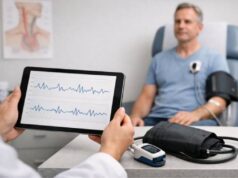
Bilateral bundle branch block is an electrocardiogram (ECG) finding that signals conduction disease in both of the heart’s main ventricular “wires.” People often learn about it unexpectedly—after an ECG for a checkup, pre-op clearance, or an episode of dizziness. The term can sound alarming, but its importance depends on the pattern and the person: some cases are stable for years, while others warn that the remaining conduction pathway is fragile and could fail intermittently.
This article explains what clinicians mean by bilateral bundle branch block, why it happens, and how it can affect blood flow and symptoms. You will also learn how it is evaluated (especially after fainting or heart procedures), what treatments are most effective, and how to reduce risk and know when urgent care is needed.
Table of Contents
- What it is and why it matters
- Causes and risk factors
- Symptoms and complications
- How it is diagnosed
- Treatment and what to expect
- Long-term management and when to seek care
What it is and why it matters
Your heart beats because an electrical impulse travels through a specialized conduction network. After the impulse passes the atrioventricular (AV) node, it enters the His-Purkinje system, which splits into the right bundle branch (supplying the right ventricle) and the left bundle branch (supplying the left ventricle). The left bundle further divides into two major pathways (fascicles) that distribute the signal across the left ventricle.
“Bilateral bundle branch block” is not one single ECG label with one fixed definition. Clinicians use it to describe disease involving both bundle branches, often in one of these practical scenarios:
- Alternating bundle branch block: the ECG shows right bundle branch block (RBBB) at one time and left bundle branch block (LBBB) at another, sometimes even beat-to-beat. This strongly suggests advanced conduction disease across both sides.
- Evidence of conduction disease in two pathways with concern for the third: for example, RBBB plus a left fascicular block (often called bifascicular block) with additional AV conduction delay. Some clinicians use “bilateral” to emphasize that the left system and right system are both affected.
- Intermittent or procedure-related new bundle branch block patterns that imply widespread injury or pressure on the conduction tissue (such as after valve procedures).
Why does this matter? The ventricles need timely, coordinated activation to pump efficiently. When a bundle is blocked, activation must detour through slower cell-to-cell pathways. That can cause:
- Electrical delay (a wider QRS on ECG) and less synchronized contraction
- Reduced pumping efficiency in some people, especially with LBBB-related dyssynchrony
- A higher risk of progression to high-grade AV block when conduction disease is extensive, meaning the atrial signal may fail to reach the ventricles intermittently or persistently
A useful way to think about bilateral bundle branch block is “reduced redundancy.” If both sides of the system show disease, the remaining pathways may be operating close to their limits. Many people still do well—especially if they have no symptoms and no structural heart disease—but the finding deserves careful context: Was it present on older ECGs? Is it new after a procedure or a heart attack? Has the person fainted or had near-fainting? Those details determine whether it is a stable marker or a warning signal.
Causes and risk factors
Bilateral bundle branch block typically reflects an underlying process that affects the conduction system, the surrounding heart muscle, or the blood supply feeding those tissues. The causes fall into patterns that are clinically useful because they guide urgency, testing, and long-term planning.
Age-related and degenerative conduction disease
One of the most common causes is progressive fibrosis and calcification of the conduction system with age. Over time, the “insulation” and tissue architecture change, and conduction slows or fails. This process is more likely when there is calcification of nearby structures (for example, the aortic valve and the cardiac skeleton), because conduction tissue sits close to those regions.
Coronary artery disease and prior heart attack
Reduced blood flow and infarction can injure conduction pathways. Some people develop new bundle branch block during an acute ischemic event; others develop it later due to scarring. In this setting, clinicians pay extra attention to symptoms, ECG evolution, and evidence of ongoing ischemia.
Cardiomyopathies and structural heart disease
Conduction abnormalities often accompany cardiomyopathy, including dilated cardiomyopathy, hypertrophic disease, and heart failure syndromes. Infiltrative diseases such as amyloidosis and sarcoidosis can also involve conduction tissue, sometimes producing fluctuating blocks that progress unpredictably.
Inflammation, infection, and metabolic contributors
Myocarditis and systemic inflammatory conditions can irritate the conduction network. Thyroid disease and severe electrolyte abnormalities can worsen conduction stability or unmask latent disease, especially when combined with medications that slow AV conduction.
Procedures and device-related injury
Valve interventions—particularly aortic valve replacement, including transcatheter approaches—can compress or injure conduction tissue. New LBBB or RBBB after such procedures is common enough that many centers use structured monitoring pathways to detect delayed high-grade block. Prior septal interventions and some congenital heart repairs can also increase risk.
Medications and genetic predisposition
Medications rarely “cause” bundle branch block in isolation, but they can expose conduction disease by slowing AV nodal conduction or lowering heart rate (for example, beta blockers, non-dihydropyridine calcium channel blockers, digoxin, and some antiarrhythmics). A smaller subset of patients have inherited channel or conduction disorders that progress over time; family history of conduction disease or sudden unexplained death raises suspicion.
Risk increases with age, hypertension, diabetes, chronic kidney disease, valve calcification, and known structural heart disease. The most actionable takeaway is this: bilateral bundle branch block is usually a sign of an underlying substrate. Identifying whether that substrate is stable (chronic fibrosis) or active (ischemia, inflammation, post-procedure injury) shapes the next steps.
Symptoms and complications
Many people with bilateral bundle branch block feel completely well. The ECG finding itself does not always cause symptoms. When symptoms occur, they usually come from one of two mechanisms: the heart’s rate becomes too slow or pauses occur due to intermittent high-grade block, or the underlying heart disease associated with conduction problems produces symptoms.
Symptoms that may occur
Possible symptoms include:
- Dizziness or lightheadedness, especially when standing or during exertion
- Near-fainting or fainting (syncope), particularly sudden episodes without warning
- Fatigue and reduced exercise tolerance, sometimes described as “running out of power”
- Shortness of breath or reduced stamina if dyssynchrony contributes to inefficient pumping (more common with LBBB patterns and existing heart weakness)
- Chest discomfort when bundle branch block appears in the context of ischemia or heart failure exacerbation
People sometimes report palpitations, but bundle branch block itself is not typically a palpitations generator. Palpitations usually reflect extra beats or tachyarrhythmias that coexist with conduction disease rather than the block alone.
Why fainting matters in this context
Syncope is the symptom that most sharply changes risk. In advanced conduction disease, the signal may intermittently fail below the AV node, leading to sudden pauses or a very slow “escape” rhythm. The episode can be abrupt and may cause injury from falls. Not every fainting episode is due to heart block—vasovagal syncope and orthostatic hypotension are common—but bilateral conduction disease lowers the threshold for a more urgent cardiac evaluation.
Potential complications
Clinicians are mainly concerned about:
- Progression to high-grade AV block (Mobitz II or complete heart block), which can cause dangerous pauses and recurrent syncope
- Bradycardia-related complications, such as falls, fractures, or reduced cerebral perfusion
- Heart failure worsening in people where conduction delay increases dyssynchrony, especially with LBBB and reduced left ventricular function
- Post-procedure delayed heart block, where conduction deteriorates hours to days after an intervention, even if the immediate post-op rhythm looked acceptable
Warning signs that warrant urgent evaluation
Seek urgent care if you have bilateral bundle branch block and develop:
- Fainting or repeated near-fainting, especially sudden episodes without a clear trigger
- Chest pressure, severe shortness of breath, or new heart failure symptoms at rest
- Confusion, profound weakness, or signs of poor circulation after an episode
- A very slow pulse with symptoms (for many adults, persistent marked bradycardia with dizziness is concerning)
In short, symptoms determine significance. The same ECG pattern can be an incidental marker in one person and a high-risk signal in another, especially when syncope or recent cardiac procedures are part of the story.
How it is diagnosed
Diagnosis involves more than confirming a wide QRS on ECG. The clinical goal is to determine whether the conduction disease is stable, whether it is new or evolving, and whether it is causing intermittent high-grade block or contributing to reduced heart function.
Electrocardiogram and pattern recognition
A 12-lead ECG is the starting point. Clinicians look for:
- RBBB, LBBB, or alternating patterns over time
- QRS width and axis changes that suggest multi-level conduction disease
- PR interval prolongation or other AV conduction delay
- Evidence of ischemia, prior infarction, or additional conduction abnormalities
Comparison with prior ECGs is crucial. A chronic, unchanged pattern is usually less urgent than a new or fluctuating one—especially after a procedure or during acute illness.
History, exam, and context
A careful history often determines the entire workup. Key details include:
- Any fainting or near-fainting, including posture, triggers, warning symptoms, and recovery time
- Exercise-related symptoms, chest pressure, or new breathlessness
- Medication list, including rate-slowing drugs and over-the-counter decongestants
- Recent cardiac procedures, infections, or inflammatory diagnoses
- Family history of conduction disease or sudden unexplained death
The physical exam focuses on heart rate, blood pressure patterns (including orthostatic changes when appropriate), signs of heart failure, and valve disease clues.
Laboratory tests and echocardiography
Testing is individualized, but common elements include electrolytes (especially potassium and magnesium) and thyroid testing when clinically indicated. An echocardiogram is often used to assess:
- Left ventricular ejection fraction and overall function
- Chamber size and wall thickness
- Valve disease, especially aortic valve pathology
- Clues to cardiomyopathy or infiltrative processes
Rhythm monitoring and inpatient telemetry
If symptoms are intermittent, ambulatory monitoring can capture transient high-grade block:
- Short-term monitors when symptoms are frequent
- Longer patch monitoring when symptoms occur weekly or less
- Implantable loop recorders when syncope is rare but high-risk
In post-procedure settings or when symptoms are concerning, clinicians may use inpatient telemetry to detect evolving conduction issues or pauses.
Electrophysiology study in selected cases
When syncope is unexplained and conduction disease is significant, an electrophysiology study may be used to evaluate infra-Hisian conduction (below the AV node). Measurements such as the HV interval and responses to pacing can help identify a fragile conduction system that may benefit from pacing even if routine monitoring has not yet captured complete block.
A good diagnostic strategy is “proof when possible, protection when necessary.” Capturing the rhythm during symptoms is ideal, but in high-risk contexts—such as alternating bundle branch block with syncope—clinicians may prioritize preventing dangerous pauses.
Treatment and what to expect
Treatment depends on symptoms, the likelihood of progression to high-grade AV block, and the presence of structural heart disease. Many patients do not need immediate intervention, but some benefit from pacing or resynchronization strategies that protect safety and improve function.
Addressing underlying and reversible contributors
Clinicians first look for treatable drivers that can worsen conduction stability:
- Correct electrolyte abnormalities (especially potassium and magnesium)
- Reassess medications that slow heart rate or AV conduction when safe to adjust
- Evaluate and treat ischemia when suspected
- Treat inflammation or infiltrative disease when identified
- Manage contributing conditions such as sleep apnea and uncontrolled thyroid disease
These steps may not reverse established bundle branch block, but they can reduce the chance of symptomatic bradycardia and improve overall stability.
When pacing becomes the main treatment
A permanent pacemaker is typically considered when there is evidence of high-grade AV block or a strong likelihood that conduction will fail intermittently. Scenarios that often lead to pacing include:
- Documented Mobitz II or complete heart block
- Symptomatic bradycardia attributable to conduction disease
- Alternating bundle branch block, especially when accompanied by syncope or signs of intermittent AV block
- Post-procedure conduction deterioration that does not resolve and poses a safety risk
Some patients need temporary pacing support in acute settings, such as during an evolving conduction crisis or while awaiting a decision after a procedure.
Resynchronization and physiologic pacing options
In people with LBBB patterns and reduced left ventricular function, dyssynchrony can worsen heart failure. In these cases, clinicians may consider pacing strategies designed to restore coordinated contraction, such as cardiac resynchronization therapy or conduction system pacing approaches. The best choice depends on ejection fraction, QRS pattern and duration, symptom burden, and anticipated pacing needs.
What to expect if a device is recommended
For most patients, pacemaker implantation is a short hospital stay or same-day procedure. Typical expectations include:
- Activity restrictions for several weeks to protect the lead position
- Device checks to optimize settings and ensure good sensing and capture
- Long-term follow-up to monitor battery and lead performance
A key reassurance: the goal of pacing in conduction disease is often straightforward—prevent pauses and dangerous bradycardia, reduce syncope risk, and improve daily function. When dyssynchrony is part of the problem, advanced pacing strategies may also improve heart failure symptoms over time.
The best treatment plan is explicit about the “why”: whether the priority is symptom relief, fall prevention, post-procedure protection, or heart failure optimization.
Long-term management and when to seek care
Living with bilateral bundle branch block is largely about structured follow-up and clear thresholds for action. The aim is to stay safe without letting an ECG label dominate your daily life.
Day-to-day management that helps
Practical steps that reduce risk and improve communication with your care team include:
- Keep an updated medication list, including over-the-counter products and supplements
- Ask specifically whether any drugs you take can slow heart rate or AV conduction
- Maintain steady hydration and avoid extreme dehydration during illness or heat
- Prioritize sleep quality and evaluate possible sleep apnea if snoring, daytime sleepiness, or resistant hypertension is present
- Manage cardiovascular risk factors (blood pressure, diabetes, cholesterol, smoking cessation), because conduction disease often travels with broader heart disease
If you use a home blood pressure cuff or wearable, focus on patterns tied to symptoms rather than reacting to single readings. An irregular or slow pulse becomes meaningful when it matches dizziness, near-fainting, or sudden fatigue.
Follow-up planning
Follow-up is usually more structured if you have:
- Syncope or recurrent presyncope
- Recent cardiac procedures with new or changing conduction findings
- Structural heart disease or reduced ejection fraction
- Evidence of worsening conduction on serial ECGs (for example, new PR prolongation or alternating patterns)
Your clinician may recommend periodic ECGs, repeat monitoring, or device checks if a pacemaker has been implanted. If a pacemaker is present, learn the early signs of device-pocket infection (increasing redness, swelling, drainage, fever) and seek prompt care if they appear, especially in the first weeks.
Safety planning after fainting or near-fainting
If you have had syncope, discuss a specific safety plan, including:
- What to do if symptoms recur (who to call and where to go)
- Whether short-term activity limits are sensible until evaluation is complete
- How to recognize warning symptoms that suggest bradycardia or pauses
This is not about fear; it is about preventing avoidable injuries while the cause is clarified.
When to seek urgent evaluation
Seek urgent care if you experience:
- Fainting, especially sudden episodes without warning
- Chest pressure, severe shortness of breath, or symptoms at rest
- Repeated near-fainting spells over days to weeks
- A slow pulse with significant dizziness, confusion, or weakness
- New symptoms soon after a valve procedure or other cardiac intervention
A helpful way to frame it is simple: if your symptoms could plausibly reflect intermittent heart block, treat it as urgent until proven otherwise. With timely monitoring and appropriate pacing when needed, most people can return to normal activities with a clear, reassuring plan.
References
- 2021 ESC Guidelines on cardiac pacing and cardiac resynchronization therapy 2021 (Guideline)
- 2023 HRS/APHRS/LAHRS guideline on cardiac physiologic pacing for the avoidance and mitigation of heart failure 2023 (Guideline)
- Randomized Pragmatic Trial of Pacemaker Versus Implantable Cardiac Monitor in Syncope and Bifascicular Block 2022 (RCT)
- Management of conduction disturbances after TAVI: the last step towards early discharge 2025 (Review)
Disclaimer
This article is for educational purposes only and does not provide medical advice, diagnosis, or treatment. Bilateral bundle branch block can be stable in some people and high-risk in others, particularly when fainting, chest pressure, shortness of breath at rest, new heart failure symptoms, or recent cardiac procedures are present. If you develop syncope, near-syncope, severe dizziness, chest pain, or sudden breathlessness, seek urgent medical evaluation. Always discuss ECG findings, medication changes, monitoring plans, and device decisions with a qualified clinician who can assess your individual risks and health history.
If you found this article helpful, please share it on Facebook, X (formerly Twitter), or any platform you prefer, and follow us on social media. Your support through sharing helps our team continue producing clear, reliable health content.