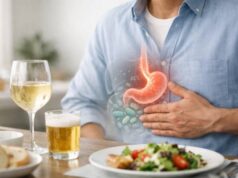
Hormonal birth control is often discussed in terms of periods, skin, and pregnancy prevention, but many people notice changes that feel more “gut-specific”: new bloating, altered bowel habits, nausea, or IBS symptoms that seem to flare on a new pill or settle with an IUD. That makes sense. Reproductive hormones help regulate digestion, the immune system in the intestinal lining, and how bile acids move through the gut. When contraception changes hormone levels or smooths out monthly swings, it can shift motility, fluid balance, and even the kinds of microbes that thrive.
The good news is that most digestive effects are manageable and often temporary, especially during the first few cycles. The more important task is separating normal adjustment from signs you should change methods or get evaluated—particularly if you have inflammatory bowel disease (IBD) or red-flag symptoms.
Essential Insights
- Digestive changes after starting birth control are common and often improve within 8–12 weeks.
- Some people with IBS find symptoms stabilize on steady hormones, while others notice more bloating, constipation, or nausea.
- Research suggests a small relative increase in IBD risk with longer exposure to estrogen-containing methods, but absolute risk remains low.
- If you already have IBD, method choice should consider clot risk, disease activity, and medication interactions—not gut symptoms alone.
- A simple 2-week symptom and food log can clarify whether a flare is hormone-timed, diet-driven, or a sign the method is not a good fit.
Table of Contents
- How hormones shape digestion and bile
- IBS flares and symptom patterns
- IBD risk what research suggests
- Choosing a method with gut symptoms
- Microbiome support while using contraception
- When to talk to a clinician
How hormones shape digestion and bile
If your gut feels different after starting or changing birth control, it is rarely “all in your head.” Estrogen and progestins can influence digestion through several overlapping pathways—some fast (days to weeks), others slower (months).
Motility and the “pace” of the intestines
Progesterone-like hormones tend to relax smooth muscle. In the gut, that can translate into slower transit for some people, which may show up as constipation, a heavy feeling after meals, or more time for gas to build. Estrogen effects are more mixed; for some, steadier estrogen levels can reduce the month-to-month swings in motility that drive cyclic diarrhea or constipation, while others notice nausea or looser stools early on.
Fluid balance and sensitivity
Hormones can also affect how the colon handles water and electrolytes. Small shifts can matter if you already have a “sensitive” bowel—meaning a colon that overreacts to normal stretching, gas, or mild inflammation. This sensitivity is a core feature of IBS, and it is one reason why a modest change in transit time can feel dramatic.
Bile acids and post-meal symptoms
Bile acids are made in the liver, stored in the gallbladder, and released to help digest fat. If bile acids reach the colon in higher amounts, they can pull water into the bowel and trigger urgency, burning diarrhea, or cramping after meals. Some people are prone to bile-acid–related diarrhea, and hormone shifts can unmask it. Others experience the opposite pattern: slower bile flow and sluggish digestion that feels like nausea, bloating, or intolerance to richer foods.
The gut barrier and immune signaling
The intestinal lining is a busy immune organ. Estrogen can influence immune activity and the integrity of the gut barrier. These effects do not automatically cause disease, but they help explain why some people with inflammatory conditions notice symptom changes with estrogen-containing methods.
A practical takeaway: the first 2–3 cycles on a new method are an adaptation window. During that time, it is normal to see mild nausea, appetite changes, bloating, or altered stools—especially if you switch doses or delivery routes (pill vs ring vs patch). If symptoms steadily improve, that trend usually matters more than any one bad day.
IBS flares and symptom patterns
IBS is a disorder of gut-brain interaction: the bowel is structurally normal, but it is more reactive. Because IBS symptoms often track stress, sleep, food choices, and the menstrual cycle, it is easy to blame birth control—or miss the real trigger.
Why IBS can flare after starting birth control
Common early side effects overlap with IBS symptoms:
- Nausea that changes meal timing, caffeine intake, or snacking patterns
- Bloating from slower transit or altered gas handling
- Constipation from reduced motility and less spontaneous stooling
- Looser stools if bile acids reach the colon more readily or if anxiety rises during the transition
In practice, IBS flares often happen for indirect reasons: a new pill causes mild nausea, you eat less fiber and more bland starches, you drink less water, stools slow down, and bloating escalates. That chain can look hormonal even when the driver is behavioral change plus a sensitive gut.
When birth control can help IBS symptoms
Some people get fewer flares on stable hormone levels because monthly swings can be a trigger. If cramps, diarrhea, or constipation predictably worsen in the late luteal phase or during bleeding, a steady hormonal method may flatten that pattern. Extended or continuous regimens (fewer hormone-free days) can also reduce cyclic symptoms for certain patients—though this should be personalized.
A simple way to detect a hormone-timed pattern
For two weeks (or ideally one full cycle), track four items daily:
- Stool form (use a 1–7 scale if you like)
- Urgency and pain (0–10)
- Bloating or visible distention (0–10)
- Hormone timing (active pills vs placebo days, ring-free week, shot timing, or IUD insertion date)
Then add only one or two context notes: major stress, alcohol, unusually high-FODMAP meals, or a missed dose. This keeps the log useful rather than overwhelming.
Clues that it is more than IBS
IBS does not cause blood in stool, persistent fever, waking from sleep with diarrhea, or unexplained weight loss. If any of those appear—especially after a contraception change—do not assume it is “just IBS.” Get evaluated.
The goal is not perfection. The goal is a clear pattern: improving adaptation, stable improvement, or persistent worsening that signals a method mismatch.
IBD risk what research suggests
IBD includes Crohn’s disease and ulcerative colitis. Unlike IBS, IBD involves measurable inflammation and can lead to anemia, nutrient deficiencies, and complications outside the gut. People understandably worry about whether birth control can “cause” IBD or trigger it in someone who is predisposed.
Relative risk vs absolute risk
Large observational datasets have reported that estrogen-containing oral contraceptives are associated with a modest increase in IBD risk, with higher estimates in long-term use. Reported effect sizes often fall in the range of about 1.3–1.6 times baseline risk, while progestin-only pills show smaller or inconsistent associations, and non-oral progestin methods often show no clear link.
That sounds alarming until you translate it into absolute risk. In many regions, new IBD diagnoses occur on the order of tens of cases per 100,000 people per year. Even if a relative risk rises modestly, the number of additional cases at the population level remains small. Individual risk is also shaped by stronger factors, such as family history, smoking, and other environmental exposures.
What these studies can and cannot prove
Observational research can detect associations, but it cannot fully prove cause and effect. People who choose certain contraceptives may differ in health behaviors, medical follow-up, smoking rates, or other variables that influence IBD risk. Still, the consistency of “dose over time” patterns in some data (more months of exposure, slightly higher risk) keeps the question scientifically relevant.
If you already have IBD
For established IBD, the bigger clinical questions are usually:
- Does the method affect disease activity or relapse risk?
- Does it raise clot risk in a person who may already have increased clot risk during active inflammation?
- Will diarrhea, malabsorption, or surgery change effectiveness for oral methods?
- Are there medication interactions that could reduce contraceptive reliability?
Available evidence has been mixed on whether hormonal contraception worsens IBD activity. Many people with IBD use hormonal methods without obvious disease destabilization, but individual circumstances matter: active disease, recent hospitalization, or a personal clot history should shift the decision-making toward lower-risk options.
A balanced takeaway: for most people, birth control is not a primary driver of IBD. But if you are high-risk (strong family history, smoker, unexplained inflammatory symptoms), it is reasonable to discuss non-estrogen options and prioritize early evaluation if red flags appear.
Choosing a method with gut symptoms
The “best” birth control for gut health depends on your symptom pattern, your medical risk factors, and how much you want hormones to be steady versus minimal. If your gut is reactive, your selection process can be more intentional than simply trying whatever is most common.
Start with the gut realities that affect reliability
Oral methods rely on absorption. Occasional loose stools usually do not matter, but severe vomiting or frequent watery diarrhea can reduce reliability—especially if it occurs soon after taking a pill. If you have unpredictable IBS-D flares, frequent gastroenteritis, or malabsorption concerns, a non-oral method may reduce anxiety and “what if” scenarios.
Non-oral options include hormonal IUDs, copper IUDs, implants, injections, patches, and vaginal rings. These bypass the need for intestinal absorption.
If bloating and constipation are your main problems
Constipation-predominant IBS or slow transit often worsens when motility slows further. If constipation noticeably increases after starting a progestin-heavy regimen, consider discussing:
- A different progestin type or lower dose approach
- A method with lower systemic hormone exposure (for example, some IUD users report fewer systemic symptoms)
- Non-hormonal options if you are highly sensitive to hormonal changes
Also consider whether the timing fits: if constipation peaks during placebo days, the issue may be the hormone drop rather than the hormone itself.
If urgency and post-meal diarrhea dominate
If you experience burning urgency shortly after meals, especially fatty meals, consider the possibility of bile-acid–driven symptoms. This pattern is treatable, but it is often mislabeled as “IBS acting up.” Switching methods may help some people, but targeted evaluation and treatment can be more effective than cycling through pills.
If your diarrhea is frequent enough to threaten pill reliability—or to make you anxious about reliability—long-acting reversible contraception can be emotionally protective as well as physiologically convenient.
If you have IBD, clot risk matters
Active IBD can raise clot risk. Estrogen-containing methods can also increase clot risk in certain individuals. If you have active disease, a history of clots, significant immobility, or other clot risk factors, a clinician may steer you toward progestin-only or non-hormonal methods. This is not about fear; it is about matching the method to your risk profile.
How long to “trial” a new method
A reasonable trial is often 8–12 weeks unless you have severe side effects. During that window, aim for consistency: keep diet and fiber steady, avoid adding new supplements weekly, and use a simple symptom log. If symptoms are progressively worsening, interfering with sleep, or triggering red-flag signs, you do not need to “push through.”
Microbiome support while using contraception
Your gut microbiome responds to diet, sleep, stress, physical activity, medications, and hormones. You cannot control every variable, but you can build a gut environment that is more resilient—so that hormonal shifts are less likely to tip you into a flare.
Prioritize fiber, but choose the right kind
A practical target for many adults is roughly 25–30 grams of fiber per day, but the route matters more than the number. If you jump too fast, bloating often spikes. Instead:
- Increase fiber by about 3–5 grams every 3–4 days
- Favor soluble fibers (oats, chia, psyllium, peeled apples, citrus) if you bloat easily
- Use cooked vegetables before raw salads if your gut is sensitive
- Pair fiber with adequate fluids, especially if constipation is present
If you have IBS, a short, structured low-FODMAP trial (typically 2–6 weeks) can reduce gas and pain, but the reintroduction phase is where long-term benefit is built. Long-term restriction without reintroduction can unnecessarily narrow the diet.
Support the “barrier” with meal pattern and protein
A resilient gut lining is supported by regular meals, enough protein, and micronutrients. Skipping meals due to nausea can backfire by increasing gastric discomfort later and pushing you toward low-fiber snacks. If morning nausea is an issue early on, try a small carbohydrate-plus-protein snack (for example, toast plus yogurt or eggs) rather than fasting until lunch.
Be careful with probiotics and “gut supplements”
Probiotics can help some people and worsen others, particularly those who are gas-prone. If you want to experiment:
- Change one variable at a time
- Trial for 2–4 weeks
- Stop if bloating, pain, or brain fog clearly worsens
- Prefer products with clear strain labeling and realistic dosing
For many IBS patients, food-based prebiotics (tolerated fibers) and gradual dietary diversity do more than aggressive supplement stacks.
Reduce inflammation drivers you can control
Microbiome-friendly habits that are often overlooked:
- Consistent sleep timing (even a 45–60 minute shift can affect gut sensitivity)
- Regular movement: 20–30 minutes of walking most days supports motility and stress regulation
- Stress “downshifts” that are short but frequent (3–5 minutes of breathing, stretching, or a brief walk after meals)
- Avoiding frequent NSAID use if you are prone to gut irritation (discuss alternatives with a clinician)
- Minimizing smoking exposure, which is strongly tied to gut inflammation risk patterns
A useful mindset is resilience over perfection. If contraception changes your gut slightly, a stable foundation makes it less likely to become a full flare.
When to talk to a clinician
Most gut changes on birth control are mild and self-limited. The purpose of medical follow-up is not to medicalize normal adjustment—it is to catch the situations where symptoms signal inflammation, dehydration, anemia, or a method that is unsafe for your risk profile.
Digestive red flags that deserve evaluation
Seek prompt medical care if you develop:
- Blood in stool, black stools, or persistent mucus with worsening pain
- Nighttime diarrhea that wakes you repeatedly
- Fever, persistent vomiting, or signs of dehydration (dizziness, very dark urine, fainting)
- Unintentional weight loss or loss of appetite that lasts more than a couple of weeks
- New iron-deficiency anemia or severe fatigue that is not explained by sleep or stress
If you have known IBD, contact your care team if you see increased bleeding, escalating pain, or a sustained rise in stool frequency beyond your baseline.
Safety flags beyond the gut
Some symptoms are not “gut side effects” at all. Urgent evaluation is warranted for signs that could suggest a blood clot or other serious complication, such as chest pain, shortness of breath, one-sided leg swelling, or sudden severe headache with neurological symptoms.
Situations where method choice benefits from extra planning
It is especially helpful to get personalized guidance if you:
- Have active IBD or a history of blood clots
- Have had bowel surgery or significant malabsorption concerns
- Frequently use medications known to reduce contraceptive effectiveness (your pharmacist can help identify these)
- Have severe IBS-D flares that make pill timing unreliable
- Are postpartum, breastfeeding, or recently had a pregnancy loss and are navigating both hormone shifts and gut changes
A simple way to make the appointment more productive is to bring your 2-week symptom log and a short list of priorities (pregnancy prevention strength, bleeding control, acne benefit, lowest gut disruption, or lowest clot risk). When clinicians know what you value most, you are more likely to leave with a method that fits your body and your life.
References
- U.S. Medical Eligibility Criteria for Contraceptive Use, 2024 2024 (Guideline)
- Contraceptive use among women with inflammatory bowel disease: An updated systematic review 2025 (Systematic Review)
- Use of contraceptives and risk of inflammatory bowel disease: a nested case–control study 2021 (Observational Study)
- Influence of menstrual cycle and oral contraception on taxonomic composition and gas production in the gut microbiome 2025 (Human Study)
- ACG Clinical Guideline: Management of Irritable Bowel Syndrome 2021 (Guideline)
Disclaimer
This article is for educational purposes and does not replace individualized medical advice, diagnosis, or treatment. Birth control choice and digestive symptoms can be influenced by medical history, medications, and risk factors such as blood clots and inflammatory bowel disease. If you have severe or persistent symptoms, red-flag signs (such as blood in stool, fever, dehydration, or unexplained weight loss), or concerns about contraceptive safety or effectiveness, consult a qualified clinician promptly.
If you found this helpful, consider sharing it on Facebook, X (formerly Twitter), or any platform you prefer so others can make more informed, body-aware choices.