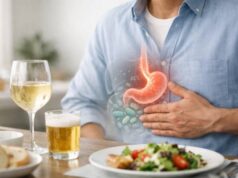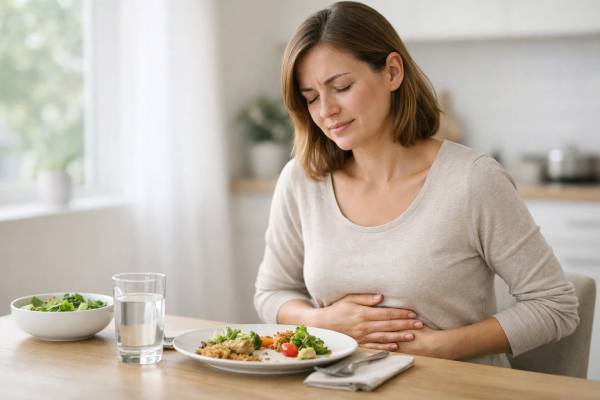
Bloating after eating is one of those symptoms that feels obvious—your abdomen feels tight, swollen, or “too full”—yet the causes can be surprisingly varied. Sometimes it is simply trapped gas from a meal that fermented more than usual. Other times it is slowed digestion, constipation, or a mismatch between how your diaphragm and abdominal wall respond to normal gut stretching. The encouraging part is that most cases improve with a few targeted changes, once you identify the pattern. This article helps you decode what your body is telling you: why bloating happens right after meals, which triggers are most common, how to get relief in the next hour, and how to spot the situations that deserve medical attention. The goal is not a perfect diet or a long supplement list—it is a practical plan you can use today, plus a clear next step if the problem keeps returning.
Key Insights
- Many “after eating” bloating episodes come from meal size, eating speed, carbonation, and fermentable carbohydrates rather than a dangerous disease.
- Fast relief often comes from posture, gentle movement, and calming gut sensitivity—not from forcing more fiber or skipping meals.
- Short elimination trials work best when they are structured, time-limited, and followed by reintroduction to pinpoint the true trigger.
- Persistent bloating with weight loss, vomiting, blood in stool, fever, or new severe pain needs medical evaluation rather than home experiments.
- A two-week pattern log (foods, timing, bowel movements, and symptoms) can clarify whether the driver is gas, constipation, intolerance, or motility.
Table of Contents
- What bloating after eating really means
- Quickly spot the most common triggers
- Intolerances and fermentation issues
- Constipation motility and pelvic floor factors
- What helps fast in the next hour
- When bloating needs medical evaluation
What bloating after eating really means
Bloating is a feeling: pressure, tightness, fullness, or trapped gas. Distension is a visible change: your abdomen measurably expands. You can have one without the other. That difference matters because it hints at the driver. Some people produce extra gas and truly expand. Others have normal gas volume but feel intensely bloated because the gut is more sensitive, or because the abdominal wall responds in a way that pushes the belly outward.
Four common pathways behind post-meal bloating
- Fermentation and gas production. Certain carbohydrates are not fully absorbed in the small intestine. They travel to the colon where microbes ferment them, producing gas. If your bloating peaks 2–6 hours after eating, fermentation is a strong suspect.
- Impaired gas clearance. You can produce a normal amount of gas but move it poorly. This can happen with constipation, slowed intestinal transit, or a “traffic jam” of stool that narrows the space for gas to move.
- Upper gut fullness and delayed emptying. If bloating is immediate—within minutes—and comes with early satiety, nausea, or a heavy “food sitting there” sensation, the stomach may be emptying slowly or accommodating poorly. High-fat meals and certain medications can amplify this.
- Visceral hypersensitivity and muscle patterning. Some people react to normal stretching with amplified sensation. Others experience a pattern where the diaphragm descends and the abdominal wall relaxes after meals, creating visible distension even without extra gas. Stress, poor sleep, and chronic gut disorders can make this more likely.
Use timing as your first diagnostic tool
- Within 0–60 minutes: meal size, eating speed, carbonation, high fat, reflux, stomach emptying, anxiety-related air swallowing.
- Within 2–6 hours: fermentation triggers (many high-FODMAP foods), lactose intolerance, fructose overload, and constipation-related gas trapping.
- Worse by evening, better in the morning: constipation, gas retention, and muscle patterning are common.
A final note that can save you frustration: bloating often has more than one cause. For example, constipation can make fermentable foods feel intolerable, and stress can make normal meals feel excessive. The most helpful plan is one that tackles the biggest driver first.
Quickly spot the most common triggers
When bloating happens “after eating,” the temptation is to blame a single food. In reality, the simplest triggers are often about how you eat and what the meal environment does to your gut’s mechanics.
Meal mechanics that inflate symptoms fast
- Eating quickly or while distracted. Faster eating increases swallowed air and reduces the stomach’s ability to “pace” the meal smoothly. If you notice frequent burping, chest pressure, or bloating that starts before you finish the plate, slow pacing is a high-value experiment.
- Large portions and tight waistbands. The stomach can expand, but it dislikes being compressed from the outside. A very full stomach plus restrictive clothing can create immediate pressure and reflux-like bloating.
- Carbonation and fizzy mixers. Carbonated drinks deliver gas directly into the stomach. For some people, that gas clears easily. For others, it lingers and creates immediate distension.
- High-fat meals. Fat is nutritious, but it slows gastric emptying and can intensify “heavy” fullness. If bloating is worst after fried foods, creamy sauces, or large nuts portions, fat dose may be part of the story.
Food patterns that commonly provoke post-meal gas
Certain foods are not “bad,” but they are frequent bloating triggers because of their carbohydrate structure or fiber load:
- Onion, garlic, wheat-based large servings, apples, pears, stone fruits
- Beans, lentils, large servings of cruciferous vegetables (especially raw)
- Milk, ice cream, soft cheeses (lactose-sensitive people)
- Sugar alcohols (sorbitol, mannitol, xylitol) often found in “sugar-free” products
- Very high fiber increases made suddenly (bran cereals, fiber bars, aggressive seed additions)
Medication-related bloating is common and often overlooked
If bloating began after a new medication or dose change, consider timing. Common culprits include certain diabetes medications, opioid pain medicines, and drugs that slow gut motility or alter absorption. This does not mean you should stop a needed medication on your own, but it does mean you should bring the timing to your clinician.
A quick two-day troubleshooting reset
If you feel otherwise well and want a fast signal, try a short, gentle reset for 48 hours:
- Keep meals smaller and more frequent.
- Avoid carbonation, chewing gum, and large raw salad bowls.
- Choose lower-fermentation starches (rice, oats, potatoes) and well-cooked vegetables.
- Keep caffeine and alcohol steady (large swings can confuse the pattern).
If bloating drops noticeably, you have evidence that mechanics and fermentation load matter—before you make any bigger diet changes.
Intolerances and fermentation issues
If your bloating reliably follows certain foods—or appears 2–6 hours after meals—intolerances and fermentation deserve a closer look. These are common, often manageable, and frequently misread as “random.”
Lactose intolerance and dairy sensitivity
Lactose intolerance occurs when the small intestine makes less lactase, the enzyme that digests lactose. Undigested lactose pulls water into the gut and ferments, causing bloating, gas, and sometimes diarrhea. Clues include symptoms after milk, ice cream, or large servings of soft dairy, often with rumbling and urgency.
A practical approach is not “never eat dairy,” but to test a cleaner variable: choose lactose-free dairy or hard cheeses for two weeks and see whether the pattern shifts. If symptoms improve, you can reintroduce small lactose servings to find your personal threshold.
Fructose overload and sugar alcohols
Some people absorb fructose poorly when it exceeds glucose, and many people are sensitive to sugar alcohols. These can cause bloating that feels dramatic compared with the amount eaten—especially from “healthy” smoothies, large fruit bowls, or sugar-free candies and gums.
Simple experiments that often clarify the issue:
- Keep fruit portions moderate and spread across the day.
- Avoid sugar alcohols completely for 7–10 days.
- Watch for improvement in both bloating and stool consistency.
Low-FODMAP does not have to become a lifestyle
A structured low-FODMAP plan can reduce bloating for many people, but it works best as a short-term diagnostic and symptom tool, not a permanent restriction. The most common mistake is staying in the strict phase too long and then feeling afraid to reintroduce foods. A better strategy is:
- A limited trial (often 2–4 weeks) focused on symptom reduction.
- A methodical reintroduction to identify which groups actually trigger you.
- A personalized long-term pattern that keeps variety while avoiding the true offenders.
SIBO and why “bloating after eating” can feel immediate
Small intestinal bacterial overgrowth can cause bloating, gas, and altered stools, sometimes soon after eating. It is more likely in people with motility problems, prior abdominal surgery, certain chronic diseases, or long-standing constipation. It is less likely when the only symptom is mild, occasional bloating.
If you suspect SIBO, avoid self-treating with multiple antimicrobials or extreme diets. The more productive path is structured evaluation and a plan that also addresses the underlying driver (often motility).
Do not miss celiac disease in the right context
If bloating comes with chronic diarrhea, unexplained anemia, weight loss, nutrient deficiencies, or a strong family history of autoimmune disease, formal evaluation matters. In those settings, a casual “gluten-free trial” can complicate testing and delay answers. If you are considering testing, do it before restricting gluten.
Constipation motility and pelvic floor factors
Many people chase “gas remedies” when the real driver is constipation, slow transit, or incomplete evacuation. The colon can hold a surprising amount of stool; when it does, gas movement becomes inefficient and meals amplify pressure. This is one reason bloating often worsens as the day goes on.
Constipation is not only “going less often”
You can have daily bowel movements and still be constipated if you:
- Strain often
- Feel incomplete emptying
- Pass small hard stools
- Need long bathroom time
- Notice bloating that improves after a larger, more complete bowel movement
A useful cue is the morning-to-evening pattern: if you wake up relatively flat and become progressively distended, constipation and gas trapping deserve attention.
Slow transit versus evacuation difficulty
Two broad constipation patterns affect bloating differently:
- Slow transit: stool moves sluggishly through the colon, often linked to low activity, certain medications, and long-standing constipation. Bloating can feel diffuse and pressure-like.
- Evacuation difficulty (pelvic floor issues): stool reaches the rectum, but coordination is off. You may feel stuck, need repeated attempts, or use digital maneuvers. Bloating can be intense because the “exit” does not fully open, so the system backs up.
If you suspect evacuation difficulty, more fiber is not always the answer. For some people it worsens the pressure. Targeted evaluation and pelvic floor therapy can be transformative.
Abdominophrenic dyssynergia and visible distension
Some people experience a post-meal muscle pattern: the diaphragm moves down and the abdominal wall relaxes, creating visible distension even without extra gas. This pattern often coexists with gut sensitivity and can be influenced by stress, posture, and breathing mechanics.
A practical, low-risk trial is diaphragmatic breathing practiced before and after meals rather than only during discomfort. Done consistently, it can retrain the pressure response and reduce visible distension over time.
Motility-slowing medications and food choices
Opioids, certain antidepressants, and some antispasmodics can slow motility and worsen bloating. Diet can do the same: very large fat loads and low fluid intake commonly slow transit. If constipation is part of your bloating story, the best “bloating fix” is often a constipation plan: hydration, consistent meal timing, soluble fiber titrated slowly, and movement—plus medical guidance if symptoms persist.
What helps fast in the next hour
Fast relief depends on choosing the right lever. If you treat fermentation bloating like constipation, or constipation bloating like reflux, you can end up more uncomfortable. The steps below are designed to be safe, practical, and easy to test.
First choose your best-match pattern
- Immediate tightness and upper fullness: think meal mechanics, stomach emptying, and trapped air.
- Crampy gas and rumbling later: think fermentation triggers.
- Worse by evening, better in morning: think constipation, gas trapping, and muscle response.
Fast relief tools that often work within 10–60 minutes
- Change your position, then move gently. A 10–15 minute easy walk helps gas clearance and motility. If walking is not possible, try slow marching in place or gentle hip circles.
- Loosen external pressure. Remove tight waistbands and avoid slumped sitting, which compresses the abdomen.
- Use diaphragmatic breathing for 3–5 minutes. Slow breathing (aiming for a longer exhale) can reduce the “pressure amplifier” effect of gut sensitivity and help normalize the diaphragm-abdominal wall response.
- Warmth and gentle abdominal massage. A warm pack and clockwise, light pressure massage can reduce discomfort and encourage movement of gas.
- Consider simple over-the-counter options. Simethicone may help some people with gas symptoms, and peppermint preparations can ease spasm in select individuals. If reflux is part of your pattern, peppermint can worsen it, so use it carefully.
What usually makes “fast bloating” worse
- Forcing a large raw salad or a heavy fiber supplement when you are already bloated.
- Skipping the next meal entirely, then overeating later. Large rebound meals often restart the cycle.
- Chugging carbonated drinks to “burp it out.” This can add more gas than you expel.
- Intense core workouts while very bloated, which can increase pressure and discomfort.
A simple stepwise plan for the rest of the day
- Make the next meal smaller and easier to digest (well-cooked foods, moderate fat, modest portions).
- Keep fluids steady, especially if constipation is possible.
- If you suspect fermentation, reduce likely triggers for one day (large onion-garlic servings, sugar alcohols, very large fruit portions).
- If you suspect constipation, prioritize a gentle bowel routine: breakfast, warm drink, a short walk, and unhurried bathroom time.
If you repeatedly need “fast fixes,” that is a sign to move from rescue strategies to identifying the driver—because the right long-term change often reduces how often you need rescue.
When bloating needs medical evaluation
Most bloating after eating is benign, but persistent or escalating symptoms deserve evaluation—especially when they come with signs that point beyond routine gas and sensitivity.
Alarm features that should not be watched at home
Seek medical care promptly if bloating is accompanied by:
- Unintentional weight loss or loss of appetite that persists
- Persistent vomiting, or vomiting that prevents hydration
- Blood in stool, black tarry stools, or unexplained anemia
- Fever, persistent night sweats, or severe fatigue
- New severe abdominal pain, especially if localized or worsening
- New difficulty swallowing, food getting stuck, or progressive reflux symptoms
- A new abdominal mass, marked one-sided swelling, or rapidly increasing distension
If bloating is severe and sudden with inability to pass stool or gas, or with intense pain, treat it as urgent.
When “common” bloating lasts too long
Consider evaluation if you have:
- Bloating most days for more than 4–6 weeks
- Symptoms that are steadily worsening
- Significant quality-of-life impact despite reasonable diet and routine adjustments
- Bloating plus major bowel habit changes (new constipation, new diarrhea, or alternating patterns)
What an evaluation often focuses on
Clinicians generally start by identifying the most likely category:
- Fermentation and intolerance: patterns tied to specific carbohydrates and timing.
- Constipation and evacuation difficulty: incomplete emptying, straining, and day-long distension.
- Upper gut motility: early satiety, nausea, vomiting, and immediate post-meal pressure.
- Inflammation or structural problems: alarm features, significant weight loss, bleeding, or persistent focal pain.
Testing choices depend on your history. Some people need only a focused exam and basic lab work. Others may benefit from targeted testing for celiac disease, inflammation, or breath tests in select situations. Imaging or endoscopy is usually reserved for alarm features, abnormal examinations, or clear reasons to suspect a structural condition.
How to make your appointment more efficient
Bring a short, specific log for 10–14 days:
- Meal timing and the top ingredients (you do not need perfect tracking)
- Time-to-bloating (immediate vs delayed)
- Stool frequency and consistency, plus straining or incomplete emptying
- Any medication or supplement changes
- The single most bothersome symptom (pressure, pain, visible swelling, nausea)
This helps turn “I feel bloated” into a clearer clinical picture—and usually leads to faster, more appropriate care.
References
- AGA Clinical Practice Update on Evaluation and Management of Belching, Abdominal Bloating, and Distention: Expert Review – PubMed 2023 (Practice Guideline)
- European Consensus on Functional Bloating and Abdominal Distension—An ESNM/UEG Recommendations for Clinical Management – PMC 2025 (Consensus)
- Functional Abdominal Bloating and Gut Microbiota: An Update – PMC 2024 (Review)
- ACG Clinical Guideline: Management of Irritable Bowel Syndrome – PubMed 2021 (Guideline)
- ACG Clinical Guideline: Gastroparesis – PMC 2022 (Guideline)
Disclaimer
This article is for educational purposes and does not replace individualized medical advice, diagnosis, or treatment. Bloating after eating is often related to diet, gut sensitivity, or bowel habits, but it can also be a sign of a medical condition that needs evaluation. Seek urgent care if bloating occurs with severe pain, persistent vomiting, fainting, shortness of breath, black tarry stools, blood in stool, fever, or rapid worsening. Do not stop prescribed medications without guidance from a qualified clinician.
If this article helped you, please consider sharing it on Facebook, X (formerly Twitter), or any platform you prefer.