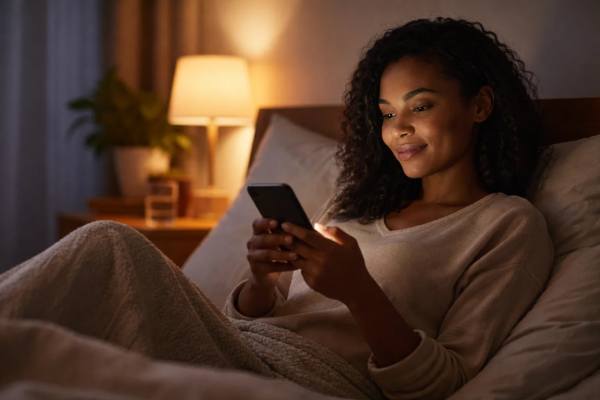
Late-night screen time can feel productive in the moment: you answer one more message, finish one more episode, or squeeze in a few extra tasks. Then sleep comes later than planned, and the next day’s focus feels strangely fragile—like your brain is running on a thinner battery. This is where blue light matters, but not in the oversimplified way it is often marketed. Blue-rich light is a powerful “daytime” signal to the brain. At night, it can increase alertness, shift your internal clock later, and interfere with the wind-down process that protects attention and mood the next day. Still, screens are only one piece of the story: overall brightness, room lighting, content, stress, and bedtime consistency often matter just as much.
This article explains what blue light at night can realistically do to focus and mood, and how to adjust settings and habits in a way that is effective, calm, and safe.
Quick Overview
- Dimmer, warmer evenings often reduce the “second wind” that delays sleep and disrupts next-day focus.
- Blue-rich light can boost alertness short term, but frequently at the cost of later sleep and mood stability.
- Night modes help most when paired with lower brightness and a darker room, not as a standalone fix.
- If you have insomnia, migraines, or bipolar disorder symptoms, change evening light habits gradually and with extra care.
- Start with a two-step rule: dim the room after dinner and protect the final 60 minutes before bed.
Table of Contents
- Why blue light changes focus and mood
- Brightness, timing, and content matter more
- Screen settings that make a real difference
- Evening lighting that supports your brain
- Personalized plans for real-life schedules
- When to seek help and what to watch for
Why blue light changes focus and mood
Blue light at night is often discussed as a sleep topic, but it is also a focus and mood topic—because your brain’s timing system is tightly connected to attention, emotional regulation, and energy. The key idea is simple: light is not only illumination; it is biological messaging. When the eyes detect blue-rich light in the evening, the brain interprets that as “day is still happening.”
Two ways blue-rich light affects your mind at night
1) It can raise alertness right now.
Many people notice a “second wind” late in the evening. Blue-rich light can intensify that effect by increasing arousal and reducing subjective sleepiness. In the short term, you might feel sharper, faster, or more motivated. This is why late-night screens can feel deceptively helpful for productivity.
2) It can make tomorrow’s focus more brittle.
When evening light pushes your internal clock later, sleep tends to start later, get shorter, or become more fragmented. Even small reductions in sleep—especially in deep sleep and consistent timing—can reduce attention control the next day. You may feel more distractible, less patient, and less able to sustain effort on demanding tasks. In many people, the cognitive cost is not dramatic like a sudden crash; it is subtle, like reduced mental “grip.”
Why mood is often involved
Mood is strongly linked to two things that light affects:
- Circadian alignment: When your schedule and body clock drift apart, mood often becomes less stable. People may feel flatter, more irritable, or oddly anxious without an obvious reason.
- Sleep continuity: Emotional regulation relies on sleep depth and timing. If you feel more reactive after a late screen night, that is not weakness; it is biology.
What blue light does not explain
It is important not to over-assign blame. Blue light is not a universal villain, and it is rarely the only driver of late-night focus problems. The same screen can be harmless in the afternoon and disruptive at midnight because timing changes the meaning of light exposure. Also, some people are simply more sensitive than others due to chronotype, stress level, sleep debt, or underlying insomnia.
A balanced view is this: blue-rich light can increase alertness at night, but that alertness is often borrowed from the next day’s attention and mood stability. The most helpful goal is not to eliminate screens completely, but to reduce unnecessary circadian stimulation in the hours when your brain is trying to shift into night mode.
Brightness, timing, and content matter more
If you take only one concept from the science, make it this: brightness and timing often outweigh “blue light” alone. A dim screen with warm settings in a softly lit room is very different from a bright screen under cool overhead lighting while you read stressful news.
Timing: your sensitive window is predictable
Most people are more sensitive to evening light in the last 2–3 hours before their natural bedtime. In that window, the brain is trying to coordinate a shift toward sleep biology. Bright light tells the brain to delay that shift. If you are already a late chronotype (a natural night owl), you may be even more vulnerable to light-based delays because you are living closer to the edge of “too late.”
A practical rule that works for many people is:
- Two to three hours before bed: reduce room brightness and switch to warmer light.
- Final hour: minimize interactive screens when possible.
Brightness: the most underestimated factor
People often focus on the color of light and forget the amount. Yet brightness is what determines the strength of the signal arriving at the eyes. Consider these common “hidden brightness” scenarios:
- Watching a bright screen in a dark room (high contrast, high eye exposure).
- Using cool-white overhead LEDs in the evening (often brighter than the screen).
- Sitting close to a phone (short distance increases intensity at the eye).
If you keep only one setting consistent, choose lower brightness, even before you adjust color temperature.
Content: the arousal problem that filters cannot solve
Even with perfect light settings, some content will keep your nervous system activated:
- Work messages, deadlines, and problem-solving tasks
- Social media conflict, upsetting videos, or doomscrolling
- Competitive games that spike adrenaline
- Anything that creates “one more thing” momentum
This matters for focus and mood because late-night activation increases stress hormones and reduces the ability to downshift. You may fall asleep later, sleep more lightly, or wake up with a mind that feels busy. In that state, next-day focus tends to suffer, and mood becomes more reactive.
The “double hit” that explains many real-life complaints
A common pattern is a double hit:
- Light delays sleepiness (you feel less tired than you should).
- Engaging content delays bedtime (you stay up longer than you intended).
This is why some people change one setting and feel nothing. A warm filter helps, but if you keep the room bright and the content stimulating, your brain still gets “daytime plus activation.” Real improvement usually comes from stacking two or three changes that act in the same direction: dimmer environment, warmer tone, lower stimulation, and consistent stop time.
When people say “blue light ruins my focus,” they are often naming a true experience—but the real cause is typically the full evening package: brightness, timing, and arousal working together.
Screen settings that make a real difference
Screen settings can help, especially when you use them as part of a broader evening plan. The goal is to reduce circadian stimulation and mental activation while preserving usability.
Start with the three high-impact adjustments
- Lower brightness aggressively at night
Set brightness to the lowest comfortable level. If you can still read easily, you can usually go lower. In a dark room, brightness often needs to be far lower than people expect. - Shift color temperature warmer
Use a night mode that reduces blue-rich output. Warmer settings generally reduce the biological “daytime” signal. If your device allows it, schedule this automatically. - Reduce contrast and visual punch
Bright whites and high contrast keep the brain alert. Two useful options are dark theme (where appropriate) and accessibility settings that reduce white intensity.
Helpful settings you can look for on most devices
- Night mode / Night Light / Night Shift: schedules a warmer display in the evening.
- Dark mode: reduces large bright areas (helpful for comfort, but not a full circadian solution).
- Extra dim / Reduce white point: lowers brightness beyond the normal slider, which can be surprisingly effective.
- Grayscale: reduces the “reward intensity” of apps for some people and can reduce late-night scrolling.
- Bedtime or sleep focus mode: mutes notifications, simplifies the screen, and reduces the “just check” habit.
Make your settings more effective with small behavior tweaks
Settings work better when you reduce exposure at the eye:
- Increase viewing distance (a tablet on a stand is often gentler than a phone close to the face).
- Avoid using screens in a completely dark room; instead, keep a very dim warm lamp on so the screen is not the only bright object.
- Use audio when possible (podcasts, calm playlists, or audiobooks) to reduce visual stimulation.
A realistic “night mode” expectation
Night mode is best thought of as a risk reducer, not a permission slip. A helpful mental model is:
- Night mode + low brightness + dim room: often meaningful
- Night mode + bright screen + bright room: often modest
- Night mode + stimulating content + late bedtime: often minimal
What about blue-blocking glasses?
For some people, blue-blocking glasses are a useful tool—especially if they must work at night or cannot control lighting. They tend to be most plausible when:
- You wear them consistently for the last 2–3 hours before bed.
- Your home or workplace has bright, cool lighting you cannot change.
- You combine them with reduced brightness and a consistent bedtime.
If you try them, treat it as a two-week experiment and judge by outcomes: time to fall asleep, morning clarity, and mood steadiness. If nothing changes, the higher-value levers are usually room lighting, content choice, and a protected final hour.
Evening lighting that supports your brain
Many people chase screen solutions while ignoring the strongest lever: the light in the room. If your environment is bright and blue-rich, your body clock receives a powerful daytime signal regardless of what your phone is doing.
The evening lighting goal
Your target is not darkness at 7 p.m. Your target is a smooth transition that tells the brain, “day is ending.” Most people do well with a gradual step-down:
- Bright enough for productivity earlier in the evening
- Softer, warmer, lower light after dinner
- Dim, calm light in the final hour before bed
- A dark sleeping environment whenever possible
Simple changes that have outsized impact
- Turn off overhead lights after dinner and use lamps instead. Overhead lighting hits the eyes more directly and tends to be brighter and cooler.
- Use warm-white bulbs in evening spaces when possible. Warm light is not “sleep magic,” but it can reduce the circadian punch compared to cool-white lighting.
- Keep light sources below eye level. Table lamps and floor lamps pointed toward walls tend to feel calmer than ceiling fixtures.
- Dim your environment, not just your phone. If your room feels bright enough to clean, reorganize, or do detailed work at 10 p.m., it is probably bright enough to delay sleepiness.
Protecting the bedroom from light leaks
Light during sleep can fragment sleep even if you fall asleep easily. Practical steps include:
- Cover or turn away bright device LEDs.
- Use blackout curtains or a sleep mask if outside light is strong.
- Keep screens out of the bed when possible so the bed becomes a cue for sleep rather than stimulation.
A focus and mood angle most people overlook
Evening light is only half the equation. Morning daylight is the anchor that strengthens your circadian rhythm and reduces your sensitivity to late-night disruptions. If you spend most of the day indoors in dim light, your body clock can become less stable, and your brain may seek stimulation late at night. A short outdoor walk in the first hour after waking often makes the evening feel easier—less restless, less “wired,” and more naturally sleepy at the right time.
If you want a minimal plan with a strong payoff:
- Get outdoor light in the morning.
- Dim the house after dinner.
- Make the final hour calm and low-light.
Those three steps tend to support better sleep, steadier mood, and more reliable focus the following day—without requiring perfection or expensive tools.
Personalized plans for real-life schedules
Blue light advice works best when it matches your actual life. A plan that is too strict fails; a plan that is tailored tends to stick.
If you are a night owl
Night owls often feel most alert late in the evening and struggle with early mornings. For you, the biggest risk is that evening light and stimulating content reinforce a later clock. A gentle strategy is more effective than a harsh one:
- Move your “dim time” earlier by 15–30 minutes every few nights.
- Keep morning wake time steady even on weekends, then use earlier light exposure to pull your clock forward.
- Avoid bright, cool light late at night, especially overhead lighting.
Your goal is not to become a morning person overnight. Your goal is to make sleep timing less of a fight.
If your focus drops after evening screens
Some people notice immediate focus issues at night: they read the same paragraph repeatedly, make careless mistakes, or feel mentally scattered. In that case, the issue may be cognitive overload more than circadian delay. Two adjustments often help:
- Switch to single-task, low-stimulation activities at night (one show, one chapter, one gentle game).
- Use “friction” tools: grayscale, app limits, or a separate device used only for reading.
If you are prone to anxiety or low mood
Late-night screen use can amplify emotional reactivity, especially if content is intense. A mood-supportive plan emphasizes nervous system downshifting:
- Avoid conflict-heavy or emotionally charged content in the last hour.
- Use low light plus calming cues (music, stretching, warm shower).
- Keep a short “worry capture” note so the brain stops rehearsing problems in bed.
If you notice consistent mood worsening with late nights, treat that as meaningful feedback rather than a character flaw.
If you are a student or working late
Sometimes screens at night are non-negotiable. In that scenario, aim for harm reduction:
- Use the warmest screen setting and lowest brightness you can tolerate.
- Keep room lighting dim and warm, not bright and cool.
- Take short breaks every 30–60 minutes to reduce arousal and eye strain.
- Set a hard stop time to protect minimum sleep.
If you are a shift worker
Shift work flips the rules. Bright light at night can be useful for performance during the shift, but you want the opposite when the shift ends. The most important skill is light control during the transition to sleep:
- Reduce light exposure when heading home.
- Keep the sleep environment very dark.
- Use consistent cues that tell your body it is bedtime, even if it is daytime outside.
Because shift work strains circadian health, individualized guidance from a sleep professional can be high value if you struggle with chronic insomnia or mood symptoms.
A personalized plan should feel doable, not fragile. The best strategy is the one you can repeat on ordinary weekdays—not only on perfect nights.
When to seek help and what to watch for
Blue light strategies are useful, but they are not a complete explanation for every focus or mood issue. If you improve your evening light habits and still feel persistently foggy, irritable, or unable to sleep, you may be dealing with something that needs a wider assessment.
Red flags that deserve medical attention
Consider professional evaluation if you notice:
- Insomnia symptoms at least three nights per week for three months or longer
- Loud snoring, gasping, or witnessed breathing pauses during sleep
- Dangerous daytime sleepiness, especially while driving
- Persistent low mood, anxiety, or loss of pleasure that is not improving
- New or worsening headaches, especially if light sensitivity is prominent
- Periods of unusually high energy, reduced need for sleep, racing thoughts, or impulsive behavior
That last group matters because sleep disruption can interact with mood conditions. If you have a history of bipolar disorder symptoms, severe anxiety, or panic, it is wise to change sleep routines gradually and involve a clinician if symptoms intensify.
Common reasons evening light changes do not fully work
- You are not getting enough daylight in the morning. Dim days make bright nights more disruptive.
- Your room lighting is still bright. Phone settings cannot fix overhead LEDs.
- Caffeine timing is too late. Many people underestimate how long caffeine can affect sleep.
- Stress is keeping your nervous system activated. Light is only one layer of arousal.
- Your sleep window is too short. If you are consistently trying to sleep in a window that is smaller than your need, focus and mood will suffer even with perfect settings.
A simple two-week check-in plan
If you want clarity without overthinking, run a short experiment:
- Keep wake time consistent.
- Get morning outdoor light most days.
- Dim the house after dinner.
- Use night mode plus low brightness on screens.
- Protect the final hour before bed from interactive content when possible.
Track three outcomes in a brief note each morning: time to fall asleep, morning mood, and midday focus. If those improve, you have a lever worth keeping. If they do not, the next step is not more gadgets—it is a broader look at sleep quality, stress, and health factors.
Blue light at night is real physiology, but the most effective approach is practical: shape your light environment so your brain can recognize night, protect enough sleep, and let focus and mood stabilize as a natural result.
References
- Recommendations for daytime, evening, and nighttime indoor light exposure to best support physiology, sleep, and wakefulness in healthy adults 2022 (Consensus Recommendations)
- Melanopic irradiance defines the impact of evening display light on sleep latency, melatonin and alertness 2023
- Efficacy of blue-light blocking glasses on actigraphic sleep outcomes: a systematic review and meta-analysis of randomized controlled crossover trials 2025 (Systematic Review and Meta-analysis)
- The association of screen time and the risk of sleep outcomes: a systematic review and meta-analysis 2025 (Systematic Review and Meta-analysis)
- Artificial light at night and risk of depression: a systematic review and meta-analysis 2024 (Systematic Review and Meta-analysis)
Disclaimer
This article is for educational purposes only and does not provide medical advice, diagnosis, or treatment. Sleep, focus, and mood symptoms can have many causes, including insomnia, circadian rhythm disorders, sleep apnea, medication effects, migraines, substance use, and mental health conditions. If you have persistent insomnia, severe daytime sleepiness, worsening mood symptoms, or episodes of unusually elevated mood or reduced need for sleep, seek evaluation from a qualified healthcare professional. If you are managing a psychiatric condition or are pregnant, discuss significant sleep or light routine changes with your clinician.
If you found this article helpful, please share it on Facebook, X (formerly Twitter), or any platform you prefer.