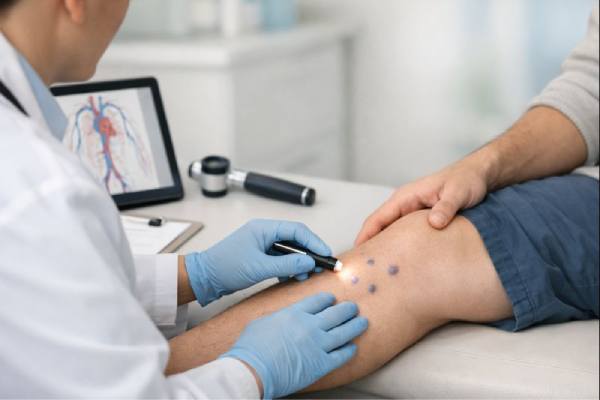
Blue rubber bleb nevus syndrome is a rare condition in which clusters of abnormal veins form soft, bluish skin “blebs” and similar lesions inside the body—most importantly in the gastrointestinal tract. The skin spots may be present at birth or appear in childhood, but the most serious problems often come from slow, repeated bleeding in the small intestine that leads to iron-deficiency anemia, fatigue, and, in some cases, transfusions. Because lesions can be scattered and symptoms can be vague, people may spend years treating anemia without knowing the cause. The good news is that modern imaging, deep endoscopy, and targeted medications can usually control bleeding and improve quality of life, and many patients do well with a careful long-term plan. This article explains what the syndrome is, why it happens, how it is diagnosed, and what treatment and daily management typically involve.
Table of Contents
- What it is and how it affects the body
- Causes, genetics, and risk factors
- Symptoms and complications to watch for
- How it is diagnosed
- Treatment options and what to expect
- Day-to-day management and prevention
- Prognosis and when to seek care
What it is and how it affects the body
Blue rubber bleb nevus syndrome is a disorder of venous malformations—veins that formed abnormally during development and behave more like low-pressure “pouches” than normal blood vessels. These malformations most often appear in two places:
- Skin and soft tissue: classic lesions look blue to purple, feel soft and compressible, and may refill after pressure is released. Many people describe them as rubbery, which is where the name comes from.
- Gastrointestinal tract: lesions can occur anywhere from mouth to rectum, but the small intestine is a frequent source of bleeding because it has a large surface area and is harder to evaluate with standard scopes.
The core problem is not that the lesions are cancerous—they are typically benign. The problem is that their thin walls can ooze blood slowly over time or bleed more heavily after irritation. In the intestine, a lesion may sit quietly for months and then bleed after a viral illness, constipation, or use of medicines that irritate the stomach lining or affect clotting.
A key concept is that symptoms are often driven by blood loss and iron depletion, not by pain. Many patients first present with anemia—fatigue, reduced stamina, headaches, or shortness of breath with exertion—before anyone connects the dots to the skin lesions. Children may show poor growth, sleepiness, or behavioral changes from low iron. Adults may attribute symptoms to stress or heavy work schedules.
The syndrome can also affect other organs. Venous malformations have been reported in muscles, joints, liver, spleen, and, less commonly, the central nervous system. These are not always symptomatic, but they matter because they can complicate procedures (bleeding risk), cause localized pain, or contribute to clotting problems in extensive disease.
An original way to think about this condition is as a “two-track” disease:
- Visible track (skin): lesions can be spotted early, which offers a chance for earlier diagnosis.
- Hidden track (gut): lesions can bleed silently, and anemia may be the only clue.
Effective care comes from treating both tracks together—controlling intestinal bleeding while also addressing skin lesions that hurt, bleed, or affect daily life.
Causes, genetics, and risk factors
Blue rubber bleb nevus syndrome usually arises from changes in how blood vessels form and stabilize during development. Most cases are sporadic, meaning they occur without a known family history. In many patients, the underlying driver is thought to be a somatic mutation—a genetic change that happens after conception in a subset of cells—leading to patches of tissue that build abnormal veins.
Genetic patterns clinicians discuss
- Somatic (mosaic) changes: These can explain why lesions may be scattered and why severity varies widely between people. If only some cells carry the change, lesions appear in “clusters” rather than everywhere.
- Familial cases are uncommon: A small minority of families appear to have inherited susceptibility. When there is a family history of venous malformations, clinicians broaden the differential diagnosis because several inherited vascular-malformation syndromes can resemble each other.
Risk factors for symptoms and severity
Because the condition is congenital, classic “lifestyle risk factors” do not cause it. Instead, risk is about what increases the chance of complications:
- High lesion burden in the small bowel: more lesions generally mean more opportunity for bleeding.
- Lesions in high-friction locations: for example, on the soles, in the mouth, or in areas that rub against clothing.
- Constipation and straining: can worsen rectal bleeding if lesions are present in the lower bowel.
- Medications and supplements that increase bleeding risk: nonsteroidal anti-inflammatory drugs, aspirin, and some anticoagulants can aggravate bleeding in susceptible people. This does not mean they are always forbidden, but the decision should be deliberate.
- Periods of high iron demand: infancy, adolescence, pregnancy, and endurance training can unmask chronic low-level bleeding by pushing iron needs upward.
- Coagulation issues with extensive venous malformations: large venous malformations can sometimes “consume” clotting factors locally, contributing to a low-grade coagulopathy in some patients.
Why diagnosis is often delayed
Delay is common for understandable reasons: iron-deficiency anemia is common, while this syndrome is rare. A person may be treated repeatedly with oral iron without a full search for bleeding, especially if symptoms improve temporarily. In children, fatigue may be mistaken for poor sleep or picky eating. In adults, low iron may be attributed to menstruation, diet, or hemorrhoids. The presence of characteristic skin lesions can shorten this pathway, but only if someone recognizes their significance.
If you are looking for one actionable insight, it is this: in a person with unexplained recurrent iron-deficiency anemia—especially when skin venous malformations are present—the “risk factor” that matters most is time. Earlier recognition usually means fewer transfusions, fewer emergency bleeds, and a clearer long-term plan.
Symptoms and complications to watch for
Symptoms vary from mild skin findings to life-disrupting anemia. Many people have stable periods followed by flares, which can make the condition feel unpredictable unless you track trends.
Common skin and soft tissue symptoms
- Bluish, compressible bumps that may enlarge slowly over years
- Tenderness or aching in a lesion after pressure, long standing, or minor trauma
- Bleeding from lesions on the lips, gums, or areas that rub
- Cosmetic distress and self-consciousness, especially when lesions are on visible areas
Some lesions are painless. Others feel like a bruise that never fully goes away. Lesions in the hands and feet may interfere with writing, walking, or sports.
Gastrointestinal symptoms and anemia signals
Bleeding is often slow and intermittent, so the body adapts until iron stores are depleted. Watch for:
- Fatigue, reduced stamina, or “heavy legs” with activity
- Shortness of breath with exertion, dizziness, or headaches
- Pale skin, brittle nails, or restless legs (a common clue in iron deficiency)
- Dark stools, visible blood in stool, or maroon stools (not always present)
- Abdominal discomfort or cramping, especially if lesions are large
In children, signs may include irritability, poor appetite, poor growth, difficulty concentrating, or a noticeable drop in school performance.
Complications that deserve special attention
- Severe iron-deficiency anemia: may require intravenous iron or transfusion when bleeding outpaces replacement.
- Acute gastrointestinal hemorrhage: less common than chronic oozing, but it can happen and may present with weakness, fainting, or rapid heart rate.
- Intussusception or bowel obstruction: rare, but larger intestinal lesions can act as a lead point, particularly in children, causing episodic severe abdominal pain and vomiting.
- Localized clotting within malformations: some venous malformations can form small clots, causing sudden pain and firmness within a lesion. This is usually not the same as a deep vein thrombosis, but it should be evaluated.
- Procedure-related bleeding risk: dental work, surgery, and even biopsies can bleed more than expected if lesions are present in the area.
Red flags for urgent evaluation
Seek urgent care for any of the following:
- Fainting, near-fainting, chest pain, or shortness of breath at rest
- Rapid heartbeat with weakness after a bowel movement
- Black, tarry stools or large-volume rectal bleeding
- Severe abdominal pain with vomiting, especially in a child
- Sudden, intense pain and swelling in a limb lesion, especially with fever
A helpful practical tip is to treat symptoms as “data,” not just discomfort. Keeping a simple log of stool color, fatigue level, and iron therapy can reveal patterns that help your clinician time investigations and treatment more effectively.
How it is diagnosed
Diagnosis typically combines visual recognition of skin lesions with targeted evaluation for internal venous malformations and bleeding sources. The workup is often staged, moving from low-burden tests to more specialized procedures.
Step one: confirm anemia pattern and bleeding likelihood
Basic testing usually includes:
- Complete blood count with indices (to characterize anemia)
- Iron studies (ferritin, transferrin saturation) to confirm iron deficiency
- Reticulocyte count when the picture is complex
- Stool testing when bleeding is suspected but not visible
Trends matter. A ferritin that repeatedly falls after iron replacement suggests ongoing losses.
Skin exam and dermatologic assessment
A clinician may diagnose cutaneous lesions clinically, but imaging can help map deeper involvement:
- Ultrasound is often used for superficial lesions to confirm low-flow venous characteristics.
- MRI is useful when lesions involve muscle or joints or when surgery is being considered.
Biopsy is not always needed and may be avoided if the lesion has a classic appearance and bleeding risk is a concern.
Finding gastrointestinal lesions
Because lesions can be scattered, evaluation often uses multiple tools:
- Upper endoscopy and colonoscopy: good for stomach, duodenum, colon, and rectum, but they can miss much of the small bowel.
- Capsule endoscopy: a swallowable camera that surveys the small intestine and helps localize likely bleeding sites. It is especially useful when anemia is unexplained and standard scopes are unrevealing.
- Deep enteroscopy: specialized endoscopy that can reach farther into the small bowel, allowing treatment such as cautery, banding, or sclerotherapy in selected cases.
- Cross-sectional imaging: CT or MRI can help identify larger lesions, complications like obstruction, and extraintestinal involvement.
In children or in people with suspected obstruction risk, clinicians may weigh capsule endoscopy carefully and use imaging first.
Assessing extent beyond the gut
Because the syndrome can involve other organs, clinicians may recommend additional evaluation based on symptoms:
- Brain or spine imaging if neurologic symptoms occur
- Liver and spleen imaging if pain, enlargement, or abnormal labs appear
- Musculoskeletal imaging for deep pain or functional limitation
What “good diagnosis” looks like
A strong diagnostic plan does more than label the syndrome. It answers four practical questions:
- Where is bleeding coming from right now?
- How extensive are lesions, especially in the small bowel?
- Are there high-risk lesions in locations that could cause future emergencies?
- What is the baseline so future changes can be recognized early?
This approach prevents the common cycle of “iron improves, iron falls, repeat,” and replaces it with a strategy that targets the bleeding source and the person’s long-term goals.
Treatment options and what to expect
Treatment is individualized and often combines supportive care (iron replacement) with lesion-directed therapy and, in selected cases, systemic medication. The goal is not necessarily to remove every lesion, but to control bleeding, prevent complications, and reduce symptom burden.
Supportive care: iron and transfusion strategy
For many patients, the foundation is correcting iron deficiency:
- Oral iron may work for mild bleeding but can be limited by stomach upset or poor absorption.
- Intravenous iron is often used when anemia is moderate to severe, when oral iron fails, or when quick replenishment is needed.
- Transfusions may be appropriate for hemodynamic instability, very low hemoglobin with symptoms, or acute bleeding. A good long-term plan aims to reduce transfusion dependence.
Clinicians often pair iron therapy with a monitoring schedule (for example, periodic hemoglobin and ferritin checks) so treatment is proactive rather than crisis-driven.
Endoscopic therapies for gastrointestinal lesions
When lesions are reachable, endoscopic treatment can reduce bleeding:
- Thermal methods (such as argon plasma coagulation) for selected superficial lesions
- Mechanical methods (banding or clipping) when anatomy and location allow
- Injection or sclerotherapy approaches in specialized centers
Because lesions can be numerous, treatment is often staged over multiple sessions, targeting the most active or high-risk lesions first.
Surgery and hybrid approaches
Surgery is less common than in the past but can be valuable when:
- A limited segment of bowel has dominant bleeding lesions
- There is obstruction or intussusception risk
- Lesions are large, localized, and repeatedly problematic despite endoscopic therapy
Hybrid approaches—such as intraoperative enteroscopy—can help identify and treat lesions during surgery while minimizing how much bowel is removed.
Systemic therapy: when medication is considered
In patients with diffuse lesions or recurrent bleeding despite procedures, clinicians may consider medications that reduce lesion activity and bleeding. One of the most discussed options in recent years is sirolimus, an mTOR pathway inhibitor used in several vascular anomaly conditions. Reported benefits in carefully selected patients include:
- Reduced gastrointestinal bleeding and improved hemoglobin stability
- Fewer transfusions or iron infusions in some cases
- Improvement in some skin lesion symptoms
Systemic therapy requires careful monitoring for side effects (such as mouth ulcers, lipid changes, infection risk, and lab abnormalities) and is typically managed by clinicians experienced in vascular anomalies.
What to expect over time
Most patients need a stepwise plan:
- Stabilize iron and symptoms.
- Map lesion burden and bleeding sources.
- Treat reachable lesions and reassess.
- Escalate to systemic therapy when disease is diffuse or relapsing.
A useful mindset is “control, then maintain.” Once bleeding is controlled, the focus shifts to preventing relapse with regular monitoring and targeted retreatment when early warning signs appear.
Day-to-day management and prevention
Daily management is where people regain control. A practical routine reduces surprises, helps clinicians make quicker decisions, and can prevent avoidable bleeding triggers.
Build a simple monitoring system
Many patients do well with a short weekly checklist:
- Energy level and exercise tolerance
- Stool color changes (especially dark or maroon stools)
- New bleeding from skin or mouth lesions
- Symptoms of iron deficiency (restless legs, headaches, dizziness)
- Any new localized lesion pain suggesting clotting within a malformation
If you have a history of rapid drops in iron, ask your clinician for a personal “action threshold,” such as when to repeat labs or when to switch from oral to intravenous iron.
Nutrition and iron strategy that is realistic
Diet alone rarely replaces iron losses from ongoing bleeding, but it can support therapy:
- Pair iron-rich foods with vitamin C-containing foods to improve absorption
- Avoid taking iron with calcium-rich meals when possible, because calcium can reduce absorption
- If oral iron causes stomach upset, discuss alternate-day dosing or different formulations rather than stopping entirely
Because constipation can worsen lower gastrointestinal bleeding, stool-softening strategies (hydration, fiber as tolerated, clinician-approved laxatives if needed) can be part of prevention.
Medication safety habits
Ask specifically about bleeding risk before starting new medicines. Common practical guidance includes:
- Avoid nonsteroidal anti-inflammatory drugs when possible, especially during known bleeding periods
- Tell every clinician and dentist about the condition before procedures
- If anticoagulation is necessary for another condition, coordinate care so bleeding risk is actively managed rather than discovered late
Skin lesion care and comfort
For lesions that hurt or bleed:
- Use protective padding or clothing strategies for friction areas
- Address footwear fit when lesions are on feet
- Discuss localized treatments (such as laser or sclerotherapy) for bothersome lesions in specialized centers
Do not attempt to puncture lesions at home. Even small lesions can bleed more than expected.
Mental health and social planning
Chronic anemia and visible lesions can affect mood, confidence, and social life. A helpful, often overlooked step is to name the burden clearly:
- fatigue-related limitations
- body-image concerns
- fear of sudden bleeding episodes
Support can include counseling, patient communities, and school or workplace accommodations. For teens and adults, having a brief written summary of the condition and the emergency plan can reduce anxiety when traveling or changing clinicians.
Prevention in this syndrome is less about stopping new lesions from forming and more about preventing the cascade: bleeding → iron depletion → severe symptoms → emergency care. With consistent monitoring and an agreed escalation plan, many people stay in the “managed” zone rather than the “crisis” zone.
Prognosis and when to seek care
Prognosis is highly variable, but many patients live long lives with stable control of bleeding once the condition is recognized and managed. The outlook depends more on lesion distribution and bleeding control than on the skin appearance.
What long-term stability can look like
With an effective plan, many people reach a point where:
- Hemoglobin and ferritin remain stable for months at a time
- Iron therapy becomes predictable (for example, scheduled intravenous iron rather than repeated transfusions)
- Endoscopic interventions are needed only periodically
- Skin lesions are managed for comfort and function rather than constant emergencies
This stability often improves school attendance in children and work reliability in adults, which can be as meaningful as lab values.
Factors that can make the course more complex
- Diffuse small-bowel involvement with frequent relapse
- Coexisting deep soft-tissue lesions that cause pain or functional limitation
- Recurrent bowel obstruction or intussusception episodes
- Need for anticoagulation for unrelated conditions
- Limited access to specialty care (deep enteroscopy and vascular anomaly expertise)
Even in these scenarios, outcomes can improve substantially when care is coordinated and proactive.
Follow-up planning that prevents setbacks
Many clinicians use a rhythm of care that includes:
- Regular blood counts and iron studies at an interval matched to prior bleeding speed
- Repeat capsule endoscopy or targeted imaging when anemia returns without obvious bleeding
- Ongoing review of medication lists for bleeding risk
- Periodic reassessment of whether systemic therapy is appropriate, especially if procedures are frequent
A practical tip is to treat “falling ferritin” as an early alarm. Hemoglobin may stay normal for a while even as iron stores drain. Catching the decline early can prevent months of fatigue and avoid emergency-level anemia.
When to seek urgent care
Seek urgent evaluation if you experience:
- Fainting, chest pain, new shortness of breath at rest, or profound weakness
- Large-volume rectal bleeding, black tarry stools, or vomiting blood
- Rapid heart rate with dizziness after a bowel movement
- Severe abdominal pain with vomiting, especially if pain comes in waves
- Signs of severe anemia: confusion, inability to stand without dizziness, or new palpitations with weakness
What to ask your clinician
If you want to leave an appointment with clarity, consider asking:
- What is my baseline ferritin and hemoglobin, and what trend should trigger action?
- Which tests will we use to locate bleeding if anemia returns?
- What treatments are available locally, and when would you refer to a specialty center?
- If systemic therapy is considered, what is the monitoring plan and what side effects should prompt a call?
The most important reassurance is that this syndrome is manageable. The path is rarely “one procedure and done,” but with a structured plan—monitor, treat, reassess, maintain—many patients achieve steady control and a good quality of life.
References
- Blue rubber bleb nevus syndrome: A European multicenter study 2025
- Treatment options for gastrointestinal bleeding blue rubber bleb nevus syndrome 2024 (Review)
- Efficacy and Safety of Sirolimus for Blue Rubber Bleb Nevus Syndrome: A Prospective Study 2021
- Endoscopic and Surgical Management of Blue Rubber Bleb Nevus Syndrome 2022 (Review)
Disclaimer
This article is for educational purposes only and does not provide medical advice, diagnosis, or treatment. Blue rubber bleb nevus syndrome can cause serious bleeding and anemia, and individual care depends on lesion location, severity, age, medications, and other health conditions. If you have fainting, severe weakness, chest pain, shortness of breath at rest, large-volume gastrointestinal bleeding, or severe abdominal pain, seek urgent medical attention. For personal guidance, consult a qualified healthcare professional who can review your history, tests, and treatment options.
If you found this article helpful, please share it on Facebook, X (formerly Twitter), or any platform you prefer, and follow us on social media. Your support by sharing helps our team continue producing reliable health content.