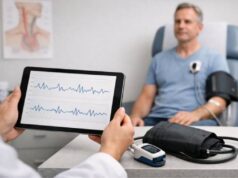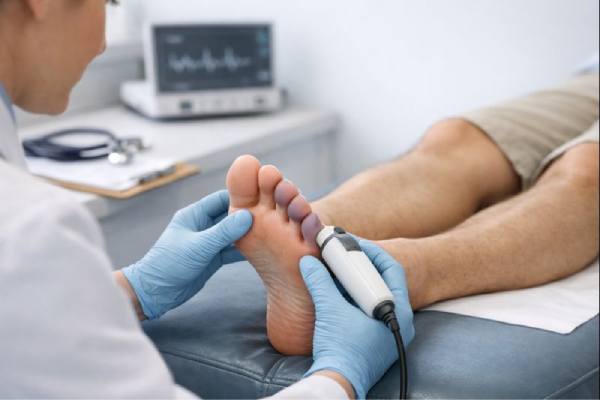
Blue toe syndrome is a clinical warning sign, not a single disease. It describes the sudden appearance of one or more toes that turn blue or purple—often painful—because tiny blood vessels in the toes are being blocked or severely narrowed. A classic clue is that the foot may still feel warm and the larger pulses can remain present, which can make the problem easy to underestimate. The most common drivers are small emboli (tiny “traveling” particles such as cholesterol crystals or clots) and inflammatory vessel conditions that choke off microcirculation. Because the toe is at the far end of the circulation, it can be the first place where a serious vascular problem becomes visible. The priority is to treat it as urgent: confirm blood flow, identify the source, prevent further emboli, and protect the skin before irreversible tissue injury occurs.
Table of Contents
- What blue toe syndrome means
- What causes it and who is at risk
- Symptoms, patterns, and complications
- How clinicians diagnose the cause
- Treatment options and what to expect
- Home care, prevention, and follow-up
- Prognosis and when to seek urgent help
What blue toe syndrome means
Blue toe syndrome refers to acute, localized toe discoloration—blue, purple, or dusky—caused by impaired blood flow in the small arteries and arterioles that feed the toes. It often develops quickly over hours to days and may affect a single toe, several toes, or multiple toes on one foot. Unlike generalized cyanosis (which can happen when oxygen levels in the blood are low), blue toe syndrome is usually regional: the rest of the foot may look relatively normal.
The most important clinical idea is this: blue toe syndrome is typically a microvascular ischemia problem, meaning the blockage happens in small vessels that you cannot feel with your fingers. That is why a person may still have palpable pulses at the ankle or top of the foot, and why standard “big-vessel” symptoms—such as a cold, pulseless limb—may be absent. This pulse-preserved presentation is a key reason it can be misread as bruising, cold exposure, or a skin issue when it is actually a vascular emergency.
To understand what is happening, it helps to separate blood flow into two levels:
- Macrocirculation: larger arteries that deliver blood to the foot (often assessed by pulses and ankle-brachial index).
- Microcirculation: tiny vessels that deliver oxygen to toe skin and tissue (often assessed by toe pressures, skin temperature, capillary refill, and how quickly discoloration evolves).
Blue toe syndrome also has a “source-and-target” logic. The toe is the target, but the source is often higher up: the heart (arrhythmia-related clots), the aorta (atherosclerotic plaque debris), or leg arteries (thrombus or plaque). In cholesterol crystal embolization, for example, unstable plaque in the aorta can shed microscopic crystals that lodge in distal vessels, causing painful discoloration while proximal pulses remain intact.
Because the toe tissue is delicate, time matters. Skin can tolerate reduced flow for a short period, but ongoing micro-occlusion can progress from discoloration to blisters, ulcers, and necrosis. The practical takeaway is that blue toe syndrome is a signal to look beyond the toe and find the upstream driver quickly, so further embolization stops and the tissue has the best chance to recover.
What causes it and who is at risk
Blue toe syndrome has many causes, but most fall into a few high-yield categories. Identifying the category early helps clinicians choose the right tests and avoid treatments that could worsen the problem.
1) Embolic causes
These are the most common drivers in many clinical settings. Small particles travel through the bloodstream and lodge in toe microvessels.
- Cholesterol crystal embolization (atheroembolism): Tiny cholesterol crystals break off from atherosclerotic plaque, often after vascular procedures (angiography, stenting, surgery) but sometimes spontaneously in severe atherosclerosis. The ischemia is often patchy, and pulses may remain present.
- Thromboembolism: Small clots can arise from the heart (for example, atrial fibrillation) or from aneurysms and ulcerated plaque in large arteries. Compared with cholesterol emboli, clots are more likely to create larger downstream blockages, but micro-embolization can still occur.
2) In-situ clotting and hypercoagulable states
Sometimes the issue is not traveling debris but local clot formation within small vessels. Triggers include:
- Cancer-associated clotting
- Antiphospholipid syndrome and other autoimmune clotting disorders
- Severe dehydration, polycythemia, or marked thrombocytosis
- Certain medications that alter clotting balance in susceptible patients
3) Inflammatory and vasculitic disorders
Inflammation can narrow or occlude small vessels:
- Small- and medium-vessel vasculitis can cause painful digital ischemia with purpura, ulcers, or systemic symptoms.
- Cholesterol embolization can mimic vasculitis because it triggers inflammation after crystals lodge in vessels.
4) Vasospasm and low-flow states
Spasm can temporarily shut down microcirculation:
- Raynaud-type vasospasm usually affects fingers more than toes but can involve toes, especially with cold exposure.
- Shock states or severe heart failure can reduce distal perfusion; however, these usually cause more widespread changes than a single blue toe.
Who is at higher risk?
Risk depends on the underlying category:
- Older age, smoking history, diabetes, high cholesterol, and known atherosclerosis increase risk for cholesterol embolization.
- Recent vascular procedures, aortic aneurysm disease, and extensive plaque burden increase risk for micro-embolization.
- Atrial fibrillation, mechanical valves, recent myocardial infarction, and cardiomyopathy increase risk for clot emboli.
- Autoimmune disease, recent infections, and systemic inflammatory symptoms raise suspicion for vasculitis.
- A history of prior unexplained clots, miscarriages, or certain cancers can point toward hypercoagulability.
A practical “pattern recognition” tip: blue toe syndrome is especially concerning when it appears without clear trauma, develops quickly, and is paired with either a recent vascular intervention or symptoms outside the foot (fever, weight loss, kidney problems, livedo-like rash). Those combinations often indicate an upstream systemic process rather than a simple local injury.
Symptoms, patterns, and complications
Blue toe syndrome can look deceptively simple—one toe changing color—but the symptom pattern often carries clues about the cause and urgency. The toe may be tender, throbbing, or sharply painful. Some people notice numbness, burning, or a “pins and needles” sensation, especially if nerve endings are affected by ischemia. Discoloration may be uniform or mottled, and it may worsen when the foot is lowered and improve slightly when elevated.
Typical toe and foot findings
Common observations include:
- Blue, purple, or dusky discoloration of one or more toes
- Pain that is out of proportion to the visible skin change, especially early
- Coolness limited to the toe tips while the rest of the foot feels warm
- Delayed capillary refill at the affected toe
- Intact pulses at the ankle or top of the foot (a classic but not universal feature)
When ulcers or blisters form, the condition is often already advanced. Blackened tissue suggests necrosis and requires urgent specialist care.
Patterns that hint at the underlying cause
- Cholesterol crystal embolization pattern: Often affects multiple toes, may be accompanied by a net-like purple discoloration on the legs, and can emerge days to weeks after an arterial procedure rather than immediately.
- Clot embolism pattern: Can be more abrupt, sometimes with more severe pain, and may be associated with irregular heartbeat or known cardiac risk.
- Vasculitis pattern: May include purpura, tender nodules, ulcers, joint pains, sinus symptoms, neuropathy, or fevers.
- Hypercoagulability pattern: May include prior thrombosis history, pregnancy losses, cancer-related symptoms, or unexplained clotting events.
Complications clinicians try to prevent
Blue toe syndrome can progress from temporary ischemia to permanent tissue injury. Key complications include:
- Skin breakdown and infection: Ischemic skin is fragile. Even minor friction from shoes can create a wound that heals poorly.
- Digital gangrene and amputation risk: If blood flow is not restored or embolization continues, tissue can die. Sometimes a limited toe procedure is needed; in severe cases, more extensive intervention may follow.
- Kidney and organ injury in systemic embolization: In cholesterol crystal embolization, micro-emboli can also lodge in kidneys and other organs, causing declining kidney function, abdominal pain, or neurologic symptoms.
- Recurrent embolization: Without addressing the source, new toes may be affected, or the same toe may worsen after brief improvement.
- Pain syndromes and mobility loss: Persistent ischemic pain can limit walking, sleep, and overall function, even if tissue loss is avoided.
A practical warning: if the toe looks blue but the pain is escalating, or if new toes begin changing color over days, this should be treated as an active process, not a static bruise. Early evaluation is often the difference between reversible discoloration and a wound that takes months to heal.
How clinicians diagnose the cause
Diagnosis has two missions: confirm that the discoloration is truly ischemic, and identify the upstream source so further injury stops. Clinicians often start with rapid bedside assessment and then layer tests based on the most likely etiologies.
History and examination that matter
Key questions include:
- Onset and speed of color change (hours versus weeks)
- Pain severity, numbness, and walking limitation
- Recent angiography, stenting, vascular surgery, or anticoagulation changes
- Cardiac history: atrial fibrillation, valve disease, recent heart attack
- Systemic symptoms: fever, weight loss, muscle aches, new rash
- Medication list: anticoagulants, antiplatelets, vasoconstrictive drugs
- Smoking history and known peripheral artery disease
On exam, clinicians compare both feet for temperature, capillary refill, skin changes, and pulses. A warm foot with a blue toe pushes suspicion toward micro-embolization or vasculitis, while a cold, pulseless foot raises concern for major arterial occlusion.
Bedside and vascular flow testing
Common assessments include:
- Ankle-brachial index (ABI): Helps evaluate large-vessel obstruction. A normal ABI does not rule out microvascular disease.
- Toe pressures or toe-brachial index: Often more informative for digital ischemia because toe vessels can show compromise even when ABI is preserved.
- Duplex ultrasound: Looks for plaque, aneurysm, thrombus, or flow-limiting disease in leg arteries and can assess embolic sources in accessible segments.
If acute limb ischemia is suspected, imaging is expedited because time-sensitive intervention may be needed.
Imaging to find the embolic source
Depending on the case, clinicians may use:
- Echocardiography to look for cardiac clots, valve lesions, or structural sources
- Cross-sectional imaging of the aorta and iliac arteries when an upstream plaque or aneurysm source is suspected
- Angiography in selected cases to define treatable lesions, with careful risk-benefit consideration when cholesterol embolization is a concern
Laboratory testing for systemic processes
Blood work is tailored to suspected causes and may include:
- Complete blood count and inflammatory markers
- Kidney function testing and urinalysis when systemic embolization is possible
- Coagulation studies and targeted hypercoagulability testing when history suggests it
- Autoimmune and vasculitis-related markers when systemic inflammation is suspected
Skin or tissue biopsy in select cases
When cholesterol embolization or vasculitis is strongly suspected and diagnosis remains uncertain, a biopsy from an affected skin area can sometimes provide definitive evidence. Biopsy decisions are careful because ischemic skin heals poorly; clinicians weigh diagnostic value against wound risk.
A practical diagnostic framework is “rule out limb-threatening occlusion first, then search upstream.” Once emergent large-vessel threats are excluded, attention turns to embolic sources, inflammatory conditions, and clotting disorders—because treating the wrong category can cause harm, such as intensifying bleeding risk or failing to stop ongoing embolization.
Treatment options and what to expect
Treatment depends on the cause, but the overall strategy is consistent: protect the toe tissue, control pain, stop further emboli or inflammation, and treat the upstream source. Because blue toe syndrome may involve both macro- and microcirculatory problems, clinicians often coordinate care across vascular medicine, cardiology, dermatology or rheumatology, and wound specialists.
Immediate priorities
Early management often includes:
- Keeping the foot warm and protected from pressure and friction
- Elevation adjustments that balance comfort with perfusion needs
- Pain control that avoids unnecessary vasoconstriction
- Careful wound care if blisters or ulcers are present
- Rapid evaluation for acute limb ischemia when pulses are diminished or severe ischemic signs appear
Treating embolic causes
- Cholesterol crystal embolization: Management is usually supportive and preventive: aggressive cardiovascular risk reduction, plaque stabilization strategies, and addressing the source lesion when feasible. Clinicians often review anticoagulation carefully because anticoagulation is not routinely used solely for cholesterol embolization and may be avoided unless there is another clear indication. If a focal source (such as an ulcerated plaque or aneurysm) is identified and treatable, endovascular or surgical repair may be considered to prevent further embolization.
- Thromboembolism: If clots are the suspected cause, anticoagulation is often central, and the source must be addressed (for example, atrial fibrillation management or evaluation for intracardiac thrombus). In selected cases, urgent revascularization procedures may be needed if there is significant arterial occlusion.
Treating vasculitis and inflammatory causes
When vasculitis is the driver, treatment may include:
- Anti-inflammatory or immunosuppressive therapy directed by a rheumatology team
- Treatment of an underlying trigger (infection, medication reaction) when identified
- Close monitoring for organ involvement beyond the toes
Because immunosuppressive therapy changes infection risk, clinicians typically confirm the diagnosis and rule out mimics before escalating treatment.
Treating hypercoagulable and blood viscosity problems
If abnormal clotting or viscosity is contributing:
- The plan targets the underlying disorder (for example, managing thrombocytosis, treating malignancy, or addressing antiphospholipid syndrome)
- Anticoagulation or antiplatelet therapy may be tailored to the patient’s clotting profile and bleeding risk
What recovery can look like
Improvement may be slow. Color can normalize over days to weeks if perfusion returns and embolization stops, but damaged skin may take longer to heal. Pain often improves before the skin fully recovers, though persistent pain can occur if nerves were injured. If a toe ulcer forms, clinicians focus on offloading pressure, preventing infection, and supporting blood flow until the tissue closes.
An important expectation-setting point: blue toe syndrome often requires two timelines—an urgent one to prevent progression in the next 24 to 72 hours, and a longer one to reduce recurrence risk over months by treating the source and optimizing vascular health.
Home care, prevention, and follow-up
Home care is not a substitute for medical evaluation, but it plays a major role in preserving tissue while the underlying cause is being treated. The goal is to minimize additional injury to an already vulnerable toe and to catch deterioration early.
Protect the toe like a healing wound
Even if the skin is intact, treat the toe as fragile:
- Wear roomy footwear with a wide toe box and soft uppers
- Avoid tight socks and pressure points that can create friction blisters
- Use protective padding only if it does not compress the toe or reduce circulation
- Keep the toe warm; avoid cold exposure that can trigger vasospasm
If a wound is present, follow the specific dressing and cleansing plan provided by your clinician. Avoid home “debridement” or cutting away tissue.
Track changes with simple, objective habits
Daily checks can prevent surprises:
- Compare toe color in the same lighting each day
- Note pain level at rest and while walking
- Watch for new numbness, spreading discoloration, or new toes becoming involved
- Monitor for signs of infection: increasing redness around a wound, warmth, pus, or fever
A useful practical tool is a weekly photo series taken from the same angle. It helps you and your clinician see subtle progression that is hard to notice day to day.
Medication and risk-factor management
Because recurrence prevention often hinges on upstream vascular health, clinicians may recommend:
- Blood pressure, lipid, and diabetes optimization
- Smoking cessation support if applicable
- A medication review to avoid vasoconstrictive agents or unnecessary bleeding risk
- A structured plan for antiplatelet or anticoagulation therapy when indicated by the cause
Do not stop prescribed anticoagulants or antiplatelets on your own. Instead, contact the prescribing clinician promptly if blue toe syndrome appears, because the decision depends on the suspected mechanism.
Foot care for people with diabetes or neuropathy
If you have reduced sensation, daily inspection is essential because you may not feel early skin injury. Keep nails trimmed carefully, avoid chemical callus removers, and consider professional foot care if vision or mobility limits safe self-care.
Follow-up that reduces recurrence
A good follow-up plan answers:
- What is the identified source, and has it been treated or stabilized?
- What tests will be repeated (toe pressures, ultrasound, labs) and when?
- What are your “call now” thresholds, such as spreading discoloration, new ulcer, or new toe involvement?
Prevention in blue toe syndrome is less about a single trick and more about an integrated approach: protect the toe, optimize vascular risk factors, and treat the upstream cause so the toe is not repeatedly exposed to new emboli or inflammatory injury.
Prognosis and when to seek urgent help
Prognosis depends primarily on the underlying cause and how quickly ongoing vessel injury is stopped. Some cases resolve with minimal long-term impact, while others signal a systemic process with significant risks to kidneys, skin, and overall cardiovascular health. A helpful way to think about prognosis is to ask two questions: is this a one-time event, and is the source still active?
When outcomes are often favorable
Outcomes tend to be better when:
- The cause is identified quickly and further embolization is prevented
- There is no established tissue necrosis at the time of evaluation
- Macrovascular flow to the foot is adequate and microcirculation improves with treatment
- The patient can reliably protect the toe from trauma and pressure during healing
In these situations, discoloration can fade and the skin can recover without lasting ulceration, though sensitivity or mild color change may persist for a time.
When prognosis is more complex
Risk increases when:
- The toe develops ulcers or blackened tissue (suggesting necrosis)
- Multiple toes become involved over days, implying ongoing embolization
- There are systemic signs such as declining kidney function, widespread mottled rash, fever, or weight loss
- There is untreated severe atherosclerosis, aneurysm disease, or a high-risk cardiac embolic source
- There are barriers to wound care, offloading, or specialist follow-up
Cholesterol crystal embolization is particularly important because it can affect multiple organs and may evolve over weeks rather than hours. In those cases, toe findings can be the visible tip of a larger problem.
When to seek urgent or emergency care
Get urgent evaluation immediately for:
- Sudden severe foot pain, a cold foot, or loss of pulses
- Rapidly spreading blue or black discoloration
- New numbness, weakness, or inability to move toes
- Fever with a worsening toe wound or signs of spreading infection
- Fainting, chest pain, shortness of breath at rest, or profound weakness
- New significant decrease in urine output or sudden swelling if systemic involvement is suspected
Long-term outlook and prevention of recurrence
Most recurrence prevention is cardiovascular prevention in disguise. Patients often benefit from:
- Clear targets for blood pressure, cholesterol, and glucose control
- A plan to manage atrial fibrillation or other embolic cardiac risks when present
- Surveillance or repair strategies for high-risk aortic or arterial lesions when indicated
- Ongoing foot protection and early wound intervention
A final practical point: blue toe syndrome is a symptom that deserves a “root-cause mindset.” Even if the toe improves, the upstream driver may still be active. Follow-through—confirming the source, adjusting medications thoughtfully, and monitoring for recurrence—is what protects the next toe, the next organ, and the next year of health.
References
- Blue toe syndrome – systemic cholesterol crystal embolism secondary to cardiovascular procedures: a forensic autopsy report of two cases 2024
- Cholesterol crystal embolization syndrome: Systemic and end-organ injury 2025 (Review)
- 2024 ESC Guidelines for the management of peripheral arterial and aortic diseases 2024 (Guideline)
- 2024 ACC/AHA/AACVPR/APMA/ABC/SCAI/SVM/SVN/SVS/SIR/VESS Guideline for the Management of Lower Extremity Peripheral Artery Disease: A Report of the American College of Cardiology/American Heart Association Joint Committee on Clinical Practice Guidelines 2025 (Guideline)
Disclaimer
This article is for educational purposes only and does not provide medical advice, diagnosis, or treatment. Blue toe syndrome can signal serious vascular disease, emboli, inflammation, or clotting disorders, and delayed care can lead to tissue loss or systemic complications. If you have sudden severe pain, spreading discoloration, a cold or numb foot, fever with a worsening wound, fainting, chest pain, or shortness of breath at rest, seek urgent medical attention. For personal guidance, consult a qualified clinician who can evaluate your symptoms, medications, and test results.
If you found this article helpful, please share it on Facebook, X (formerly Twitter), or any platform you prefer, and follow us on social media. Your support by sharing helps our team continue producing quality health content.