Blurry vision during COVID-19 can feel unsettling because it is hard to tell what is “just part of being sick” and what deserves urgent attention. In many people, vision changes are temporary and linked to dry eye, irritation, fever-related dehydration, or hours of screen time while recovering. In others, blurring can reflect inflammation, changes in the tear film, medication side effects, or—more rarely—problems involving the retina, optic nerve, or blood vessels.
The good news is that most COVID-19–related eye symptoms improve with supportive care and time. The key is knowing how to sort common, self-limited causes from red flags like sudden vision loss, severe eye pain, or new neurologic symptoms. This guide walks through likely explanations, practical steps you can take at home, and the situations where an eye exam (or emergency care) is the safest next move.
Core Points for Clearer Vision
- Treat dryness early with preservative-free lubricating drops and frequent blink breaks, especially during fever or heavy screen use.
- Expect mild blur with irritation, watery eyes, or conjunctivitis to improve over days as the illness resolves.
- Seek urgent evaluation for sudden vision loss, severe eye pain, a new curtain-like shadow, or new weakness, numbness, or slurred speech.
- Review recent medications (including decongestants, antihistamines, steroids, and new inhalers) as potential contributors to blur and dryness.
- If blur lasts beyond 1–2 weeks or persists after recovery, schedule an eye exam to check the cornea, tear film, retina, and optic nerve.
Table of Contents
- Why COVID-19 can blur vision
- Common eye-surface causes
- Retina and nerve-related causes
- Treatment and medication effects
- When to get checked urgently
- What an eye exam may include
Why COVID-19 can blur vision
Blurry vision is not one single symptom—it is a final common pathway. Your vision can blur when the tear film becomes unstable, when the cornea’s surface is irritated, when the lens changes shape, or when the retina or optic nerve is not transmitting a clear signal. During COVID-19, several of these pathways can happen at the same time, which is why your eyes may feel “off” even if you cannot point to one specific problem.
A useful way to think about COVID-19 and vision is to separate surface blur from inside-the-eye blur. Surface blur often fluctuates: you blink, your vision clears briefly, then it smears again. It may come with burning, grittiness, watery eyes, or light sensitivity. Inside-the-eye blur tends to be steadier and may come with new floaters, flashes, missing spots in vision, or reduced color brightness.
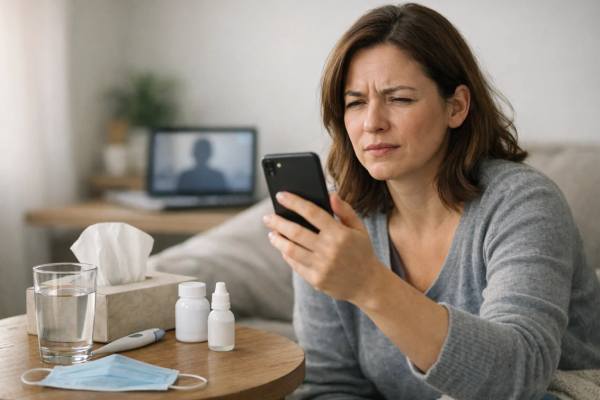
COVID-19 can also amplify everyday triggers that already challenge the visual system. Fever and reduced fluid intake can thicken tears and dry the ocular surface. Congestion can change sleep quality and worsen eye strain. Many people spend more time on phones and laptops while isolating, which reduces blink rate and increases evaporation. Even a poorly fitting mask can direct airflow upward, drying the eyes and making vision intermittently hazy.
Timing matters. Some people notice blur during the first few days of illness, when fever, dehydration, and sinus symptoms peak. Others notice it later, after respiratory symptoms improve, when inflammation or post-viral fatigue becomes more prominent. A smaller group notices blur weeks later during a longer recovery, often tied to dry eye, headaches, or difficulty focusing up close.
The most important takeaway: most causes are manageable, but the safest approach is to treat new vision changes as meaningful data. Track what you feel, how quickly it started, and whether it comes with pain or neurologic symptoms. Those details help you and a clinician decide whether supportive care is enough—or whether you need an exam now.
Common eye-surface causes
The most common reasons for blurry vision during COVID-19 involve the ocular surface—the tears, eyelids, and cornea. When the tear film breaks up too quickly, the cornea’s optics become uneven, and vision can look smeared or “filmy.” This kind of blur often improves briefly after blinking, using lubricating drops, or stepping away from a screen.
Dry eye and tear-film instability can flare for several reasons during illness:
- Dehydration from fever, sweating, diarrhea, or low fluid intake
- Reduced blink rate from screen time, fatigue, or “staring” while resting
- Nasal congestion and mouth breathing, which increase evaporation
- Indoor air (heating, air conditioning) and fans used during recovery
Viral conjunctivitis (pink eye) can also cause blur. It typically brings redness, watering, irritation, and a sticky or crusty sensation. Vision blurs because tears and inflammatory debris coat the cornea. If you have significant discharge, eyelid swelling, or one eye is much worse than the other, a clinician may want to confirm whether it is viral, bacterial, allergic, or a mixed picture.
Mask-associated dry eye is easy to miss. If your mask directs airflow upward, you may feel a dry, gritty sensation and notice blur that worsens in public spaces or while talking. A simple test is to see whether symptoms improve when you gently tape the top edge of a mask (skin-safe tape) or adjust the nose wire for a better seal.
Contact lens irritation is another frequent contributor. When you are sick, you may sleep irregularly, forget lens hygiene steps, or wear lenses longer because you are not leaving home. Even mild dryness can make contacts feel uncomfortable and make vision fluctuate. As a general rule, switch to glasses during active illness and return to lenses only when your eyes feel normal again.
Practical at-home steps that often help within 24–72 hours:
- Use preservative-free artificial tears 4–6 times per day, and more often if needed.
- Add warm compresses to the eyelids for 5–10 minutes daily if lids feel crusty or oily.
- Follow the 20-20-20 rule: every 20 minutes, look 20 feet away for 20 seconds and blink slowly.
- Improve airflow: avoid direct fans, and consider a humidifier if the air is dry.
- Stop contact lenses temporarily, and replace lenses and case before restarting.
If blur steadily worsens, becomes painful, or is paired with light sensitivity that makes it hard to keep the eye open, move beyond home care and get checked.
Retina and nerve-related causes
Less commonly, blurry vision during or after COVID-19 relates to the retina, optic nerve, or the neurologic pathways that control eye movements and visual processing. These causes matter because they can threaten vision or signal a broader medical issue, even when the eye looks fairly normal from the outside.
One category involves blood vessel and clotting changes. COVID-19 can increase inflammatory and clotting tendencies in some people, especially during more severe illness or in those with risk factors like diabetes, smoking, high blood pressure, or prior vascular disease. Vascular problems in the eye can present as sudden blur, missing areas of vision, or distortion (straight lines look bent). You may also notice a shower of new floaters or a dark “curtain” if bleeding or retinal detachment occurs.
Another category involves optic nerve inflammation (such as optic neuritis) and related neuro-ophthalmic conditions. These can present with:
- Reduced clarity in one eye (sometimes both)
- Pain with eye movement
- Colors looking washed out or dim
- A central smudge or missing spot in vision
- New sensitivity to bright light
COVID-19 has also been associated with cranial nerve palsies that affect eye alignment. People may describe blur that becomes double vision (two images) or blur that improves when one eye is covered. If you are unsure whether it is double vision, cover one eye, then the other. If the symptom disappears when either eye is covered, it is more likely true double vision and should be evaluated promptly.
Not all neurologic blur is dangerous, but it is still worth sorting out. Migraine aura can cause shimmering lights, zig-zag patterns, or temporary blur, sometimes without headache. Illness, dehydration, and sleep disruption can make migraine more likely. Accommodative spasm (difficulty relaxing focus after long close work) can also cause near blur, distance blur, or headaches—especially when you are tired and scrolling for hours.
A helpful decision point is whether your blur is intermittent and blink-related (often surface) or persistent and quality-changing (more concerning). Any of the following should move you toward urgent evaluation rather than watchful waiting:
- Sudden, significant change over minutes to hours
- A new dark curtain, shadow, or missing field
- New flashes of light or many new floaters
- Eye pain that is deep, severe, or worsens with movement
- New neurologic symptoms such as facial droop, weakness, numbness, confusion, or trouble speaking
Even when these issues turn out not to be serious, prompt assessment is the safest way to protect vision.
Treatment and medication effects
Blurry vision during COVID-19 is sometimes less about the virus and more about what changes during illness—especially medications, sleep, hydration, and routines. A quick medication review can reveal a fixable cause.
Decongestants and antihistamines (common in cold and flu products) can dry the eyes and mouth, making the tear film unstable. They can also trigger mild pupil dilation in sensitive individuals, which may worsen glare and make focusing feel harder. Cough and cold combinations may include multiple drying ingredients, so it is worth reading labels rather than stacking products.
Steroids deserve special attention. Oral steroids can temporarily raise blood sugar and may contribute to blurry vision by shifting the lens’ focusing properties—especially in people with diabetes or prediabetes. Inhaled steroids can also worsen dry eye symptoms indirectly by affecting the ocular surface environment in some patients. Steroids can be appropriate and helpful when prescribed for specific reasons, but new blur while on steroids should be discussed with the prescriber.
Antibiotics and antivirals are less commonly direct causes of blur, but they can contribute through dehydration, nausea, or changes in sleep. If you are taking any medication that makes you feel jittery, sleepless, or nauseated, your eyes may pay the price through dryness and strain.
COVID-19 can also temporarily disrupt blood sugar control, even in people without known diabetes. Higher glucose levels can pull fluid into and out of the lens, causing fluctuating focus—often noticed as difficulty seeing clearly up close, then far away, then back again. If you have risk factors for diabetes, a period of persistent blurry vision during illness is a good reason to ask about checking glucose.
Sleep disruption and prolonged near work are “silent drivers.” When you are sick, your world becomes close-range: phone, laptop, TV. The focusing system stays locked into near vision, and your blink rate drops. This can create a cycle of eye strain, headaches, and blur that improves briefly after rest but returns quickly.
Practical steps:
- Avoid stacking multiple drying medicines unless necessary.
- Drink enough fluids that your urine is pale yellow (unless you have a medical reason to restrict fluids).
- Use lubricating drops proactively if you start decongestants or antihistamines.
- Take short “distance breaks” several times per day, even if you feel tired.
- If you have diabetes, monitor sugars more closely during illness and report sustained changes.
If your blur began soon after starting a new medication, or it worsens as doses change, bring that timeline to a clinician—it is often the clue that speeds up a solution.
When to get checked urgently
Vision changes deserve respect during any systemic illness. While many cases of blurry vision during COVID-19 are mild and temporary, certain patterns strongly suggest you should not wait.
Seek emergency care now (emergency department or urgent ophthalmology evaluation) if you have:
- Sudden vision loss in one or both eyes, even if painless
- A curtain, shadow, or missing side vision that does not clear with blinking
- Flashes of light or a rapid onset of many new floaters, especially with a dark spot
- Severe eye pain, especially with nausea, vomiting, or a hard headache
- A red, painful eye with significant light sensitivity or reduced vision
- Any eye injury or chemical exposure during illness
Seek urgent same-day or next-day evaluation if you notice:
- New double vision, new eyelid droop, or a new eye turn
- Eye pain that worsens with movement, or colors looking noticeably dull in one eye
- Persistent blur in one eye that does not fluctuate and does not improve with lubricating drops
- New visual distortion (straight lines look wavy)
- Blurry vision plus neurologic symptoms such as weakness, numbness, imbalance, confusion, trouble speaking, or severe new headache
If you have COVID-19 and are unsure whether your symptoms meet a red-flag threshold, a quick self-check can help you describe what is happening:
- One eye or both? Cover one eye, then the other.
- Does blinking clear it? If yes, surface dryness is more likely.
- Any pain? Burning/grit suggests surface; deep pain can be more concerning.
- Any missing spots? Amsler-style check: look at a small text block; does it warp or disappear?
- Any neurologic changes? New weakness or slurred speech is never “just the eyes.”
Also consider your baseline. People with glaucoma, macular degeneration, diabetic eye disease, high myopia, prior retinal tears, immune suppression, or a history of optic neuritis should have a lower threshold for calling an eye clinician.
Finally, do not postpone care because you are actively sick. Clinics have protocols for contagious respiratory illnesses and can advise safe timing, masking, and entry procedures. When vision is at stake, the goal is careful triage—not delay.
What an eye exam may include
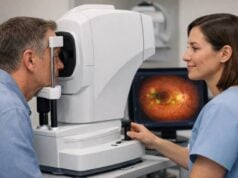
If blurry vision persists, an eye exam is usually straightforward and often reassuring. The clinician’s goal is to pinpoint whether the blur is coming from the tear film and cornea, the lens and focusing system, or the retina and optic nerve.
A typical evaluation may include:
- Visual acuity testing (distance and near), sometimes with a pinhole test to see whether blur is optical
- Refraction to check whether your prescription needs a temporary or permanent adjustment
- Slit-lamp exam of the eyelids, tear film, and cornea to look for dryness, inflammation, or infection
- Eye pressure measurement, especially if there is pain, headache, or steroid use
- Pupil and color testing, which can reveal optic nerve involvement
- Dilated retinal exam to assess for bleeding, swelling, vascular changes, or retinal tears
Depending on findings, additional testing may be recommended. Imaging of the retina (often with photographs or cross-sectional scans) can show subtle swelling or fluid that you cannot feel. If the concern is neuro-ophthalmic—such as optic neuritis or a cranial nerve palsy—your clinician may coordinate with neurology and consider targeted blood tests or imaging of the brain and orbits.
You can make the visit more efficient by bringing:
- The date your symptoms started and whether they were sudden or gradual
- A list of all medications and supplements, including cold remedies and inhalers
- Any history of migraine, diabetes, autoimmune disease, clotting disorders, or prior eye problems
- Notes on what improves symptoms (blinking, drops, rest) and what worsens them (screens, dry air, mask use)
If you are in the later phase of recovery, it is also reasonable to discuss post-viral dry eye and focusing fatigue. Some people need a short-term plan: regular lubricating drops, eyelid hygiene, screen-time boundaries, and a follow-up visit to confirm improvement. Others benefit from prescription anti-inflammatory drops, treatment for eyelid gland dysfunction, or a temporary glasses adjustment for near work.
A practical timeline:
- If blur is mild and clearly dry-eye–type, try supportive care for 48–72 hours.
- If blur is improving but not resolved, reassess at 1–2 weeks.
- If blur is persistent, one-sided, worsening, or paired with red flags, do not wait—get evaluated promptly.
The goal is not only to restore clarity, but also to confirm that your eyes and visual pathways are safe while your body recovers.
References
- Ocular manifestations of COVID-19: A systematic review of current evidence 2024 (Systematic Review)
- Update on overview of ocular manifestations of COVID-19 2022 (Review)
- Ophthalmic Presentations and Manifestations of COVID-19: A Systematic Review of Global Observations 2023 (Systematic Review)
- A review of neuro-ophthalmic sequelae following COVID-19 infection and vaccination 2024 (Review)
Disclaimer
This article is for general educational purposes and does not replace individualized medical advice, diagnosis, or treatment. Blurry vision can have many causes, including conditions that require urgent care. If you have sudden vision loss, severe eye pain, new flashes or floaters, a curtain-like shadow, or any neurologic symptoms (such as weakness, numbness, confusion, or trouble speaking), seek emergency evaluation promptly. If you have COVID-19 and new or persistent vision changes, contact a qualified eye care professional for guidance on safe timing and appropriate assessment.
If you found this helpful, consider sharing it on Facebook, X (formerly Twitter), or any platform you prefer.