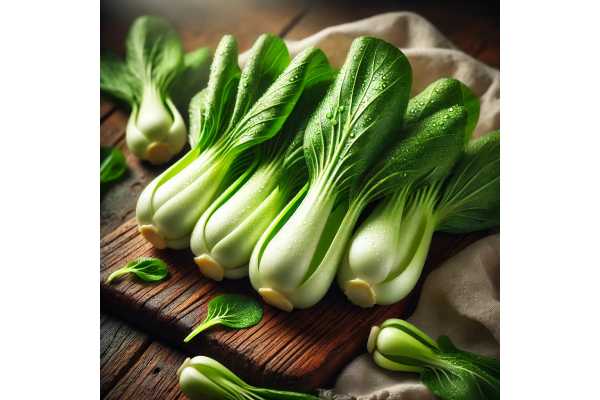
Bok choy, sometimes called pak choi or Chinese cabbage, is a leafy green that delivers far more nutrition than its delicate appearance suggests. Belonging to the Brassica family alongside kale, broccoli, and cabbage, it combines a very low calorie content with impressive levels of vitamins A, C, and K, as well as folate, calcium, and potassium.
In the kitchen, bok choy is remarkably adaptable. Its crisp white stalks and tender dark leaves cook quickly and pair well with garlic, ginger, soy-based sauces, and light broths. You will see it in stir-fries, noodle soups, steamed side dishes, and raw salads. Because it is mild and slightly sweet, it also works well in dishes for people who are wary of more bitter greens.
At the same time, bok choy is a cruciferous vegetable rich in glucosinolates and other plant compounds that have been investigated for roles in heart health, blood sugar balance, and cancer prevention. There are also a few specific safety notes, especially for people with thyroid disease or those considering extreme intakes of raw bok choy. This guide walks through bok choy’s nutrition profile, science-based benefits, potential risks, and practical ways to select, store, and cook it.
Nutrition Snapshot
- Bok choy provides roughly 13 kcal, 2.2 g carbohydrates, 1 g fiber, and 1.5 g protein per 100 g, plus high vitamin A, C, and K with very low fat and sodium.
- As a cruciferous vegetable, it supplies glucosinolates and other phytonutrients linked with heart, metabolic, and cancer-protective benefits when eaten regularly.
- A practical serving is 1–2 cups raw or ½–1 cup cooked bok choy (about 70–150 g), several times per week as part of a varied vegetable intake.
- People with thyroid disease should avoid very large amounts of raw bok choy and discuss intake with their clinician, especially if iodine intake is low or medication doses are being adjusted.
Table of Contents
- Bok choy basics and uses
- Bok choy nutrition profile
- Science backed benefits of bok choy
- Risks, allergies and thyroid considerations
- Selecting fresh bok choy and storage
- Cooking bok choy and nutrient retention
- Bok choy portions, comparisons and FAQs
Bok choy basics and uses
Bok choy (Brassica rapa subsp. chinensis) is a non-heading Chinese cabbage with crisp white stalks and dark green leaves. Unlike classic cabbages that form tight heads, bok choy grows as an open rosette. It is common in East and Southeast Asian cuisines but is now widely available in supermarkets and farmers’ markets worldwide.
You will typically encounter two main forms. “Standard” bok choy has broad, thick stalks and large leaves; “baby” bok choy is harvested younger, with smaller, more tender plants often cooked whole or halved. Nutritionally they are very similar; the choice is more about texture and presentation.
Flavor-wise, bok choy is mild, slightly sweet, and far less bitter than some other cruciferous vegetables. The stalks stay crunchy when lightly cooked, while the leaves soften quickly. This contrast in texture makes bok choy excellent for quick cooking methods. Common uses include:
- Stir-frying with garlic, ginger, and a splash of soy sauce or tamari.
- Adding to noodle soups, dumpling fillings, or hotpots.
- Steaming or braising with mushrooms, tofu, or seafood.
- Slicing raw into salads or slaws for extra crunch and color.
Because bok choy is very low in calories yet rich in micronutrients, it is an efficient way to increase vegetable volume in meals without significantly affecting energy intake. Its high water content also contributes to hydration and meal bulk, which can improve satiety when paired with protein and healthy fats.
Bok choy belongs to the cruciferous family, which is characterized by sulfur-containing compounds that can create a faintly peppery or mustard-like aroma when cut or cooked. In bok choy, these flavors are relatively subtle, so it often appeals even to people who dislike stronger-tasting relatives like Brussels sprouts.
From a cultural perspective, bok choy features in everyday home cooking as well as festive dishes. It is often associated with prosperity and long life in some traditions because of its leafy appearance and vibrant green color. Practically, it offers an easy entry point into cooking with Asian greens, especially for quick weeknight meals.
Bok choy nutrition profile
The following values are approximate for raw bok choy per 100 g, based on national food composition data and rounded for clarity.
Macros and electrolytes (per 100 g raw bok choy)
| Nutrient | Amount per 100 g | Unit | Approx. %DV* |
|---|---|---|---|
| Energy | 13 | kcal | 1% |
| Water | 96 | g | — |
| Protein | 1.5 | g | 3% |
| Total fat | 0.2 | g | 0% |
| Carbohydrates (total) | 2.2 | g | 1% |
| Dietary fiber | 1.0 | g | 4% |
| Total sugars | 1.2 | g | — |
| Net carbohydrates (approx.) | 1.2 | g | — |
| Sodium | 65 | mg | 3% |
| Potassium | 252 | mg | 5% |
*%DV based on a 2,000 kcal reference diet.
This profile shows why bok choy is considered an ultra–low calorie, low-carbohydrate vegetable with modest fiber and useful levels of electrolytes, especially potassium.
Vitamins (per 100 g raw bok choy)
| Vitamin | Amount per 100 g | Unit | Approx. %DV |
|---|---|---|---|
| Vitamin A (as retinol activity) | 223 | µg | 25% |
| Vitamin C (ascorbic acid) | 45 | mg | 50% |
| Vitamin K | 46 | µg | 38% |
| Folate (vitamin B9, total) | 66 | µg | 16% |
| Vitamin B6 (pyridoxine) | 0.14 | mg | 8% |
| Thiamine (vitamin B1) | 0.04 | mg | 3% |
| Riboflavin (vitamin B2) | 0.05 | mg | 4% |
| Niacin (vitamin B3) | 0.35 | mg | 2% |
| Vitamin E | 0.06 | mg | <1% |
Bok choy stands out for its high vitamin C, A, and K content relative to calories, making it useful for immune function, skin and eye health, and normal blood clotting.
Minerals and trace elements (per 100 g raw bok choy)
| Mineral | Amount per 100 g | Unit | Approx. %DV |
|---|---|---|---|
| Calcium | 105 | mg | 8% |
| Iron | 0.8 | mg | 4% |
| Magnesium | 19 | mg | 5% |
| Phosphorus | 37 | mg | 3% |
| Potassium | 252 | mg | 5% |
| Zinc | 0.2 | mg | 2% |
| Manganese | 0.16 | mg | 7% |
| Selenium | 0.5 | µg | 1% |
Calcium and potassium are noteworthy, especially for people who prefer to obtain more bone- and blood-pressure–related minerals from vegetables and legumes.
Bioactives, glycemic and acid–base metrics, and oxalates
Key non-vitamin, non-mineral components include:
- Glucosinolates and their breakdown products (such as isothiocyanates), which are being studied for anti-inflammatory, cardiometabolic, and anticancer effects.
- Carotenoids, particularly beta-carotene, which the body can convert to vitamin A.
- Phenolic compounds and other antioxidants, contributing to oxidative stress protection.
Bok choy is naturally very low in carbohydrates and has a minimal glycemic load, making it suitable for blood sugar–conscious eating patterns. It also has a negative potential renal acid load, meaning it is mildly alkalizing in typical dietary models.
Importantly for people at risk of kidney stones, bok choy is a low-oxalate leafy green: its oxalate load is much lower than that of spinach or beet greens and is generally compatible with low-oxalate diet guidance.
Science backed benefits of bok choy
Because bok choy is part of the cruciferous vegetable family, much of the research on its benefits comes from studies that group multiple Brassica vegetables together. While specific trials on bok choy alone are limited, the overall evidence for cruciferous vegetables is strong and highly relevant.
Heart health and blood pressure
Bok choy contains potassium, magnesium, calcium, fiber, and various phytochemicals that together support cardiovascular health. Higher intakes of cruciferous vegetables are associated with better blood pressure and lipid profiles in observational studies, and some controlled trials show improvements in blood pressure and vascular markers when people increase their intake of these vegetables.
Potential mechanisms include:
- Potassium’s role in supporting healthy blood pressure regulation.
- Glucosinolates and their breakdown products, which may improve endothelial function and reduce oxidative damage.
- Fiber’s contribution to cholesterol management and improved glycemic control.
Cancer prevention potential
Cruciferous vegetables, including bok choy, are rich in glucosinolates that can convert to biologically active compounds such as isothiocyanates and indoles. These compounds have been shown in laboratory and animal studies to:
- Support detoxification of certain carcinogens.
- Promote programmed cell death in damaged cells.
- Influence hormone metabolism and cell-signaling pathways linked to cancer risk.
Epidemiological research has associated higher cruciferous vegetable consumption with lower risks of several cancers, including colorectal, lung, and some hormone-sensitive cancers. Even moderate daily intakes of cruciferous vegetables (for example, a half-cup serving) appear to contribute to risk reduction, though they are only one component of a broader protective lifestyle.
Metabolic and inflammatory health
Bok choy’s low calorie density, modest fiber, and high micronutrient content support weight management and metabolic health. Regular consumption of cruciferous vegetables has been linked with:
- Improved markers of blood glucose and insulin sensitivity.
- Healthier blood lipid patterns.
- Lower levels of inflammatory markers in some populations.
While it is impossible to attribute these benefits to bok choy alone, including it as part of a varied vegetable intake can help people reach the levels of cruciferous consumption associated with these outcomes.
Eye, bone, and immune function
Because bok choy delivers substantial vitamin A (via carotenoids), vitamin C, vitamin K, calcium, and folate, it can support:
- Eye health and vision through vitamin A and carotenoids.
- Immune function and wound healing via vitamin C and folate.
- Bone health and normal blood clotting through vitamin K and calcium.
These contributions are particularly valuable when bok choy replaces low-nutrient side dishes and when it is combined with other colorful vegetables and quality protein sources.
Risks, allergies and thyroid considerations
For most people, bok choy is a very safe and beneficial addition to meals. However, certain situations warrant extra attention.
Thyroid and goitrogen concerns
Like other cruciferous vegetables, bok choy contains goitrogenic compounds derived from glucosinolates. In very high amounts, especially when raw and combined with low iodine intake, these compounds can interfere with thyroid hormone synthesis.
A widely discussed medical case described a woman who developed severe hypothyroidism after consuming extremely large quantities of raw bok choy daily for months as a self-treatment for diabetes. This intake was far beyond typical dietary habits. Reviews of cruciferous vegetables and thyroid health conclude that normal dietary amounts of cooked or mixed raw and cooked crucifers are unlikely to harm thyroid function in people with adequate iodine status.
Practical points:
- People with well-managed hypothyroidism can usually include moderate servings of cooked bok choy as part of a balanced diet.
- Those with thyroid conditions should avoid very large daily amounts of raw bok choy, especially if iodine intake is uncertain.
- Cooking (steaming, stir-frying, boiling) reduces the activity of certain goitrogenic enzymes, further lowering risk.
It is always wise for people on thyroid medication to discuss any major, sustained changes in cruciferous vegetable intake with their healthcare professional, since such changes can subtly alter hormone requirements.
Oxalates and kidney stone risk
Unlike some leafy greens, bok choy is very low in oxalates. For individuals prone to calcium oxalate kidney stones, this makes bok choy a safer choice than high-oxalate greens such as spinach, beet greens, and Swiss chard. It is often recommended as a primary leafy green when a low-oxalate diet is prescribed.
Allergies and intolerances
True allergy to bok choy is uncommon but possible. Signs can include itching, hives, swelling of the lips or throat, wheezing, or dizziness shortly after eating. Anyone experiencing such symptoms after eating bok choy should seek urgent medical care and formal allergy assessment.
Milder digestive discomfort (gas, bloating) may occur in some people due to the fermentable carbohydrates and fiber in bok choy, especially if large amounts are introduced suddenly. In that case, smaller portions, more thorough cooking, and combining bok choy with other foods may help.
Medication interactions and special populations
- People on vitamin K–sensitive anticoagulant therapy (for example, warfarin) should keep intake of vitamin K–rich leafy greens—bok choy included—consistent from week to week, rather than avoiding them altogether.
- Those with very low blood pressure or on multiple antihypertensive medications should discuss substantial dietary changes with their clinicians, even though bok choy itself is unlikely to cause dramatic shifts.
- Infants and very young children can have small amounts of well-cooked bok choy as part of diversified complementary feeding, but raw forms and salty sauces should be avoided.
Selecting fresh bok choy and storage
Choosing high-quality bok choy and storing it well improves both enjoyment and nutritional value.
How to select good bok choy
When buying fresh bok choy, look for:
- Firm, crisp stalks that feel heavy for their size and snap cleanly when bent.
- Leaves that are deep green (or pale green in some varieties), free from large yellow patches or major wilting.
- Minimal blemishes or dark, slimy spots, especially at the base where decay can start.
Baby bok choy should appear compact and perky, with proportionally more leaf to stalk. Larger, mature bok choy is fine for soups and stir-fries but may have slightly tougher outer leaves that benefit from a bit more cooking time.
Some markets also sell Shanghai bok choy, which has lighter green stems and leaves and an even milder flavor. You can treat it the same way in recipes.
Storage for freshness and safety
To store bok choy at home:
- Remove any obviously damaged outer leaves, but keep the base intact to hold the stalks and leaves together.
- Do not wash until just before use; excess moisture in storage can speed spoilage.
- Place in a breathable produce bag or loosely wrapped in paper towels inside a perforated plastic bag.
- Store in the vegetable drawer of the refrigerator.
Under good conditions, fresh bok choy usually keeps for about 3–5 days, sometimes longer if very fresh at purchase. As it ages, leaves may yellow or wilt and stalks can become floppy. These visual cues are more useful signals of decline than an exact time limit.
If you need to store bok choy longer:
- Lightly blanch chopped bok choy (briefly boiling, then cooling quickly) and freeze it for later use in soups or stir-fries. This preserves many nutrients but can soften texture.
- Use older bok choy in soups or braises where slight wilting is less noticeable, reserving very fresh pieces for quick stir-fries.
Sustainability considerations
Bok choy is relatively efficient to grow and can be cultivated in many temperate and subtropical regions. To reduce environmental impact:
- Buy locally grown bok choy when available to cut transport distance.
- Use the whole plant—stalks and leaves—to minimize waste.
- Add trimmed pieces and outer leaves to homemade stocks rather than discarding them, if they are still fresh and clean.
These practices not only support sustainability but also help you extract maximum culinary and nutritional value from each bunch.
Cooking bok choy and nutrient retention
Bok choy’s delicate structure means it cooks quickly, which is convenient and can help preserve heat-sensitive nutrients if you avoid overcooking.
Preparation basics
Before cooking:
- Trim a thin slice from the root end to separate stalks if desired.
- Rinse thoroughly, paying attention to the base where soil and grit often collect. For whole or halved baby bok choy, swish repeatedly in a bowl of water.
- Decide how to cut: keep baby bok choy whole or halved for presentation, or slice larger bok choy into separate stalks and leaves. Stalks benefit from slightly longer cooking than leaves.
Cooking methods and their effects
- Stir-frying or quick sautéing: This classic method uses high heat and short cooking times, often with a small amount of oil and aromatic ingredients. It tends to preserve vitamin C and folate reasonably well compared with prolonged boiling, while enhancing flavor and texture.
- Steaming: Gentle steaming softens leaves and stalks without immersing them in water, helping retain water-soluble vitamins and minerals. Steamed bok choy works as a simple side dish with a drizzle of sesame oil or a light sauce.
- Boiling or blanching: Submerging bok choy in boiling water for a short period can cause some loss of vitamin C and folate into the cooking water but is useful for softening large batches quickly, reducing bitterness, or preparing greens for freezing.
- Simmering in soups and stews: Adding bok choy toward the end of cooking keeps it tender and ensures many leached nutrients remain in the broth.
- Roasting or grilling: Less common but flavorful; high heat caramelizes the cut surfaces of halved baby bok choy, creating deeper flavors. Some vitamin loss occurs, but overall mineral and fiber content remain.
Because bok choy is so low in calories, the cooking method’s added ingredients often matter more nutritionally than the vegetable itself. Using modest amounts of healthy fats, limiting added sodium, and balancing with protein and complex carbohydrates keeps the overall dish aligned with health goals.
Practical nutrient-preserving tips
- Cook bok choy just until the stalks are crisp-tender and leaves wilted. Overcooking dulls color and flavor and increases nutrient loss.
- If boiling or blanching, keep the cooking time short and consider using the cooking liquid in soups or sauces to capture soluble nutrients.
- Combine bok choy with iron-rich foods (such as legumes or tofu) and small amounts of vitamin C–rich ingredients (citrus, peppers) to support iron absorption from the meal as a whole.
Ultimately, the best cooking method is the one that encourages you to eat bok choy often. Gentle, quick cooking methods usually offer a good balance between taste, texture, safety, and nutrient retention.
Bok choy portions, comparisons and FAQs
Understanding what counts as a portion and how bok choy compares with other greens makes planning easier.
Practical portion sizes
Realistic serving examples include:
- About 1 cup raw, shredded bok choy (roughly 70 g).
- About ½–1 cup cooked bok choy (70–150 g).
- Several small baby bok choy heads as a side dish, depending on size.
For most adults, including bok choy in meals two to four times per week within a varied vegetable intake is a reasonable target. People who enjoy cruciferous vegetables may choose to eat them daily by rotating bok choy with broccoli, cabbage, kale, and similar greens.
How bok choy compares with other greens and vegetables
- Versus spinach or Swiss chard: Bok choy provides less iron per gram than spinach but is far lower in oxalates, making more of its calcium and certain minerals potentially usable and making it more suitable for low-oxalate diets.
- Versus lettuce: Compared with many lettuces, bok choy offers substantially more vitamin A, vitamin C, vitamin K, calcium, and folate, with only a small increase in calories.
- Versus other cruciferous vegetables: It has a milder flavor than kale or Brussels sprouts and a more delicate texture than cabbage, which can make it easier to incorporate for people sensitive to stronger tastes.
Frequently asked questions
Is bok choy low in FODMAPs?
Typical servings of bok choy are generally considered low in fermentable carbohydrates, especially compared with certain other vegetables. Many people with sensitive digestion tolerate small portions well, but individual responses can vary.
Can bok choy fit into a low carb or ketogenic diet?
Yes. With about 2.2 g total carbohydrate and roughly 1.2 g net carbohydrate per 100 g, bok choy is compatible with low carb and ketogenic patterns, particularly when used as a bed for higher-protein or higher-fat main dishes.
Is bok choy safe during pregnancy and breastfeeding?
Bok choy can be a beneficial part of pregnancy and breastfeeding diets due to its folate, vitamin C, vitamin K, calcium, and iron content. Reasonable portions of cooked or lightly cooked bok choy are appropriate. As always, food hygiene (thorough washing and proper refrigeration) is important.
Should people with thyroid conditions avoid bok choy completely?
Generally, no. Most evidence suggests that normal dietary amounts of cooked or mixed raw and cooked cruciferous vegetables are safe when iodine intake is adequate and thyroid medication is properly managed. The case of harm involved extremely large daily amounts of raw bok choy, far beyond typical eating patterns. Individuals with thyroid disease should, however, discuss their overall diet with their healthcare team.
Is raw bok choy healthier than cooked?
Raw bok choy preserves maximum vitamin C and certain enzymes, while cooking can improve digestibility and reduce some goitrogenic activity. In practice, a mix of raw and cooked preparations is a sensible approach, aligned with personal tolerance and taste.
References
- Nutrition Facts for Raw Bok Choy (Pak-Choi) 2023 (Food Composition Database)
- Bok Choy: Nutrition, Benefits, Risks, and How to Cook It 2025 (Evidence Summary)
- Bok choy: Benefits, nutrition, diet, vs spinach, and risks 2023 (Evidence Summary)
- Glucosinolates From Cruciferous Vegetables and Their Potential Role in Cardiometabolic Health 2021 (Systematic Review)
- Do Brassica Vegetables Affect Thyroid Function? 2024 (Review)
Disclaimer
This article is intended for general information only and does not provide individualized medical, nutritional, or lifestyle advice. Bok choy is usually safe when eaten in typical food amounts, but people with thyroid disorders, kidney disease, blood clotting disorders, or other significant medical conditions may have specific dietary needs. Always consult a qualified healthcare professional or registered dietitian before making major changes to your diet, using large amounts of any single food, or relying on foods or supplements for disease treatment or prevention.
If this article helped you better understand bok choy, you are welcome to share it on Facebook, X (formerly Twitter), or any platform you prefer. Thoughtful sharing supports others in accessing balanced nutrition information and helps our team continue creating carefully researched, practical content.