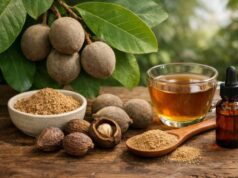
Boldo is an evergreen tree native to Chile whose aromatic leaves have long been used as a traditional digestive and “bile-support” herb. In modern herbal practice, boldo is most often taken as a tea or as a water-based extract for short-term relief of indigestion—especially when symptoms feel heavier after meals, with bloating, nausea, or a sense that digestion is sluggish. Its reputation comes from a unique mix of plant alkaloids (notably boldine), polyphenols, and volatile compounds that influence bile flow, smooth-muscle tone in the gut, and oxidative stress pathways.
At the same time, boldo is not a casual everyday tea for everyone. Concentrated forms—especially essential oil preparations—raise safety concerns because certain volatile constituents can be irritating or toxic at higher exposures. Used thoughtfully, in the right form and dose, boldo can be a useful “situational” herb for digestive comfort, but it requires practical guardrails around duration, contraindications, and drug interactions.
Essential Insights
- Boldo is most commonly used for short-term indigestion, bloating, and post-meal heaviness.
- Avoid boldo essential oil and high-alcohol extracts due to higher risk of adverse effects.
- Typical adult tea dose is 1–2 g dried leaf infused in 150 mL hot water, 2–3 times daily.
- Avoid use in pregnancy and breastfeeding, and if you have bile duct obstruction or gallstones.
- Use extra caution with blood thinners and before surgery due to potential interaction risk.
Table of Contents
- Boldo basics and key compounds
- How boldo may support digestion
- Boldo for liver and gallbladder health
- How to use boldo in practice
- How much boldo per day
- Boldo side effects and interactions
- What research says and limits
Boldo basics and key compounds
Boldo (Peumus boldus) is best known for its leaves: thick, oval, strongly scented, and naturally bitter. That bitterness is not a flaw—it is part of why many people reach for boldo when digestion feels slow or “stuck.” In traditional use, bitter herbs are taken shortly before meals to help trigger digestive secretions and coordinate the rhythm of the stomach, liver, gallbladder, and small intestine.
What people mean by “boldo leaf”
Most products labeled “boldo” are made from the dried leaf. You may see it sold as:
- Loose-leaf tea or tea bags
- Capsules containing powdered leaf
- Capsules or tablets containing a dry extract (often water-based)
- Liquid extracts (tinctures), sometimes combined with other bitters
Because boldo’s safety and effects depend heavily on which constituents are present, the type of preparation matters as much as the plant itself.
Key ingredients and what they do
Boldo contains several families of compounds that help explain its traditional role:
- Aporphine alkaloids (including boldine): These are often discussed for antioxidant behavior and potential effects on smooth muscle and signaling pathways involved in inflammation and bile-related digestion. In real-world use, boldine is best thought of as one piece of a larger “leaf matrix,” not a guarantee of a specific clinical outcome.
- Polyphenols and flavonoids: These contribute to antioxidant capacity and may help calm oxidative stress that accompanies irritation or inflammation in tissues. They are also part of what makes a water infusion (tea) meaningful, because many polyphenols extract well into hot water.
- Volatile (essential oil) constituents: These provide the signature aroma. Some components can be harsh or risky in concentrated forms. This is why ingesting boldo essential oil is generally considered a different—and higher-risk—practice than drinking boldo tea.
Why extraction method changes the risk profile
A practical rule: water-based preparations typically emphasize polyphenols and reduce exposure to certain volatile compounds, while essential oils and some alcohol extracts can concentrate volatiles. If your main goal is gentle digestive support, tea or a water-based dry extract is usually the most conservative choice.
How boldo may support digestion
Most people try boldo for one of three patterns: post-meal heaviness, bloating with sluggish digestion, or nausea that feels tied to rich foods. While experiences vary, boldo’s traditional “logic” is consistent: stimulate and coordinate digestion rather than simply suppress symptoms.
Post-meal heaviness and “slow” digestion
Bitter herbs can increase salivation and prime the stomach for food. Taken 10–20 minutes before eating, boldo tea may help some people feel less weighed down after meals—particularly meals that are higher in fat. Practically, this can show up as:
- Less pressure in the upper abdomen
- Reduced belching or “food sitting there” sensation
- A gentler transition from stomach digestion into intestinal digestion
If you are prone to acid reflux, the bitter effect is a double-edged sword: some people feel better, while others notice more burn. This is one reason to start with a weaker brew and evaluate your own response.
Bloating, gas, and mild cramping
Boldo is often described as mildly antispasmodic, which matters when bloating is paired with crampy discomfort. If the gut is tense, even normal gas can feel painful. In that context, boldo is sometimes used as a short course rather than a daily habit.
If bloating is your main symptom, you may also benefit from a gentler, more widely used option like peppermint for digestive comfort, especially when symptoms seem linked to stress and gut spasm.
Nausea and appetite “reset”
Some users report that a small cup of boldo tea can ease mild nausea or restore appetite when food feels unappealing. The likely explanation is not a single “anti-nausea compound,” but a combination of:
- Aromatic stimulation (smell and taste)
- Bitter signaling that affects digestive secretions
- A shift in gut motility and tone
A helpful expectation: boldo is more likely to help functional digestive discomfort than nausea caused by infection, migraine, pregnancy, or medication side effects—situations where you should address the root cause first.
Boldo for liver and gallbladder health
Boldo’s “liver” reputation is often misunderstood. In herbal traditions, the liver and gallbladder are central to digestion because bile helps emulsify fats and supports the normal movement of waste through the intestines. When people say boldo supports the liver, they often mean it supports bile-related digestion—not that it “detoxes” the body in a dramatic or fast way.
Bile flow and fat digestion
Boldo is commonly categorized as a bitter and choleretic-style herb (a traditional term for herbs used to support bile function). In practice, this may be relevant when symptoms cluster like:
- Greasy-food intolerance
- Nausea after rich meals
- Pale stools or a sense that fat digestion is inefficient (these symptoms also warrant medical evaluation)
For some people, short-term use before meals is more useful than taking it after symptoms flare. Think of it as a “pre-meal support” tool rather than an emergency fix.
“Liver detox” claims: what’s reasonable
Your liver already detoxifies continuously. What herbs can sometimes do is support processes that influence how you feel: digestion, inflammation signaling, oxidative stress, and bile movement. A realistic framing is:
- Boldo may help digestive symptoms that feel bile-related.
- It is not a substitute for medical care in hepatitis, fatty liver disease, cirrhosis, or drug-induced liver injury.
If your goal is comprehensive liver support alongside diet and medical guidance, some people explore alternatives with more established modern clinical interest, such as milk thistle for liver support strategies. Even then, product choice and medical context matter.
Gallbladder cautions are not optional
Here is the key safety point: if you have gallstones, a history of bile duct obstruction, or unexplained right-upper-abdominal pain, do not “experiment” with bile-stimulating herbs. In those situations, stimulating bile flow can worsen pain or complicate care. If you suspect gallbladder issues, it is safer to get evaluated first.
How to use boldo in practice
Boldo is most useful when you match the form to the goal: gentle digestive support generally favors tea or a water-based extract, while concentrated oils are best avoided for internal use.
Boldo tea (infusion)
Tea is the classic option and often the most conservative. It is also the easiest to “titrate”—you can brew it weaker or stronger.
How to prepare
- Add dried boldo leaf to a cup or mug.
- Pour hot (just-boiled) water over it.
- Cover and steep 5–10 minutes, then strain.
How it tends to be used
- Before meals: 10–20 minutes prior, especially before heavier meals
- After meals: if you are testing tolerance, some people prefer after eating to reduce the chance of reflux
Taste matters: boldo is naturally bitter and aromatic. If bitterness is intense, reduce the dose rather than masking it with lots of sweeteners. A small amount of lemon or honey is reasonable if it improves consistency.
Capsules and dry extracts
Capsules can be convenient when you want predictable dosing and do not enjoy the taste. Look for labels that specify:
- Water-based dry extract (often described with an extract ratio)
- Clear mg amounts per capsule
- Avoidance of boldo essential oil as an ingestible ingredient
Boldo is also frequently combined with other bitters. Combinations are not automatically “better,” but they can be more comfortable for some users—particularly blends that emphasize gentle bile support and gut spasm relief. One common companion in digestive formulas is artichoke leaf; if you want to understand that ingredient on its own, see artichoke for digestion and bile-related support.
What not to do
- Do not ingest boldo essential oil. Essential oils are highly concentrated and do not behave like teas.
- Do not use boldo as a daily “cleanse.” It is better framed as a short-term digestive tool.
- Do not stack multiple bitter or bile-moving herbs if you already have sensitive digestion or uncertain gallbladder health.
How much boldo per day
Boldo dosing depends on form. A helpful principle is to start low, use it for a short window, and reassess. If you need continuous support for weeks or months, it is worth identifying the underlying driver (diet triggers, reflux, H. pylori, gallbladder disease, medication effects, stress, or food intolerances) rather than rotating digestive herbs indefinitely.
Typical adult tea dose
A commonly used adult range for boldo leaf infusion is:
- 1–2 g dried leaf infused in 150 mL hot water
- Taken 2–3 times daily
Many people do well starting with one cup daily for 2–3 days, then increasing only if helpful and well tolerated.
Capsules and dry extract dosing
Because products vary widely, follow the label first—then use common sense about totals. A typical pattern for water-based dry extracts is:
- 200 mg per capsule, taken 1–2 capsules twice daily
This is an example of a traditional-style dosing approach for certain standardized preparations; your product may differ depending on extract strength and how it is made.
Timing: before or after food?
- Before meals is most consistent with the “bitter digestive” goal.
- After meals may feel gentler if you are reflux-prone.
- If you take medications, consider separating boldo by 2 hours unless your clinician advises otherwise, since digestive herbs can influence absorption and gut movement.
Duration and when to stop
Boldo is best used as a short course, often 1–2 weeks, especially for capsule forms. Stop sooner if:
- Symptoms worsen
- You develop abdominal pain, rash, palpitations, or unusual fatigue
- You notice dark urine, yellowing of skin/eyes, or persistent nausea (seek medical care)
If you have no clear benefit after a week of consistent use, boldo may simply not be your herb—or your symptoms may not be the kind it helps.
Boldo side effects and interactions
Even though boldo is “natural,” it is still pharmacologically active. The most important safety decision is choosing a safer form (tea or water-based extract) and knowing when to avoid it entirely.
Common side effects
At typical tea doses, side effects are usually mild when they occur, but can include:
- Stomach irritation, nausea, or diarrhea (often from too-strong tea)
- Headache or a “wired” feeling in sensitive individuals
- Worsened heartburn in reflux-prone users
A simple fix is to reduce dose strength, shorten steep time, or move the timing to after meals. If symptoms persist, discontinue.
Higher-risk reactions and red flags
More concerning reactions have been reported with concentrated or inappropriate preparations. Seek medical evaluation if you experience:
- Rapid heartbeat, faintness, or chest discomfort
- Severe abdominal pain (especially right-upper abdomen)
- Signs of allergy (hives, swelling, wheezing)
- Signs suggestive of liver stress (jaundice, dark urine, marked fatigue)
A key reason essential oil is problematic is that volatile constituents can be irritating or toxic at higher exposures. Tea is not “risk-free,” but it generally does not deliver the same concentrated profile as an essential oil product.
Medication interactions
Use caution and discuss with a clinician if you take:
- Anticoagulants or antiplatelet drugs (blood thinners), due to potential bleeding-risk interactions
- Immunosuppressants (for example, transplant medications), where herb-drug interactions can be clinically important
- Drugs that affect heart rhythm, especially if you have a personal or family history of arrhythmia
Also be cautious before surgery. A practical rule is to stop non-essential herbal supplements at least 1–2 weeks prior to procedures unless your surgical team says otherwise.
Special populations
Avoid use in:
- Pregnancy and breastfeeding
- Children and adolescents, unless specifically advised by a qualified clinician
- People with known bile duct obstruction or gallstones
If you have chronic liver disease, do not self-treat with boldo; get individualized guidance.
What research says and limits
Boldo sits in a common herbal “evidence gap”: strong traditional usage and plausible mechanisms, but limited high-quality human trials on boldo alone for specific symptoms. That does not mean it cannot help; it means expectations should stay practical.
What we can say with reasonable confidence
- Digestive tradition is consistent: Across different herbal traditions, boldo is repeatedly used for dyspepsia-like symptoms (indigestion, fullness, mild spasm).
- Leaf chemistry supports digestive plausibility: Bitters, polyphenols, and alkaloids can influence secretion, smooth muscle tone, and oxidative stress markers—processes relevant to functional digestive discomfort.
- Short-term use is the norm: Most traditional patterns and product directions treat boldo as a time-limited tool, not a daily staple.
Where the evidence is thinner
- “Liver detox” language is not a clinical endpoint. Research may measure oxidative markers or liver enzymes in models, but that does not translate directly into a need for routine detoxing in healthy people.
- Human studies often involve combinations. Many commercial products pair boldo with other herbs, making it hard to know what boldo contributes on its own.
- Dose and preparation vary. Tea, powdered leaf, water extract, and essential oil are not interchangeable in either efficacy or safety.
How to use the evidence wisely
If you want to make an evidence-aligned decision, focus on questions that matter:
- What symptom are you targeting—bloating, post-meal fullness, nausea, cramping?
- Is your product a tea or water-based extract (generally more conservative), or a concentrated volatile preparation (higher risk)?
- Are there red flags that require medical evaluation instead of herbal self-care (unexplained weight loss, persistent vomiting, blood in stool, jaundice, severe pain)?
In other words: boldo can be reasonable for short-term functional digestive discomfort when chosen and used carefully, but it should not replace diagnosis, dietary troubleshooting, or medical treatment when symptoms are persistent or severe.
References
- Assessment report on Peumus boldus Molina, folium 2016 (Guideline)
- Non‐Chinese herbal medicines for functional dyspepsia – PMC 2023 (Systematic Review)
- Frontiers | Pharmacology of boldine: summary of the field and update on recent advances 2024 (Review)
- Bioactive Content and Antioxidant Properties of Spray-Dried Microencapsulates of Peumus boldus M. Leaf Extracts – PubMed 2024 (Research Article)
Disclaimer
This article is for educational purposes only and does not provide medical advice, diagnosis, or treatment. Herbs and supplements can cause side effects and may interact with medications or medical conditions. If you are pregnant, breastfeeding, have gallbladder or liver disease, take prescription medications (especially blood thinners or immunosuppressants), or are preparing for surgery, consult a qualified healthcare professional before using boldo. Stop use and seek medical care promptly if you develop severe abdominal pain, allergic symptoms, palpitations, or signs of liver problems such as jaundice or dark urine.
If you found this guide useful, consider sharing it on Facebook, X (formerly Twitter), or any platform where your friends and community look for practical health information.