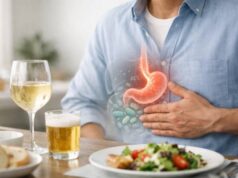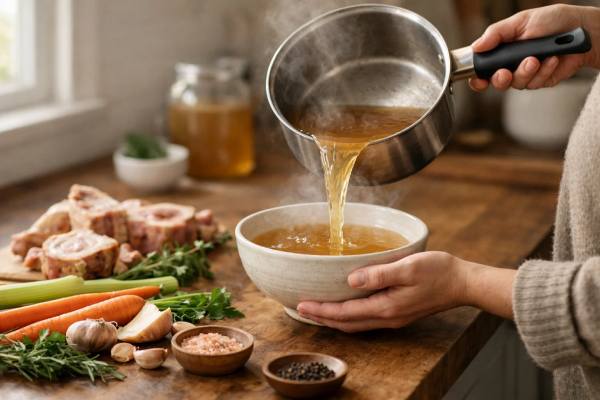
Bone broth has moved from a traditional comfort food to a modern “gut healing” staple. Part of the appeal is practical: it is warm, easy to sip when appetite is low, and can add protein and fluid in a form many people tolerate better than a full meal. The deeper appeal is biological. Broth made from bones and connective tissue can contain gelatin (from collagen), along with amino acids such as glycine and proline that are involved in building and repairing body tissues.
Still, “gut healing” is a slippery phrase. Some people mean fewer symptoms like bloating and cramping. Others mean reduced intestinal permeability, calmer immune activation, or support during an IBS or IBD flare. The truth sits in the middle: bone broth has promising components, but the clinical evidence is uneven. This article translates what research can and cannot tell you—and how to use bone broth wisely if it fits your body and goals.
Essential Insights
- Bone broth can be a gentle way to add fluids and some protein when your stomach feels sensitive.
- Claims about “sealing” the gut are mostly based on mechanisms and early research, not definitive human outcomes.
- Long-simmered broths may be high in sodium or histamine, which can worsen symptoms in some people.
- Choose broth by tolerability and label details, not hype, and treat it as supportive nutrition—not a cure.
Table of Contents
- What gut healing really means
- What is actually in bone broth
- Collagen and gelatin and the evidence
- Amino acids that support gut lining
- Bone broth and your microbiome
- When bone broth is not a fit
- How to use bone broth well
What gut healing really means
“Gut healing” is often used as if the digestive tract were a single surface you can patch with the right food. In reality, your gut is a living system: a mucus layer, an immune barrier, a lining of cells that renew every few days, and trillions of microbes that respond to what you eat, how you sleep, and how stressed you are.
A useful way to think about “healing” is to separate three goals that get lumped together:
1) Symptom soothing
This is the most immediate and measurable goal: less bloating, less nausea, fewer cramps, and more regular stools. Foods that are warm, low in fat, and easy to digest often help here, especially during flares or after illness. Bone broth can fit this category because it is gentle and hydrating, and it may replace meals you cannot tolerate temporarily.
2) Barrier support
The intestinal lining is selective: it absorbs nutrients while keeping most bacteria and irritants in the lumen. “Leaky gut” is a popular term for increased intestinal permeability, but permeability is not automatically a disease. It can be transient (after infection, heavy exercise, certain medications) or part of ongoing conditions (some IBS patterns, celiac disease, IBD). Supporting the barrier usually means addressing triggers (inflammation, infection, medication effects, stress, alcohol) more than adding a single “repair” ingredient.
3) Inflammation control
Inflammation can be mild and local (irritated lining) or systemic (immune activation that affects joints, skin, fatigue). In IBD, inflammation is central, and nutrition supports treatment but does not replace it. In IBS, inflammation is not typically the driver, but immune and nerve signaling can still be involved.
Bone broth sits best as supportive nutrition within a broader plan. It can make hard days easier, may contribute helpful building blocks, and can be part of an elimination or refeeding phase. The mistake is expecting it to override unresolved drivers like active IBD, ongoing NSAID use, untreated celiac disease, or chronic constipation that keeps the gut stretched and hypersensitive.
What is actually in bone broth
Bone broth is not one product. “Broth,” “stock,” and “bone broth” get used interchangeably, but their nutrition can differ dramatically depending on bones used, added meat, simmer time, acidity, and whether the final product is diluted.
Here is what tends to matter most for gut-related goals:
Protein and gelatin
Broths made with connective tissue (joints, knuckles, feet, skin) usually yield more gelatin. Gelatin is collagen that has been partially broken down by heat and water. In the fridge, higher-gelatin broths set like a soft gel; that texture is a quick clue you have extracted more collagen-derived material.
Commercial products vary widely. Some are closer to a seasoned beverage with modest protein; others are essentially a protein drink in soup form. Labels often show anywhere from single-digit grams of protein per serving to double digits. If you are using bone broth for nourishment during flares, protein content matters more than marketing terms.
Amino acids
Collagen-rich broths tend to be relatively high in glycine, proline, and hydroxyproline. They may contain glutamine and arginine as well, but amounts vary and are often lower than what is used in studies of amino acid supplementation. This matters because many “gut healing” claims assume supplement-level dosing.
Minerals and electrolytes
Minerals do transfer into broth, but not always in the quantities people expect. Preparation details (bone type, acidity, simmer time) change the result. For gut comfort, the most relevant “electrolyte” is often sodium—because it can help hydration but can also aggravate swelling, reflux, or blood pressure in sensitive individuals.
Fat and additives
Fat content depends on whether the broth is skimmed and whether fatty cuts are included. Higher fat can worsen symptoms in people prone to bile acid diarrhea, reflux, or gallbladder sensitivity. Additives in store-bought broth can also matter: onion and garlic are common triggers for people on a low FODMAP approach, and some thickeners can bother those with sensitive digestion.
Histamine potential
Long simmer times and slow cooling can increase histamine and related compounds in some preparations. If you notice headaches, flushing, itchy skin, or sudden reflux after broth, histamine intolerance is one possible reason.
In practice, the best bone broth for your gut is the one that matches your goal: higher protein for nutrition support, lower fat for reflux-prone digestion, lower sodium for daily use, and simpler ingredients if you suspect food triggers.
Collagen and gelatin and the evidence
Collagen is a structural protein found in connective tissues. When you simmer bones and cartilage, collagen unwinds into gelatin, and digestion then breaks it down further into peptides and amino acids. The key question is not whether collagen is “good,” but whether collagen-derived peptides meaningfully change gut outcomes in humans.
What the strongest new research suggests
Recent scientific attention has focused on barrier integrity and inflammation—especially in contexts where the gut lining is stressed. A modern review of bone broth and intestinal barrier function highlights plausible mechanisms: amino acids and minerals that may support mucosal integrity, immune signaling, and inflammation pathways. That said, reviews synthesize existing evidence, and much of the direct work still leans on animal models, cell studies, and indirect human outcomes.
What human studies can and cannot claim
Human trials of collagen peptides (supplements, not necessarily broth) give a mixed picture:
- Some studies in generally healthy participants report improvements in mild digestive symptoms such as bloating, especially with daily use over several weeks. These findings are encouraging but not definitive, because symptom improvement can be influenced by many factors (expectation, diet changes, regression to the mean, and the natural rise and fall of symptoms).
- Other controlled trials that measure specific markers of gut injury or permeability under stress conditions have found little to no change with collagen peptides, suggesting that collagen is not a guaranteed “barrier sealant” in every context.
A fair summary is this: collagen peptides may help a subset of people feel better, but the effect is not universal, and the best-supported outcomes today are modest—comfort, tolerability, and possible symptom relief—rather than dramatic shifts in disease activity.
Why collagen might still feel helpful
Even without a clear biomarker improvement, collagen-rich broth can still support your gut day-to-day by:
- replacing harder-to-digest foods during flares,
- providing a warm, low-residue option when appetite is low,
- increasing protein intake in people who undereat because symptoms make food feel risky,
- helping hydration when paired with sodium and fluid.
If you treat collagen as a supportive nutrient instead of a therapeutic drug, the evidence becomes easier to interpret: it may help, it may do nothing, and it is not a substitute for diagnosing and treating the reason your gut is inflamed or hypersensitive.
Amino acids that support gut lining
If bone broth has a “science story,” it often centers on amino acids linked to the intestinal lining. It is worth unpacking what each amino acid is known for—and what that means in real-world broth servings.
Glutamine: the most discussed, but not a shortcut
Glutamine is a fuel source for intestinal cells and immune cells. In some clinical settings (serious illness, trauma, certain types of malnutrition), glutamine has been studied for gut integrity. For chronic conditions, the results are mixed. Reviews of glutamine trials in IBD do not show consistent, meaningful improvement in disease course. That does not mean glutamine is useless—it means that IBD is complex, and simply adding one amino acid rarely overrides inflammation, immune signaling, and microbiome shifts.
For IBS, glutamine is sometimes discussed when there is suspected post-infectious onset or increased permeability, but research still does not support treating it as a universal solution.
Practical implication: bone broth likely does not provide glutamine in the high doses used in supplementation studies. If glutamine is part of your plan, you should discuss dosing and safety with a clinician rather than assuming broth equals supplement-level intake.
Glycine: calming and connective-tissue focused
Glycine is abundant in collagen. It is involved in making glutathione (an antioxidant) and in collagen synthesis. Some people describe a calming effect from glycine-rich foods, especially in the evening. While that is not “gut healing” by itself, better sleep and lower stress reactivity can indirectly reduce gut sensitivity for people with disorders of gut-brain interaction.
Proline and hydroxyproline: structure and repair
These amino acids support connective tissue and are part of why gelatin is associated with tissue repair. The gap is that “supports repair” does not automatically translate to “repairs intestinal injury” in humans. Your body uses amino acids where needed, but healing depends on the entire environment: inflammation levels, nutrient status, blood flow, and the cause of injury.
Arginine and histidine: immune and vascular roles
These can influence nitric oxide pathways and immune function, but again, amounts in broth vary.
A helpful mental model is to see bone broth as a protein source with a collagen tilt. If your diet is protein-poor because symptoms restrict you, broth can help close that gap. If your protein intake is already strong, the incremental amino acid benefit may be small—and your results will depend more on triggers like constipation, food intolerances, stress, and medication effects.
Bone broth and your microbiome
The microbiome conversation around bone broth tends to be enthusiastic but imprecise. People often assume that collagen “feeds good bacteria” or that broth “repairs dysbiosis.” The reality is more nuanced—and, in a way, more interesting.
Proteins and peptides can shape the microbiome
Your microbes do not only eat fiber. They also interact with peptides and amino acids that escape absorption in the small intestine. These compounds can influence which bacteria thrive, what metabolites they produce, and how the immune system behaves along the gut lining.
Recent reviews of bioactive peptides describe plausible pathways: certain peptides may support beneficial bacteria, alter fermentation products, and influence inflammation signaling. However, translating those mechanisms into specific advice like “drink bone broth for microbiome health” is still a leap, because:
- peptide effects can depend on the source protein and how it is processed,
- individual microbiomes respond differently to the same diet,
- higher-protein patterns can help some people and worsen symptoms in others (for example, if constipation is the dominant issue).
What to expect in real life
If bone broth helps your microbiome, it is most likely through indirect effects:
- you eat more consistently because you have a tolerable option during flares,
- your overall diet quality improves (more home-cooked meals, fewer ultra-processed snacks),
- you tolerate more protein without digestive distress, supporting muscle and immune resilience,
- you stay better hydrated, which can support motility and stool comfort.
On the other hand, bone broth can backfire microbiome-wise if it replaces fiber-rich foods long-term. A low-fiber, “liquid comfort” pattern can reduce stool bulk and slow transit, setting the stage for constipation and more gas buildup.
A balanced approach that respects the microbiome
If you use bone broth regularly, pair it with microbiome-friendly habits that most guts tolerate well:
- include soluble fiber sources you tolerate (oats, chia, kiwi, cooked carrots, potatoes cooled and reheated),
- aim for gentle movement daily to support motility,
- prioritize consistent meal timing to reduce gut-brain stress signaling,
- reintroduce diverse plant foods gradually after flares rather than staying in “safe foods only” mode.
In short: bone broth can fit into a microbiome-supportive lifestyle, but it rarely is the microbiome intervention on its own.
When bone broth is not a fit
Bone broth is often described as universally soothing. In practice, a meaningful minority of people feel worse with it. Knowing the common reasons can save you weeks of confusion.
High sodium or hidden triggers
Many commercial broths are salty, and some people notice more bloating, thirst, or reflux when sodium is high. Ingredient lists can also include common triggers (onion, garlic, spicy extracts) that worsen symptoms for people with IBS patterns.
Histamine sensitivity
Long-simmered broths are a common “mystery trigger” for people prone to histamine reactions. If symptoms appear quickly—flushing, headache, nasal congestion, itchiness, sudden reflux, or a wired-but-tired feeling—consider trying:
- a shorter simmer time,
- rapid cooling and freezing in small portions,
- a simpler broth with fewer aged ingredients,
- or pausing broth entirely to see if symptoms settle.
Fat intolerance and bile-related symptoms
If fat is not skimmed, broth can be richer than it looks. People with gallbladder sensitivity, bile acid diarrhea, or reflux often do better with thoroughly skimmed broth or a product labeled low-fat.
Kidney disease, gout, and special diets
Broth is not automatically unsafe, but it can complicate certain conditions:
- chronic kidney disease may require limits on protein, sodium, potassium, or phosphorus,
- gout can be sensitive to purine-rich patterns (more relevant for meat-heavy stocks than skimmed broths),
- low-sodium or heart-failure diets may not accommodate salty broths.
When symptoms suggest something bigger
Do not rely on bone broth (or any home remedy) if you have red flags such as:
- blood in stool, black stools, or persistent vomiting,
- fever, dehydration, or severe abdominal pain,
- unexplained weight loss or ongoing loss of appetite,
- persistent diarrhea lasting more than several days,
- anemia or profound fatigue,
- new symptoms after age 50 or a strong family history of colon cancer or IBD.
In these cases, bone broth can be supportive hydration while you seek care, but it should not delay evaluation.
If broth consistently worsens symptoms, that is useful information—not a failure. It often points to histamine sensitivity, ingredient triggers, fat intolerance, or a mismatch between what you need (motility support, fiber, medication review) and what broth can provide.
How to use bone broth well
If bone broth agrees with you, the goal is to use it in a way that supports your gut without crowding out the nutrients your microbiome and body still need.
Choose the right “type” for your goal
- For flare support and appetite dips: prioritize tolerability and simplicity. A plain broth with modest fat and easy-to-digest seasoning is often best.
- For protein support: choose a broth with higher protein per serving and minimal extra ingredients.
- For reflux-prone digestion: pick low-fat and avoid spicy or acidic additions.
- For IBS trigger awareness: avoid onion and garlic if you suspect FODMAP sensitivity, and keep seasoning predictable.
Portion and timing that usually work well
A practical starting point is 1 cup once daily for a week, then adjust:
- If you feel better (less nausea, steadier appetite, improved comfort), you can increase to 1 cup twice daily during stressful periods or flares.
- If you notice swelling, thirst, or reflux, reduce frequency or choose a lower-sodium option.
- If constipation is your main issue, treat broth as hydration support and add a constipation-focused plan (soluble fiber you tolerate, magnesium if appropriate, movement, and adequate total calories).
Use broth as an ingredient, not only a beverage
Turning broth into meals often improves outcomes because you add carbs, fiber, and micronutrients:
- Use it as a base for rice congee or soft polenta.
- Simmer potatoes, carrots, zucchini, or spinach into a simple soup.
- Add shredded chicken, tofu, or lentils if tolerated to make it more complete.
- Blend with cooked vegetables for a smooth soup when chewing feels hard.
A simple “flare day” structure
If you are in a short-term flare and want a gentle plan:
- Morning: broth plus a small carb (toast, oats, rice).
- Midday: soup with a protein and a soft vegetable.
- Evening: broth-based meal again, plus a tolerated fruit or yogurt if it suits you.
- Throughout: steady water intake and small snacks to prevent the empty-stomach nausea cycle.
Know when alternatives make more sense
Sometimes the goal behind bone broth is better met by something else:
- If you want collagen peptides without sodium or histamine concerns, a plain collagen peptide powder may be easier to dose and track.
- If you need motility support, targeted fiber and hydration usually outperform broth alone.
- If you suspect IBD activity, medical treatment and inflammation monitoring are the foundation; broth is optional support.
Bone broth works best when it is part of a broader, calm approach: consistent meals, enough protein to maintain strength, fibers you tolerate to support transit, and medical evaluation when symptoms suggest inflammation or bleeding. That combination is far more “healing” than any single food.
References
- Bone Broth Benefits: How Its Nutrients Fortify Gut Barrier in Health and Disease 2025 (Review)
- Effect of Bioactive Peptides on Gut Microbiota and Their Relations to Human Health 2024 (Review)
- Effect of a Daily Collagen Peptide Supplement on Digestive Symptoms in Healthy Women: 2-Phase Mixed Methods Study 2022 (Clinical Study)
- Effects of glutamine supplementation on inflammatory bowel disease: A systematic review of clinical trials 2021 (Systematic Review)
- Essential and toxic metals in animal bone broths 2017 (Research Study)
Disclaimer
This article is for educational purposes and is not a substitute for personalized medical advice, diagnosis, or treatment. Digestive symptoms can have many causes, and “gut healing” strategies that help one person may worsen symptoms in another. If you have ongoing abdominal pain, persistent diarrhea or constipation, unexplained weight loss, fever, dehydration, blood in stool, black stools, severe weakness, or symptoms that rapidly worsen, seek medical care promptly. If you have inflammatory bowel disease, kidney disease, heart failure, are pregnant, or take medications that affect fluid balance or immunity, discuss dietary changes such as regular bone broth intake with a qualified clinician.
If you found this guide useful, consider sharing it on Facebook, X, or any platform you prefer so others can use it as a practical starting point for informed conversations about gut health.