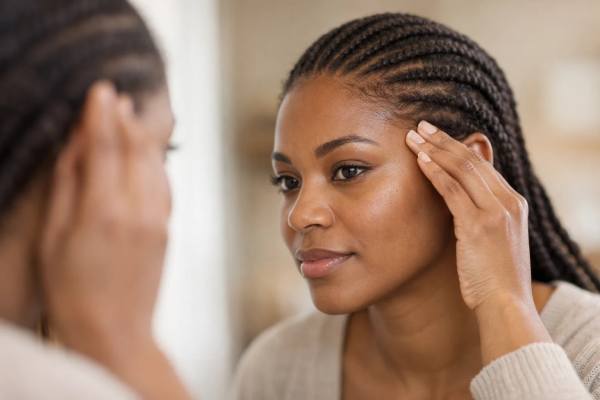
Braids can be one of the most practical and beautiful ways to style hair: they reduce daily manipulation, simplify routines, and can help you retain length by limiting breakage. Yet the same features that make braids long-lasting—tension, precision, and added structure—can quietly strain the most delicate area of the scalp: the hairline. “Edge loss” often starts as subtle thinning at the temples or along the front, then progresses into fragile, sparse zones that no longer bounce back between styles.
The good news is that most braid-related hairline damage is preventable. Protection is less about giving up braids and more about controlling the variables that overload follicles: tightness, weight, placement, duration, and how you maintain and remove the style. This guide explains why edges are vulnerable, how to spot early warning signs, and the specific decisions—before, during, and after installation—that keep your hairline strong.
Quick Overview
- Choosing larger parts, lighter extensions, and lower-tension techniques can reduce hairline stress without sacrificing style.
- Early signals like tenderness, small bumps, and broken “baby hairs” often appear weeks before visible thinning.
- Keeping braids in too long or re-braiding the same perimeter repeatedly is a common reason edges stop recovering.
- Plan a 6–8 week wear window and a 2–4 week break, and rotate your parting and perimeter placement.
- If the hairline looks shiny, smooth, or scar-like—or thinning persists after stopping tension—seek medical evaluation promptly.
Table of Contents
- How braids lead to edge loss
- Warning signs your edges are stressed
- Picking braid styles that spare the hairline
- Installation rules your stylist should follow
- Care between appointments and safe takedown
- Recovery plan and when to seek help
How braids lead to edge loss
Edge loss from braids is usually a traction problem, not a “growth” problem. The hairline is made of finer-caliber hairs with a shorter growth phase and less tolerance for repeated pulling. When braids create constant tension at the roots, the follicle responds first with irritation and shedding, and later—if the stress continues—with miniaturization and, in some cases, permanent damage.
Three forces tend to combine:
- Tension (how tight it feels at the scalp): This is the biggest driver. If a braid feels “snatched” but painful, that sensation is your nervous system reporting mechanical strain.
- Weight (how heavy the braid is over time): Added hair, especially long or thick bundles, turns a style into a low-grade tugging system. The longer the braid hangs, the more it pulls at the base.
- Duration (how long follicles stay under load): Follicles can recover from short stress. They struggle with months of repeated, unrelenting tension—especially when the same perimeter hairs are re-braided again and again.
It also matters where that stress is placed. Edges are often braided smaller to look neat, but smaller sections concentrate force on fewer hairs. If you braid the perimeter tightly, the load is not distributed across the scalp; it is focused on the most fragile hairs you have.
A common misconception is that edge loss only happens when braids are extremely tight. In reality, many people develop gradual thinning from “moderately tight” styles worn repeatedly with minimal breaks. The damage is cumulative: follicles endure a cycle of tension, inflammation, and incomplete recovery, then are stressed again before they regain full strength.
Finally, don’t underestimate the role of the scalp environment. If tight braids trigger bumps, itching, or folliculitis, the inflammation can amplify shedding and worsen fragility. If you want a deeper explanation of tension-related loss patterns and what makes them reversible early on, see traction alopecia from hairstyles.
Warning signs your edges are stressed
Edge loss rarely appears overnight. Most people get warning signs for days to weeks before the hairline looks thinner. Catching these early can be the difference between quick recovery and a long regrowth journey.
Early warning signs that deserve attention
- Tenderness or headache that improves when you loosen the hair: Pain is a signal, not a “normal adjustment.” If discomfort lasts beyond the first 24–48 hours, the tension is usually too high.
- Bumps, pustules, or crusting around the hairline: This can reflect traction-related irritation or folliculitis. When inflammation sits at the base of hairs under tension, shedding becomes more likely.
- “Tenting” of the scalp: If the skin at the braid base looks lifted or peaked, the hair is being pulled so tightly that the scalp is visibly displaced.
- Short, broken hairs along the temples: Many people interpret this as “baby hairs growing,” but breakage at the perimeter can be a traction clue, especially when it appears after a fresh install.
Changes you might notice in the mirror
- A gradually widening temple area or corners that look less dense
- A hairline that looks more uneven than before
- A fringe of very fine hairs that remains while thicker hairs disappear (a pattern clinicians sometimes call a “fringe” effect)
How to tell breakage from hair loss
This distinction matters because the fixes differ. Breakage is a shaft problem (hair snapping), while traction hair loss is a follicle problem (hair leaving the scalp). Quick checks:
- If you see lots of short fragments with no root bulb, breakage is likely.
- If you see full-length hairs with a small white bulb at one end, shedding is more likely.
- If you have both, you may be dealing with traction plus fragility from chemical services, heat, or dryness.
If you are unsure, a simple guide to breakage versus hair loss can help you interpret what you’re seeing and choose the right next steps.
Symptoms that should stop the style immediately
- Burning, stinging, or persistent scalp pain
- Rapid swelling or weeping skin
- Bald patches forming along braid lines
- Any shiny, smooth area that looks scar-like (this can signal longer-standing follicle damage)
The most protective habit you can build is responding to signals early. A braid style is never worth weeks of tenderness and months of regrowth work.
Picking braid styles that spare the hairline
A “protective” style only protects if it respects the scalp. The goal is not to find the one perfect braid type—it is to choose a style that spreads force, limits perimeter tension, and stays maintainable for your hair density and texture.
What tends to be gentler on edges
- Medium-to-large braids over micro braids: Larger sections distribute tension across more hairs, which lowers the stress per follicle. Micro braids can look beautiful, but they are high risk for edges, especially when installed tightly or left in for long periods.
- Knotless or feed-in techniques (when done correctly): These can reduce the “anchoring knot” pressure at the base. However, knotless does not automatically mean low tension—weight and tightness still matter.
- Loose perimeter planning: Many people do best when the hairline is braided larger, looser, or partially left out, rather than tightly braided for maximum neatness.
What often increases edge risk
- Very long, heavy extensions: The braid base is not just holding hair—it is holding leverage. Longer braids swing, pull, and add mechanical stress during sleep and movement.
- Tiny parts at the hairline: Small perimeter sections concentrate force and can “saw” at the hairline with daily movement.
- Repeated high-tension flat braids at the front: Cornrows, stitch braids, and sleek frontal patterns can be higher risk if the goal is an ultra-flat look. If you love these styles, spacing them out and alternating with looser options helps.
A practical way to choose a safer braid plan
Before you commit, decide your non-negotiables:
- Comfort: No lasting pain.
- Weight: A style you can lift in one hand without feeling strain at the scalp.
- Perimeter protection: A plan for edges (larger sections, reduced tension, or strategic leave-out).
- Wear time: A style you can maintain cleanly and remove on time.
If you regularly wear braids as part of a long-term routine, it helps to think beyond one install and build a “rotation” that includes breaks and lower-tension options. For ideas that prioritize scalp health and minimize traction patterns over time, see protective styles and scalp health considerations.
The safest braid style is the one that stays comfortable from day one to takedown—without requiring you to “get used to it.”
Installation rules your stylist should follow
Most edge loss prevention happens at installation. A careful technique can make braids look neat and last well without turning your hairline into the sacrifice zone. If you’re the client, your job is not to tolerate pain—it’s to advocate for the scalp that has to live with the style.
A tension checklist that actually works
- The 24-hour rule: Mild tightness on day one can happen. Ongoing pain, bumps, or a headache beyond 24–48 hours is a red flag.
- The “move the braid” test: You should be able to gently wiggle a braid at the base without sharp pain. If the scalp feels locked down, it’s too tight.
- No scalp tenting: The skin should not lift around braid bases.
- Edge comfort is non-negotiable: The perimeter should feel the easiest—not the tightest.
Installation choices that protect follicles
- Start with healthy, detangled hair: Tangled hair encourages aggressive pulling during prep. Gentle detangling and clean parting reduce friction and breakage.
- Avoid braiding on a freshly irritated scalp: If you have active bumps, flaking inflammation, or scalp soreness, pause and calm the scalp first. Braiding over irritation stacks mechanical stress on top of inflammation.
- Be cautious with edge control products: Heavy gels, strong hold pastes, and frequent brushing can contribute to irritation and mechanical breakage at the hairline.
- Match extension hair to your density: If your natural hair is fine or your edges are already sparse, dense extension bundles overload follicles quickly.
If you relax, color, or heat-style your hair
Chemical processing and heat don’t “cause” traction loss by themselves, but they reduce the margin for error by weakening the shaft. When the hair is fragile, the same tension causes more breakage and faster thinning. In those cases, choose larger parts, reduce braid length, and keep edges looser than you think you need.
How to talk to a stylist without conflict
Use clear, factual language:
- “Please keep the hairline looser. I’m protecting my edges.”
- “If you see any tenting, I want you to redo that section.”
- “I don’t want the style to hurt tomorrow. Comfort matters more than tightness.”
If your scalp is painful or burning, don’t push through. Persistent discomfort can also overlap with scalp sensitivity conditions; if you want to understand what scalp pain signals can mean beyond “tight braids,” see causes of scalp pain and tenderness.
Care between appointments and safe takedown
Even a well-installed style can become edge-hostile if maintenance is rough. The first two weeks are usually the easiest; after that, new growth creates movement, friction increases, and the braid base can start tugging—especially if you pull styles into tight ponytails or buns.
Scalp care that protects the hairline
- Cleanse gently: Aim for scalp cleansing every 1–2 weeks, depending on oil, sweat, and product use. Use a diluted shampoo in an applicator bottle, focus on the scalp, and rinse thoroughly. Product buildup at the base can worsen itch and scratching, which can break fragile perimeter hairs.
- Moisturize with restraint: Light hydration sprays or watery leave-ins can help, but heavy oils can trap buildup and increase itch. If you’re prone to bumps, less is often more.
- Hands off the edges: Daily brushing and re-slicking of baby hairs can be as damaging as tight braids. Treat the hairline like delicate fabric—minimal friction, minimal tension.
Styling while braided
A common edge-loss trigger is pulling braids into very tight updos repeatedly. If you want a sleek look, keep it occasional and rotate placement. Better options include low-tension buns, loose half-up styles, or scarf styles that don’t yank the perimeter.
Sleep protection
Night friction adds up. Protecting braids at night isn’t about perfection; it’s about reducing the repetitive rubbing that weakens the perimeter.
- Use a satin bonnet or scarf
- Keep braids gathered loosely (not tight)
- Avoid sleeping with a heavy braid mass pulling on one side
If you’re deciding between sleep protection options, see silk pillowcases versus satin bonnets for practical differences.
A safer takedown process
Removal is where many edges break, especially when people rush.
- Cut extension hair carefully: Cut well below your natural hair length and in good light.
- Use slip: Apply conditioner or a detangling product to each section as you unravel.
- Unravel from the ends upward: Don’t yank at the base.
- Detangle gently after removal: Finger-detangle first, then a wide-tooth comb.
- Wash and reset: A gentle wash removes buildup and lets you assess shedding versus breakage without panic.
Timing matters
For most people, a practical wear window is 6–8 weeks, followed by a 2–4 week break or a lower-tension style. The break is not a failure—it’s the recovery time follicles need to stay resilient.
Recovery plan and when to seek help
If you suspect braid-related edge loss, the first step is simple but powerful: remove the traction. Hair follicles cannot recover while they are still being pulled. What you do next depends on whether you’re dealing with early, reversible stress or longer-standing damage.
A realistic recovery plan
- Stop high-tension styles immediately: Replace braids and tight ponytails with low-tension options for at least 8–12 weeks.
- Reduce perimeter manipulation: Avoid daily edge brushing, aggressive baby-hair styling, and tight headbands.
- Calm inflammation: If you have bumps, itching, or tenderness, focus on gentle cleansing and a minimal routine. Scratching and picking can worsen breakage and prolong inflammation.
- Support the hair shaft: Use conditioner consistently, detangle with slip, and avoid high-heat styling that increases breakage while edges are fragile.
- Track change with photos: Take a monthly photo in the same lighting and angle. It helps you see improvement and prevents “mirror anxiety” that can drive over-styling.
What regrowth timelines can look like
- In early traction, shedding often improves within 4–8 weeks after tension stops.
- Visible thickening at the edges commonly takes 3–6 months.
- If follicles have been under tension for years, recovery may be partial, and some areas may not fully return.
When you should get medical help
Seek evaluation sooner rather than later if:
- Thinning persists after 3 months of removing traction
- You see smooth, shiny skin or loss of follicle openings
- You have patchy loss, intense scaling, or significant scalp pain
- Hair loss is happening in multiple patterns, not just the perimeter
A clinician can assess whether this is traction alone or mixed with another condition and can discuss targeted treatments when appropriate. If you want a clear checklist for escalation, see when to see a dermatologist for hair loss.
A practical long-term braid strategy
Once edges stabilize, you don’t have to abandon braids. Build a braid routine that includes:
- Larger perimeter sections and lower tension
- Lighter extension choices
- Strict wear-time limits
- Rotating parting and braid placement
- Planned breaks
Think of edge protection like joint protection in exercise: you can keep training, but you adjust form, load, and recovery so the structure holds up for the long run.
References
- Traction Alopecia: Clinical and Cultural Patterns – PMC 2021 (Review)
- Prevalence and Associated Factors of Traction Alopecia in Women in North Sudan: A Community-Based, Cross-Sectional Study – PMC 2025 (Observational Study)
- Afro-textured hair care: a narrative review and recommendations for dermatologists – PMC 2026 (Review)
- Traction Alopecia – StatPearls – NCBI Bookshelf 2025 (Clinical Overview)
Disclaimer
This article is for educational purposes and does not replace medical advice, diagnosis, or treatment. Edge loss can result from traction, breakage, scalp inflammation, medical conditions, or a combination of factors. If you have rapid or patchy hair loss, scalp pain, signs of infection, or thinning that persists after removing tight styles, seek evaluation from a qualified healthcare professional. Avoid self-treating painful or inflamed scalp conditions with harsh products, and use extra caution with hairstyles that cause discomfort, bumps, or persistent tenderness.
If this guide helped you protect your hairline, consider sharing it on Facebook, X (formerly Twitter), or your preferred platform so others can braid more safely and spot early warning signs sooner.