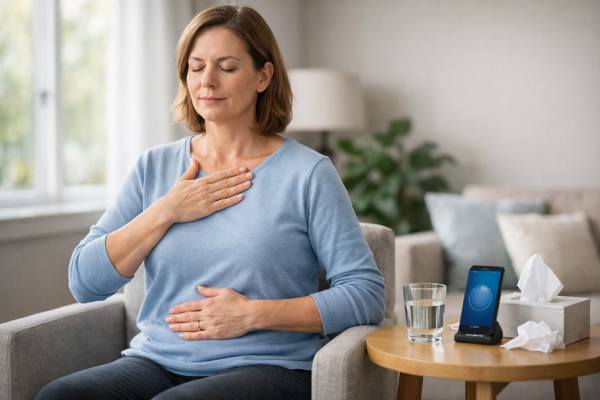
Shortness of breath can be frightening, even when the cause is temporary. The right breathing exercise will not “fix” every problem, but it can reduce the sensation of air hunger, lower panic, and help you move more comfortably through daily tasks like walking, climbing stairs, or recovering after a coughing spell. The techniques that work best share a theme: they make breathing more efficient by slowing the exhale, reducing rapid shallow breaths, and helping your respiratory muscles do less work for the same airflow.
This matters for common situations—viral illness, asthma, COPD, anxiety, and post-infection breathlessness—where symptoms often fluctuate and the nervous system amplifies discomfort. With a few simple tools, you can create a reliable “rescue routine” for sudden breathlessness and a short practice plan that builds confidence over time. This guide focuses on methods with practical physiological logic and clear step-by-step instructions.
Essential Insights
- A slow, longer exhale can reduce air trapping and calm the body’s stress response in many types of breathlessness.
- Pursed-lip breathing and paced breathing are often the fastest techniques to use during activity or a flare.
- Diaphragmatic breathing can improve efficiency for some people, but it should feel easier—not like hard work.
- Stop the exercise and seek urgent care if breathlessness is severe, sudden, or paired with chest pain, bluish lips, confusion, or fainting.
- Practice for 3–5 minutes, 2–3 times daily, so the technique is easy to access when symptoms spike.
Table of Contents
- When shortness of breath is urgent
- What breathing exercises actually change
- Pursed-lip and slow exhale methods
- Diaphragmatic breathing and rib mobility
- Breathing retraining for anxiety and panic
- Using breath control with activity
When shortness of breath is urgent
Breathing exercises are meant for mild to moderate breathlessness and for recovery after a spike. They are not a substitute for urgent evaluation when symptoms suggest a serious problem. If your breathlessness is severe, sudden, or rapidly worsening, treat that as a medical priority first and a breathing-technique problem second.
Call emergency services or seek urgent care immediately if you have any of these red flags:
- Chest pain or pressure, especially if it spreads to the arm, back, jaw, or is paired with sweating or nausea
- Bluish or gray lips, face, or nails
- Confusion, fainting, severe dizziness, or inability to stay awake
- Severe breathing difficulty at rest, gasping, or trouble speaking in full sentences
- A new, sudden episode that feels different from your usual asthma, anxiety, or chronic lung symptoms
- One-sided leg swelling or calf pain plus sudden breathlessness (a clot risk pattern)
- High fever with worsening breathing, or a sense that your breathing is “failing,” not just uncomfortable
For asthma, a practical warning sign is breathlessness that does not improve with your prescribed rescue medicine, or a drop in peak flow if you monitor it. For chronic lung disease, seek care if you have a flare with new confusion, marked sleepiness, or you cannot keep oxygen levels in a safe range if you use home monitoring.
If you are recovering from a viral illness, it is normal to feel winded with exertion for a period. What is not normal is severe shortness of breath at rest, worsening day by day, or breathlessness paired with chest pain, coughing up blood, or persistent lightheadedness.
When it is appropriate to use breathing exercises:
- You feel winded after movement, a coughing spell, or a stressful moment
- You are breathing fast and shallow, and you want to regain control
- You have chronic breathlessness and want a reliable method to reduce intensity during activity
- You feel panic rising, and you want a structured routine that signals safety to your nervous system
If you are unsure whether your symptoms are “safe enough” for a home approach, use this simple rule: if you cannot speak a full sentence comfortably, or you feel worse despite resting, it is time to get medical advice rather than pushing through a breathing routine.
What breathing exercises actually change
Breathlessness is not just about oxygen. It is a sensation created by airflow, muscle effort, airway resistance, carbon dioxide levels, and the brain’s threat-detection system. That is why you can feel short of breath even when oxygen is normal, and why a technique that changes rhythm and effort can change the feeling quickly.
Effective breathing exercises typically do three things.
They reduce “over-breathing”
When you are anxious, in pain, congested, or fighting an infection, you may breathe faster than your body needs. This can lower carbon dioxide too quickly, which may trigger dizziness, tingling, chest tightness, and a stronger sense of air hunger. Slowing the breath and lengthening the exhale can stabilize the pattern and reduce these symptoms.
They reduce air trapping and dynamic hyperinflation
In obstructive conditions like COPD and sometimes asthma, exhalation can be limited. If you inhale again before fully exhaling, air stacks in the lungs. That increases the work of breathing and makes the next breath feel smaller and harder. Techniques that slow and “organize” the exhale can help empty the lungs more completely and make the next inhale easier.
They lower accessory muscle strain
When breathlessness rises, many people lift their shoulders, tighten their neck, and breathe from the upper chest. This can worsen the feeling of effort and create a feedback loop: effort signals danger, danger increases effort. Exercises that shift breathing lower (or simply make the pattern smoother) can reduce neck and chest tension and improve comfort.
A helpful mental model is “efficiency over depth.” Many people try to fix breathlessness by taking very deep breaths. That can backfire by increasing effort, swallowing air, or triggering more rapid breathing. A better approach is often smaller, slower breaths with a longer exhale.
Breathing techniques also influence your autonomic nervous system. A slower breath with a gentle, extended exhale can nudge the body toward a calmer state. This does not mean breathlessness is “all in your head.” It means the nervous system is part of breathing, and calming it can reduce symptoms.
Finally, these techniques work best when they are matched to the situation:
- If you are breathless during activity, use a method you can do while moving
- If anxiety is driving the sensation, use a slow rhythm that reduces over-breathing
- If air trapping is the main problem, prioritize a longer exhale and relaxed shoulders
- If you feel weak and “air hungry,” focus on ease and posture rather than forcing big breaths
The next sections give practical techniques you can test and combine. The best choice is the one that makes breathing feel easier within 30–90 seconds.
Pursed-lip and slow exhale methods
If you want one technique that helps many types of breathlessness, start with a slow exhale. Pursed-lip breathing is a structured way to do that. It is especially useful for obstructive breathing patterns and for getting control back during activity.
How pursed-lip breathing works
Lightly narrowing the lips creates gentle back-pressure during exhale. That can help keep smaller airways from collapsing too early and can slow down a rushed breathing pattern. The main goal is not to blow out hard. The goal is a calm, longer exhale.
Step-by-step pursed-lip breathing
- Sit upright or lean slightly forward with shoulders relaxed.
- Inhale through your nose for a comfortable count of 2. Keep it quiet and easy.
- Purse your lips as if you are softly blowing on hot soup.
- Exhale slowly through the pursed lips for a count of 4 to 6.
- Repeat for 6 to 10 breaths, then pause and reassess.
Common mistakes and quick fixes
- If you feel lightheaded, you may be breathing too deeply or too quickly. Make each inhale smaller and slow the rhythm.
- If your cheeks puff strongly, you are pushing too hard. Reduce effort and think “gentle stream of air.”
- If your shoulders lift, place one hand on your upper chest as a reminder to keep the neck soft.
A “rescue version” for sudden breathlessness
When you feel a spike, do this for 60 seconds:
- One normal nasal inhale
- One long pursed-lip exhale that lasts about twice as long as the inhale
- Repeat without trying to take deeper breaths
This works well after climbing stairs, after a coughing spell, or when you first notice panic rising.
Other slow-exhale options (if pursed-lip breathing feels awkward)
- Humming exhale: inhale through the nose, then hum gently during the exhale to slow it down.
- Straw breathing: exhale as if through a narrow straw (without forcing).
- Whispered “sss” exhale: exhale with a soft “sss” sound to control speed.
How often to practice
To make it automatic, practice 3–5 minutes, 2–3 times per day for a week. Then use it as needed during activity. Many people also benefit from pairing it with a trigger, such as “before I stand up,” or “before I climb stairs.”
When to avoid forcing it
If you are in severe respiratory distress, exhausted, or cannot speak comfortably, do not rely on technique alone. In that setting, the priority is urgent medical assessment and appropriate treatment.
Diaphragmatic breathing and rib mobility
Diaphragmatic breathing is often taught as “belly breathing,” but the most useful version is actually “lower rib breathing.” The diaphragm descends, the lower ribs expand, and the upper chest stays relatively quiet. Done well, it can reduce neck tension and make breathing feel smoother. Done forcefully, it can make you feel like you are working too hard. The goal is ease.
A simple way to set up
- Sit with your back supported, or lie on your side with knees slightly bent.
- Let your jaw unclench and your shoulders drop.
- Place one hand on your lower ribs (not high on the chest). If you prefer, place one hand on the upper chest and one on the lower ribs to compare movement.
Step-by-step lower rib breathing
- Inhale through your nose for a comfortable count of 3, aiming for gentle expansion under your lower-rib hand.
- Keep the upper chest relatively still; think “wide and low” rather than “high and big.”
- Exhale slowly through pursed lips or a relaxed mouth for a count of 4 to 6.
- Pause for a brief moment at the end of the exhale without holding your breath tightly.
- Repeat for 8 to 12 breaths.
If you struggle to “find” the diaphragm
Try a smaller breath first. Paradoxically, many people get better diaphragm movement when they stop trying to pull in a huge inhale. Another helpful cue is to imagine your lower ribs gently widening like an umbrella opening.
Rib mobility add-on for tight chests
If your chest feels stiff from coughing, stress, or posture, you can add a small rib expansion drill:
- Inhale gently and imagine the breath widening the sides of the ribs.
- Exhale slowly and let the ribs soften down and in.
- Keep it subtle. If you feel strain, reduce the depth.
Who benefits most
- People who tense shoulders and neck during breathlessness
- People who feel “stuck” in upper chest breathing after illness or stress
- People using breath control as part of pulmonary rehabilitation or recovery plans
When diaphragmatic breathing is not the best first choice
Some people with severe COPD or significant air trapping can feel worse when they emphasize belly breathing, especially if it increases effort. If it feels harder, switch back to pursed-lip breathing with smaller inhales and a longer exhale.
How to practice without overdoing it
- Start with 2 minutes, once or twice per day.
- Stop if you feel dizzy, more short of breath, or fatigued in the belly muscles.
- Increase slowly toward 5 minutes as it becomes easier.
This technique shines when it reduces effort. If it feels like a workout, it is the wrong intensity for the moment.
Breathing retraining for anxiety and panic
Anxiety-related breathlessness can feel identical to lung-related breathlessness: tight chest, air hunger, frequent sighing, and the sense that you cannot get a satisfying breath. Often, the driver is a fast, shallow breathing pattern that lowers carbon dioxide and keeps the nervous system on high alert. The goal is not to “take a deep breath.” The goal is to slow the pattern enough that the brain stops interpreting breathing as an emergency.
A reliable method is paced breathing with a longer exhale. It is simple, discreet, and easy to repeat.
Paced breathing (calming rhythm)
- Inhale through your nose for 3 to 4 seconds.
- Exhale gently for 5 to 6 seconds, preferably through pursed lips.
- Repeat for 2 to 5 minutes.
If counting increases anxiety, use a quieter cue:
- Inhale: “in, two, three.”
- Exhale: “out, two, three, four, five.”
Or synchronize with a gentle rocking motion while seated.
A short “panic interrupt” routine (about 90 seconds)
- Plant your feet and lean slightly forward, elbows on knees if comfortable.
- Do 6 cycles of: small nasal inhale, long gentle exhale.
- On each exhale, relax your shoulders on purpose.
- After 6 cycles, pause and reassess. Many people notice the urge to gasp has softened.
What about box breathing
Box breathing (equal counts in and out) can be helpful for some, but if you are already lightheaded, equal timing can feel too breath-hold-like. A safer default during air hunger is exhale-dominant breathing (longer out than in).
Dysfunctional breathing patterns to watch for
If you see yourself doing these, it is a sign to shift to a calmer rhythm:
- Frequent yawning or sighing that does not relieve discomfort
- Mouth-breathing with tight jaw
- Breath stacking (inhaling again before finishing the exhale)
- Scanning for a “perfect” breath and getting stuck in the search
How to make this work in real life
- Practice when you are calm. Your nervous system learns patterns through repetition.
- Use it early. Waiting until anxiety is maximal makes everything harder.
- Pair it with a grounding task: name five objects you see, or press your feet into the floor during each exhale.
If you have recurring episodes of breathlessness with normal medical tests, consider asking about breathing pattern dysfunction, panic physiology, or vocal cord-related breathing issues. These are treatable, and breathing retraining is often part of the solution. At the same time, new or worsening symptoms still deserve medical evaluation—anxiety and lung issues can overlap.
Using breath control with activity
Most people do not become breathless while sitting perfectly still. They become breathless while doing something: walking, showering, carrying groceries, climbing stairs, talking, or recovering from a cough. That is why the most useful techniques are the ones you can apply mid-task, without stopping your life.
Paced breathing for walking and stairs
Match your exhale to effort. A longer exhale often helps you avoid “breath stacking.”
- Walking: inhale for 2 steps, exhale for 3 to 4 steps.
- Stairs: inhale for 1 step, exhale for 2 steps, especially on higher steps.
- If you feel rushed, slow down and lengthen the exhale first, then adjust the pace.
Use pursed-lip breathing as a recovery tool
After a short burst of effort:
- Stop, lean slightly forward, and place hands on thighs or a stable surface.
- Do 6 to 10 pursed-lip breaths with smaller inhales and longer exhales.
- Resume only when your breathing has clearly settled.
Posture and “breathing positions” that reduce work
A forward-lean position can make breathing feel easier by stabilizing the shoulder girdle and helping accessory muscles work more efficiently.
- Sit and lean forward with elbows on knees.
- Stand and lean forward with hands on a counter or on the back of a chair.
- Keep the neck long and shoulders down.
Talking when you are breathless
Speaking forces exhalation. That can be helpful if you use it intentionally.
- Speak in short phrases, then inhale gently through your nose.
- Avoid long explanations while winded.
- If you feel air hunger, pause and do two slow exhales before continuing.
Breath control during coughing fits
Coughing can create a cycle: irritation leads to cough, cough worsens breathlessness, breathlessness triggers more cough. After a coughing spell:
- Take one small nasal inhale.
- Do a long, gentle pursed-lip exhale.
- Repeat 4 to 6 times before trying to talk or move quickly.
A simple one-week practice plan
This is designed to build automatic skill without fatigue:
- Twice daily, practice 3 minutes of pursed-lip breathing.
- Once daily, practice 2 minutes of lower rib breathing.
- During one short walk, use a paced pattern (2 steps in, 4 steps out) for one minute, then return to normal.
- When breathless, use the same routine every time for at least 60 seconds before judging whether it helps.
What to expect
Breathing exercises often reduce the intensity of breathlessness and improve confidence faster than they change underlying fitness or lung function. That confidence is not trivial. When you feel more in control, you move more, recover faster, and avoid the fear-driven breath patterns that worsen symptoms.
What these exercises cannot do
They cannot treat pneumonia, an asthma attack that needs medical escalation, a blood clot, or heart failure. If your breathlessness is new, worsening, or paired with red flags, breathing exercises are supportive care—not the main care.
Used correctly, breath control becomes a practical skill: you spend less energy fighting your breathing, and more energy doing what you want to do.
References
- European Respiratory Society clinical practice guideline on symptom management for adults with serious respiratory illness – PubMed 2024 (Guideline)
- Breathing techniques to reduce symptoms in people with serious respiratory illness: a systematic review – PMC 2024 (Systematic Review)
- Breathing Practices for Stress and Anxiety Reduction: Conceptual Framework of Implementation Guidelines Based on a Systematic Review of the Published Literature – PMC 2023 (Systematic Review)
- The health effects of diaphragmatic breathing: A systematic review – PubMed 2025 (Systematic Review)
- Breathing exercises for chronic obstructive pulmonary disease | Cochrane 2022 (Systematic Review)
Disclaimer
This article is for general educational purposes and does not provide medical advice, diagnosis, or treatment. Shortness of breath can be a symptom of serious illness. Seek urgent medical care if breathing difficulty is severe, sudden, or worsening; if you have chest pain, bluish lips or face, confusion, fainting, coughing up blood, or you cannot speak comfortably in full sentences. If you have asthma, COPD, heart disease, are pregnant, or are immunocompromised, contact a licensed clinician promptly for personalized guidance, especially during respiratory infections.
If you found this article helpful, please consider sharing it on Facebook, X (formerly Twitter), or any platform you prefer.