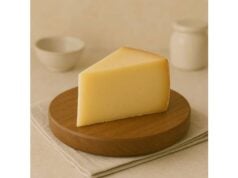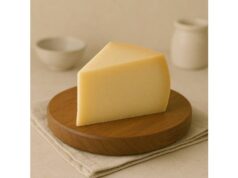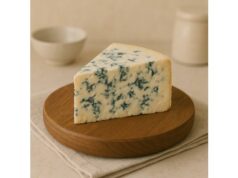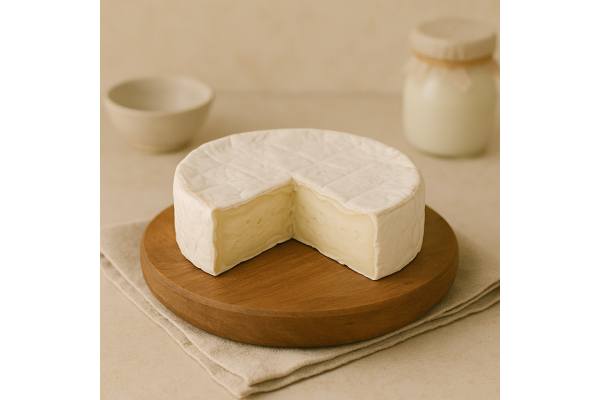
Brie cheese is a soft-ripened classic with a bloomy white rind, a custardy center, and aromas that range from fresh and buttery to earthy and mushroom-like as it ripens. Made from cow’s milk and aged for a few weeks, Brie develops its signature exterior through a surface culture that slowly ripens the paste from the outside in. In the kitchen, it is one of the most adaptable cheeses: serve at room temperature on a board, melt onto crostini, bake whole for an easy appetizer, or whisk small cubes into a pan sauce for silky richness. Nutritionally, Brie delivers complete protein, calcium, vitamin B12, and riboflavin in modest portions, with naturally low lactose because of fermentation and draining. Its softness, however, also means higher moisture and a shorter shelf life than hard cheeses, and its saturated fat and sodium call for thoughtful portions. This guide brings together what most readers want to know—nutrition per 100 g with % Daily Value, evidence-based benefits and risks, how to buy and store Brie for best quality, cooking strategies that preserve nutrients and flavor, and realistic serving sizes that fit into many dietary patterns.
Fast Facts
- Good source of protein and vitamin B12; provides calcium with naturally low lactose for most varieties.
- Soft-ripened, high-moisture cheese requires careful cold-chain handling; avoid unpasteurized Brie during pregnancy.
- Typical serving: 28–30 g (about 1 oz), enjoyed up to several times per week within saturated fat and sodium goals.
- Those with milk allergy or taking monoamine oxidase inhibitors should avoid; histamine-sensitive individuals may react to aged rinds.
Table of Contents
- Brie Cheese: Detailed Overview
- Brie Nutrition Profile (Per 100 g)
- Evidence-Based Health Benefits
- Risks, Allergies and Interactions
- Selecting, Quality, Sustainability and Storage
- Preparation, Cooking and Nutrient Retention
- Portions, Comparisons and FAQs
Brie Cheese: Detailed Overview
What Brie is—quick definition.
Brie is a soft-ripened, cow’s-milk cheese with a thin, edible “bloomy” rind and a creamy interior. The rind forms when cheesemakers inoculate the surface with white mold cultures during early aging. Those cultures digest fats and proteins from the outside inward, softening the paste and releasing the buttery, mushroomy aromas that define the style.
Milk, rennet, and cultures.
Brie is typically made with cow’s milk, starter cultures, rennet, and salt. Rennet may be animal-derived or microbial; if vegetarian suitability matters, check the label. Many international Bries are pasteurized; some traditional French AOP styles (such as Brie de Meaux and Brie de Melun) are made from raw milk and have a deeper, more savory profile.
Texture and flavor through ripeness.
Ripeness is everything with Brie. A young wheel is pale, mild, and slightly chalky at the center. As it ripens, the center becomes custardy and oozing; aromas turn from fresh dairy to mushroom and warm hay. A slight ammoniac note can be normal at peak ripeness, but a sharp, stinging ammonia smell signals a cheese that has gone past its prime or was stored poorly.
Double and triple cream variants.
“Double cream” and “triple cream” Bries have extra cream added to the milk before coagulation, raising butterfat and creating a lush, almost whipped texture. These versions spread easily and taste richer but also carry more calories and saturated fat per serving. They shine on a cheese board or gently warmed in the oven.
How Brie compares to similar cheeses.
- Camembert: Smaller format, often earthier and funkier, ripens faster.
- Coulommiers: A cousin to Brie with a thicker paste and slightly sweeter profile.
- Soft goat’s cheeses: Fresher, tangier, and leaner, without a bloomy rind that ripens the paste inward.
Culinary strengths in everyday cooking.
- Board-ready: Pair with crisp apples or pears, toasted nuts, and a tart jam.
- Hot applications: Baked Brie wrapped in pastry, stuffed chicken breasts, or melted over roasted vegetables.
- Sauces: Cube and whisk into a hot pan off the heat to add body to pan sauces or puréed soups without flour.
Nutrition at a glance.
Brie offers complete protein, calcium, B12, and riboflavin with naturally low lactose. Compared with hard cheeses, it usually has less calcium per gram but still contributes meaningfully in modest portions. Because it is a soft, high-moisture cheese, it needs careful refrigeration and shorter storage than hard styles.
Brie Nutrition Profile (Per 100 g)
Values below reflect typical non-fortified Brie cheese. Numbers vary by producer, milk treatment, and ripeness. %DV uses current adult Daily Values.
Macros and Electrolytes (per 100 g)
| Nutrient | Amount | %DV* |
|---|---|---|
| Energy | 334 kcal | — |
| Protein | 20.8 g | 42% |
| Total Fat | 27.7 g | 36% |
| Saturated Fat | 17.4 g | 87% |
| Carbohydrate | 0.5 g | 0% |
| Total Sugars | 0.5 g | — |
| Dietary Fiber | 0 g | 0% |
| Sodium | ~620 mg | 27% |
| Potassium | ~150 mg | 3% |
| Cholesterol | ~100 mg | † |
Vitamins (per 100 g)
| Vitamin | Amount | %DV |
|---|---|---|
| Vitamin A (RAE) | ~170–200 µg | 19–22% |
| Vitamin B12 (cobalamin) | ~1.5–1.8 µg | 63–75% |
| Riboflavin (B2) | ~0.5 mg | 38% |
| Vitamin D | ~0.5–0.7 µg | 3% |
Minerals (per 100 g)
| Mineral | Amount | %DV |
|---|---|---|
| Calcium | ~180–200 mg | 14–15% |
| Phosphorus | ~180–220 mg | 14–18% |
| Zinc | ~2.0–2.5 mg | 18–23% |
| Selenium | ~14 µg | 25% |
| Magnesium | ~20 mg | 5% |
Fats and Fatty Acids (typical profile)
| Component | Amount | Notes |
|---|---|---|
| Monounsaturated fat | ~8 g | Oleic acid predominant |
| Polyunsaturated fat | ~1 g | Small fraction |
| Trans fat | trace | Naturally occurring ruminant trans fats may be present in small amounts |
Protein and Amino Acids
- Complete protein with all essential amino acids; casein predominates.
- Ripening forms peptides that influence flavor and texture; physiological effects depend on strain and product and remain an active research area.
Allergens and Intolerance Markers
- Contains milk proteins (casein and whey).
- Lactose is naturally low in most Brie due to fermentation and draining (often <0.5 g/100 g). Individual tolerance varies.
- Contains biogenic amines (e.g., histamine, tyramine), especially in rinds and more mature samples.
Additives and Fortification
- Traditional Brie is not fortified.
- The edible rind is formed by surface cultures (commonly Penicillium camemberti). Industrial coatings or protective films are uncommon on high-quality Brie; if present, they should be declared on the label.
Glycemic and Acid–Base Metrics
- Glycemic impact is negligible due to minimal carbohydrate.
- Like other cheeses, Brie is acid-forming in potential renal acid load scoring; balance meals with vegetables, legumes, and fruit.
Portion translation.
A 30 g (1 oz) serving provides roughly 100 kcal, 6–7 g protein, 8–9 g fat (about 5 g saturated), ~185 mg sodium, and ~55 mg calcium, with minimal lactose.
- %DV: Fat 78 g; Saturated Fat 20 g; Carbohydrate 275 g; Fiber 28 g; Sodium 2,300 mg; Potassium 4,700 mg; Calcium 1,300 mg; Phosphorus 1,250 mg; Zinc 11 mg; Selenium 55 µg; Vitamin B12 2.4 µg; Vitamin A 900 µg RAE; Vitamin D 20 µg.
† Cholesterol %DV is not required on modern labels; older 300 mg DV would place 100 mg at ~33%.
Evidence-Based Health Benefits
1) Convenient protein for fullness and repair
Brie supplies complete protein that helps maintain lean tissues and supports everyday recovery after activity. Because Brie is softly textured and richly flavored, a small, weighed portion can enhance a meal’s satisfaction without relying on large quantities. For instance, adding 20–30 g of Brie to a grain-and-vegetable bowl can increase satiety and reduce the urge to add extra sauces that contribute more sodium or added sugars.
2) Practical source of vitamin B12 and riboflavin
A single ounce of Brie contributes meaningful vitamin B12, which supports red blood cell formation and neurological function, and riboflavin (B2), which helps energy metabolism and antioxidant defenses. For people who limit meat or fish, small amounts of Brie can help cover these micronutrient needs when combined with other dairy or fortified foods.
3) Calcium contribution in modest amounts
While Brie contains less calcium per gram than hard cheeses, it still adds up in realistic servings, especially when consumed a few times per week. Pair Brie with calcium-containing sides or spreads—like tahini, almond butter, or leafy greens—to lift your total daily intake without greatly increasing calories.
4) Fermentation-driven “flavor density” that supports plant-forward eating
Brie’s ripening creates savory, mushroomy aromas and a creamy mouthfeel that make vegetables and whole grains more appealing. Using 10–15 g of finely diced Brie to finish roasted carrots, steamed greens, or whole-grain toast can replace heavier cream sauces while delivering satisfying texture and taste.
5) Naturally low lactose for many with intolerance
Because most of the lactose drains with the whey and remaining lactose is metabolized by cultures, Brie is naturally low in lactose. Many people with lactose intolerance tolerate small servings of Brie, especially with meals. Tolerance is individual; start with 10–15 g and increase as comfortable.
How to leverage benefits with balance
- Treat Brie as a condiment rather than a main protein.
- Combine with high-volume, high-fiber foods (salads, roasted vegetables, legumes).
- Use acidic and aromatic seasonings (lemon, herbs) to brighten flavor, allowing smaller portions of cheese.
What Brie does not do
Brie is not a cure-all; it does not replace calcium-rich staples like yogurt or fortified plant milks in those who need higher daily calcium. It should be part of an overall dietary pattern grounded in plants, lean proteins, whole grains, and minimally processed foods.
Risks, Allergies and Interactions
1) Food safety—soft cheeses and vulnerable groups
Soft-ripened cheeses have higher moisture and a surface-ripening process that requires strict hygiene. Pregnant individuals, older adults, and immunocompromised people should avoid unpasteurized Brie due to the risk of Listeria monocytogenes. Many health authorities advise choosing pasteurized Brie only, and for extra caution, eating it cooked hot (heated to steaming, ~74–75 °C / 165 °F) in mixed dishes. Keep Brie refrigerated at ≤4 °C (≤40 °F) and respect use-by dates.
2) Tyramine, MAOIs, and linezolid
As Brie matures, it can accumulate tyramine. Anyone taking non-selective monoamine oxidase inhibitors (for depression or Parkinson’s disease) or the antibiotic linezolid should follow a low-tyramine diet and avoid aged cheeses, including Brie, to reduce the risk of a hypertensive crisis.
3) Histamine sensitivity
Brie and other fermented foods may contain histamine and related amines. Sensitive individuals can experience flushing, headache, hives, or gastrointestinal discomfort. Reactions vary: if you are histamine-sensitive, avoid or trial very small portions of young, fresh Brie and monitor symptoms.
4) Saturated fat and sodium budgeting
Per 30 g, Brie provides ~5 g saturated fat and ~185 mg sodium. If managing LDL cholesterol or blood pressure, keep portions modest, pair Brie with unsalted, potassium-rich sides (greens, beans, potatoes), and choose unsalted nuts and whole grains for the rest of the plate.
5) Milk allergy and lactose intolerance—different issues
Brie contains casein and whey, which are unsafe for people with IgE-mediated milk allergy—strict avoidance is required. Lactose intolerance is a digestive condition; many with intolerance tolerate small servings of Brie because residual lactose is low, especially when eaten with other foods.
6) Rind and mold considerations
Brie’s rind is an edible, intentionally grown surface. However, toss Brie that shows pink, black, or fuzzy molds beyond the normal white bloom, or if it smells sharply of ammonia. If you have mold allergies, you may prefer to trim the rind and eat only the interior.
Practical safety checklist
- Choose pasteurized Brie unless you understand and accept the risks of raw-milk cheeses.
- Keep cold at all times; do not hold Brie at room temperature longer than serving requires.
- For high-risk individuals, favor hot preparations and discard leftovers promptly.
Selecting, Quality, Sustainability and Storage
At the cheese counter—what to look for
- Label clarity: Milk treatment (pasteurized vs. raw), country of origin, and producer name. For pregnancy or immunocompromise, confirm pasteurized.
- Appearance: A thin, velvety white rind with fine wrinkles; no wet spots, pink or black specks, or heavy cracking. The paste should be pale straw to ivory and soften toward the rind.
- Aroma: Fresh butter and mushrooms. Subtle ammonia can appear as peak ripeness nears, but a strong ammonia sting signals decline.
- Touch: Gently press the sides—slight give indicates ripeness. A hard, chalky center means it is young; a bulging wheel may be overripe.
Styles and naming
- Brie de Meaux / Brie de Melun (France): Traditional AOP styles, often raw milk, deeper savory notes.
- Domestic and international Bries: Typically pasteurized; quality varies by maker.
- Double and triple cream: Extra cream added; very lush texture and higher fat.
Sustainability pointers
- Short supply chains and seasonal milk can lower transport and support regional farms.
- Packaging: Ask for cut-to-order wedges wrapped in paper for short holds; reseal tightly at home to reduce waste.
- Food waste: Plan portions realistically; Brie is perishable. Save trims for sauces or baked dishes rather than discarding.
Home storage for best quality
- Wrap: Use cheese paper or parchment, then a loose outer layer (foil or reusable wrap). Avoid tight plastic against the rind for long storage—it traps moisture and encourages off-flavors.
- Temperature: Store at 2–4 °C (35–39 °F) in a drawer with steady humidity.
- Timing: Enjoy within 7–10 days of opening for peak quality; rewrap after each use.
- Freezing: Possible but not ideal. If needed for cooking, freeze small wedges tightly wrapped; expect a crumblier texture on thawing.
Signs to discard
- Strong ammonia, sliminess, or colored molds beyond the usual white rind.
- Sour or bitter flavors, leaking whey, or a ruptured, sticky rind.
Buying tips
- Purchase smaller wedges more often instead of a large piece that lingers.
- For milder flavor and often slightly lower sodium, choose younger Bries or double-cream styles and serve with bright, acidic accompaniments.
Preparation, Cooking and Nutrient Retention
Serve at the right temperature
Brie blooms in flavor and texture when allowed to temper for 20–30 minutes at room temperature before serving. A too-cold Brie tastes muted and feels firm; a tempered Brie becomes supple and aromatic.
Heat and nutrient notes
- Protein and minerals (calcium, phosphorus) are stable through typical cooking.
- B-vitamins (B12, riboflavin) are sensitive to prolonged high heat; add Brie late in cooking or off the heat to preserve more.
- Fat-soluble vitamins (A, D) are relatively stable but can degrade with extended high heat.
- Sodium and saturated fat do not change with cooking—portion size remains the key lever.
Techniques that maximize flavor with modest portions
- Baked Brie, lightened: Score the top, drizzle with a teaspoon of honey, add chopped nuts and thyme, and bake just until soft. Serve with sliced apples or pears instead of crackers to keep sodium reasonable.
- Skillet finishing: Toss hot roasted broccoli, mushrooms, or cauliflower with 10–15 g cubed Brie, lemon zest, and herbs; residual heat melts cheese into a light glaze.
- Savory toast: Spread 15 g Brie on whole-grain toast; top with arugula and a squeeze of lemon rather than salami or bacon.
- Pasta gloss: Whisk 20 g Brie into a ladle of hot pasta water with a splash of olive oil and black pepper; the emulsion coats noodles so you can use less cheese.
- Stuff and roast: Place thin slices under chicken skin or in mushroom caps and roast until the cheese just melts—remove from heat before oiling-off occurs.
Avoid common pitfalls
- Overheating: Boiling or broiling for too long causes oiling-off and a greasy finish.
- Oversalting: Remember Brie’s inherent sodium; lean on acids (lemon, vinegar) and fresh herbs for brightness instead of extra salt.
- Overportioning: Pre-cut 30 g servings to keep totals in check when entertaining.
Food safety in cooked dishes
- For high-risk groups, ensure Brie-containing dishes are heated to steaming (≥74 °C / 165 °F). Refrigerate leftovers within 2 hours and reheat thoroughly once. Avoid repeated reheating.
Portions, Comparisons and FAQs
Portion guidance and weekly rhythm
A practical everyday portion is 28–30 g (about 1 oz)—roughly two thin slices or a small wedge. Many balanced eating patterns can include 2–4 portions per week, scaled to your calorie needs and saturated fat goals. Athletes or highly active individuals can use Brie more often in cooked dishes if overall diet quality remains high.
How Brie compares (per 28 g typical portions)
- Brie vs. Camembert: Similar calories and fat; Camembert can be earthier and often saltier.
- Brie vs. Cheddar: Comparable calories; Cheddar typically provides more calcium per ounce but has a firmer texture and sharper acidity.
- Brie vs. Blue cheese: Blue is usually saltier and more pungent; you may need less by weight to achieve a big flavor impact.
- Brie vs. fresh goat cheese: Goat cheese is tangier and usually lower in fat per ounce; it lacks Brie’s bloomy rind and melting character.
Frequently asked questions
Is the rind edible?
Yes. The thin white rind is an intentionally grown, edible surface. If you dislike the texture or have mold sensitivities, trim it away and enjoy the interior.
Is Brie suitable during pregnancy?
Choose pasteurized Brie only and keep it cold. Many health authorities advise avoiding unpasteurized soft cheeses and recommend eating soft cheeses only when heated hot in cooked dishes during pregnancy.
Is Brie lactose-free?
Not completely, but residual lactose is usually very low due to fermentation and whey removal. Many with lactose intolerance tolerate small portions; trial 10–15 g with a meal and adjust.
What about tyramine and medications?
If you take MAOIs or linezolid, avoid aged cheeses, including Brie, due to tyramine.
How do I store leftovers from a party board?
Rewrap in parchment or cheese paper with a loose outer layer, refrigerate promptly, and aim to finish within 3–4 days for best quality.
Any budget tips?
Buy smaller pieces more often; use Brie as a finishing accent rather than a main ingredient; and transform rinds or small trimmings into flavor by melting into soups and sauces (remove rind before serving if you prefer).
References
- How Listeria Spread: Soft Cheeses and Raw Milk 2025 (Guidance)
- Listeria (Food Safety for Moms-to-Be) 2025 (Guidance)
- Definition & Facts for Lactose Intolerance 2025
- A Comprehensive Review on the Biogenic Amines in Cheeses: Their Origin, Chemical Characteristics, Hazard and Reduction Strategies 2024 (Systematic Review)
- Lactose Residual Content in PDO Cheeses: Novel Inclusions for Consumers with Lactose Intolerance 2021 (Review)
Disclaimer
This guide is for general education and is not a substitute for medical advice, diagnosis, or treatment. Dietary needs vary widely. Consult your healthcare professional or a registered dietitian for personal guidance—especially if you are pregnant, immunocompromised, managing blood pressure or cholesterol, have a milk allergy or lactose intolerance, or take medications that interact with aged cheeses.
If this article helped you, please consider sharing it on Facebook, X (formerly Twitter), or your preferred platform, and follow us for future evidence-based food guides. Your support helps us continue creating high-quality content.