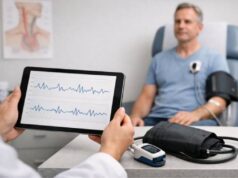
Brugada syndrome is an inherited heart-rhythm condition that can raise the risk of dangerous ventricular arrhythmias, often in people whose hearts look structurally normal. It is best known for a distinctive electrocardiogram (ECG) pattern in the right chest leads, yet that pattern can come and go—appearing during fever, after certain medications, or sometimes only when the leads are placed slightly higher on the chest. This “intermittent signal” is why many people live for years without a diagnosis, while others first learn about it after a fainting episode or a frightening family history of sudden death. The good news is that most people with Brugada syndrome never experience a life-threatening event, and management can be highly effective when risk is assessed carefully. This article explains what Brugada syndrome is, who is most at risk, how doctors confirm the diagnosis, and what treatment and everyday precautions matter most.
Table of Contents
- What Brugada syndrome is and why it matters
- Causes and risk factors people overlook
- Symptoms and complications to watch for
- How doctors diagnose it accurately
- Treatment options and what to expect
- Management, prevention, and when to seek care
What Brugada syndrome is and why it matters
Brugada syndrome is a cardiac channelopathy—a condition caused by altered electrical signaling in heart muscle cells, usually involving sodium channels that help start each heartbeat. The hallmark is a type 1 Brugada ECG pattern (a “coved” ST-segment elevation) in the right precordial leads, typically V1 and V2. When the pattern is present and truly due to Brugada syndrome, it signals an increased vulnerability to fast, chaotic rhythms such as polymorphic ventricular tachycardia and ventricular fibrillation, which can cause fainting or sudden cardiac arrest.
A defining feature is that the ECG pattern can be intermittent. Many people have a normal ECG most of the time, then develop a type 1 pattern during fever, after alcohol binges, with severe sleep deprivation, or after exposure to certain medications. Clinicians often repeat ECGs, use prolonged monitoring, and sometimes reposition V1 and V2 one or two spaces higher on the chest to better “see” the right ventricular outflow tract region where the signal is most apparent.
It also helps to separate three ideas that are often mixed up:
- Brugada syndrome: a diagnosis that combines a diagnostic ECG pattern with clinical context (symptoms, family history, or other supportive features).
- Brugada ECG pattern: the ECG appearance itself, which may be spontaneous or provoked.
- Brugada phenocopy: a Brugada-like ECG pattern caused by a reversible condition (such as metabolic disturbances or certain illnesses), not the inherited syndrome.
Why this distinction matters: treatment decisions—especially whether someone needs an implantable defibrillator—depend on true arrhythmic risk, not just a single ECG snapshot.
Finally, Brugada syndrome is commonly described as occurring in “structurally normal” hearts, but that does not mean the condition is trivial. The heart’s structure may look normal on ultrasound, yet the electrical system can still be unstable under the right triggers. The goal of modern care is not to label everyone as high-risk, but to identify the smaller group who truly needs aggressive protection while helping everyone reduce avoidable triggers.
Causes and risk factors people overlook
Brugada syndrome most often stems from genetic changes that reduce the heart’s sodium current, making it easier for dangerous rhythms to start—particularly in the right ventricular outflow tract region. The best-known gene is SCN5A, which encodes a key cardiac sodium channel. Even so, genetics are not the whole story: many people with a Brugada diagnosis do not have an identifiable mutation on current testing, and many mutation carriers never develop symptoms. This is a classic example of incomplete penetrance (not everyone with the genetic risk shows the condition) and variable expressivity (severity differs widely).
Risk factors that influence who declares the disease
- Sex and hormones: Brugada syndrome is diagnosed more often in males, and risk may be higher in adult men than in women with similar ECG findings.
- Age: Events often occur in adulthood, but children can be affected—especially during fever—so family context matters.
- Fever: One of the most important and underappreciated triggers. Higher temperature can worsen sodium-channel function and unmask the diagnostic ECG pattern or provoke arrhythmias.
- Medication sensitivity: Certain drugs can worsen the Brugada ECG pattern or increase arrhythmic risk by blocking sodium channels or altering repolarization.
- Alcohol and large meals at night: For some people, these can increase vagal tone and destabilize rhythms during sleep.
- Electrolyte disturbances: Low potassium, low magnesium, or severe metabolic stress can lower the threshold for arrhythmias and can also produce Brugada-like ECG patterns that need careful interpretation.
- Family history: Sudden unexplained death, nocturnal death, or known Brugada syndrome in a close relative raises pre-test suspicion and changes how clinicians approach screening.
What “inherited” means for families
Brugada syndrome is often described as autosomal dominant, meaning a mutation (when present) can be passed from parent to child with a 50% chance. In real life, risk is more nuanced because not all gene carriers show the ECG pattern, and not all people with the pattern have an identifiable mutation. Families benefit most from a structured plan:
- Confirm the diagnosis in the affected person using strict ECG criteria.
- Screen first-degree relatives with ECGs (sometimes including high right-precordial lead placement).
- Consider targeted genetic testing when a clearly disease-associated variant is found in the family.
The most overlooked message is practical: risk is not fixed. For many people, avoiding triggers—especially aggressive fever control and medication caution—reduces the chance that a latent vulnerability becomes an emergency.
Symptoms and complications to watch for
Many people with Brugada syndrome have no symptoms and learn about it after an ECG done for another reason, a family screening evaluation, or a workup for fainting. When symptoms do occur, they are often episodic and may cluster around specific conditions such as fever or nighttime rest.
Symptoms that should prompt urgent evaluation
- Syncope (fainting), especially if sudden and without warning
- A brief, unexplained collapse while at rest or during sleep is more concerning than fainting that occurs after standing up quickly or during dehydration.
- Nocturnal agonal respirations
- Gasping or abnormal breathing during sleep can be a sign of an arrhythmic event, although sleep disorders can mimic this—either way it warrants evaluation.
- Palpitations with dizziness or near-fainting
- Palpitations alone are common in many benign conditions, but palpitations plus presyncope deserve attention.
- Seizure-like episodes
- Some cardiac arrhythmias cause brief convulsive movements due to low blood flow to the brain, and they may be misdiagnosed as epilepsy unless an ECG and rhythm evaluation are done.
Common complications and why they happen
The major feared complication is ventricular fibrillation leading to sudden cardiac arrest. In Brugada syndrome, events often occur during rest or sleep, a pattern linked to shifts in autonomic tone (higher vagal influence) and the syndrome’s unique electrophysiology.
Other complications are less dramatic but important:
- Recurrent syncope with injury risk, especially if episodes happen without warning.
- Electrical storm
- This term describes multiple episodes of ventricular fibrillation or sustained ventricular tachycardia in a short period. It is a medical emergency that requires hospital care.
- Atrial arrhythmias
- Some people develop atrial fibrillation or atrial flutter, which can worsen symptoms and complicate management choices.
- Psychological burden
- Living with a condition linked to sudden death—especially with a family history—can cause persistent anxiety. This is not a side note; it affects sleep, activity, and medication adherence.
What symptoms usually mean something else
Chest pain with exertion, progressive shortness of breath, or leg swelling are not typical “Brugada symptoms” and should trigger evaluation for other heart problems (coronary disease, cardiomyopathy, valve disease). Brugada syndrome can coexist with other conditions, and it is safer to treat new cardiopulmonary symptoms as their own clinical problem rather than assuming everything is Brugada-related.
A helpful framing is this: Brugada syndrome is often quiet until a trigger pushes the electrical system past a threshold. Symptoms matter most when they suggest that threshold has already been crossed.
How doctors diagnose it accurately
Diagnosis hinges on recognizing a true type 1 Brugada ECG pattern and confirming that it reflects Brugada syndrome rather than a reversible mimic. Because the ECG pattern can be intermittent, accurate diagnosis is as much about method as it is about one test.
Step 1: Capture the right ECG pattern
A diagnostic type 1 pattern is typically seen in V1 and V2. Clinicians often repeat ECGs and may record right precordial leads in higher positions to increase sensitivity. If a type 1 pattern appears spontaneously (without medication provocation), it generally carries more clinical weight than a pattern seen only after a drug challenge.
Step 2: Consider provocation testing carefully
When suspicion is high but the diagnostic pattern is absent, electrophysiology teams may use a sodium-channel blocker challenge in a controlled setting to unmask the type 1 pattern. This is not a casual test. Good practice includes:
- Continuous monitoring and resuscitation capability
- Clear contraindications screening
- Stopping criteria if concerning changes occur
Because the test can provoke arrhythmias in a small number of patients, clinicians reserve it for cases where the result will change management and where mimics have been considered.
Step 3: Rule out mimics and structural disease
Even if the ECG resembles Brugada, clinicians evaluate for other explanations and coexisting conditions. This often includes:
- Bloodwork to check electrolytes and metabolic stressors
- Review of medications and substances
- Cardiac imaging (often echocardiography) to assess structure and function
- Assessment for ischemia when symptoms suggest it
Step 4: Risk stratification, not just diagnosis
A diagnosis does not automatically equal high risk. Risk assessment typically weighs:
- Prior cardiac arrest or documented ventricular fibrillation (highest risk)
- Arrhythmic syncope (more concerning than vasovagal syncope)
- Spontaneous type 1 ECG pattern
- Certain ECG features that suggest conduction slowing
- Family history patterns (helpful, but not sufficient alone)
In some cases, an electrophysiology study is considered, but its role in predicting future events—especially in asymptomatic people—remains debated. In real-world practice, clinicians prioritize the most reproducible predictors: symptoms consistent with arrhythmia, documented dangerous rhythms, and the nature of the ECG pattern over time.
The bottom line: a careful diagnosis is deliberately conservative because the consequences of overdiagnosis (unnecessary restrictions, anxiety, device complications) and underdiagnosis (missed sudden-death risk) are both significant.
Treatment options and what to expect
Treatment for Brugada syndrome is risk-based. The aim is simple: prevent sudden death while minimizing unnecessary interventions. For many people, that means trigger management and monitoring. For a smaller group, it means definitive protection with a device or procedural therapy.
Implantable cardioverter-defibrillator (ICD)
An ICD is the most effective protection against fatal ventricular arrhythmias because it can detect ventricular fibrillation and deliver a life-saving shock. ICDs are most clearly indicated for:
- Survivors of cardiac arrest due to ventricular fibrillation
- People with documented sustained ventricular arrhythmias
ICDs can also be considered in selected patients with high-risk features, such as syncope believed to be arrhythmic plus a diagnostic pattern, after careful specialist evaluation. What to expect is mixed: ICDs save lives, but they also come with potential downsides—lead problems, infections, and inappropriate shocks—so the decision should be individualized.
Medications for specific scenarios
There is no single daily “Brugada pill” for everyone, but medications can be crucial in targeted situations:
- Isoproterenol infusion is often used in hospital for electrical storm to stabilize rhythm acutely.
- Quinidine may reduce ventricular arrhythmia recurrence in some high-risk patients, including those with recurrent ICD shocks or those who cannot receive an ICD. Side effects can limit long-term use, so clinicians monitor tolerance and interactions carefully.
Catheter ablation
Ablation targets arrhythmogenic substrate—often in the right ventricular outflow tract region, sometimes from the epicardial surface. It is not first-line for most people, but it may be considered for:
- Recurrent ventricular fibrillation or repeated ICD shocks despite optimal management
- Patients in whom a clear substrate is identified and procedural risk is acceptable
Ablation can reduce arrhythmia burden and ICD shocks, and in selected high-risk patients it can be transformative, but it should be performed in experienced centers.
Treatment expectations by risk category
- Asymptomatic with intermittent pattern and no high-risk features: trigger control, follow-up, and family screening may be the core plan.
- Syncope suspicious for arrhythmia: deeper evaluation and a lower threshold for aggressive prevention.
- Prior ventricular fibrillation or sustained ventricular tachycardia: ICD is usually central, with medications and ablation as needed.
A practical point: treatment is often less about “fixing” the ECG and more about preventing the rare but catastrophic rhythm that can occur when triggers and vulnerability align.
Management, prevention, and when to seek care
Daily management focuses on reducing avoidable triggers, preparing for predictable risks (especially fever and medications), and ensuring that family members are assessed appropriately. The goal is steady, confident living—not constant fear.
Fever plan (one of the most important interventions)
If you have Brugada syndrome or a strong suspicion of it, fever deserves a structured response:
- Treat fever early with appropriate antipyretics and hydration (following your clinician’s guidance).
- Avoid strenuous exertion while febrile.
- Seek urgent medical advice if fever is high, persistent, or accompanied by fainting, palpitations, or chest discomfort.
- If you have a child in a Brugada-affected family, discuss in advance when an ECG during fever or hospital monitoring is recommended.
Medication and procedure safety
Many problems arise not from everyday life, but from unexpected exposures—new prescriptions, anesthesia, or over-the-counter products. Helpful habits include:
- Keep an updated medication list and tell every clinician you have Brugada syndrome (or are being evaluated for it).
- Ask before starting new medications, including some antidepressants, antiarrhythmics, and certain anesthetic agents.
- Plan ahead for surgery: anesthesia teams can choose safer agents and monitoring strategies when they know the diagnosis.
Lifestyle and rhythm stability
You do not need a fragile life, but a few patterns are consistently helpful:
- Avoid heavy alcohol intake, especially in the evening.
- Prioritize sleep and avoid extreme sleep deprivation.
- Maintain steady electrolytes: dehydration from gastroenteritis, extreme dieting, or intense heat exposure can be a risk amplifier.
- Discuss athletic participation individually; many people can exercise safely, but syncope during exertion or a high-risk profile changes the conversation.
Follow-up and family screening
Good follow-up often includes periodic ECGs, review of symptoms, and a reassessment of risk factors over time. Family screening is not “one and done.” A normal ECG today does not always mean lifelong absence of the pattern, especially in younger relatives.
When to seek urgent care
Seek emergency evaluation for:
- Fainting without a clear benign explanation
- Seizure-like episode with rapid recovery or unexplained collapse
- New palpitations with dizziness, chest pain, or shortness of breath
- Any suspected electrical storm symptoms (repeated near-fainting, recurrent shocks if you have an ICD)
Arrange prompt (non-emergency) medical review for:
- New nighttime gasping episodes
- Recurrent near-fainting
- A strong new family history event (sudden unexplained death, resuscitated arrest)
A calm but prepared approach works best: treat fever aggressively, be cautious with medications, and anchor decisions in individualized risk rather than worst-case stories.
References
- 2022 ESC Guidelines for the management of patients with ventricular arrhythmias and the prevention of sudden cardiac death 2022 (Guideline)
- The Brugada syndrome: risk stratification 2023 (Review)
- The Brugada syndrome: pharmacological therapy 2023 (Review)
- Brugada syndrome update 2025 (Review)
Disclaimer
This article is for educational purposes only and does not provide medical advice, diagnosis, or treatment. Brugada syndrome can increase the risk of life-threatening arrhythmias, and care decisions depend on your symptoms, ECG findings over time, family history, and specialist evaluation. If you have fainting, seizure-like collapse, severe palpitations, chest pain, or breathing difficulty—especially during fever—seek urgent medical attention. For personalized guidance on testing, medication safety, exercise, and family screening, consult a qualified clinician, ideally a cardiologist with electrophysiology expertise.
If this article helped you, please share it on Facebook, X (formerly Twitter), or any platform you prefer, and follow us on social media. Your support through sharing helps our team continue producing high-quality health content.