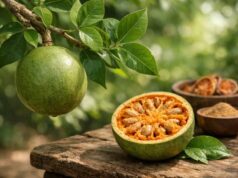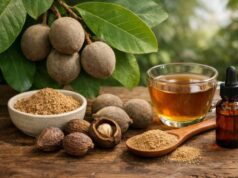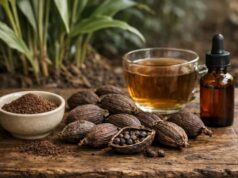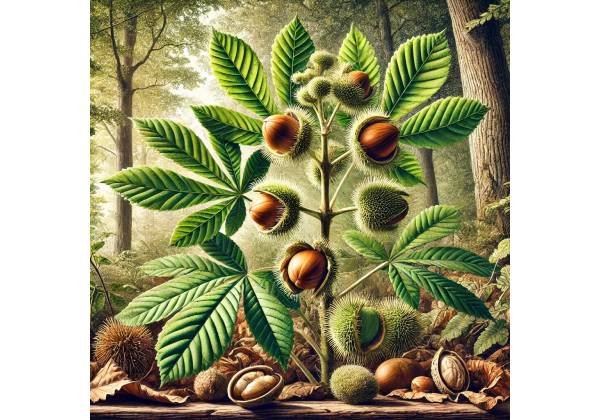
Buckeye nuts come from several Aesculus species, including the Ohio buckeye, California buckeye, and red buckeye. They are best known in North America as glossy “good-luck” seeds, but they also have a long history of traditional use—especially in forms meant for external application. The key point, however, is safety: buckeye nuts are not edible in their raw form and can cause poisoning when swallowed.
From a medicinal perspective, most modern research does not focus on homemade buckeye preparations. Instead, it centers on standardized extracts from a related Aesculus species, commonly called horse chestnut, which are processed to remove or reduce toxic constituents and standardized for triterpene saponins (often discussed as aescin or aescin-equivalents). These extracts are studied for their venotonic and anti-edema effects, meaning they may help with symptoms tied to poor venous circulation such as leg heaviness and swelling.
This article explains what buckeye nut contains, what benefits are realistic (and what is overhyped), how buckeye-derived products are used, what dosing looks like for standardized preparations, and how to avoid preventable risks.
Essential Insights
- Standardized Aesculus extracts may reduce leg heaviness and swelling linked to minor venous circulation problems.
- Raw buckeye nuts should not be eaten because toxicity can cause gastrointestinal and neurologic symptoms.
- Typical oral extract dosing targets about 40–100 mg triterpene glycosides per day, often split twice daily.
- Avoid use in children and during pregnancy or breastfeeding unless a clinician specifically advises it.
- Use extra caution if you take blood thinners or have liver or kidney disease.
Table of Contents
- What is buckeye nut
- Does buckeye help with veins and swelling
- How to use buckeye safely
- How much buckeye is safe
- Buckeye preparation and quality tips
- Side effects, interactions, who should avoid
- What the evidence actually says
What is buckeye nut
“Buckeye nut” is a common name for the shiny seeds produced by trees and shrubs in the genus Aesculus. In North America, the best-known species include Ohio buckeye (Aesculus glabra), California buckeye (Aesculus californica), and red buckeye (Aesculus pavia). In Europe, a closely related species—horse chestnut (Aesculus hippocastanum)—is the one most often used in regulated herbal products.
Although buckeyes resemble edible chestnuts at a glance, they are not culinary nuts. The seed is rich in plant chemicals that can irritate the gut and affect the nervous system. That is why buckeye “benefits” need to be discussed with a different lens than foods like walnuts or Brazil nuts: buckeye is primarily a traditional medicinal plant and, in modern settings, a source for standardized extracts, not a snack.
Key ingredients and why they matter
Buckeye seeds and bark contain several compound groups that help explain both their traditional uses and their risks:
- Triterpene saponins (often discussed as aescin/escin): Associated with venotonic, anti-edema, and anti-inflammatory effects in extracts, but also linked to irritation and toxicity when the plant is unprocessed.
- Coumarin-like glycosides (often discussed as aesculin/esculin): Frequently cited as a contributor to toxicity and irritation when raw plant material is consumed.
- Flavonoids and proanthocyanidins: Antioxidant-type compounds that may support vascular and connective tissue signaling in theory, though human evidence depends on the preparation.
- Tannins: Astringent compounds that can tighten tissues and may partly explain traditional external use, but can also aggravate sensitive digestion.
Buckeye versus horse chestnut
Many consumer discussions blur these plants together. They are related, but not interchangeable in practice. The strongest clinical evidence is for processed, standardized horse chestnut seed extracts, not for raw buckeye seeds or homemade buckeye preparations. If you want a clear comparison of the better-studied extract category (including what “standardized” means), see horse chestnut extract basics and safety notes.
One simple safety anchor
If the product in front of you is literally a buckeye seed, treat it as not for ingestion. If a product is marketed for internal use, it should be a regulated or professionally manufactured preparation with clear dosing and quality information—not a DIY tincture or powder.
Does buckeye help with veins and swelling
When people search for buckeye “health benefits,” they are often looking for help with leg heaviness, swelling, varicose vein discomfort, bruising, or hemorrhoid symptoms. Here is the practical reality: the most defensible benefits come from standardized Aesculus preparations, especially those modeled after horse chestnut seed extract. Raw buckeye nuts themselves are not a safe route to these effects.
Most realistic benefit: venous discomfort and edema
Standardized Aesculus extracts are commonly described as venoactive. That term refers to products used to support vein tone and reduce fluid leakage into surrounding tissues. In plain language, this category is used for symptoms such as:
- heaviness or aching in the legs after standing
- mild to moderate ankle swelling by day’s end
- feelings of tightness, itching, or fatigue in the lower legs
- visible varicose veins with discomfort (supportive care, not a cure)
The effects people notice—when they notice them—tend to be symptom-level improvements, not structural changes. An extract might reduce swelling or discomfort, but it will not “remove” varicose veins.
Bruises and localized swelling
Traditional and topical use commonly centers on bruises, bumps, and localized swelling. In these cases, the goal is not systemic circulation support but a local effect: comfort, reduced puffiness, and faster return to normal appearance. Topical products are also where many people tolerate Aesculus best, because the dose reaching the bloodstream is typically much lower than with oral use.
Hemorrhoids and pelvic vein symptoms
Hemorrhoids involve swollen veins and irritated tissue, so buckeye is sometimes grouped with hemorrhoid-support herbs. The evidence is not as strong as for lower-leg venous symptoms, and it is easy for marketing to overreach. If hemorrhoids are your main concern, it is usually smarter to focus first on stool softness, hydration, and proven topical comfort measures, then consider venoactive options as secondary support.
For readers comparing options, diosmin for vein support is another well-known venoactive ingredient that is often discussed in the same “leg heaviness and swelling” context.
What buckeye does not reliably do
You will sometimes see claims that buckeye “detoxifies,” “melts fat,” or “rebuilds joints.” Those claims are not aligned with the strongest evidence base for Aesculus. The more grounded use is vascular tone and edema support, plus topical use for bruising or discomfort—always with careful attention to safety.
How to use buckeye safely
Because raw buckeye nuts are unsafe to ingest, “how to use buckeye” really means “how to use Aesculus preparations safely.” In practice, that usually falls into two categories: topical products and standardized oral extracts. The safest approach is to treat buckeye like a potent botanical—use a form with clear labeling, avoid improvising doses, and prioritize products designed for the intended route of use.
Topical use: the lowest-risk entry point
Topical Aesculus products are commonly used for:
- bruises and localized swelling
- a sense of heaviness in the legs after long standing
- cosmetic support for the look of tired legs (results vary)
For topical use, apply only to intact skin and avoid mucous membranes (eyes, lips, genital tissue). If you have eczema-prone skin or a history of contact allergy, patch testing on a small area for 24 hours is a reasonable precaution.
Oral use: only with standardized preparations
Oral products are where people need the clearest guidance. A responsible oral product should specify:
- the plant part (usually seed extract)
- the extraction type (dry extract, liquid extract)
- standardization (for triterpene glycosides or similar)
- serving size in mg and dosing frequency
- warnings for pregnancy, children, and medication interactions
If a product does not provide that information, it should not be used internally.
Traditional use is not the same as safe use
Some communities historically processed buckeye seeds to reduce bitterness and toxicity. That does not translate into a safe modern wellness practice. At-home processing is inconsistent, and the risk-to-benefit ratio is unfavorable when safer alternatives exist.
Practical ways to pair buckeye with supportive habits
For leg heaviness and swelling, buckeye-like products work best when paired with the basics:
- movement breaks during long sitting or standing
- calf activation (walking, gentle heel raises)
- compression when appropriate
- hydration and adequate protein intake
For hemorrhoid discomfort, address stool softness and irritation first. If you want a gentle topical option often used for tissue comfort, witch hazel topical guidance is commonly considered alongside other supportive measures.
How much buckeye is safe
The safest way to answer “how much buckeye is safe” is to separate raw buckeye nuts from standardized medicinal preparations.
- Raw buckeye nuts: there is no recommended edible dose. Swallowing buckeye seeds can cause poisoning, and risk is higher in children and smaller bodies.
- Standardized oral extracts: dosing is product-specific and should follow labeled directions, ideally matching well-established monograph ranges.
- Topical products: dosing is usually “apply a thin layer” with a limited daily frequency.
Below are practical ranges that reflect how Aesculus preparations are typically used in regulated or research-informed contexts.
Oral standardized extracts for venous symptoms
A common dosing pattern for standardized extracts is twice-daily dosing, with the “active” amount expressed as triterpene glycosides (often described as aescin-equivalents). One structured approach used in monographs is approximately:
- about 20–25 mg triterpene glycosides per dose, twice daily (roughly 40–50 mg per day total)
Some products express dosing differently (for example, total extract mg rather than standardized glycosides). In those cases, the label should still indicate what the extract is standardized to, so you can compare products meaningfully.
How long to use it
For chronic venous insufficiency-type symptoms, people often expect immediate results. In reality, several weeks of consistent use may be needed before changes are noticeable. A sensible self-check is:
- reassess symptoms after 4 weeks
- stop if side effects occur
- consult a clinician if swelling is one-sided, sudden, painful, or associated with shortness of breath
Topical use for bruises or localized swelling
Topical products are often used in a simple pattern:
- apply a thin layer 1–3 times daily for a short period
If bruising or swelling does not improve within a few days, or if pain is significant, it is wiser to reassess rather than continue indefinitely.
Variables that change the “right” dose
Dose tolerance and usefulness can change with:
- age and body size (children should not use internal products without medical direction)
- kidney or liver function
- concurrent medications, especially anticoagulants
- baseline risk (history of clotting, chronic swelling, or cardiovascular disease)
The most important rule is this: do not try to convert buckeye seeds into a home dose. Use standardized products or skip internal use.
Buckeye preparation and quality tips
With buckeye, the biggest “quality tip” is not about finding the freshest seed. It is about avoiding preventable risk by choosing the right form, the right labeling, and the right expectations. This section focuses on the mistakes that lead to problems—and the practical decisions that keep buckeye use on the safer side.
Do not DIY buckeye for internal use
Homemade buckeye powder, tinctures, or teas are risky because:
- toxic constituents are not reliably removed
- potency varies widely by species, season, and processing
- dosing becomes guesswork
- side effects may appear suddenly, especially in sensitive people
If internal use is the goal, stick with preparations made for that purpose and avoid “folk recipe” dosing.
Look for these label signals
Higher-quality Aesculus products tend to be transparent. Prefer products that state:
- the species and plant part (seed extract versus bark)
- standardized content (for triterpene glycosides or equivalent)
- a clear mg-per-serving dose and frequency
- warnings for pregnancy, breastfeeding, children, and medication interactions
- third-party testing or quality certification when available
If the product uses vague language like “proprietary blend” without active standardization, the risk-to-benefit tradeoff is rarely favorable.
Match the form to the goal
- For bruises or localized swelling: topical products are usually the most practical.
- For leg heaviness and mild swelling: an oral standardized extract may be considered, but only with appropriate medical context and medication screening.
- For severe swelling, sudden pain, or one-sided symptoms: do not self-treat—rule out serious causes first.
Know when to stop and reassess
Stop use and reassess if you develop:
- persistent nausea, vomiting, or diarrhea
- dizziness, weakness, unusual sleepiness, or tremors
- rash, hives, facial swelling, or breathing difficulty
- worsening swelling, especially if it is one-sided
A final realism check: buckeye-derived extracts may help with symptoms, but they are not a substitute for evaluation when symptoms suggest a clot, heart failure, or significant vascular disease.
Side effects, interactions, who should avoid
Buckeye safety is not a minor footnote—it is the center of responsible use. The genus Aesculus contains compounds that can cause significant adverse effects when unprocessed plant material is swallowed, and even standardized products can cause side effects in some people. Treat buckeye like a pharmacologically active botanical, not like a casual supplement.
Side effects seen with standardized extracts
When properly manufactured and used short term, standardized Aesculus extracts are often tolerated, but side effects can include:
- stomach upset (nausea, cramps, reflux)
- dizziness or headache
- itching or mild allergic symptoms
- skin irritation or rash with topical products
These effects are more likely when dosing is high, the product is poorly made, or the user is sensitive to saponins.
Poisoning risk with raw buckeye nuts
Swallowing raw buckeye nuts can lead to symptoms that may progress beyond mild GI upset. Reported toxicity patterns include gastrointestinal irritation and neurologic effects such as weakness, drowsiness, tremors, and coordination problems. Severe reactions are more likely in children, people with smaller body size, and those who ingest multiple seeds or concentrated forms.
If accidental ingestion occurs, seek urgent medical guidance rather than waiting for symptoms to “pass.” This is especially important for children, older adults, or anyone with significant symptoms.
Medication interactions to take seriously
Because Aesculus constituents can affect vascular and inflammatory pathways, screening for interactions is prudent. Use extra caution—and involve a clinician—if you take:
- anticoagulants or antiplatelet drugs (bleeding risk concerns and dose stability considerations)
- NSAIDs frequently (combined GI irritation risk)
- diabetes medications (if appetite and intake change due to GI upset)
- blood pressure medications (if dizziness or low blood pressure symptoms occur)
Also stop Aesculus products before planned surgery unless your clinician explicitly advises otherwise.
Who should avoid buckeye products
Avoid internal buckeye or Aesculus products unless a qualified clinician directs otherwise if you are:
- pregnant or breastfeeding
- a child or teenager (unless specifically prescribed or recommended in a regulated context)
- living with liver disease, kidney disease, or a history of unexplained abnormal liver tests
- prone to severe allergies or have had past reactions to similar botanicals
- experiencing unexplained leg swelling, chest pain, or shortness of breath (rule out urgent causes first)
Even for topical use, avoid application to broken skin and stop immediately if irritation or hives appear.
What the evidence actually says
Buckeye sits in a tricky evidence space: it is widely known, often discussed online, and strongly linked to folklore, yet the best clinical evidence focuses on standardized Aesculus extracts, not on raw buckeye nuts. That difference matters. When research supports an effect, it usually supports a defined preparation with measurable dosing, not “buckeye” as a general concept.
Where evidence is strongest
The most consistent evidence cluster is for venous symptoms, especially those associated with chronic venous insufficiency or minor venous circulation disturbances. Outcomes commonly tracked include leg volume or ankle swelling, heaviness, pain, itching, and fatigue. Across trials and reviews, the signal tends to be “helpful for symptoms in some people,” with the usual caveats: study sizes vary, product formulations differ, and results are not universal.
Mechanisms are plausible, but not a substitute for outcomes
Mechanistic research supports the idea that escin-rich preparations can influence:
- capillary permeability and fluid leakage (relevant to edema)
- inflammatory signaling and tissue irritation
- venous tone (how veins respond under pressure)
Those mechanisms help explain why some people feel less heaviness or swelling, but they should not be confused with disease reversal. A mechanism is a hypothesis-support tool, not proof of broad clinical benefit.
Evidence gaps and practical limits
Important gaps remain:
- direct studies on North American buckeye species are limited compared with horse chestnut
- long-term safety data is thinner than short-term safety data
- evidence for hemorrhoids, bruising speed, and broader “detox” claims is mixed or limited
The most responsible conclusion is straightforward: Aesculus extracts may be a useful adjunct for venous discomfort and swelling, especially when paired with movement and compression strategies, but buckeye nuts themselves are not a safe self-treatment tool.
How to apply this evidence in real life
If you are considering buckeye-derived products, the evidence supports a conservative, safety-first approach:
- prioritize topical use for localized issues
- choose standardized oral extracts only when the label is clear and medication screening is done
- set expectations around symptom relief, not cures
- stop quickly if side effects appear
That approach respects both what the research suggests and what buckeye toxicity makes non-negotiable.
References
- Horse Chestnut: Usefulness and Safety | NCCIH 2025
- Escin’s Action on Bradykinin Pathway: Advantageous Clinical Properties for an Unknown Mechanism? – PMC 2024 (Review)
- Poisoning due to consumption of horse chestnut seed – PMC 2021 (Case Report)
- European Union herbal monograph on Aesculus hippocastanum L., semen Final – Revision 1 2020 (Guideline)
- CALIFORNIA BUCKEYE Aesculus californica (Spach) Nutt. Plant Guide 2003
Disclaimer
This article is for educational purposes only and does not provide medical advice, diagnosis, or treatment. Buckeye nuts and related Aesculus species can be toxic when consumed in unprocessed form. Do not eat raw buckeye nuts or use homemade buckeye preparations internally. If you are pregnant, breastfeeding, giving products to a child, have liver or kidney disease, or take prescription medications (especially blood thinners), consult a qualified clinician or pharmacist before using Aesculus products. Seek urgent medical help for suspected poisoning, severe allergic reactions, trouble breathing, facial swelling, fainting, chest pain, or sudden one-sided leg swelling.
If you found this guide useful, please share it on Facebook, X (formerly Twitter), or your preferred platform to help others make safer, better-informed choices.